
33 Majestic Stone Fireplace Ideas to Anchor a Room
Your room can have a comfortable sofa, lovely lighting, and still feel as though something is missing. A stone fireplace gives the eye somewhere to settle, with texture and shape that help the whole seating area feel connected.
Choosing the right look takes more than finding a beautiful photo. Rough masonry can compete with busy wallpaper, while a pale surround may need contrast to stand out. The room’s size, daylight, and existing furniture all affect how the finished design feels.
These 33 ideas cover rustic fieldstone, sculptural surrounds, rich marble, and simple styling updates. You’ll find ways to work with an existing hearth as well as inspiration for a larger renovation, with practical details to help you choose a look that belongs in your home.
1. Full Height Fieldstone

A full height stone fireplace gives even simple furniture a striking backdrop. Choose irregular fieldstone in soft gray, sandy beige, and muted brown for an earthy mix. Repeat one of those tones in your rug so the tall surface feels connected to the seating below.
Keep the surrounding walls warm white and let the uneven texture carry the design. A low cream sofa and a simple oak coffee table balance the visual weight. Before choosing the stone, view several samples together in your room, since one piece cannot show the full color range.
2. Cream Limestone Surround

- Give a busy room a calmer focal point with cream limestone and a simple rectangular opening.
- Bring home a sample and compare it with your wall paint beside a window and under evening lamps.
- Pair the pale surround with a slim black firebox frame for clear contrast.
- Repeat the cream shade in one nearby cushion or lampshade, then use oak furniture to add warmth.
The clean outline works especially well beside patterned rugs, bookcases, or windows with detailed trim. Smooth stone gives the eye somewhere to rest without making the room feel empty. Choose a finish you can examine in person, because subtle pores and markings may disappear in online product photos.
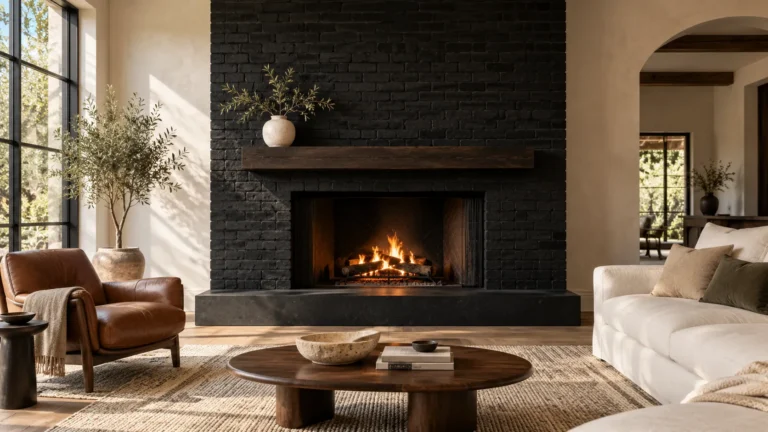
3. Charcoal Stacked Stone

Quick Tip:
Dark stone feels richer when its texture stays visible. Compare a charcoal sample in daylight and evening light before committing, because deep colors can hide the layered texture in a dim room.
Pair the dark wall with oatmeal upholstery, a pale oak table, and a cream rug to keep the seating area inviting. Limit nearby accessories to one large ceramic vessel or a simple framed print. That restrained styling gives the narrow stone layers room to stand out without visual competition.
4. Arched Stone Surround

BEFORE: Too many sharp corners can leave a fireplace wall feeling rigid. A square surround, boxy coffee table, and straight shelving repeat the same angular shapes throughout the seating area.
AFTER: An arched stone surround introduces a gentler outline above the firebox. Sandy beige blocks bring warmth, while the curve gives the room a distinct architectural detail.
An arched outer surround can frame a rectangular firebox, so the visible opening does not have to follow the same curve. Carry the shape into one nearby accessory, such as an oval mirror. Have the stone fabricator plan the proportions around your existing fireplace before ordering.
5. Oversized Mantel Artwork

- Give rugged masonry a clear visual partner with one large landscape or abstract painting. Choose broad shapes that remain readable from across the room.
- Cut a paper template to the proposed artwork size and hold it above the mantel. Leave visible stone on both sides to keep the composition balanced.
- Select a frame that repeats an existing finish, such as walnut furniture or black window trim.
- Clear away smaller frames and clustered ornaments. Keep one low ceramic bowl if the mantel needs a finishing detail.
One large painting can make an irregular stone wall feel more settled, especially when several small decorations previously competed for attention. Pull a muted color from the artwork into a cushion across the room. Check the fireplace manufacturer’s guidance before placing artwork above the opening, where heat may affect it.
6. Honed Marble Slabs

| Detail | Honed Marble | Polished Marble |
|---|---|---|
| Light reflection | Soft, diffuse highlights | Brighter, defined reflections |
| Visual emphasis | Veining and slab shape | Veining and surface shine |
| Suggested pairings | Linen upholstery and pale oak | Velvet upholstery and warm metals |
| Styling direction | Relaxed and understated | Formal and reflective |
Bold veining can supply all the decoration a fireplace wall needs. Ask to see the proposed slab layout before cutting, especially where pieces meet above the opening. Keep mantel accessories sparse and repeat one vein color in your furniture or textiles so the stone connects with the surrounding room.
7. Flanking Walnut Shelves

DO:
- Frame pale stone with walnut shelves to give the fireplace wall a warmer finish.
- Align corresponding shelves on both sides for a balanced outline.
- Leave open space around larger objects so their shapes remain visible.
- Repeat one ceramic color across both shelving arrangements.
DON’T:
- Fill every shelf from end to end with books and ornaments.
- Assume matching shelves need identical displays.
- Mix several competing wood finishes beside already varied masonry.
- Let tall accessories obscure the edges of the stone surround.
Matching shelves give an uneven stone surface a more orderly frame. Keep their outer edges aligned with the cabinets below, if you have them, so the whole wall reads as one arrangement. For everyday storage, place small items in matching boxes instead of scattering them between decorative pieces.
8. Rounded River Rock

Visual Impact: Rounded stones bring a softer rhythm to rustic masonry.
Palette: Slate gray, tan, and warm brown.
Best For: Cottage rooms, cabins, and relaxed family spaces.
Planning: Review a sample panel showing both stones and mortar.
Mortar changes the look almost as much as the stones themselves. A pale joint color creates a lighter overall surface, while contrasting mortar outlines each rounded piece. Ask for a sample with the intended spacing, because tightly packed rocks look different from widely spaced ones.
9. Sage Paneled Backdrop

Sage paneling can make a pale hearth feel like part of the room instead of an isolated feature. Use the color on the walls beside the stone surround, choosing simple rectangular panels that echo its proportions. The green brings gentle contrast without a sharp color break.
Choose a muted sage with gray undertones if the stone is cool, or a warmer olive sage beside beige masonry. Keep decorative paneling outside the fireplace’s required clearance area. Finish with ivory curtains and one moss green cushion for a room that feels softly connected.
10. Compact Corner Hearth

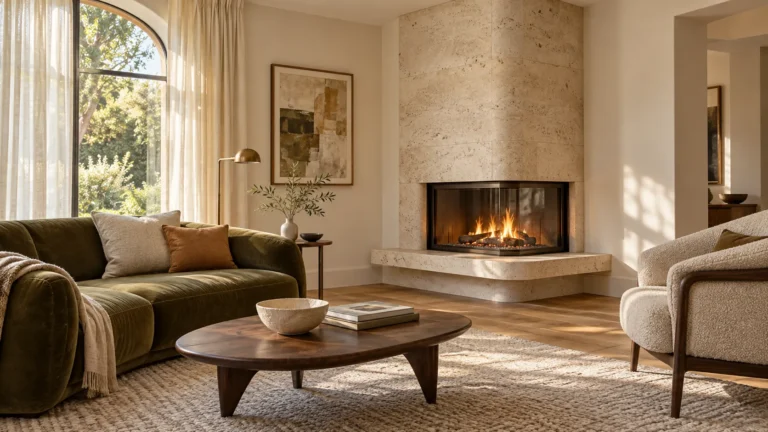
- Give an overlooked corner a purpose with a compact surround in pale, roughly cut stone.
- Keep the stone color close to the adjacent wall paint so the projecting surround feels less bulky.
- Mark the proposed hearth footprint on the floor to check door swings and walking routes before approving the design.
- Choose a simple mantel profile with minimal overhang to keep the corner visually tidy.
Corner placement works best when the furniture acknowledges it. A sofa facing straight past the hearth can leave the feature feeling disconnected, even with attractive stonework. Turn one accent chair toward the opening and use a round coffee table to soften the diagonal arrangement without crowding the center of the room.
11. Herringbone Stone Hearth

Quick Tip:
A small hearth can carry a surprising amount of pattern. Choose narrow stone tiles and a grout shade close to their color, then request a dry layout to check the border cuts before installation.
The zigzag pattern gives a plain surround a decorative base without covering the entire wall. Keep the nearby rug plain so the angled tile layout stays easy to read. Ask your installer to confirm that the chosen stone, setting materials, and hearth dimensions suit your particular fireplace.
12. Rustic Timber Mantel

BEFORE: A broad stone surround can overwhelm delicate mantel trim. Small decorations disappear against the uneven background.
AFTER: A substantial oak mantel breaks up the masonry and gives the opening a clear frame. Its warm grain links the hearth to wooden furniture elsewhere in the room.
Choose a beam with a simple rectangular profile and enough visible grain to complement the stone. Skip heavily distressed finishes if the masonry already has strong texture. Have a qualified installer check the proposed beam depth, mounting method, and required fireplace clearances before you order the timber.
13. Paired Brass Sconces

- Bring a little evening glow to the stone with two matching brass sconces. Choose simple shapes that complement the surround.
- Tape paper templates on the walls beside the fireplace to compare height and spacing from the sofa.
- Select ivory shades and a muted brass finish to soften the contrast with rough masonry.
- Have an electrician plan the wiring and install the fixtures, with dimmers if the fittings support them.
Balanced lighting helps the hearth remain a focal point after daylight fades. Position the pair in relation to the entire surround, checking their spacing from the main seating area. In rooms with uneven side walls, paper templates make differences in height and distance easier to spot before installation.
14. Fluted Stone Surround

| Detail | Fluted Stone Legs | Smooth Stone Legs |
|---|---|---|
| Surface detail | Repeated vertical grooves | Broad, uninterrupted surfaces |
| Light and shadow | Fine shadows within the grooves | Softer shifts across the flat faces |
| Visual rhythm | Narrow lines emphasize height | Simple planes emphasize the overall shape |
| Suggested styling | Plain upholstery and simple artwork | Patterned textiles or detailed artwork |
Fine grooves give pale stone a sense of detail without introducing another color. Confine the fluting to the two upright legs and leave the mantel smooth for a clear outline. A plain rug and rounded chair keep the composition calm, especially in rooms that already contain patterned curtains.
15. Extended Stone Hearth

DO:
- Stretch the hearth beyond the surround to give a tall fireplace a grounded, horizontal base.
- Align one end with a nearby wall or cabinet for an intentional stopping point.
- Keep the edge profile simple so the long slab remains the focus.
- Have the fabricator plan support and seams around the proposed dimensions.
DON’T:
- Extend the slab into a doorway or a regular walking route.
- Cover the ledge with rows of small ornaments.
- Treat the hearth as a seat or storage shelf while the fireplace is operating.
An extended hearth makes a stone fireplace feel connected to the wall around it, particularly in a room with a wide seating arrangement. Keep decorative objects beyond the clearances specified for your fireplace. Leaving most of the ledge bare lets the stone’s color and edge profile carry the design.
16. Double Sided Stone Divider

Visual Impact: One shared fire becomes a focal point for two adjoining rooms.
Best For: Adjacent living and dining spaces.
Finish: Coordinated stonework on both visible faces and exposed ends.
Planning: Professional fireplace and partition design.
A shared hearth gives adjoining spaces a common focal point without making their furniture arrangements identical. Repeat the stone palette in the dining chairs or table finish, then keep pathways around the partition clear. Plan the unit, venting, structural support, and required clearances with qualified professionals before committing to the layout.
17. Green Marble Surround

Deep green marble can make a modest fireplace opening feel like the room’s most distinctive feature. Choose a slab with visible cream or gray veining, then keep the surrounding wall quiet. Warm ivory paint gives the green room to stand out without making the whole space feel dark.
Let the stone supply the pattern and introduce softness through camel velvet or oatmeal linen. A bronze lamp adds a warm accent without demanding another bold color. Check how the actual slab looks beside your flooring, since green stone can range from cloudy olive to a much cooler forest shade.
18. Round Mantel Mirror
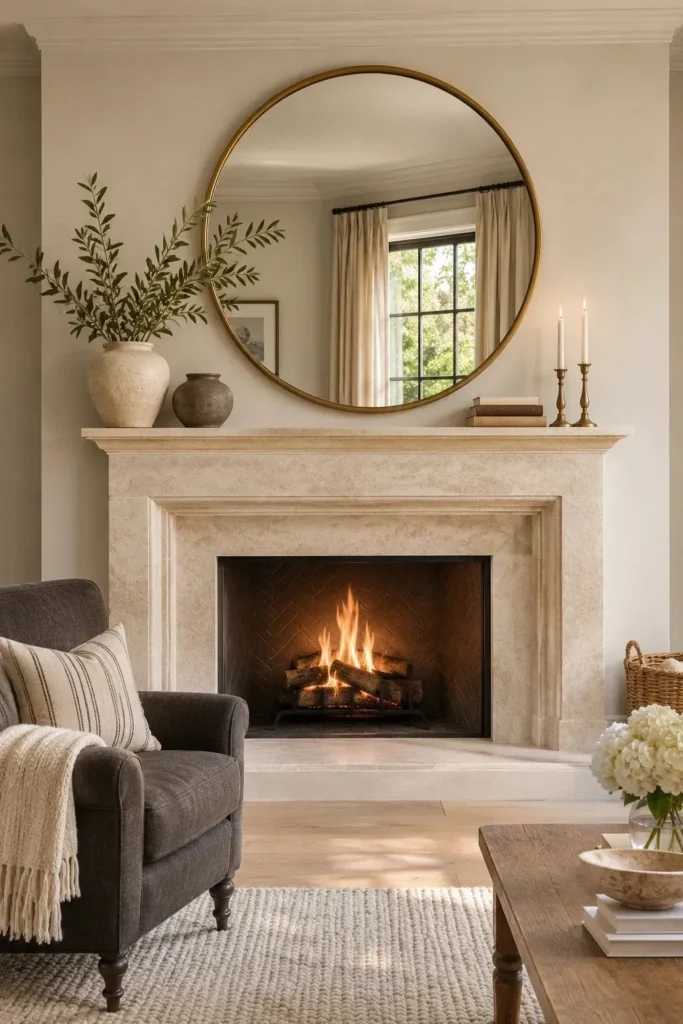
- Break up a wall of straight lines with a round mirror centered above the mantel.
- Choose a diameter smaller than the mantel width so the frame has breathing room on both sides.
- Check the reflection from the sofa before choosing the mounting position. Aim for a window, a favorite artwork, or an uncluttered part of the room.
- Use a thin frame that repeats one existing finish, such as aged brass lighting or black cabinet handles.
- Have the mirror securely mounted with fixings suited to its weight and the wall construction.
A circle softens the strong outline of a rectangular surround while giving the upper wall a clear focal point. Keep objects below the mirror low so they do not clutter its reflection. Follow the fireplace’s clearance requirements and the mirror manufacturer’s placement guidance when deciding on the final height.
19. Tapered Stone Chimney

Quick Tip:
Sloping shoulders give a broad stone chimney a more graceful outline. Have a fireplace professional plan the tapered outer profile around the firebox and flue, keeping the hearth base visually wider than the upper section.
The changing silhouette draws attention upward without requiring a larger firebox. Keep nearby shelves and artwork low so the sloping sides remain visible. It pairs naturally with exposed beams and pitched ceilings, especially when the stone narrows beneath the roof’s highest point and echoes its angles.
20. Reclaimed Limestone Blocks

BEFORE: Even a freshly renovated room can feel short on character. Smooth plaster, crisp trim, and a sharply edged surround leave little variation around the fire.
AFTER: Reclaimed limestone blocks introduce softened edges, uneven coloring, and traces of earlier workmanship. The surround gives clean walls a sense of age while keeping the rest of the room simple.
Request clear photographs and dimensions of every reclaimed piece before agreeing to a layout. Chips can add character, but cracks or mismatched depths may complicate fabrication. Have a stone specialist assess the material, then choose a simple arrangement that allows its worn edges and natural color differences to remain visible.
21. Fireside Reading Nook

- Turn an unused spot beside the stone surround into a place you will linger. Start with a comfortable chair that supports your back.
- Angle the chair toward the hearth while keeping it outside the fireplace’s required clearance area.
- Place a small side table beside the chair for a book and drink. Keep the route into the seat open.
- Position a reading lamp so light falls onto the page without shining directly into your eyes.
Rough stone and soft upholstery create a satisfying contrast at close range. Choose a chair fabric that picks up one quiet shade in the masonry, then add a cushion with a small stripe or check. A dedicated reading light makes the spot useful even when the fireplace is not lit.
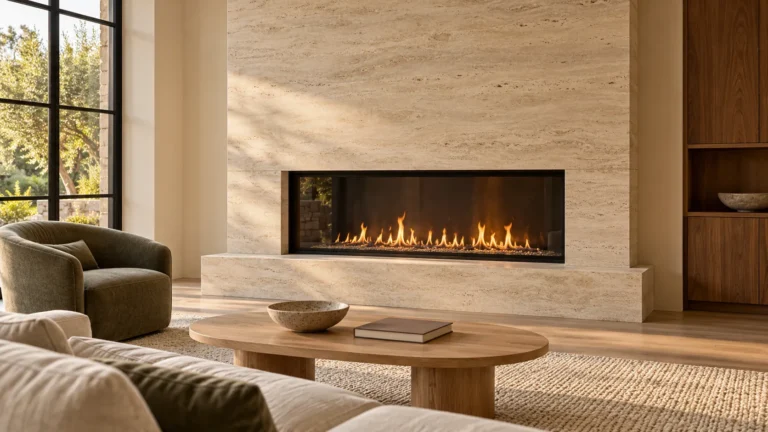
22. Wide Linear Firebox

| Detail | Wide Linear Opening | Compact Square Opening |
|---|---|---|
| Visual emphasis | A long horizontal line | A concentrated central feature |
| Suggested wall proportions | Broad chimney breast or feature wall | Narrower chimney breast or smaller surround |
| Furniture pairing | Long sofa and low rectangular table | Compact sofa and smaller seating group |
| Styling direction | Open, horizontal composition | Contained, framed composition |
A long ribbon of flame can anchor a broad wall without a bulky mantel. Draw the proposed opening to scale before selecting the surround, and compare it with the sofa opposite. Leave enough uninterrupted stone above and below for the opening to feel deliberately framed.
23. Asymmetrical Stone Wall

DO:
- Shift the visual weight to one side with a wider section of stone beside the firebox.
- Balance the opposite side with a low cabinet or a broad piece of wall art.
- Align the stone’s outer edge with an architectural feature, such as a wall return.
DON’T:
- Center every accessory when the larger composition is intentionally uneven.
- Leave a narrow leftover strip of stone at the edge of the wall.
- Let adjacent cabinetry encroach on the fireplace’s required clearances.
An off-center arrangement works when each side has a clear role. Let the stone be the dominant surface and give the quieter side one useful function, such as closed storage. Check the wall from the doorway as well as the sofa, since the balance can change with your viewpoint.
24. Red Sandstone Surround

Color Impact: A warm red surround becomes the room’s main accent.
Palette: Clay red, sandy rose, and muted brown.
Suggested Finish: Matte, with visible tonal variations.
Best For: Earthy modern rooms and Southwestern interiors.
Reddish stone can give a plain room the warmth usually supplied by colorful furniture. Balance it with putty walls and oatmeal upholstery, then introduce muted sage through one chair or cushion. Keep nearby wood finishes neutral, since strongly orange stains can overwhelm the softer variations within the stone.
25. Deep Stone Inglenook

A deep inglenook gives the hearth its own sheltered setting within the room. Frame a recessed firebox with broad stone sides and a substantial lintel, leaving the opening visually uncluttered. The depth creates shadows that make even softly colored masonry feel rich and architectural throughout the day.
Keep the seating outside the recess so the stonework remains easy to see. A simple wool rug and low wooden table support the cottage character without adding competing details. Because this design involves the fireplace enclosure, have a specialist assess the structure, ventilation, and clearances before planning any alterations.
26. Botanical Wallpaper Backdrop

- Let a leafy print give plain stone a softer setting. Choose a background color close to the masonry so the outline stays gentle.
- Match the print’s scale to the wall area. Small branches suit narrow strips, while larger motifs need room to remain recognizable.
- Keep the mantel display limited to one or two simple shapes so the wallpaper remains readable.
- Use wallpaper only on adjacent wall areas where the fireplace’s installation requirements permit combustible finishes.
Wallpaper brings movement to the wall while the stone provides a solid visual anchor. A smooth surround works particularly well with fine botanical lines because the two surfaces offer different kinds of detail. Carry one leaf or branch color into nearby upholstery, then choose a rug with a plain weave.
27. Paired Fireside Chairs

Quick Tip:
Two chairs angled toward each other can make the hearth feel like a destination. Position them beyond the fireplace’s required clearances and leave a clear approach to each seat, with a small table placed where both seats can reach it.
The pair gives a large masonry wall a more human scale, especially in rooms where the main sofa sits farther away. Choose chairs with open arms or slim legs so the hearth remains visible between them. Matching upholstery creates a calm outline; different cushions can add a little personality.
28. Mantel Free Stone Column

BEFORE: A small chimney breast feels crowded beneath an oversized mantel shelf. Layered trim and scattered ornaments interrupt the stone’s outline.
AFTER: A mantel free design leaves one clear vertical surface around the firebox. The pale stone becomes the feature, with the opening supplying a crisp dark accent.
Keep panel joints aligned so the surface feels deliberate from floor to ceiling. Choose stone with gentle markings if the room already contains patterned fabrics or busy shelving. Have a fireplace installer confirm the complete surround design before changing an existing mantel, since its role and installation requirements can vary.
29. Sculptural Ceramic Mantel

- Give a rugged stone wall a softer focal point with three ceramic pieces in different shapes.
- Choose one tall vase, one rounded pot, and one shallow bowl. Keep their colors within a small palette of chalk, taupe, and charcoal.
- Arrange them as one loose group near an end of the mantel, with enough space to see each silhouette.
- Check the arrangement from your usual seat and remove anything that makes the group look crowded.
Smooth pottery stands out against rough masonry because the surfaces catch light differently. Leave the rest of the mantel mostly clear so the grouping has room around it. Choose stable pieces that sit fully on the shelf, and follow the fireplace’s clearance requirements when deciding where decorations can safely go.
30. Carved Stone Corbels

| Detail | Carved Corbels | Plain Stone Brackets |
|---|---|---|
| Profile | Curved scrolls or leaf details | Straight or simply stepped lines |
| Shadows | Fine shadows around carved details | Broad shadows beneath block forms |
| Visual character | Ornamental and traditional | Restrained and architectural |
| Suggested surroundings | Plain walls and simple textiles | Patterned fabrics or detailed wall finishes |
Carved brackets bring a touch of traditional craftsmanship to a simple stone mantel. Choose a restrained scroll or leaf motif, then keep the shelf edge relatively plain so the details remain visible. Confirm with the fabricator which components carry weight and which are decorative before approving the finished surround design.
31. Bookmatched Marble Panels

DO:
- Turn natural veining into the main artwork with a bookmatched pair of marble panels.
- Ask the fabricator to show the actual slabs together before approving their orientation.
- Align the mirrored pattern with the firebox centerline for a deliberate focal point.
- Keep adjacent wall finishes plain so the veining remains easy to follow.
DON’T:
- Assume two similar slabs will produce a mirrored pattern.
- Approve individual slab photographs without seeing the proposed joined layout.
- Place a large mirror or painting over the feature and hide the stone.
The joined panels create a broad symmetrical pattern that can hold attention across a large room. Keep furniture silhouettes simple and choose one quiet color from the veins for upholstery. Since cutting determines where the pattern meets the firebox, approve a scaled drawing that shows every visible seam.
32. Wraparound Stone Cladding

Visual Effect: Every exposed side becomes part of the feature.
Best For: Projecting chimney breasts visible from several viewpoints.
Key Detail: Stone courses that align around corners.
Planning: A front view and side views of the proposed cladding.
Side views matter as much as the main view in an open room. Carry the stone around visible returns, and decide where it will stop before work begins. A clean junction with the adjacent plaster makes the feature look finished from the dining table, hallway, and sofa alike.
33. Stone And Plaster Chimney

Rough stone below and smooth plaster above give a tall chimney breast two distinct textures. Keep their colors close, such as cream limestone beneath warm ivory plaster, so the change feels gentle. A slim stone mantel or a clean horizontal joint can mark where the two finishes meet.
Carry the plaster color onto nearby walls to connect the upper section with the room. Let the lower stone remain visible by limiting mantel accessories and keeping furniture clear of its edges. This combination suits homeowners who want substantial masonry around the fire with a softer, quieter surface above.
Conclusion
The right stone fireplace can bring warmth, balance, and a clear focal point to your room. Whether you love rugged fieldstone or smooth marble, start with the idea that suits your existing space and daily routine. You might refresh the mantel, rearrange two chairs, or begin planning a new surround.
Small styling choices deserve attention, too. Save this post on Pinterest so your favorite details are easy to revisit. Try one idea, see how it feels, and build from there. Share the article with someone planning a cozy room refresh, then take that first step toward a room you love.
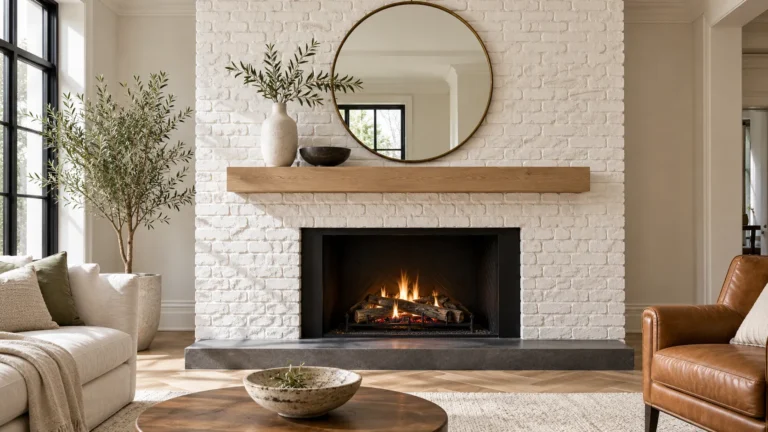
For more fireplace inspiration, explore our corner fireplace ideas, white brick fireplace ideas, and black fireplace ideas.
2 Comments