
Winter Mantel Decor: 35 Polished Ideas Beyond Xmas
The garland comes down, and suddenly the mantel looks twice as long. What belongs there now? One of the simplest winter mantel decor ideas starts with three photos on your phone. Frame the climb up a snowy hill, the sled ride down, and the mittens drying afterward. You have a January display with a story your family knows by heart.
These 35 ideas give you ways to style the shelf you have. On a narrow mantel, a single winter postcard in a wide ivory frame can be enough. On a longer one, a sweep of blue juniper gives the eye a line to follow. Start by looking at the shelf from your usual seat. You’ll have a better feel for where a small detail will show up and where a larger piece belongs.
Bare Birch Branches

Bare birch branches look twice as full when afternoon light throws their shadows across the wall. Set a heavy blue crock at one end of the mantel and choose three stems of different heights. Turn the tallest toward the center so its smaller twigs arch over the open shelf.
For winter mantel decor on a narrow shelf, check that the crock’s base sits fully on the wood. Trim the branches a little at a time, then step back to your usual seat. Leave enough space between the stems to see where each one forks.
Brass Taper Trio

- Let one tall brass candlestick break the straight line of the shelf. Set it just behind the other two.
- Choose ivory flameless tapers in the same shade to give mismatched holders a common detail.
- Stagger the shorter pair so all three brass stems are visible from your favorite chair.
- Gather the trio on one side of the mantel and leave a few inches of bare stone around it.
Brass has a particular charm on gray winter afternoons. Even before you switch on the tapers, the edges of the holders catch what little daylight reaches the shelf. If the arrangement looks flat from the sofa, move the middle holder forward an inch so its outline clears the tallest stem.
Framed Winter Postcard
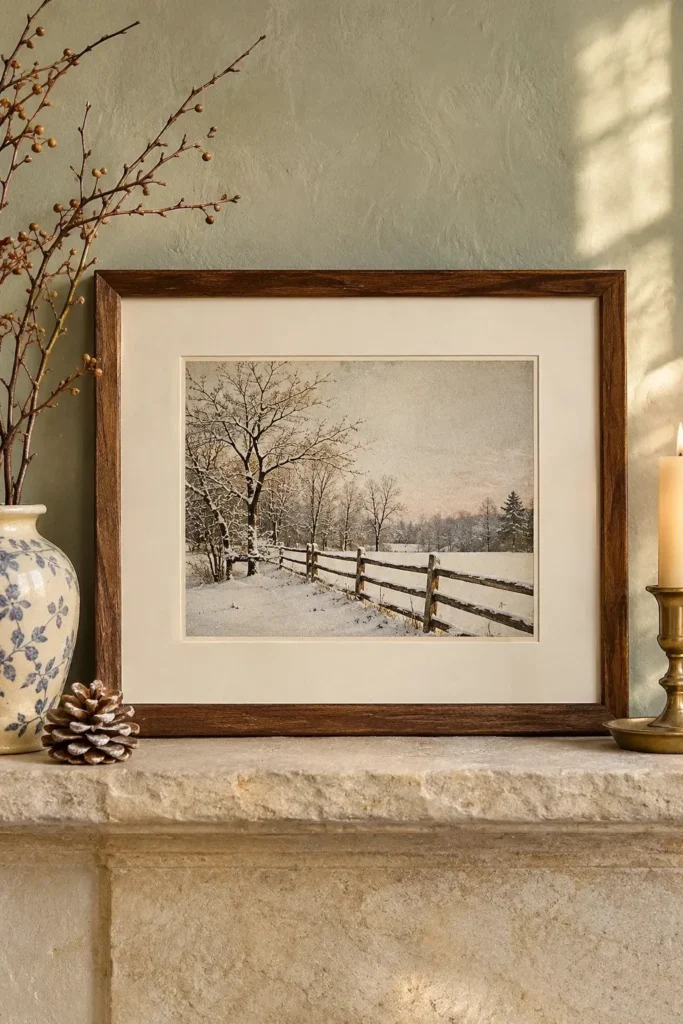
Quick Tip:
Can a postcard hold its own above a fireplace? Give a 4 by 6 inch print an 11 by 14 inch frame with a wide mat so the little scene has room to stand out.
Choose a landscape with a dark detail you can still see from the sofa, such as a fence crossing a snowy field. Match the mat to the palest warm tone in the print. That small shift from bright white to ivory keeps the snow distinct from the paper around it.
Arched Mantel Mirror

BEFORE: From the sofa, the most prominent feature above the fireplace is a long rectangle of blank plaster. A small bowl in the middle of the shelf looks lost against all that height.
AFTER: An arched mirror gives the eye a curve to follow above the straight mantel. From the same seat, bare maple branches now fill the glass, and the bowl sits just below the reflection.
Before choosing a hanging height, have someone hold the mirror against the wall while you sit in your usual spot. A few inches can change the view from a ceiling vent to the tops of the trees. Once you find that view, mark the frame position with painter’s tape.
Pinecone Trough

- Let the pinecones peek over the rim. Choose a shallow wooden trough that fits fully on the mantel so the cones are visible from your seat.
- Set the largest cone just off center with its open scales facing the room. Lay two smaller cones on their sides near the opposite end.
- Tuck a few smooth gray stones beside the cones to keep them from rolling. Leave a patch of wood showing between the two groups.
The contrast shows up best on a gray day. Pinecone scales cast tiny shadows, while the stones catch a soft strip of light. If your shelf is long, resist the urge to fill the trough from end to end. Those glimpses of worn wood are part of the arrangement.
Blue Transferware Plates
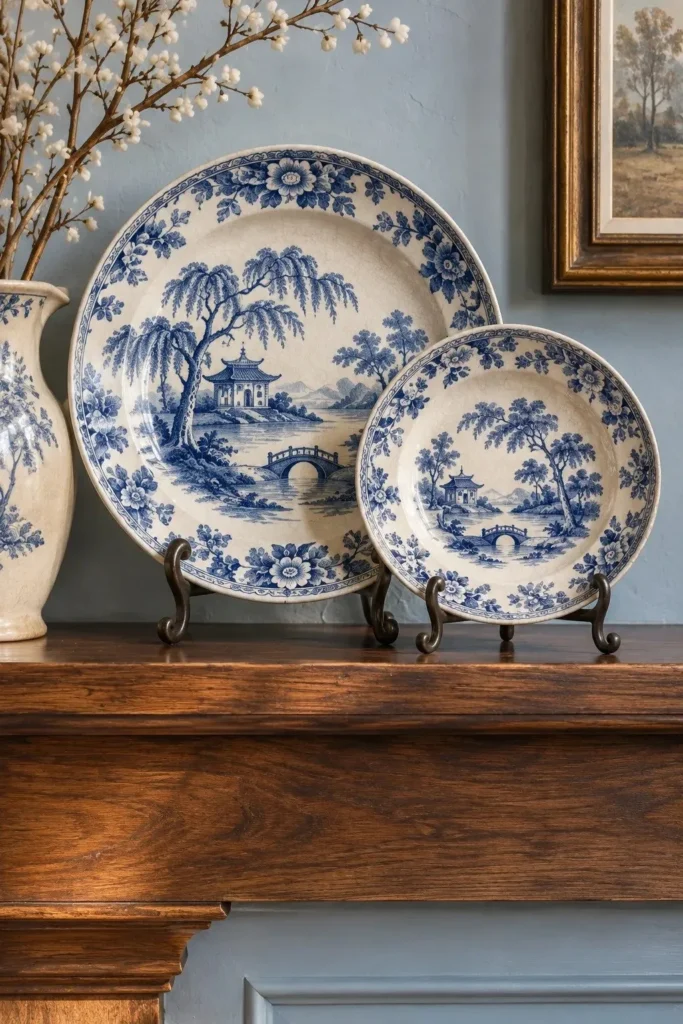
| Design choice | One oval platter | Dinner plate and saucer |
|---|---|---|
| Focal point | A single cobalt landscape reads clearly from the doorway. | Two patterned rims draw the eye across the shelf. |
| Placement | Center the platter on a stand beneath the chimney breast. | Set the saucer slightly forward and to one side of the dinner plate. |
| Best fit | A narrow span of wall where one broad shape can stand alone. | A wider shelf with enough depth for both stands to sit fully on it. |
Blue and white dishes bring a crisp winter palette to the fireplace, and you may already have a piece worth displaying. Pull out the plate you usually save for company and look at it upright. A little bridge or bare tree in the pattern can disappear entirely when the table is set.
Carved Wooden Village

DO
- Give the village a winding street by turning two houses slightly toward each other.
- Place the tallest roof behind a shorter cottage so both silhouettes stay visible.
- Leave a gap wide enough to see the wall between the two groups.
DON’T
- Line up every front door along the same edge.
- Squeeze in another house if it hides a roof you like.
- Cover the bases with imitation snow that conceals the wood grain.
The most convincing detail is the little lane between the houses. From across the room, that sliver of olive wall lets you see where one cottage ends and the next begins. On a short mantel, three houses are plenty. Give each roof a different height and let the lane curve between them.
Chalkboard Snowflakes

Result: One oversized snowflake gives a dark slate board a focal point you can see from the sofa.
Cost: A stick of white chalk if you already own a board.
Time: About ten minutes for three flakes.
Skill level: Beginner. Each flake starts with three intersecting lines.
Draw three lines through a single point, spacing the six arms evenly. Add two short strokes near the tip of each arm to make a little fork. For a softer finish, rub a spare piece of chalk on scrap paper first. The blunt edge gives each line a slightly snowy texture.
Winter Citrus Bowl

On a gray January afternoon, six clementines can carry the whole mantel. Choose a shallow cream bowl so the orange peel shows above the rim, then arrange the fruit in a loose mound. Turn one leafy stem toward the room, where its deep green will stand out against the rind.
A handled serving dish works especially well here because you can carry it back to the kitchen as the fruit gets eaten. Set it on a cool mantel and keep the freshest clementines on top. If your shelf warms up during a fire, use realistic faux citrus instead.
Juniper Garland Sweep

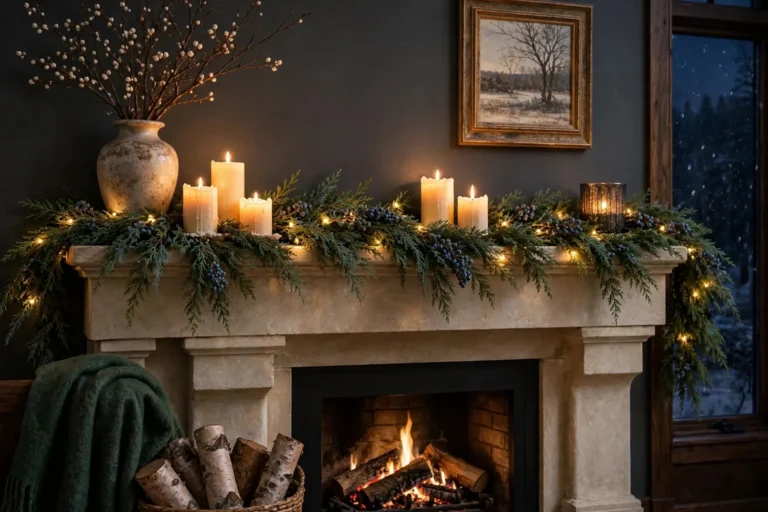
- Give the garland a direction. Place the fullest end near one corner and aim the finer tips toward the middle.
- Turn a few berry clusters toward the room so their dusty blue color shows against the needles.
- Keep the greenery on top of the shelf, with a strip of pale stone visible along the front.
- Leave the far end of the mantel bare so the taper is easy to see.
The shape is easiest to judge from the doorway. If the juniper looks like a straight green stripe, lift one branch near the full end and let the next follow the shelf. That slight change in height makes the individual sprays easier to see, especially against a dark wall.
Framed Cable Knit

Quick Tip:
The best part of an old sweater might be the six inches down the front. Move a paper window over the knit until you find a crop with one complete cable in the center.
Wrap the knit around a piece of backing board and secure the edges on the reverse. Keep the tension loose enough for the cables to stay plump. A deep frame leaves room between the wool and the glass, so each twist casts a small shadow when light crosses the mantel.
Amber Bottle Trio
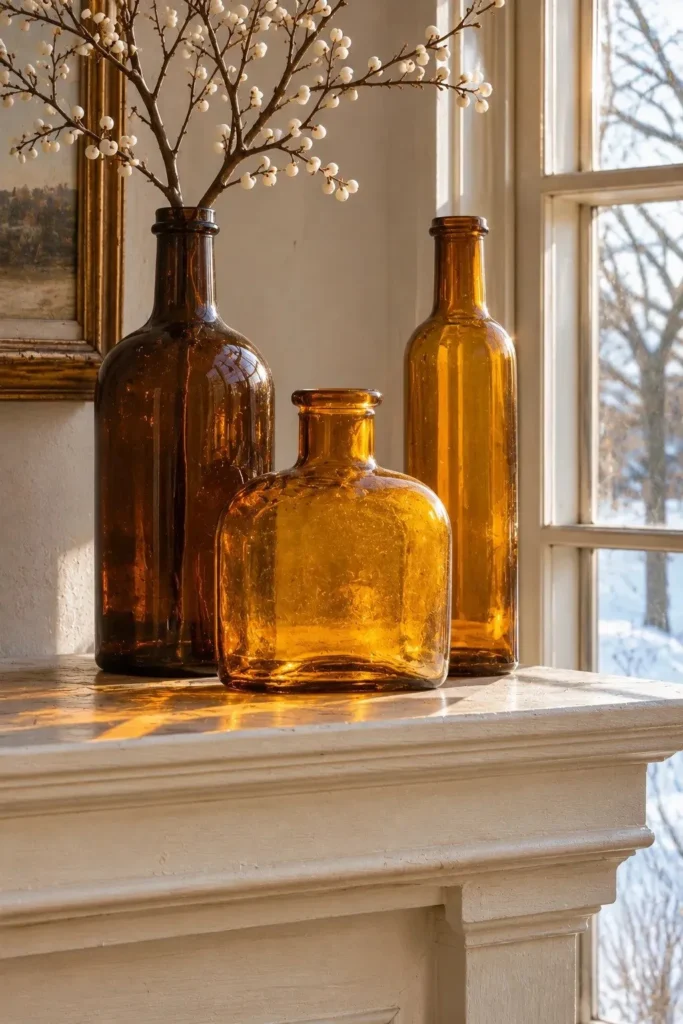
BEFORE: Three brown bottles blend into the dark brick at the center of the mantel. From the sofa, their widest shoulders overlap, and the group reads as one solid shape.
AFTER: At the window end of the shelf, daylight reveals honey and deep copper tones in the glass. The squat flask sits a little forward, with a sliver of pale wall visible between the two taller necks.
Test the arrangement at the hour you spend most often in the room. Morning light may catch one end of the shelf while late afternoon favors the other. If the bottles still look muddy, slip a piece of ivory card behind them to see whether a lighter background brings out their color.
Layered Paper Mountains

- Build a winter ridgeline from three scraps of matte cardstock. Choose slate blue, fog gray, and ivory so the peaks stay distinct when they overlap.
- Cut a different silhouette from each sheet. Give one peak a steep face, another a broad slope, and the third a low, uneven ridge.
- Fold two small cardstock strips into L shapes for each mountain. Tape one side of each strip to the back and rest the flat feet on the shelf.
- Set the darkest peak at the back. Bring the palest ridge forward and shift it sideways until all three summits show.
A little space between the layers does more for this scene than an extra mountain. Start with a finger’s width between each piece, then check the shadows in daylight. On a shallow shelf, even a small gap lets the front ridge cast a fine line across the one behind it.
Marble Bookends
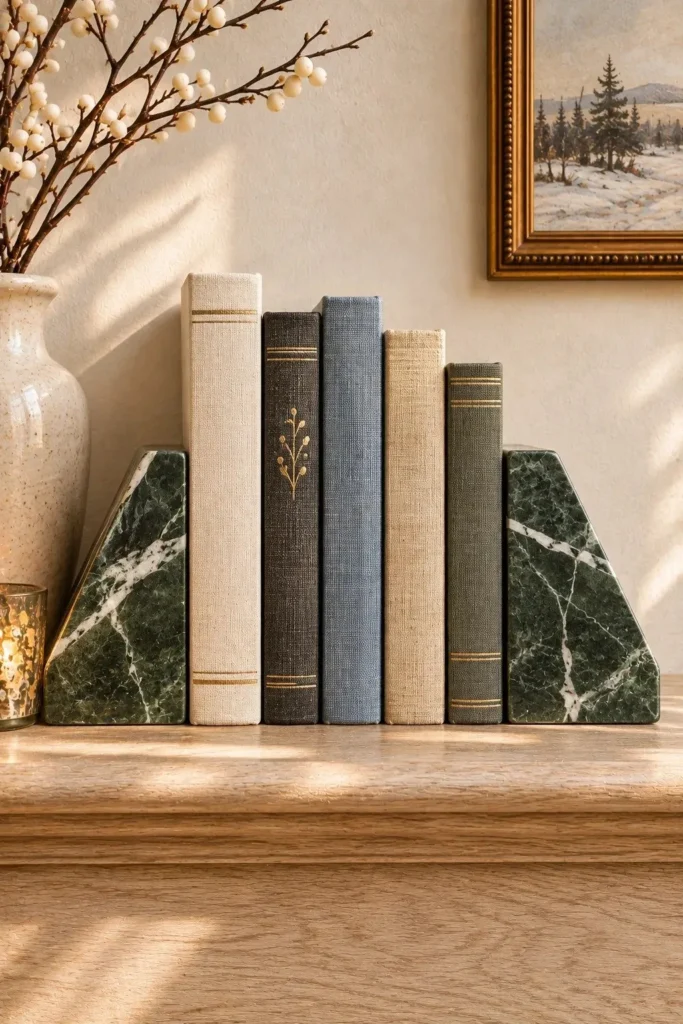
| Design choice | White marble wedges | Deep green marble wedges |
|---|---|---|
| Shelf color | Pale stone stands out on walnut or painted charcoal. | Green gives an oak or ivory shelf a distinct outline. |
| Book colors | Faded navy and charcoal spines pick up gray veining. | Oatmeal linen and cream paper look warmer beside green stone. |
| Placement | Turn the veined faces toward the room so the pattern shows. | Leave a little space beyond each wedge so its shape stays visible. |
Give the books a reason to live on the mantel. A field guide to winter birds, a slim poetry collection, or the landscape book you open on Sundays makes the row feel personal. Check the depth first so both the books and the marble bases sit fully on the shelf.
Dried Hydrangea Cluster

DO
- Let one bloom sit just above the rim so the cluster looks full from the sofa.
- Cut the second stem a little longer to give the arrangement an uneven outline.
- Turn the third bloom until its prettiest patch of faded color faces the room.
DON’T
- Press brittle flower heads together to make them fit a narrow opening.
- Hide all the browned edges, which help define the individual petals.
- Display dried flowers above a fireplace you use for fires.
A mantel over a closed decorative fireplace is a lovely spot for flowers saved from the garden. Before trimming the stems, hold all three blooms together against the wall. Rotate the bunch slowly to find the side where the olive and dusty rose petals show up best.
Ivory Felt Snowballs
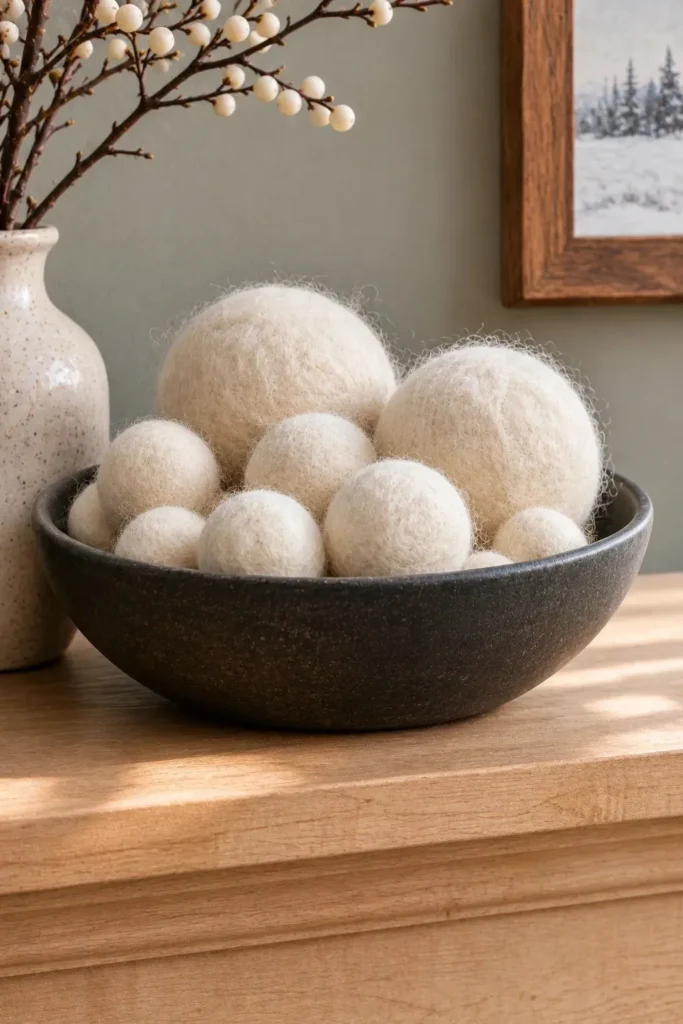
Result: A low mound of wool snowballs gives a dark mantel bowl a soft, wintry outline.
Materials: A shallow bowl and felt balls in two sizes.
Time: About five minutes with ready-made felt balls.
Best for: A mantel beneath artwork where a taller object would block the view.
Place the larger balls first, then tuck smaller ones into the dips. Leave a little of the dark rim showing so the ivory wool has a crisp outline. Check the bowl from your usual seat. If only the rim is visible, add one more ball near the back.
Midnight Blue Panel

That cream pitcher you love can almost disappear against a white wall. For winter mantel decor with more contrast, paint a slim plywood panel midnight blue and hang it behind the pitcher. Leave a border of white wall visible on all sides so the blue reads as a backdrop.
Test the color on a piece of cardboard before buying enough paint for the panel. Set the sample behind the pitcher and look again after the lamps come on. Choose a blue that still looks blue in lamplight, especially if the handle is the detail you want to show off.
Vintage Snowshoe Pair
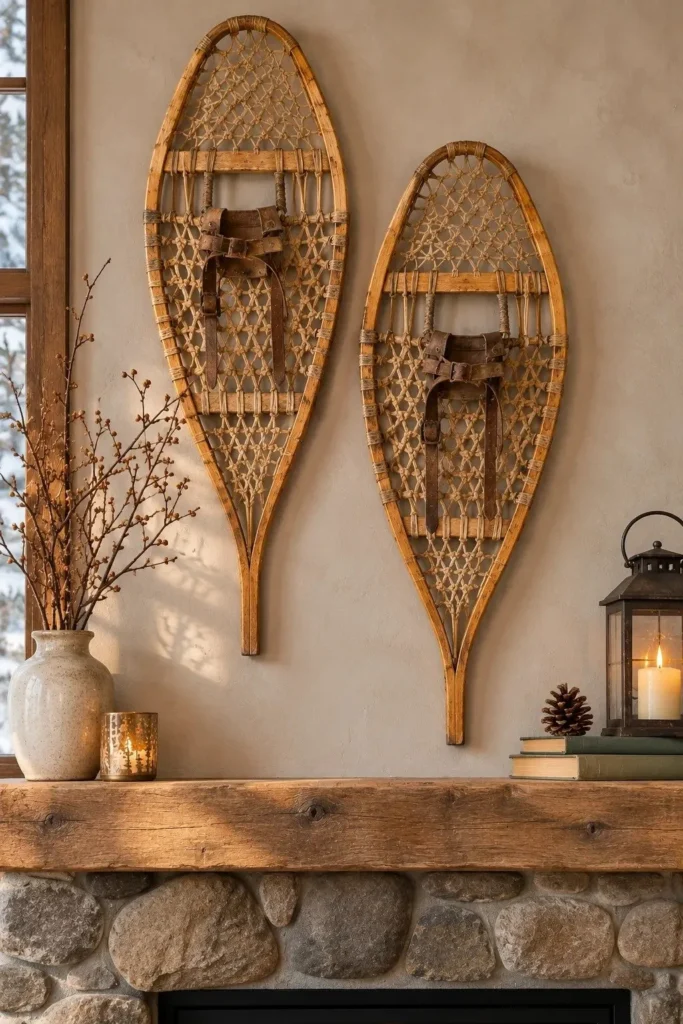
- Let the open lacing do the decorating. Hang the snowshoes where a plain wall can show through the weave.
- Trace both frames onto paper first. Tape the outlines above the mantel to test their spacing from across the room.
- Lift one outline by a few inches so the curved tips sit at different heights.
- Mount each shoe with hooks that support the wooden frame. Keep the old lacing free of tension.
A pair found secondhand may have one darker frame or a patch of repaired webbing. Give that detail the brighter side of the wall, where daylight can pick it out. With the snowshoes hanging above the shelf, there’s still room below for the things you use every day.
Frosted Glass Hurricanes

Quick Tip:
Hide the plastic base of a battery candle behind the frosted part of the glass. Choose a pillar short enough that its light glows through the finish, with the clear rim catching just a glint.
A matched pair works especially well on a long mantel. Set one hurricane near each end and leave the middle open beneath your artwork. At dusk, the two pools of amber light frame the piece. A dim setting keeps the frost visible as a soft white texture even after dark.
Stoneware Chickadees

BEFORE: Two little bird figures face straight out from the shelf. Their beaks barely show from the front, and the markings that make them look like chickadees are easy to miss.
AFTER: Turn one bird sideways to show its white cheek and point the other toward it at a slight angle. The pair suddenly looks like two winter visitors that landed a moment apart.
A scrap of slate makes a good base if the grain of your mantel competes with the markings on the birds. Its flat gray surface brings out their pale bellies. Choose a piece just wide enough for both figures, with a little chipped edge showing at either end.
Paperwhite Bulb Bowl
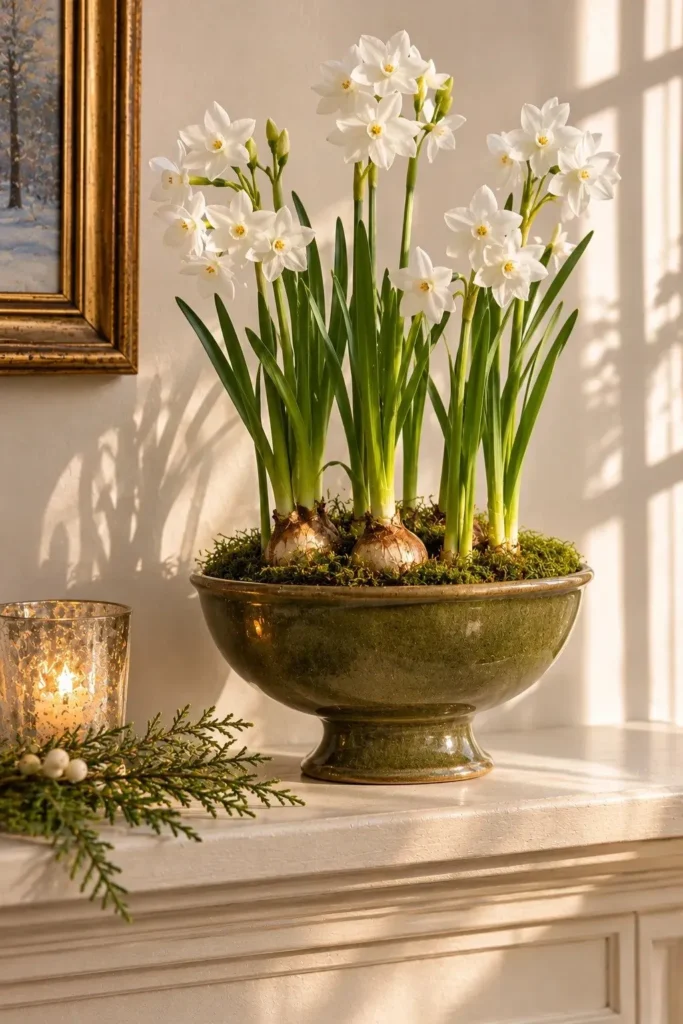
- Start with potted paperwhites in bud so you get to see the white flowers open. Choose a mantel that stays cool and receives bright daylight.
- Slip the nursery pot into a watertight decorative bowl. Pick one deep enough to conceal the plastic rim while leaving the tops of the bulbs visible.
- Turn the bowl until the shortest stems face the room. If a taller stem leans, support it with a slender stake and a loose loop of twine.
- Lift the nursery pot out to water it. Let it drain before returning it to the bowl.
Paperwhites earn their spot on a winter shelf because the arrangement changes a little each morning. Give the stems enough space beneath any artwork for the buds to open without brushing the frame. Once the first cluster blooms, turn it toward the chair where you have your morning coffee.
Tartan Mantel Runner

| Design choice | Charcoal and oat tartan | Navy and forest green tartan |
|---|---|---|
| Mantel finish | Dark checks define the edge of a white shelf. | Blue and green bring cool color to honey oak. |
| Accent piece | A cream jug picks up the pale stripe in the weave. | A pewter dish catches the light against the darker wool. |
| Pattern scale | Small checks stay visible in a narrow fold. | A wider fold shows the full pattern of a large plaid. |
On a decorative fireplace, a folded scarf can do the work of a runner. Use one woven stripe as a guide to keep the front edge straight. Before setting anything on top, tuck the fringe underneath at both ends so the plaid has a clean finish.
Brass Moon Mobile

DO
- Give each moon a little dark wall around it so its outline is easy to read.
- Hang the pieces at different heights, with the lowest one off center.
- Choose a brushed finish if a nearby lamp reflects sharply in polished brass.
DON’T
- Crowd the shapes so closely that they touch when the air moves.
- Hang the crescent edge-on where its curve disappears from view.
- Place a tall object on the shelf directly beneath the lowest piece.
Switch on the lamp you usually read by and watch where the shadows fall. On a long winter evening, the shadow of the crescent can be as distinct as the brass itself. Leave that patch of wall clear so you can see both curves from your chair.
Moss Under Glass
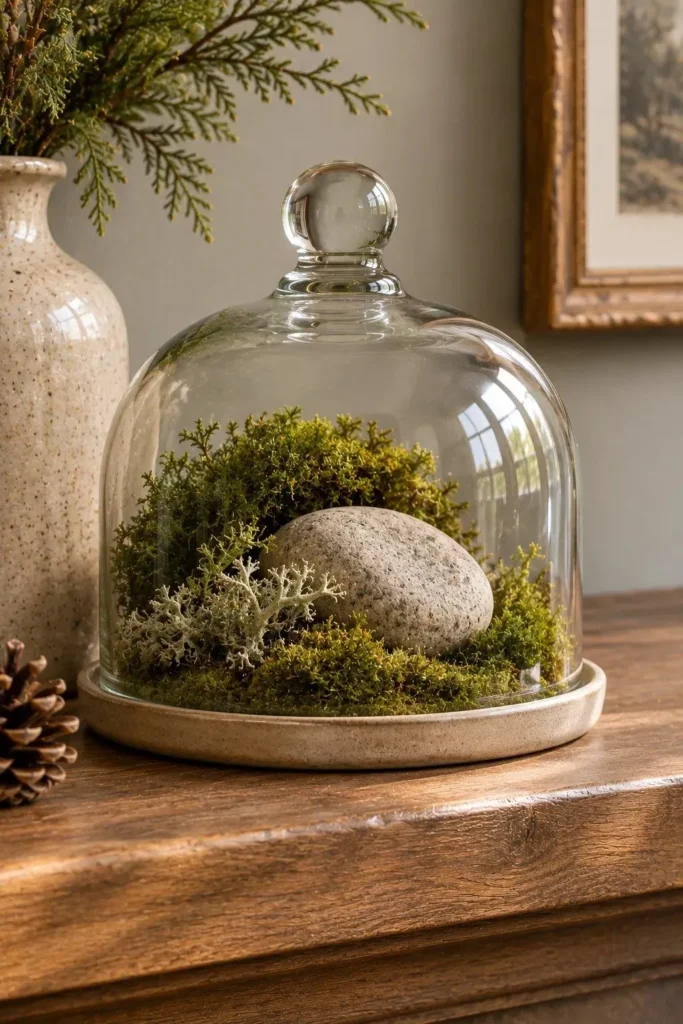
Result: A palm-sized woodland scene with one pale stone rising above a cushion of green.
Materials: Preserved moss, a smooth stone, a saucer, and a glass cloche.
Time: About ten minutes to arrange.
Best for: A narrow mantel where one close-up detail suits the scale of the shelf.
Set the stone slightly off center and press the moss around its base in small tufts. Leave a strip of the saucer visible along the front so the green edge has a clear outline. Lower the dome last, checking that the tallest tuft sits clear of the glass.
Family Snow Photos

A crooked sled track in a family photo tells you something a pristine snowscape can’t. Choose three snapshots from one outing, perhaps the climb uphill, the ride down, and the heap of mittens afterward. Print them in black and white at the same size so they read as a sequence.
Use matching frames and crop each picture around one detail you want to remember. Keep the sled rope in the uphill shot, even if it means leaving a little extra sky. Set the pictures in order along the shelf so someone walking past can follow the afternoon from left to right.
Graduated Pewter Cups
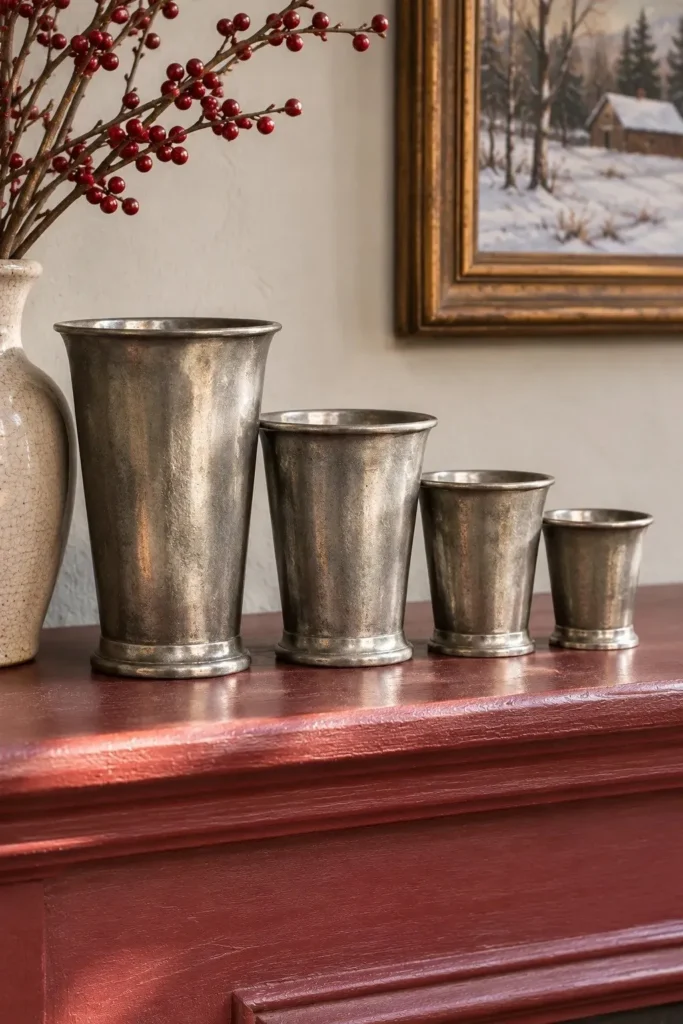
- The rims make the pattern here. Set the tallest cup at one end and arrange the others in descending height.
- Leave a finger’s width between cups so each curved lip remains visible.
- Turn a maker’s stamp or an engraved initial toward the room. It gives the eye a detail to linger on.
- Keep the cups empty so daylight can pick out the elliptical shape of each opening.
Matching sets are optional. A thrifted egg cup can stand in for the smallest measure, and a pewter creamer makes a handsome tall end. What holds the row together is the repeated glint along the rims. On a dark painted mantel, that fine silver line shows up even on an overcast morning.
Split Quartz Geode
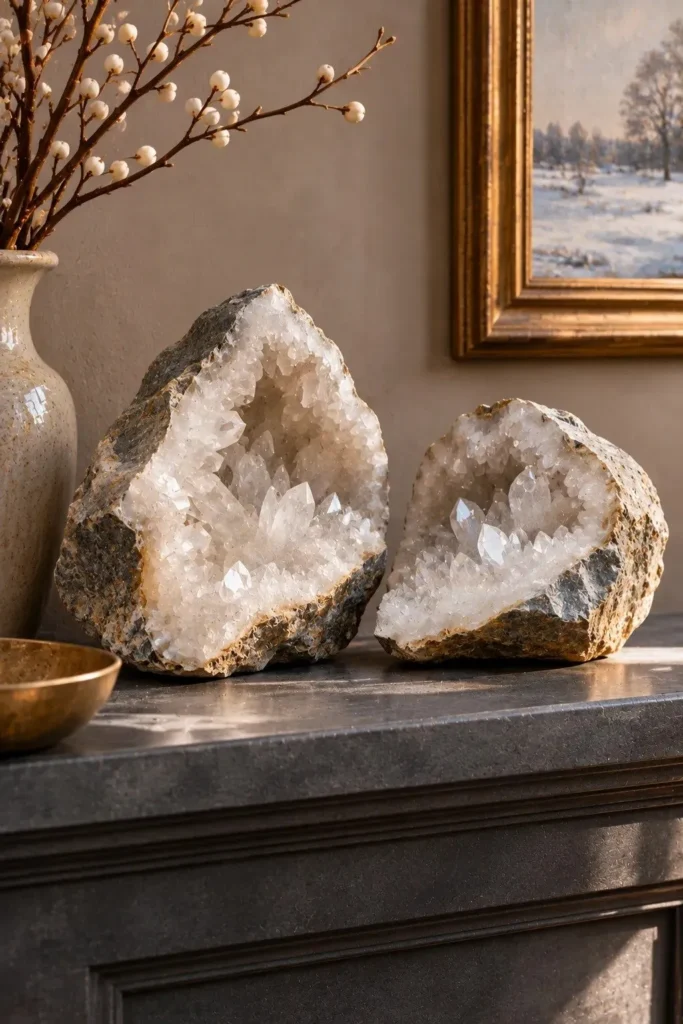
Quick Tip:
A quarter turn can change which crystals catch the light. Set both geode halves on their stable sides, then rotate one toward the window until a few points glint from your usual seat.
Keep the halves close enough that you can see where their uneven edges once fit together. A palm-sized geode works well on a short shelf because its rough shell and bright interior give you two textures in one object. Dark wood or slate makes the pale crystals especially easy to see.
Woven Winnowing Basket

BEFORE: Three small ornaments are spread across a long mantel, but none catches your eye from the doorway. Their outlines disappear against the pale wall.
AFTER: Hang a broad, shallow basket above the shelf and keep just one low ornament beneath it. The round rim breaks up the straight lines of the fireplace, while the willow brings warmth to the dark green paint.
Before choosing a basket, cut a paper circle the same diameter and tape it above the mantel. Sit where you usually read and check how much wall shows around the rim. A generous border makes the woven pattern easier to appreciate, particularly where side light catches the raised strands.
Miniature Skating Pond

- Turn an oval mirror into a frozen pond by laying it flat on the shelf. Choose one shallow enough that its frame sits fully on the wood.
- Place three or four small pebbles along one curve to suggest a bank. Leave the opposite edge open so the glass catches the light.
- Set two model skaters slightly apart. Point one along the curve and turn the other toward the middle, as if their paths are about to cross.
- Look at the pond from sitting height. Move the figures until you can see a little reflected color beneath each coat.
The open patch of mirror is what makes the scene feel like a pond. Once the skaters are in place, leave enough room for them to appear to glide. A tiny figure in a red scarf shows up particularly well because you see the scarf twice, once above the ice and once in its reflection.
Brass Picture Light

| Design choice | Frame-mounted light | Wall-mounted light |
|---|---|---|
| Best fit | A sturdy frame that can support the fixture. | A favorite mantel display with a settled position. |
| Placement | The light moves with the frame when you rearrange the shelf. | The light stays in place when you swap artwork beneath it. |
| Detail to check | The clamp fits the frame without covering the drawing. | The arm reaches far enough to cast light down the face of the artwork. |
A pencil drawing can fade into the background just when you settle in for a winter evening. Aim the light with someone seated across the room. Adjust it until they can see the finest marks on the paper without a bright reflection crossing the part of the drawing they like best.
Walnut Mantel Clock

DO
- Let the clock face be the first detail you notice. Give the numerals a clear sightline from your favorite chair.
- Turn the case slightly if a window reflects across the dial.
- Leave room above a curved or stepped case so you can see its outline.
DON’T
- Crowd the clock with objects that reach the same height as the dial.
- Place it at the deepest part of the shelf if the mantel lip hides its feet.
- Block the rear door if you need to reach it for winding or adjustments.
On a dark winter afternoon, check the dial with your usual reading lamp switched on. A small shift along the shelf may be enough to carry light across the face. That’s the right spot if you can glance up from a book and tell the time without leaning forward.
Indigo Quilt Star

Result: An indigo quilt star gives a plain chimney breast a crisp pattern that recalls a snowflake.
Materials: One finished quilt block or miniature quilt and a wooden quilt hanger sized to fit it.
Best for: A decorative fireplace with little shelf depth.
Detail to check: All eight points show beneath the hanging rail.
Choose a block with a plain border wide enough for the hanger to grip without covering the star. Slight differences between the blue patches are worth keeping. A faded point beside a darker one lets you see how the pieces were sewn together, even from the other side of the room.
Hammered Copper Kettle
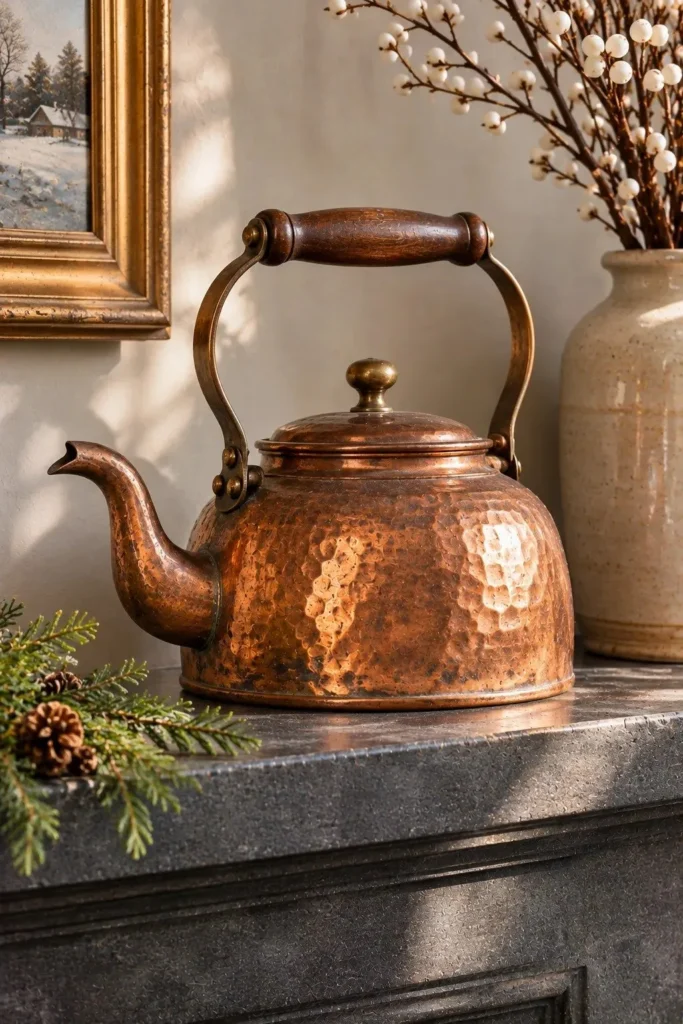
A copper kettle comes into its own on a gray January afternoon. The hammered shoulders catch the window light while the belly stays a deep russet. Turn the spout sideways so its curve shows against the wall, then raise the handle to give the squat shape a little height.
An old kettle can keep its patina. Wipe away dust and leave the darker patches around the rivets, where they show how the handle joins the body. If your mantel is narrow, measure the base before buying. A small kettle that sits fully on the shelf needs only its own patch of daylight.
Alpine Ski Pennant

- Let the triangle lead the eye along the mantel. Hang the wide end near an outer corner and point the tip toward the center.
- Choose a pennant with a place name you recognize. A souvenir from a favorite ski hill gives the display a story.
- Use small display clips along the wide edge and support the tip separately so the felt lies flat.
- Keep the shelf beneath the lettering clear. A tall object can hide the name when you look up from a chair.
Faded felt often has several shades worth picking up elsewhere on the mantel. If the stitched lettering has aged from white to cream, set an ivory mug near the wide end of the pennant. The colors will relate, and the pointed end will still have room to stand out.
Dried Lunaria Wreath

Quick Tip:
Hold the wreath against the wall before placing the hook. Move it toward the window until a few lunaria discs catch the light and you can see the fine lines down their centers.
If you make the wreath yourself, wire the stems to the ring in small bunches, leaving some of the vine visible. Handle each stem below the discs to protect their fragile edges. Against a blue or charcoal wall, even a sparse ring has enough contrast to carry the mantel on its own.
Conclusion
Start with the end of the shelf that catches the afternoon light. An amber bottle placed there can cast a patch of gold across the wood. Finding details like that is part of the pleasure of winter mantel decor, and you can try it with something you already own.
Save this post on Pinterest so your favorite arrangements are easy to find when the holiday boxes are packed away. Share it with a friend who’s wondering what to put above the fireplace in January. Then choose one idea you’d love to come home to and give it a place on your mantel.


2 Comments