
White Brick Fireplace: 32 Stunning Ideas to Add Depth
The little shadows between the bricks might be your fireplace’s best feature. A white brick fireplace gives warm wood, soft lighting, and carefully chosen colors a bright backdrop to stand against.
If your fireplace feels flat, bare, or disconnected from the furniture, start with one detail: a darker frame, a warmer mantel, or a lamp that brings out the brick’s uneven surface.
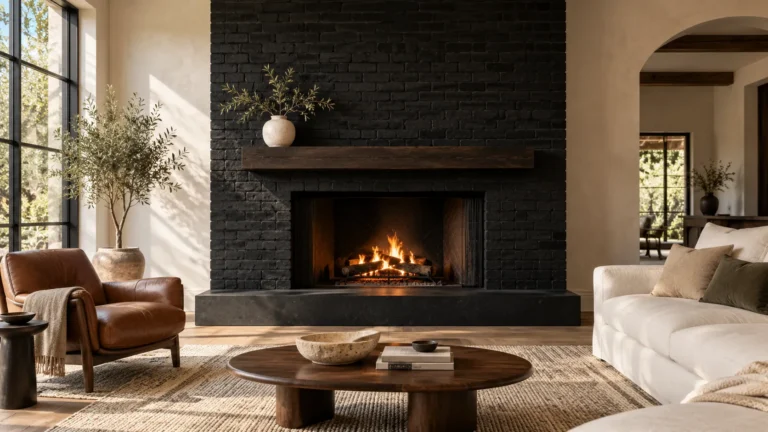
These 32 ideas cover mantel styling, hearth patterns, paint pairings, and room layouts. You will find simple updates to try with pieces you already own, alongside larger changes to discuss with a fireplace professional. Save the looks that suit your home, then choose one detail to begin with. If you prefer a sleeker look, explore these modern fireplace ideas for contemporary designs. Prefer the opposite mood? These black fireplace ideas show how dramatic the same brick texture can look.
Natural Oak Mantel

A natural oak mantel gives a white brick fireplace a warm focal point without hiding the masonry. Choose a simple beam with visible grain and a neutral finish. Its projecting edge casts a gentle shadow across the brick, making the painted surface feel less flat.
Repeat the oak tone in a nearby chair or coffee table, then keep mantel accessories sparse. A tall ceramic vase and one shallow bowl leave enough empty space to appreciate the grain. Before installing a wood mantel, confirm the required clearances for your particular fireplace.
Matte Black Accents

- Give pale brick a sharper outline with a slim black metal fireplace screen. Choose a design suited to your fireplace opening.
- Repeat the finish in one picture frame above the mantel. A simple profile keeps the brick texture visible.
- Carry a small black detail into the seating area, such as a charcoal striped cushion, to connect the fireplace with the room.
- Leave white space between dark accessories. A crowded row of black objects can make the mantel feel heavier than intended.
Black accents give your eye a clear path around a pale fireplace wall. The trick is spacing: let each dark detail stand against something light. In a small living room, a screen and one matching frame may be enough. Add more only if the arrangement still feels airy.
Oversized Arched Mirror

Quick Tip:
Does the wall above your mantel feel unfinished? Tape an arched paper template in place to check proportions, leaving visible brick on both sides. Secure the chosen mirror with fixings suited to its weight and your wall.
The curved top softens the brickwork’s straight lines, while the reflection adds another view within the room. Choose a narrow frame so the mirror stays visually light, and keep the mantel below mostly clear. Position it to reflect a window or favorite artwork from your usual seat.
Warm Greige Walls

BEFORE: All that white can make the fireplace outline disappear. When the surrounding walls and painted masonry look nearly identical, the room may feel flat even with plenty of texture.
AFTER: Warm greige walls give the white surround a distinct edge. The gentle contrast draws attention to the brickwork without turning the fireplace wall into a bold color statement.
Compare two or three greige samples beside the brick before committing. Check them in daylight and under your evening lamps, since the same shade can read differently across the day. Choose the sample that complements your existing white finish, especially if it has a creamy undertone.
Layered Landscape Artwork
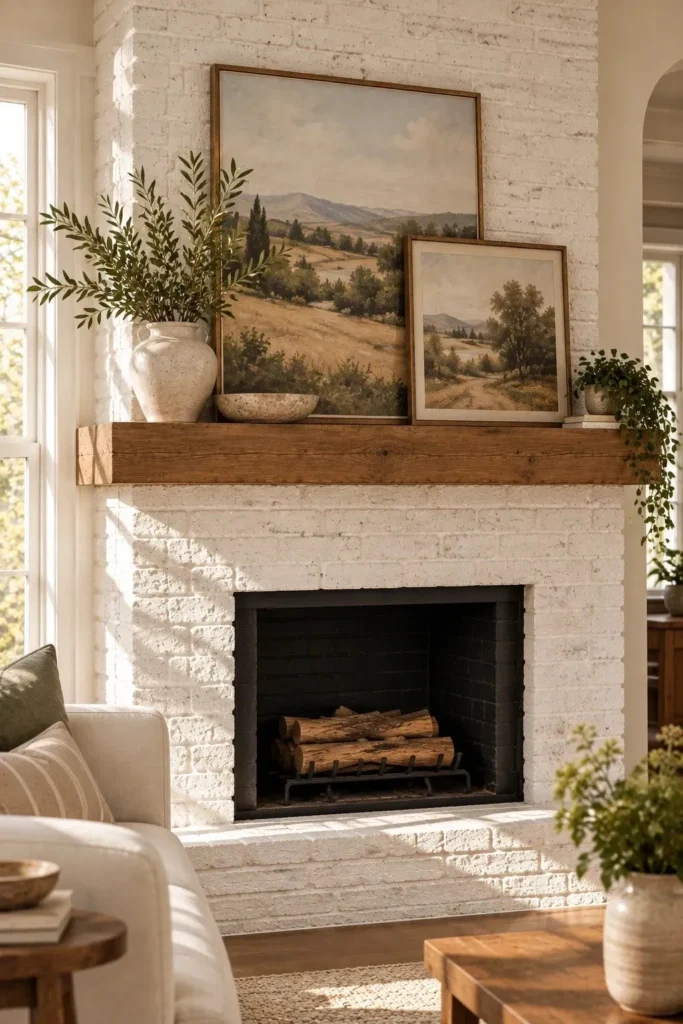
- Let a landscape painting bring a view to an otherwise blank fireplace wall. Choose a larger piece with two or three colors already present in your room.
- Place a smaller artwork slightly in front and to one side. Keep the overlap near the frame edge so both scenes remain readable.
- Pair frames with a shared detail, such as natural wood or a narrow profile. They do not need to match exactly.
- Secure the artwork with suitable hardware, keeping it outside the fireplace’s required clearance area. Finish with one low bowl on the opposite side.
From the sofa, tiny frames can disappear against textured brick. Start with a larger piece, then use the smaller artwork to create a second visual layer. Leave some mantel surface empty so the arrangement feels intentional. A pair of inexpensive landscape prints can achieve this look without original paintings.
Green Built-In Shelves

| Design Detail | Sage Green | Forest Green |
| Contrast with white brick | Soft and subtle | Strong and defined |
| Overall mood | Light and relaxed | Cozy and dramatic |
| Shelf accessories | Pale oak and white pottery | Cream pottery and brass details |
| Surrounding wall colors | Warm white or pale greige | Cream or muted taupe |
Green shelving makes pale brick stand out before you add a single accessory. Test your preferred shade beside the brick and flooring before painting. Keep the shelf contents lighter than the backing, and leave gaps between groups. Too many dark objects can disappear against a deep green background.
Herringbone Hearth Tiles

DO
- Draw attention downward with narrow rectangular tiles arranged in a herringbone pattern.
- Use a grout color close to the tile for a quieter finish.
- Have your installer confirm that the tile and setting materials are suitable for your hearth.
DON’T
- Do not assume hearth tiles or adhesives are suitable for the firebox.
- Avoid combining a busy hearth with an equally busy mantel display.
- Do not finalize the layout until you have checked cuts along every exposed edge.
The diagonal layout breaks up the brickwork’s horizontal lines, giving the fireplace a second layer of pattern. Keep both surfaces in related shades so the change comes from direction and texture. Before ordering, lay out a sample section on the floor to judge the scale from your usual seat.
Paired Brass Sconces

Result: Side lighting brings out the brick’s texture after sunset.
Finish: Brushed or aged brass for a softly reflective accent.
Best For: Fireplaces with little room for mantel lamps.
Placement: One fitting on each side of the upper brickwork.
Choose sconces that cast light across the brick rather than straight into the room. Shaded bulbs help keep glare out of your eyes when seated. Check the fixture size with paper templates before buying, and have an electrician assess wiring and mounting needs before you commit to their placement.
Soft Blue Accents

Dusty blue gives pale masonry a gentle color contrast without making the room feel busy. Start with two cushion covers in different textures, such as linen and cotton weave. Keep their blues similar, then let the brick remain the brightest surface in the seating area.
Repeat the color once more in a striped chair or a small artwork across the room. That repetition connects the fireplace to the furniture instead of leaving it visually isolated. For an inexpensive seasonal update, change cushion covers first and judge the effect before buying larger pieces.
Tonal Ceramic Display

- Texture does the decorating when pale ceramics have different silhouettes. Choose pieces with clearly contrasting shapes.
- Build a group of three with one tall pitcher, one medium vase, and one low bowl. Let their uneven heights create a small skyline.
- Mix chalk white, ivory, and sand instead of trying to match every piece to the brick.
- Place a ribbed or handmade vessel beside a smoother piece so texture supplies the contrast.
- Group the ceramics toward one end and leave the opposite end open. Avoid spreading small objects across the entire shelf.
White objects need shadows and edges to remain visible against pale masonry. Look at the arrangement from across the room, where subtle differences can disappear. If two pieces merge visually, separate them or replace one with a warmer shade. Thrifted pottery works well when the shapes feel distinct.
Low Hearth Bench

Quick Tip:
Stretch the fireplace’s visual width with a long, low brick hearth. On an existing raised hearth, clear the surface so its horizontal line reads clearly. Have a fireplace professional assess any proposed bench extension for safety and structural support.
The long horizontal edge balances a tall chimney breast and draws attention to the room’s width. Keep the brick finish consistent across the fireplace and bench for a connected look. Only sit on a hearth designed to support seating, with the fireplace off and all surfaces completely cool.
Woven Texture Layers
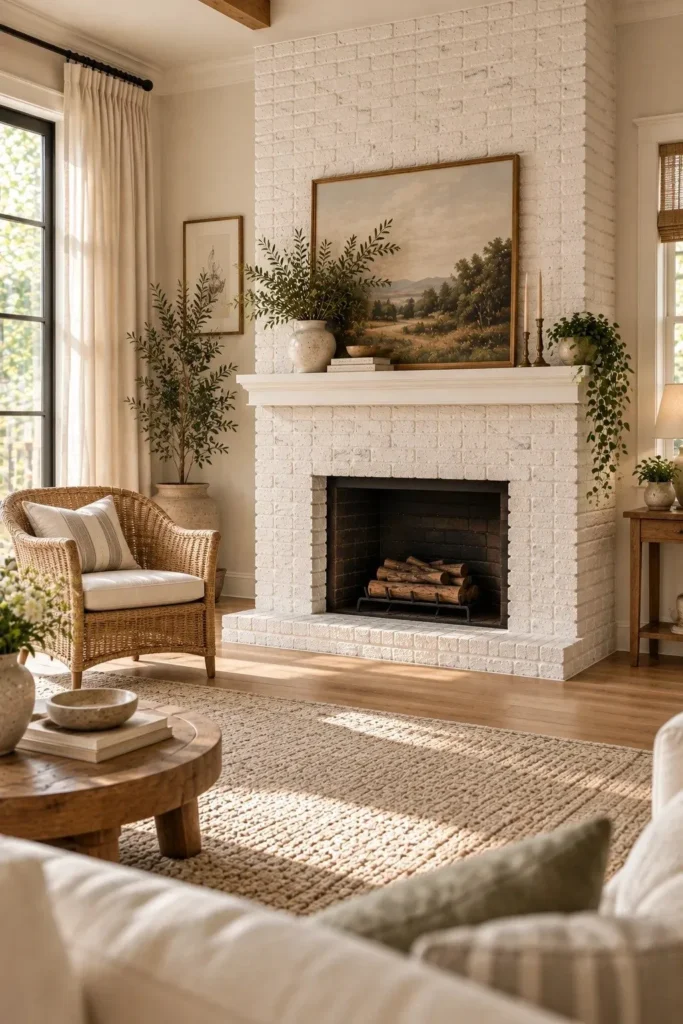
BEFORE: Does the room still feel chilly after the brick turns white? Smooth furniture and bare windows can leave the seating area looking sparse, even when the fireplace itself has plenty of texture.
AFTER: A woven chair, linen curtains, and a textured rug introduce softer surfaces around the masonry. Their different weaves make the room feel more layered without requiring another strong color.
Start with one woven element large enough to notice from the doorway, such as a rattan armchair. Then repeat its warm tone in a smaller detail across the room. Keep textiles and baskets beyond the fireplace’s required clearances. The goal is texture around the seating area, with the hearth clear.
Floor-to-Ceiling Brick

- For a stronger vertical focal point, mark the proposed brickwork’s edges with painter’s tape. Check the outline from the doorway and your usual seat.
- Choose brick or brick veneer with dimensions and surface texture that complement the existing surround. Compare physical samples before ordering.
- Keep the upper and lower areas the same white so the whole surface reads as one continuous feature.
- Have a qualified installer confirm the underlying wall, support, and installation method before extending the masonry.
A continuous column of brick gives the eye a clear path upward, making the fireplace feel more prominent within the room. Leave the upper section mostly undecorated so its height remains noticeable. For a vaulted ceiling, sketch how the brick would meet the slope before choosing the final outline.
Charcoal Stone Hearth

| Design Detail | Pale Stone | Charcoal Stone |
| Contrast with white brick | Gentle transition between surfaces | Strong outline beneath the masonry |
| Relationship to a black firebox | Leaves the opening as the darkest feature | Repeats the dark tone across the base |
| Effect beside pale flooring | Blends into the surrounding palette | Clearly separates the hearth from the floor |
| Overall appearance | Light and understated | Bold and graphic |
A dark hearth gives white masonry a defined base, particularly when the surrounding floor is pale. Hold a charcoal stone sample beside both the brick and flooring before choosing it. Ask your installer to confirm hearth suitability, then favor a simple edge that lets the color contrast stand out.
Recessed Firewood Niche

DO
- Turn a separate storage alcove into a texture feature by facing the cut log ends toward the room.
- Choose logs of similar length so the stack stays behind the niche’s front edge.
- Confirm that the alcove sits outside all required combustible clearances before storing wood.
DON’T
- Do not carve storage into an existing chimney or fireplace structure without professional assessment.
- Do not overfill the niche; leave enough room to remove a log without shifting the whole stack.
- Do not let stored wood block vents, controls, or inspection access.
The irregular rings and rough bark add a natural pattern that painted brick cannot supply on its own. A recessed stack also creates shadows within the wall, giving the fireplace area more dimension. Keep the rest of the display simple so the log ends remain the main detail.
Soft Limewash Finish

Result: Original brick becomes part of the decoration.
Finish: Flat white with softly distressed areas.
Ideal Base: Unpainted, unsealed, absorbent masonry, subject to product instructions.
First Step: A small sample to check coverage and dried color.
A limewashed white brick fireplace gains depth from subtle variation and glimpses of the original masonry. Keep the worn areas scattered rather than outlining every brick. Test your preferred coverage on a small section first. For previously painted brick, ask the finish manufacturer about surface preparation and compatibility before buying.
Mantel-Free Brickwork

Without a projecting shelf, the brick itself becomes the main detail. A mantel-free surround suits a room where furniture, artwork, and window frames already create plenty of lines. Keep the masonry finish consistent and let the recessed firebox provide the strongest contrast against the pale surface.
Balance the simple fireplace with a rounded coffee table or curved chair across the seating area. Those softer shapes prevent the straight brick courses from making the room feel rigid. If removing an existing mantel, have its fixings and the surrounding masonry assessed before work begins.
Oversized Floor Greenery

- Soften the brick’s straight lines with one generously sized floor plant. Choose a shape with visible stems and an open canopy so the room still feels spacious.
- Position it near suitable natural light, outside the fireplace’s required heat clearances. Leave a comfortable route through the room.
- Select a planter in sand, clay, or warm gray to connect the greenery with the room’s neutral finishes.
- Raise the plant on a stable stand only if its leaves disappear behind nearby furniture.
- Protect the floor with a watertight saucer or an outer pot, and empty collected water after watering.
For a balanced arrangement, judge the plant’s outline from the sofa rather than from directly beside the pot. The leaves should frame the fireplace without covering its edges. If the corner receives little light, choose a realistic artificial plant instead of repeatedly replacing one that struggles there.
Vintage Mantel Clock

Quick Tip:
Could one vintage clock replace a row of small ornaments? Choose a case that leaves visible brick on both sides, then check that its dial is readable from your usual seat. Keep nearby accessories lower than the clock face.
The dark case creates a clear silhouette against pale brick, while the curved top interrupts the masonry’s straight lines. Look for a clock with a simple dial if the room already has patterned fabrics. An ornate case needs more empty mantel space to let its carved details stand out.
Paneled Side Walls

BEFORE: Two bare stretches of wall can make the fireplace feel disconnected from the rest of the room. The brick has texture, but the surrounding surfaces offer little visual structure.
AFTER: Shallow wall panels give each side a defined outline that frames the fireplace. Painted to match the walls, their smooth borders add detail without competing with the brickwork.
Map the panel outlines with painter’s tape before buying trim. Keep them outside the fireplace’s required clearances, and align their top edges. Paint the trim and walls the same warm white for gentle shadow lines. The smooth panel borders give the rough brick a quieter backdrop.
Terracotta Color Accents

- Warm up the white surround with one terracotta accent, such as a clay colored cushion on the nearest sofa.
- Repeat the tone in a small ceramic vessel on a side table. Vary the surface texture so the pieces feel related without matching exactly.
- Pair the earthy orange with oatmeal, cream, or tan so it connects with existing neutral pieces.
- Stop at two or three accents and view them from the doorway. The white masonry should still be the brightest feature.
Muted terracotta works especially well when the brick’s white finish has a creamy undertone. If your fireplace reads cooler, compare a dusty clay shade with a brighter orange before committing. Small fabric and pottery accents make this palette easy to test, and you can move them between rooms later.
Arched Brick Opening

| Design Detail | Rectangular Opening | Arched Opening |
| Top edge | Straight and horizontal | Softly curved |
| Relationship to brickwork | Repeats the horizontal mortar lines | Introduces a contrasting rounded shape |
| Suggested styling | Simple profiles and tailored furnishings | Cottage details and softly shaped furniture |
| Main visual feature | Width and proportions | Curve and surrounding brick arrangement |
An arched opening makes the firebox a decorative feature even when no fire is burning. Keep nearby artwork and accessories simple so the curve stays noticeable. For an existing masonry fireplace, have a specialist assess structural support and draft before changing the opening’s shape or dimensions.
Angled Accent Chairs

DO
- Angle two chairs inward so the fireplace becomes part of the conversation area.
- Choose chairs with open arms or raised legs to leave more of the brickwork visible.
- Keep every part of the chairs outside the fireplace’s required combustible clearances.
- Leave a clear walking route behind or between the chairs.
DON’T
- Do not force matching chairs into a corner that only comfortably fits one.
- Avoid chair backs that obscure the brickwork from your main doorway.
- Do not squeeze a side table into the route used to reach the fireplace.
Sit in each chair before calling the layout finished. You should be able to see the fireplace and speak to someone opposite without twisting your shoulders. In a compact room, one angled chair beside a sofa can create the same inviting arrangement with less furniture.
Single Picture Light

Effect: A pool of light makes the artwork the evening focal point.
Best For: One substantial artwork above the mantel.
Finish: Matte black for contrast or aged brass for warmth.
Placement: Centered above the frame, with the beam aimed onto the picture.
Choose an adjustable fixture and check the beam from your usual seat before fixing its position. Glare on glass can hide the artwork instead of highlighting it. For a wired fitting, have an electrician plan the installation; for a rechargeable model, make sure its controls and charging port remain accessible.
Corner Fireplace Layout

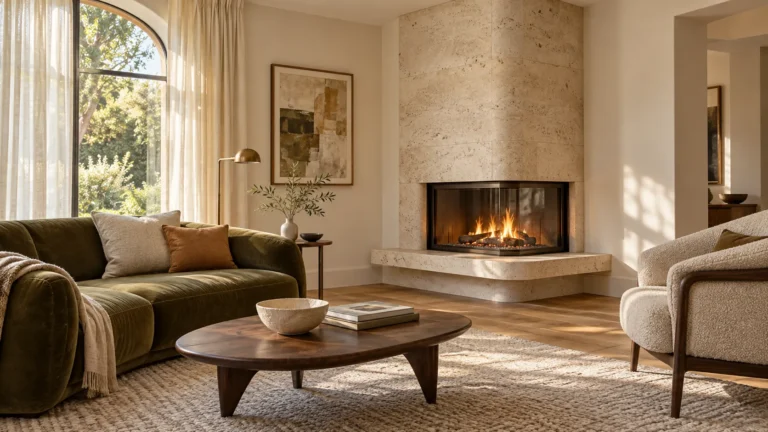
That awkward corner can become the room’s strongest focal point. Arrange the main sofa so the angled brick surround stays visible, then choose a round coffee table to soften the diagonal. Keep nearby storage low so the fireplace has room to stand out within the seating area.
Avoid lining every piece of furniture tightly against the walls. Pull the seating forward enough to create a clear conversation area, while respecting the fireplace’s required clearances. Before moving heavy pieces, mark their footprints with painter’s tape and walk through the proposed layout from each doorway.
Checkerboard Hearth
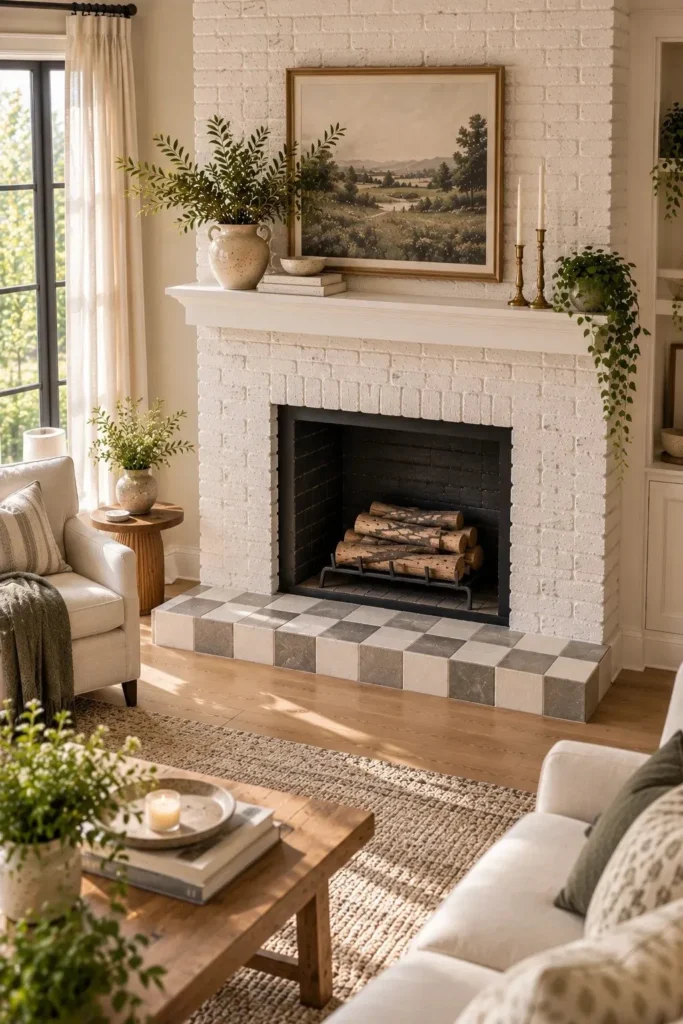
- Let a checkerboard hearth supply the pattern while the white brick stays quiet.
- Choose squares large enough for the pattern to read clearly from the sofa. Avoid a scale that leaves tiny tile fragments around the edges.
- Match the lighter tile to the warmth of the painted brick, especially if the white has a creamy undertone.
- Use a quiet neutral grout so the joints do not compete with the squares.
- Confirm that the tiles and installation materials are suitable for your particular hearth before ordering.
The alternating squares give the fireplace a patterned base that remains visible from across the room. Keep the mantel display simple so your eye can settle on the hearth. For a gentler version, choose ivory and pale taupe; their smaller color difference adds detail without dominating the room.
Rustic Ceiling Beams
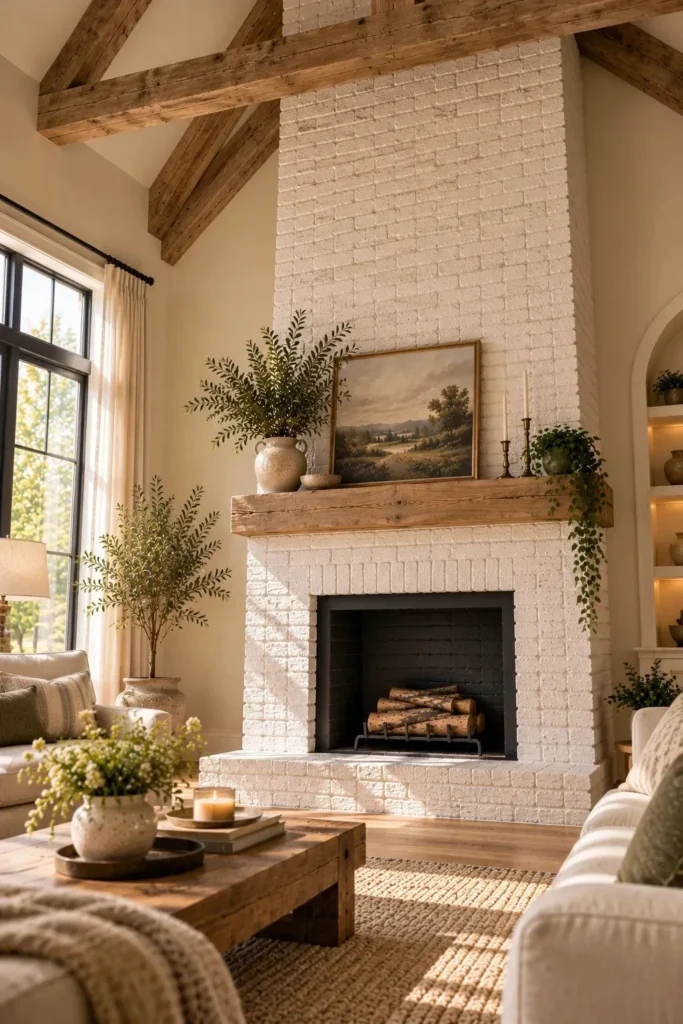
Quick Tip:
Want the white masonry to feel connected to a tall ceiling? Repeat the wood tone of existing overhead beams in the mantel. If adding decorative beams, have their support and required fireplace clearances assessed before installation.
Rough timber overhead gives the eye another textured surface to compare with the painted brick. Keep the beam color consistent with one or two wooden pieces below, such as the mantel and coffee table. In a low room, a pale wood finish keeps the overhead contrast gentler.
Floating Side Shelves
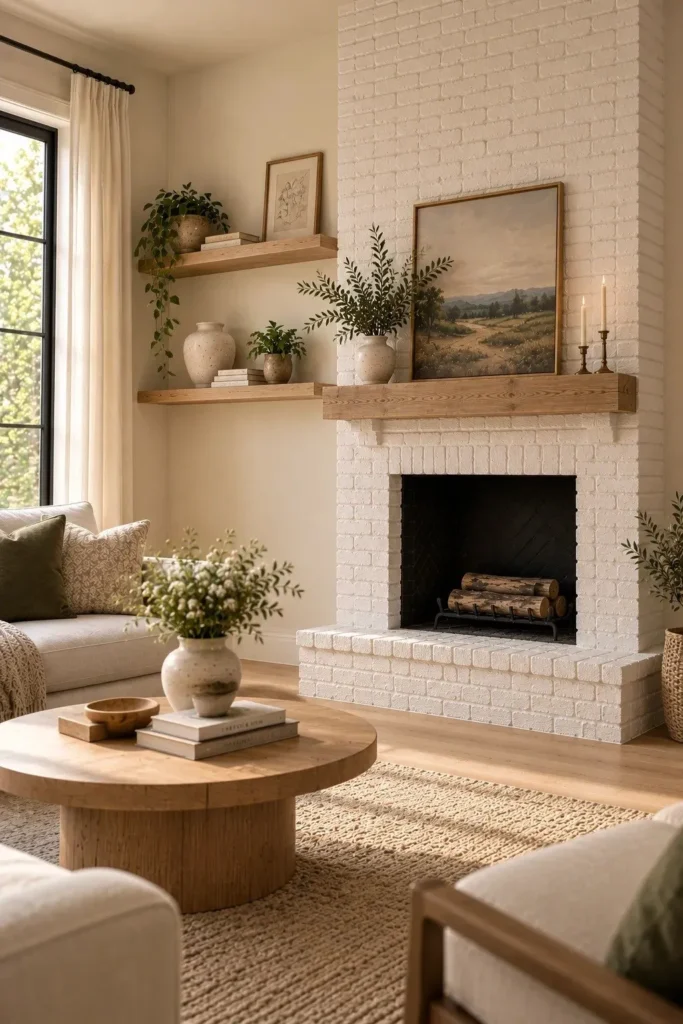
BEFORE: The empty strip beside a chimney breast can feel like wasted space. Deep cabinets may crowd the room, while tiny ornaments disappear against a large blank wall.
AFTER: Two shallow floating shelves give that narrow area a clear purpose. Their open ends leave more of the wall visible, while wood edges provide a warm contrast with the masonry.
Measure the side wall before choosing shelf lengths, and leave a visible gap beside the brick. Position books on the lower shelf and one taller vase above, varying the heights without filling every inch. Use fixings suitable for the wall and load, and respect the fireplace’s clearance requirements.
Family Photo Display
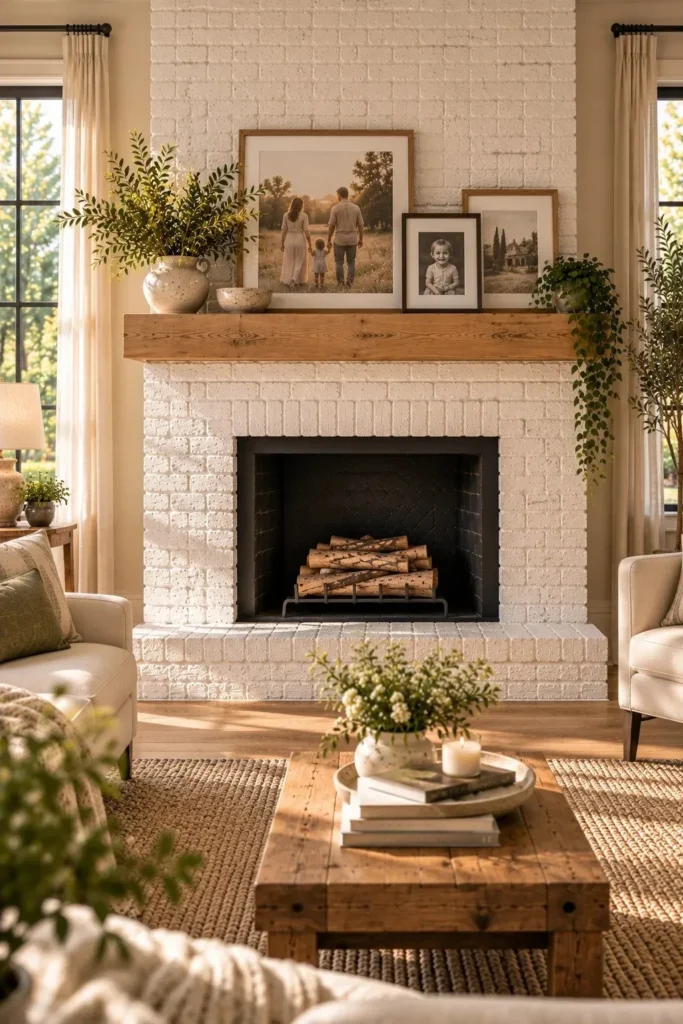
- Make the fireplace feel personal with a small group of photographs you enjoy seeing every day. Start with a family outing, a favorite place, or an ordinary moment worth remembering.
- Choose two or three frames that share one detail, such as pale wood or a narrow black edge. Mix portrait and landscape formats for variation.
- Place the tallest frame slightly off center, then set a smaller one beside it without covering either image.
- Add just one small object with personal meaning, such as a handmade bowl. Keep the rest of the mantel open.
Everyday snapshots often bring more personality than perfectly coordinated prints. Choose images with a similar mood or convert copies to black and white if their colors compete. Keep irreplaceable originals away from fireplace heat and sunlight, using reprints for the display so the arrangement stays easy to update.
Soft Gray Mortar

| Design Detail | White Mortar | Soft Gray Mortar |
| Brick outlines | Blend into the surrounding white | Remain gently defined |
| Overall appearance | Continuous and understated | Patterned and more detailed |
| Main visual emphasis | Surface texture and shadows | Individual brick shapes and courses |
| Complementary accents | Cream fabrics and pale oak | Warm gray fabrics and charcoal details |
Soft gray mortar gives white brick faces a quiet outline, making the individual shapes easier to notice. Compare a finished sample panel from across the room before deciding. This detail is easiest to plan during new facing work; ask a mason about suitable options before changing existing joints.
Fireside Dining Nook

DO
- Bring the fireplace into everyday life with a small dining table positioned within view of the brickwork.
- Use a round or oval table if square corners would narrow the walking route.
- Choose a low centerpiece so diners can see the brick texture across the table.
DON’T
- Do not judge spacing with chairs tucked in; check the fireplace’s required clearances with them pulled out for use.
- Do not let the table block fireplace controls or the route used for tending a fire.
- Skip extra floor baskets if they make chairs awkward to pull out.
The brickwork gives a small dining area character without needing another decorated wall. Repeat the mantel’s wood tone in the table, then choose plain chair upholstery so the masonry stays prominent. This setup suits an open room where the fireplace can connect the sitting and dining areas.
Seasonal Mantel Rotation

Effect: Two small swaps give the mantel a different seasonal mood.
Keep: One large mirror or artwork as the main focal piece.
Swap: A vase and one small ceramic accent.
Budget: Start with decorations you already own.
A white brick fireplace gives seasonal colors a calm backdrop, so you only need a few changes. Use a pastel vessel in spring or an amber glass accent in autumn. Photograph arrangements you enjoy before packing them away, creating a simple reference for next year’s decorating.
Conclusion
Your white brick fireplace can become the detail that makes the whole room feel connected. Start with one idea that solves a real need, whether that means softening an empty wall, warming up the palette, or giving the mantel a clearer focal point. Notice how it looks from your favorite seat before adding more.
For a tight room, our corner fireplace ideas show how to style the same look in a corner.
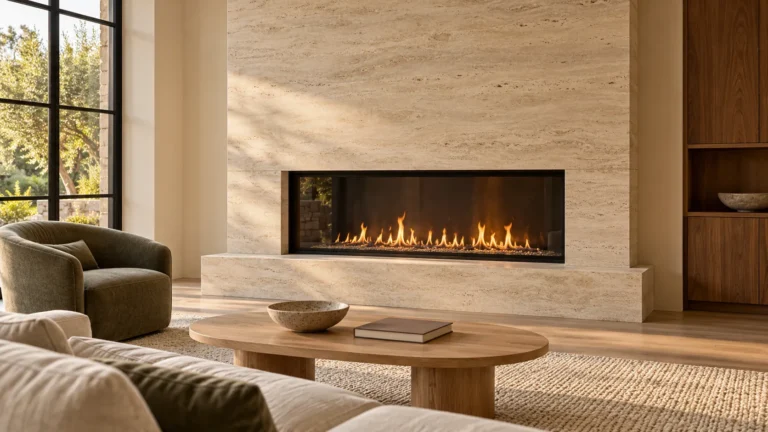
For a natural, textured look, explore our stone fireplace ideas.
Save this post on Pinterest so your favorite combinations are easy to find, and share it with someone planning a fireplace refresh. Even a single familiar object can help the room feel more personal. Choose one detail you love, try it today, and make it yours.
2 Comments