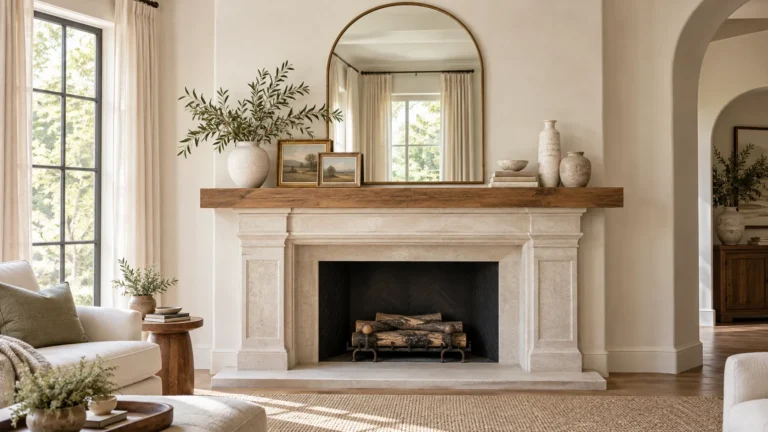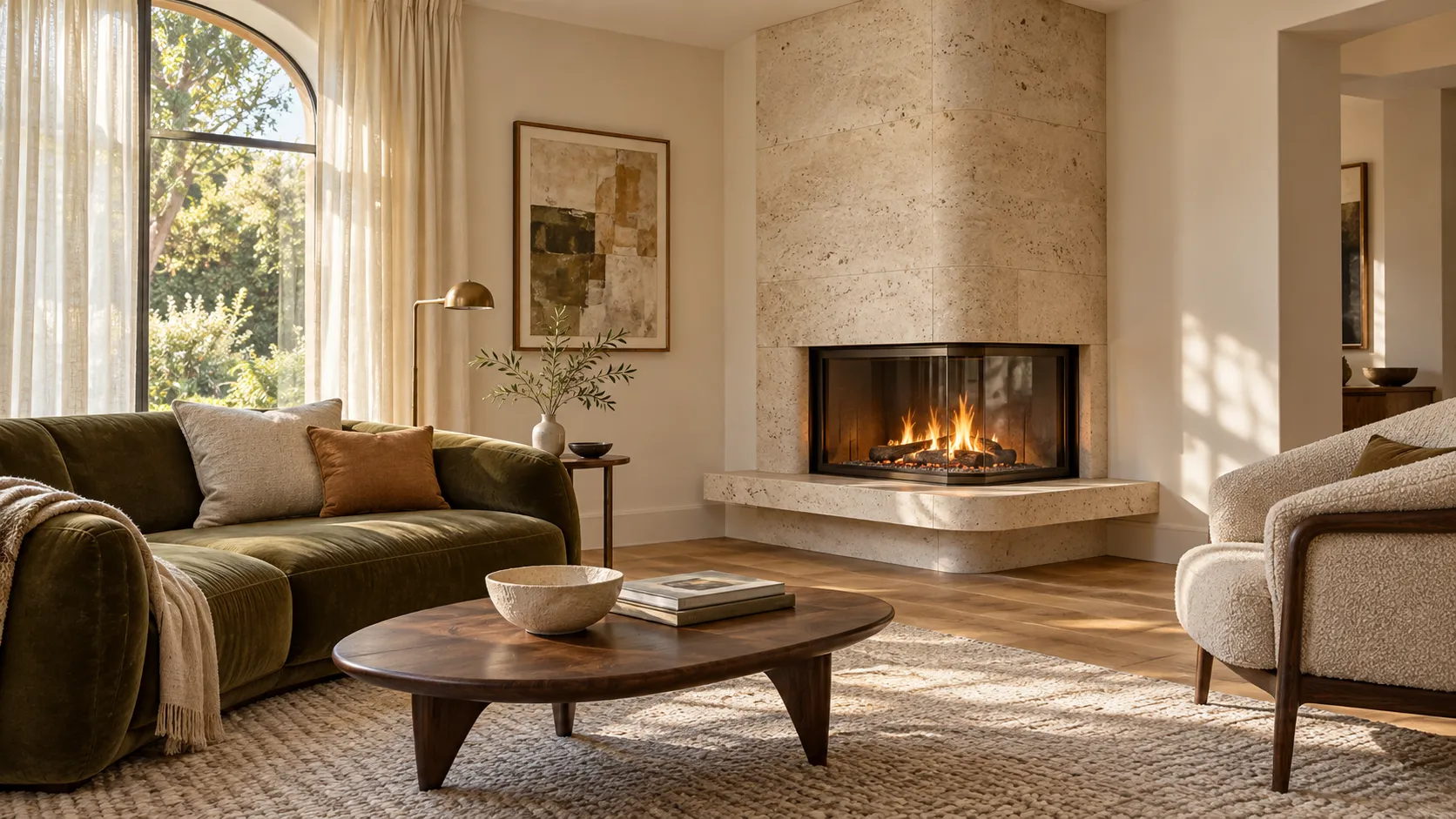
Corner Fireplace: 31 Brilliant Ideas for Tight Rooms
An awkward corner should not decide how your whole living room feels. A corner fireplace can be a welcoming focal point, even when the sofa, walkway, and television seem to compete for the same few feet.
Perhaps your favorite chair blocks the hearth, or a bulky coffee table makes every trip across the room feel cramped. These everyday frustrations offer useful clues about what to change first.
These 31 ideas explore practical furniture layouts, thoughtful storage, inviting textures, and distinctive fireplace finishes. You will find simple styling changes alongside renovation inspiration, with guidance to help you judge what suits your room. Whether you prefer soft ivory plaster, earthy terracotta, or a quiet charcoal backdrop, start with the ideas that make your space easier to use and more enjoyable to come home to.
Soft White Surround
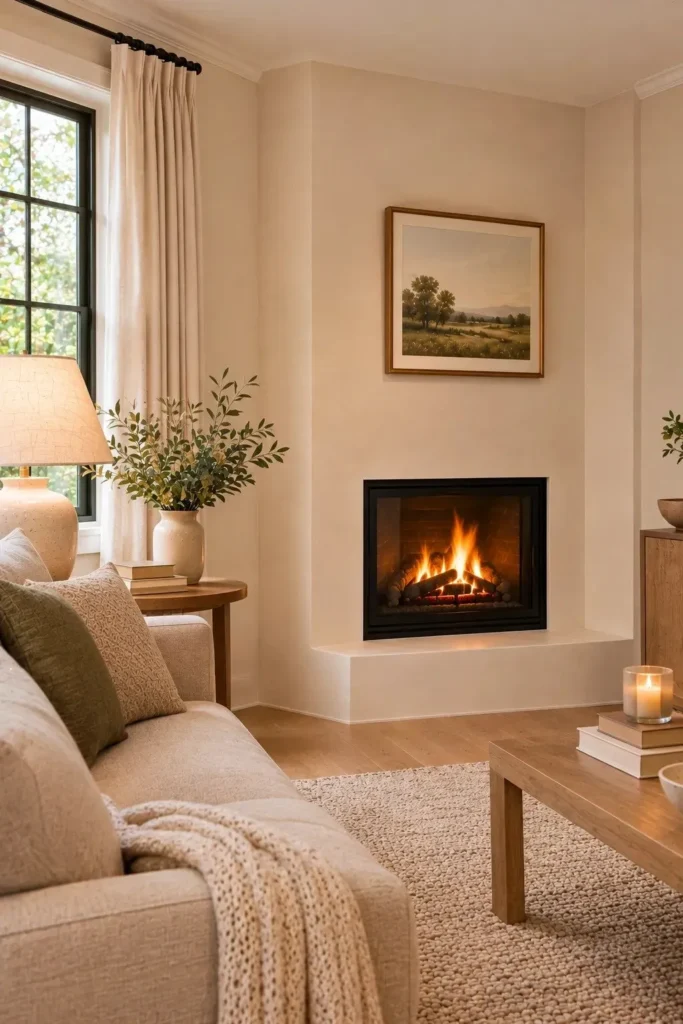
A bulky corner fireplace can feel less imposing when its surround blends with the walls. Choose a soft white that shares the same warm undertone as the surrounding paint. The reduced contrast keeps the angled structure from becoming the first thing you notice in a tight room.
Compare paint samples beside your flooring before choosing a shade, since white can look yellow or gray against different materials. Carry the palette into cream cushions and an ivory rug without matching every surface exactly. Small shifts in texture keep the pale scheme from feeling flat.
Round Coffee Table

- Stop letting a square table crowd the route past the hearth. A round tabletop removes projecting corners from that awkward diagonal path.
- Mark the proposed table outline on the floor with painter’s tape. Walk between the sofa, doorway, and fireplace to check the fit before buying.
- Choose a diameter that suits the available gap, rather than filling every inch. Everyone should be able to sit down and stand up without shifting the table.
- Look at the base as carefully as the top. Widely splayed legs can interrupt the walking space you hoped to gain.
The curved shape softens the meeting of an angled hearth, straight sofa, and rectangular rug. Keep tabletop styling compact with one shallow bowl or a small stack of books. In a narrow seating area, the useful change is a clearer route through the room, especially beside the sofa.
Single Statement Artwork
Quick Tip:
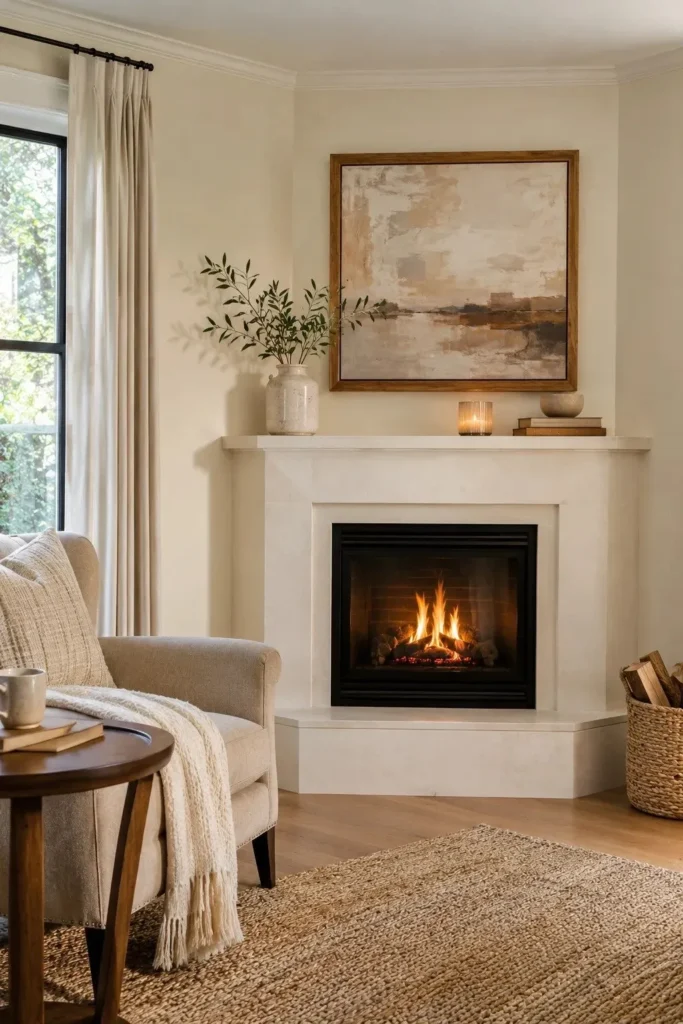
Could one artwork quiet the whole corner? Cut a paper template to the proposed frame size and tape it above the mantel before buying. Check it from the doorway and sofa to make sure it fits comfortably within the angled wall.
Choose a simple composition with two or three colors already present in the room. Leave visible wall around the frame so the display feels contained. Before hanging, check the appliance guidance and artwork’s heat sensitivity; a cooler adjacent wall may be the better location for a valuable piece.
Wall Aligned Sofa
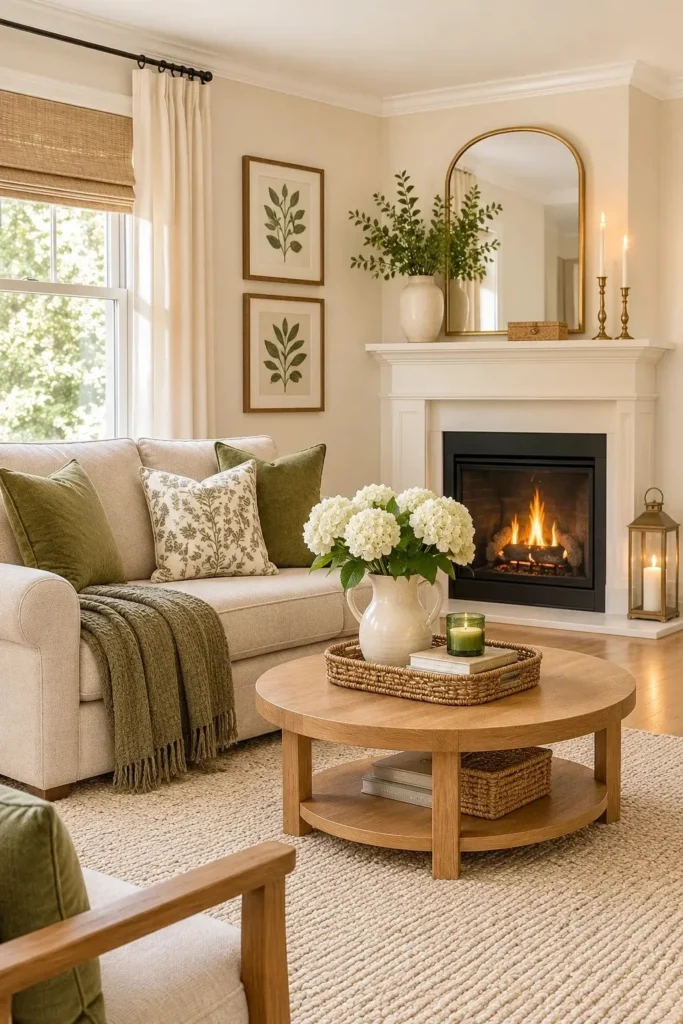
BEFORE: The sofa does not have to copy the fireplace’s angle. Turning a large sofa diagonally can leave an awkward wedge behind it while pushing one arm into the main walking route.
AFTER: Position the sofa parallel to the longest usable wall, keeping the hearth visible from the seats. The furniture arrangement feels more settled, and the space behind the sofa becomes easier to manage.
Start by moving your existing sofa before shopping for anything new. Check the view from each seat, then walk your usual route through the room carrying a laundry basket. That everyday test helps reveal tight spots that an attractive furniture arrangement can hide in a photograph.
Asymmetric Mantel Styling

- Give a crowded mantel breathing room by removing everything first. An empty surface makes it easier to judge how much decoration the narrow corner actually needs.
- Place one taller ceramic piece toward one end, keeping it comfortably within the mantel’s edges. Choose a shape that looks appealing from both the doorway and the sofa.
- Balance the opposite end with two lower objects, such as shallow pottery bowls. Leave a visible gap between the groups instead of filling the middle.
- Check that every piece sits securely and suits the heat conditions specified for your fireplace. Keep vents and controls unobstructed.
Uneven heights give the display a gentle rhythm without requiring matching pairs on an awkward angled ledge. Repeat one color across the objects to keep them connected. Photograph the arrangement from your usual seat; overlapping silhouettes often become easier to spot in a photo than while standing beside the mantel.
Nesting Side Tables
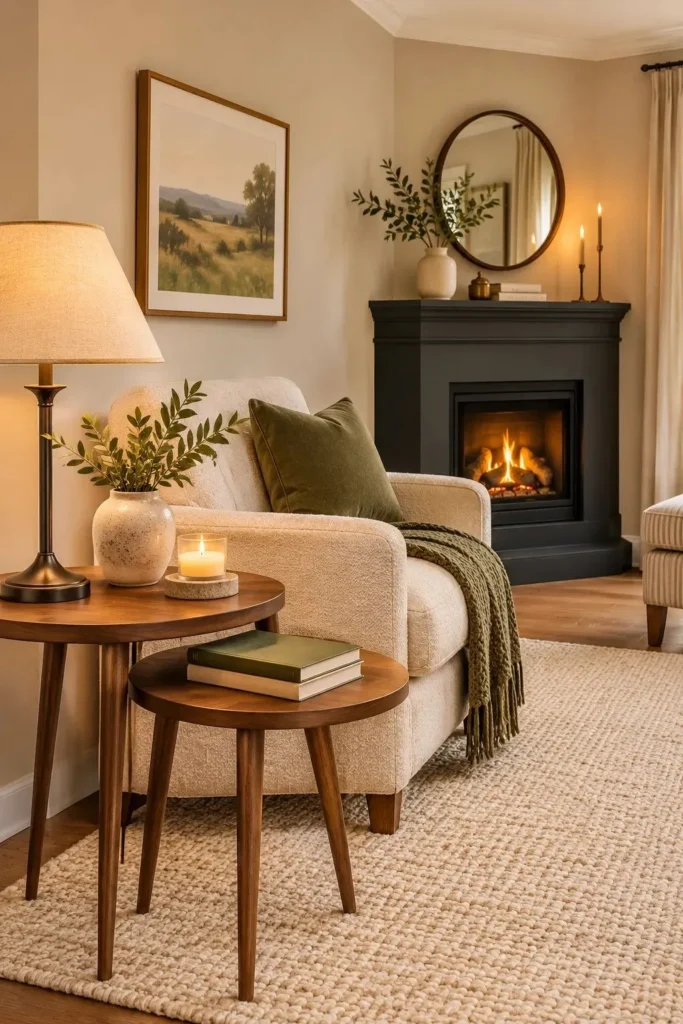
| Comparison Point | Separate Side Tables | Nesting Side Tables |
| Everyday footprint | Two tables need two standing spots | The smaller table tucks beneath the larger |
| Extra drink space | Surfaces stay in their usual positions | The smaller table moves beside a guest |
| Visual effect | Tables can spread furniture across the room | One compact grouping keeps the layout quieter |
| Buying check | Measure each intended position | Measure the set both tucked together and extended |
An extra drink surface need not occupy the walkway all week. Keep the nested pair beside the seat farthest from the hearth, then bring out the smaller table when company arrives. Choose pieces you can lift comfortably, and leave enough space to pull the lower table out without moving furniture.
Hearthside Rug Placement

DO
- Give the seating area a clear boundary by aligning the rug with the sofa.
- Choose a size that accommodates the sofa’s front legs without entering the fireplace’s required clearance area.
- Keep the hearth fully exposed and follow the appliance’s guidance for nearby combustible materials.
- Use a suitable rug pad to help prevent slipping and curled edges.
DON’T
- Rotate the rug diagonally just to match the firebox.
- Cover part of the hearth to make a larger rug fit.
- Assume a wool rug can safely sit against an active fireplace.
- Let a raised rug corner interrupt the main walking route.
Let the seating area determine the rug’s position instead of turning it toward the firebox. An angled fireplace already introduces a diagonal line; keeping the rug square with the sofa gives the room a steadier base. Test the outline with tape before committing to a size.
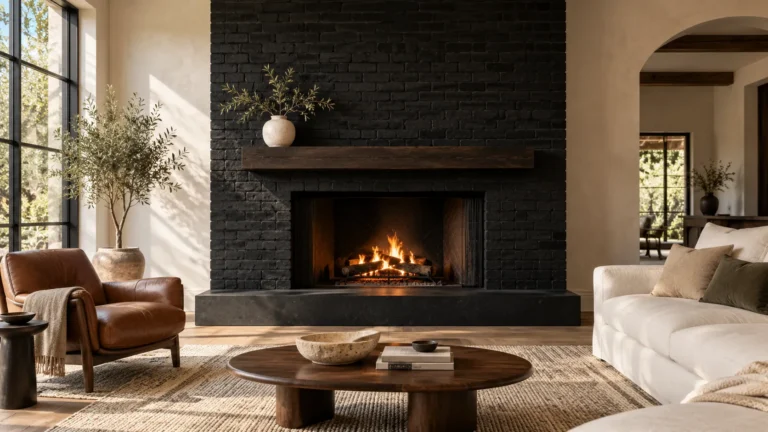
Charcoal Chimney Breast

Result: A dark focal point that makes the angled architecture look intentional.
Palette: Soft charcoal, warm ivory, and pale natural wood.
Best For: A projecting chimney breast surrounded by lighter walls.
Sample Check: View large color samples in daylight and evening lamplight.
The darkest surface can become the room’s clearest anchor. Keep the charcoal contained to the chimney breast, and repeat it in one small detail, such as a picture frame. Choose a finish suitable for the surface and fireplace conditions; ordinary wall paint does not belong inside the firebox.
Slim Arm Loveseat
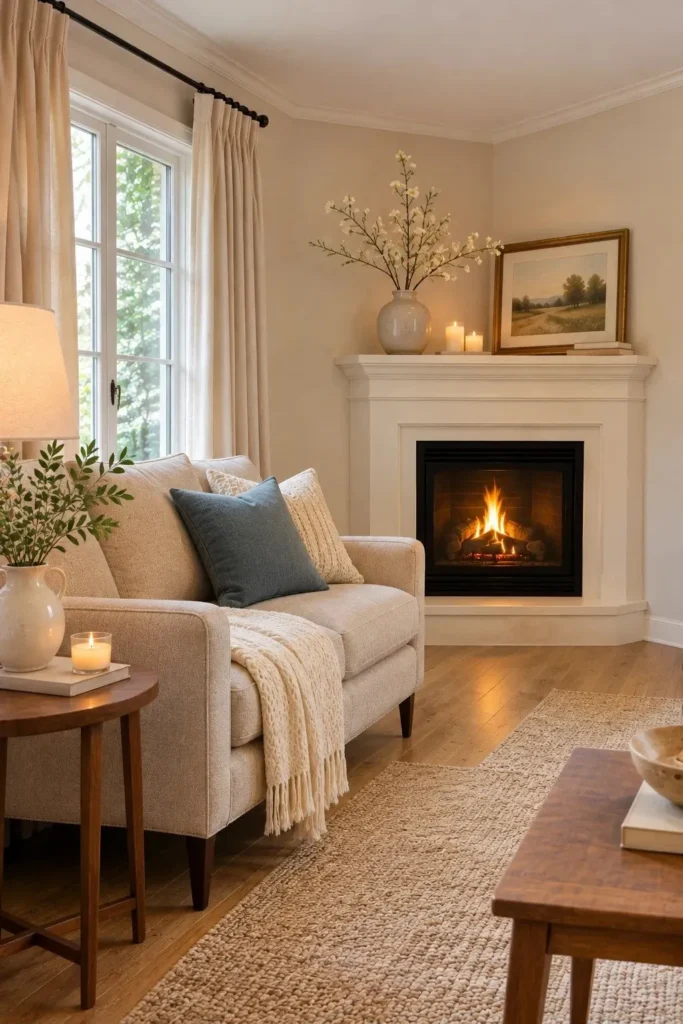
Wide sofa arms can steal room you would rather use for sitting. A loveseat with narrow arms keeps the outline compact while leaving more of its width available for cushions. Beside an angled hearth, that smaller footprint can make the gap between seating and the walking route less cramped.
Compare overall width with usable seat width rather than judging by photographs alone. Check depth, too, because a narrow sofa can still project far into the room. Before replacing anything, mark the proposed footprint and confirm that the smaller seat still feels comfortable for your household.
Vertical Tile Surround
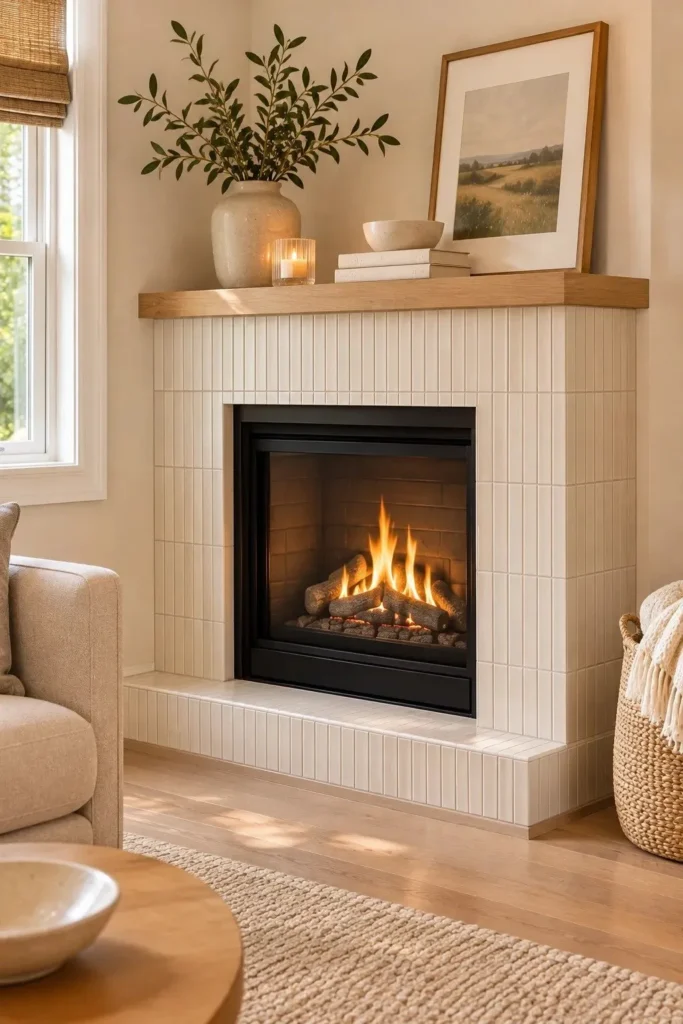
- Let slender vertical tiles draw attention upward along a narrow surround. Keep the pattern contained to the fireplace face so the corner has one clear detail.
- Pair ivory tiles with warm beige grout for a subtle effect. Strongly contrasting grout will make each tile stand out and create a busier appearance.
- Lay out several tiles together before choosing a finish. A single sample cannot show how color variation will look across the whole surface.
- Ask your installer to plan the edge cuts and specify materials suitable for your fireplace. Narrow slivers at both sides can make an otherwise simple layout look awkward.
Repeat the tile’s undertone in a nearby cushion or lampshade to connect the surround with the seating area. Keep mantel accessories sparse so the vertical pattern remains visible. For a small room, quiet grout lines and neatly finished edges can matter more visually than an elaborate tile shape.
Swivel Accent Chair

Quick Tip:
One chair can serve two views. Choose a compact swivel seat that turns between the hearth and the sofa, then check its full turning circle against nearby furniture and the fireplace’s required clearances. The back and arms need room to rotate, not just the base.
A swivel chair suits rooms where conversation and quiet reading share the same few square feet. Position a small drink table within reach without blocking rotation. Compare the chair’s full dimensions with your available space, since a rounded silhouette can look compact while taking up a surprisingly large footprint.
Closed Side Storage
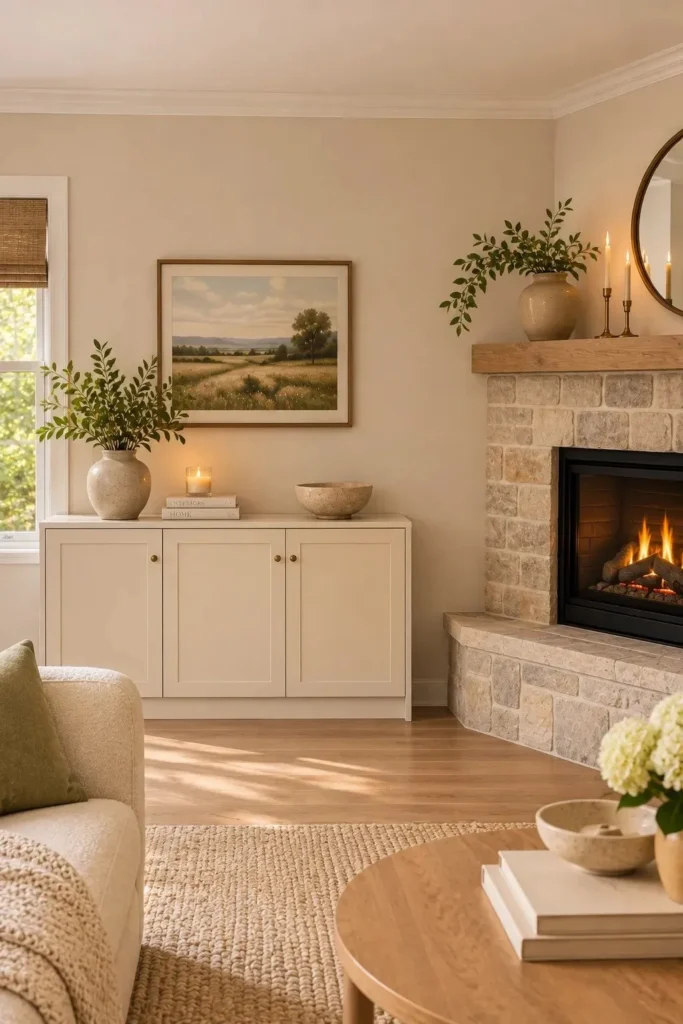
BEFORE: Everyday clutter can steal attention from even a carefully styled hearth. Open shelves beside the fireplace hold tangled chargers, board games, and loose papers, making the small corner feel crowded.
AFTER: A low cabinet with solid doors gathers those items behind one quiet surface. Its restrained height leaves open wall above, giving the fireplace room to remain the main feature.
Measure the items you need to store before choosing the cabinet’s depth. Check that its doors open fully without hitting seating, and position it outside the fireplace’s required clearance area. Reserve the top for one small object so the newly cleared surface does not become another place to pile things.
Layered Evening Lighting
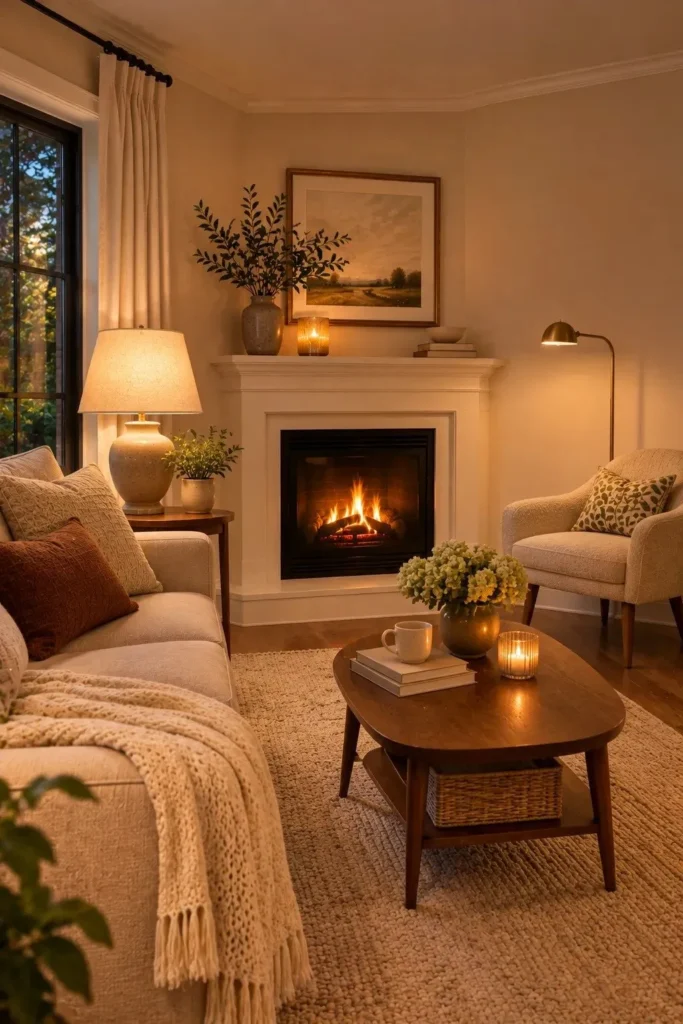
- Give the room somewhere to glow beyond the hearth. Place a shaded lamp beside the sofa so the opposite side of the room does not disappear into darkness.
- Add a focused reading light only where someone regularly sits with a book. Position it to illuminate the page without shining directly into their eyes.
- Choose bulbs with a similar warm color appearance. Noticeably different light colors can make nearby cream walls and fabrics look mismatched.
- Test the lamps together after sunset with the overhead light off. Adjust their positions until you can move comfortably through the room without harsh glare.
Firelight provides atmosphere, but it does not replace useful lighting beside a seat. Spreading gentle light across the room helps the fireplace feel connected to the furniture around it. Keep lamp bases off busy walking routes, and route cords along walls rather than across the open floor.
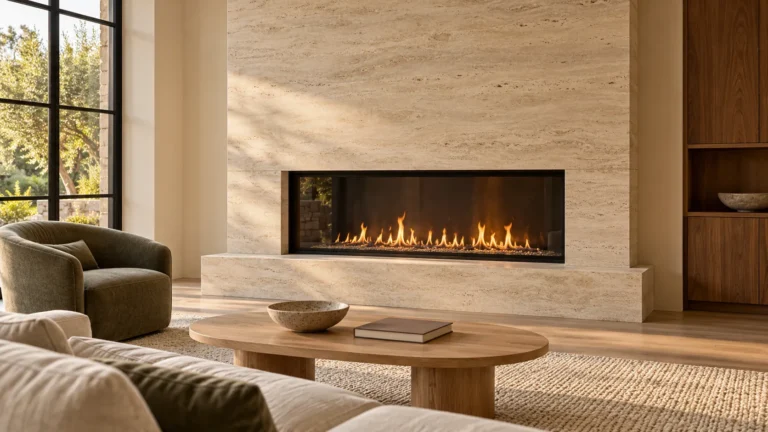
Quiet Stone Veining
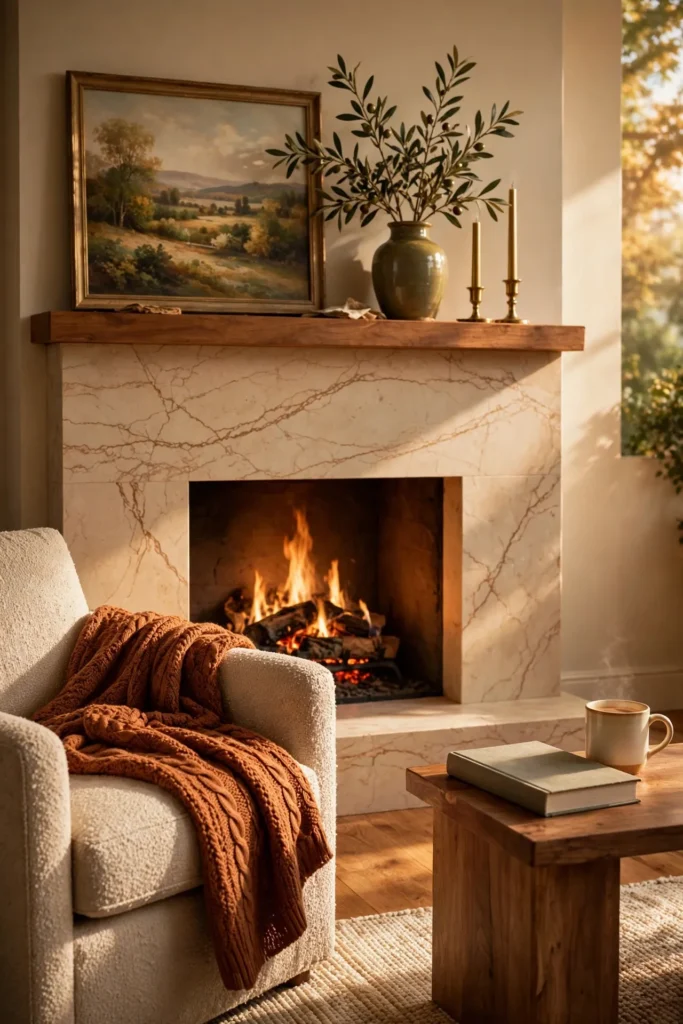
| Comparison Point | Bold Stone Pattern | Fine Stone Pattern |
| Visual impact | Dramatic veins make the surround a strong focal point | Delicate veins introduce a quieter surface detail |
| Small fireplace face | Large markings may appear as disconnected fragments | Smaller markings can remain readable across narrow sections |
| Nearby textiles | Plain fabrics give the stone room to stand out | Subtle fabric patterns can sit comfortably alongside it |
| Selection check | Review where the strongest veins will fall | Review the overall undertone and consistency |
A small surround gives every vein more attention. View the full slab or a representative group of tiles before approving the layout, and ask how the pattern will meet at corners. Coordinate the stone’s background color with the walls; close undertones help the angled structure feel less visually separate.
Adjacent Wall Mirror

DO
- Make the reflection earn its place by positioning the mirror where it catches daylight or a pleasing view.
- Test the location from both the sofa and the doorway before marking the wall.
- Choose a narrow frame that relates to another wood or metal finish in the room.
- Use mounting hardware suitable for the mirror’s weight and wall construction.
DON’T
- Assume the space directly above the mantel is the only possible location.
- Aim the mirror toward a crowded shelf or an exposed cable cluster.
- Place it where reflected sunlight creates uncomfortable glare at your usual seat.
- Crowd the frame against the chimney breast or nearby furniture.
The reflected view matters as much as the mirror’s shape. A separate wall lets you position the glass around what it reflects, rather than forcing it to follow the fireplace’s angle. Leave visible wall around the frame so it reads as a deliberate feature instead of filling a leftover gap.
Arched Plaster Surround
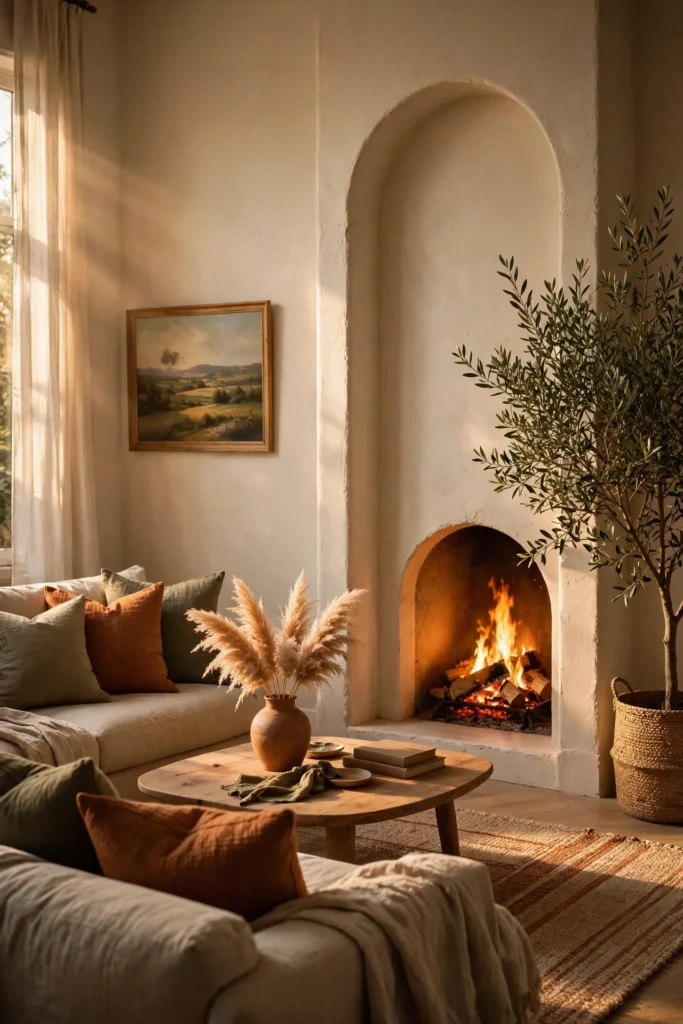
Effect: A gentle curve softens the corner’s sharp geometry.
Style: Simple plaster detailing with an uncluttered mantel area.
Best For: A planned renovation or an existing arched surround.
Planning: Professional assessment of the opening, materials, and appliance requirements.
Let the arch supply the decoration instead of surrounding it with extra trim. A plain finish keeps the curve readable from across a small room. Discuss the shape with a qualified fireplace installer before changing an existing opening; the decorative outline must work with the fireplace’s construction and operating requirements.
Window Seat Pairing

The window wall can supply an extra seat without introducing another armchair into the middle of the room. A fitted bench beneath the sill makes use of an existing recess, while the hearth remains visible across the seating area. Keep the cushion simple and the ends uncluttered.
Start with the recess measurements and check that the bench will not obstruct a radiator, air vent, or window operation. Choose a supportive cushion rather than stacking loose pillows. In a room with limited chairs, this gives visitors a clear place to sit without rearranging the main furniture.
Separate Television Wall

- Give the screen its own wall instead of making it follow the hearth’s diagonal. A straight viewing position can simplify the placement of the main sofa.
- Test the screen position while seated, using a paper template before mounting anything. Choose a height that lets you watch without continually lifting your chin.
- Keep the console shallow enough to preserve the route through the room. Check its actual depth, including handles and space needed for connections.
- Repeat one finish between the two areas, such as walnut furniture or a small black frame. That shared detail helps the screen and fireplace belong to the same room.
Two focal points can coexist when the seating has a clear purpose. Face the sofa toward the television if that is how you use the room most often, while keeping the hearth visible to one side. The arrangement should support your evenings, rather than force every seat toward the flames.
Terracotta Tile Frame
Quick Tip:
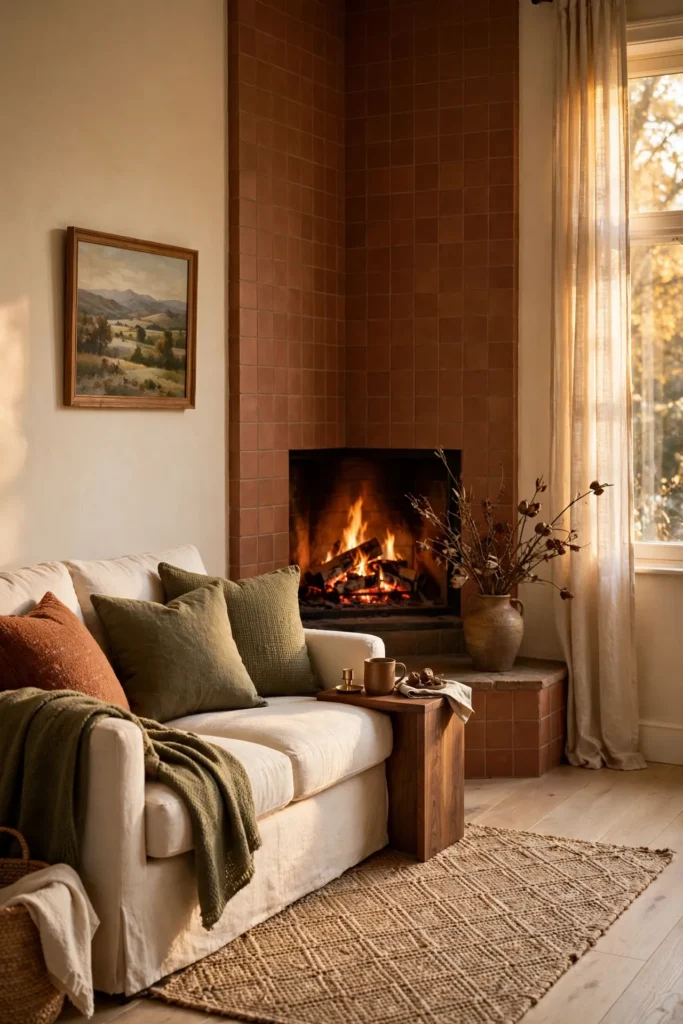
A narrow terracotta border can bring warmth without covering the whole chimney breast. Compare several tiles together against your wall color, then choose grout close to the clay tone so the frame reads as one connected shape.
Keep the surrounding decor quiet and repeat the rusty shade in just one textile. This gives the hearth a connection to the seating without spreading orange throughout the room. Have an installer confirm the tile system’s suitability for your fireplace, including its backing, adhesive, grout, and edge details.
Tailored Roman Shade

BEFORE: Full curtains can overwhelm the short wall beside an angled hearth. When gathered open, thick folds cover part of the window and crowd the nearby seating.
AFTER: A fitted Roman shade keeps the fabric concentrated around the window opening. The cleared sides reveal more wall, making the window and fireplace easier to distinguish within the small layout.
Choose a plain weave or a fine stripe that supports the room’s palette. Check the shade’s folded depth so it does not cover more glass than expected when raised. Fabric still needs the required separation from the fireplace; a shorter window treatment does not automatically make a close placement suitable.
Narrow Bookcase Styling

- Put a short stretch of wall to work with one narrow bookcase. Measure its footprint and keep it outside the fireplace’s required clearance area.
- Choose shelf depth around what you actually own. Paperbacks and small decorative objects do not need the same depth as large art books.
- Place heavier books on the lower shelves and use the upper shelves for lighter objects. Follow the manufacturer’s anchoring instructions.
- Arrange books in small groups, leaving some shelf space empty. Add one ceramic piece where a gap needs a visual pause rather than filling every opening.
A tall bookcase gives the eye a vertical line beside the hearth’s diagonal shape. Keep its finish related to another piece of furniture so the corner feels connected. If the shelves begin to look crowded, remove a few display objects before sacrificing the books you actually use.
Mantel Free Surround

| Comparison Point | Projecting Mantel | Mantel Free Surround |
| Wall profile | A ledge extends into the room | A simpler face reduces visible projection |
| Decorative space | Provides a surface for display objects | Keeps the area above the opening uncluttered |
| Visual emphasis | Draws attention to a horizontal shelf | Places emphasis on the opening and surround |
| Planning check | Confirm shelf dimensions and required clearances | Confirm the design suits the appliance and construction |
A clean outline can make an angled fireplace feel more like part of the wall. Let the surrounding materials provide interest instead of adding a ledge for ornaments. For an existing fireplace, have a qualified professional assess the mantel’s role before considering removal or alteration.
Single Plant Accent
DO
- Give greenery one clear home instead of scattering small pots around the hearth.
- Choose a plant suited to the actual light at its intended position.
- Check its expected mature size so leaves will not overtake the walkway.
- Use a stable planter with a protective saucer suited to your flooring.
DON’T
- Place foliage within the fireplace’s required clearance area.
- Choose an oversized planter that narrows the route beside the sofa.
- Hide a light-loving plant in a dim gap simply because the pot fits.
- Let trailing stems cross vents, controls, or walking paths.
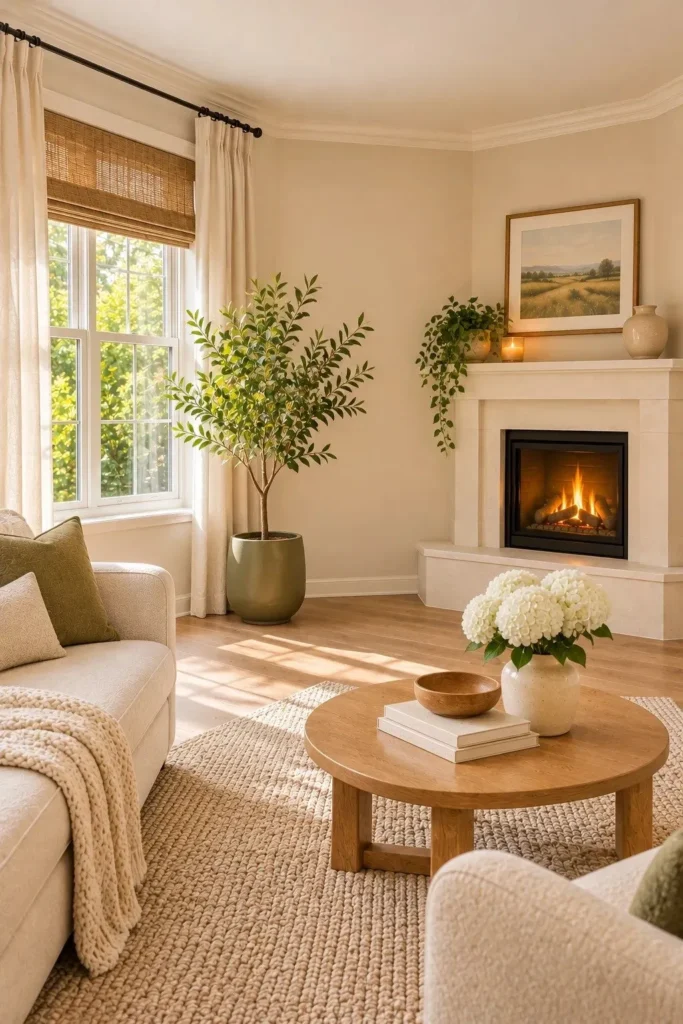
One leafy silhouette offers a softer counterpoint to the fireplace’s hard edges. Place it where the foliage has room to spread, then keep nearby accessories minimal. A window-side position can connect the hearth area with the rest of the room without turning the mantel into a plant shelf.
Herringbone Brick Surround

Visual Effect: Zigzag brickwork gives a small surround a distinct focal detail.
Palette: Muted clay, warm beige mortar, and ivory walls.
Best For: A plain fireplace face that can carry one contained pattern.
Planning: An installer familiar with suitable fireplace finishes and balanced edge cuts.
Keep the herringbone within a clearly defined border so the pattern looks intentional on the angled face. Ask to see the proposed layout before installation, especially where partial bricks meet the edges. Plain cushions and a simple rug give the brickwork room to stand out without competing patterns nearby.
Compact Sectional Layout

An extra seat does not always require another piece of furniture. A compact sectional with a short return can gather seating along two walls while leaving the angled hearth visible across the room. Choose this arrangement only when the return stays clear of the main entrance.
Map both sections on the floor, including their full depth. Then check whether someone can reach every seat without stepping over another person’s legs. The best orientation depends on the doorway and hearth position, so compare left and right returns before committing to a particular configuration.
Vertical Fireplace Tool Stand

- Keep essential fire tools together instead of letting them lean against the surround. For a wood-burning hearth, one upright stand gives the equipment a defined place.
- Compare the base dimensions as well as the height. Decorative feet can take up more floor space than the slim shaft suggests.
- Choose a finish that echoes the firebox or screen. Repeating matte black, for example, makes the equipment feel connected to the opening.
- Position the stand where tools remain accessible without obstructing the walking route or fireplace operation. Check that each tool lifts free without hitting a nearby shelf.
Useful equipment deserves space in the layout from the beginning. A compact stand can reduce scattered objects, but stability matters more than having the smallest base. Skip this accessory beside an electric unit that does not need it; decorative tools would simply occupy floor space without serving a purpose.
Subtle Checkerboard Hearth

Quick Tip:
Checkerboard does not need sharp black-and-white contrast to catch the eye. Pair cream with pale taupe for a gentler pattern, and ask the installer to show how complete squares and edge cuts will fit the hearth’s outline.
Treat the checkerboard as the room’s main floor pattern, then choose a plain rug for the seating area. Keep the hearth’s required dimensions and construction intact when planning new finishes. On a small angled surface, a carefully arranged tile layout will look more considered than a pattern squeezed around awkward edges.
Soft Sage Walls

BEFORE: Several competing wall colors can make an already angled room feel fragmented. A bright accent behind the hearth and a different shade beside the sofa draw attention to every change in direction.
AFTER: Soft sage across the surrounding walls creates a continuous backdrop. The ivory surround remains distinct, while the seating area feels connected to the fireplace through one shared color.
Test large sage samples on both adjoining walls because each plane receives different light. Compare them beside the surround and flooring before choosing. Keep the ceiling and trim simple, then repeat the green sparingly in a cushion or small ceramic piece rather than matching every accessory.
Textured Neutral Layers

- Give a pale room depth through texture instead of adding more ornaments. Start with the largest textile already present, such as the sofa upholstery or rug.
- Choose two contrasting fabric textures for the cushions. Smooth linen beside a ribbed weave creates variation without requiring a busy pattern.
- Add one throw where it will actually be used. Fold it over the sofa arm away from the hearth rather than piling blankets across the seats.
- Remove any cushion that makes sitting uncomfortable. The finished arrangement should leave enough usable seating for everyday life.
Texture gives the eye something to notice even when the colors stay close together. Keep the mix focused on a few surfaces so the small room still feels restful. Check the arrangement from the doorway: the hearth should remain visible, with soft furnishings supporting rather than obscuring it.
Upholstered Storage Ottoman

| Comparison Point | Open Coffee Table | Storage Ottoman |
| Everyday role | Provides a firm surface for cups and books | Provides a footrest with concealed storage |
| Clutter control | Stored items may remain visible below | Blankets and games can disappear inside |
| Serving drinks | A firm tabletop usually supports cups directly | A stable tray is needed on the soft surface |
| Access check | Allow room to reach any lower shelf | Allow room to open the lid fully |
| Visual character | Exposed legs can keep the center visually open | Upholstery introduces another soft texture |
Hidden storage can earn its place in a small seating area, provided the ottoman does not overwhelm the gap. Measure around it with the lid open and closed. Keep the tray easy to lift off, and choose this option only if accessing the contents will remain convenient during daily use.
Clear Entry Sightline
DO
- Give the hearth a clear introduction by checking its visibility from the main doorway.
- Move tall decorative objects out of the direct view between the entrance and fireplace.
- Position lower furniture where it preserves both the sightline and a comfortable walking route.
- Take a doorway photograph to spot overlapping shapes that are less obvious while moving around.
DON’T
- Let a tall chair back hide most of the fireplace opening from the entrance.
- Place a large vase on the central table simply to fill an empty surface.
- Push furniture toward the hearth to improve the view at the expense of required clearances.
- Sacrifice comfortable seating just to make the doorway photograph look balanced.
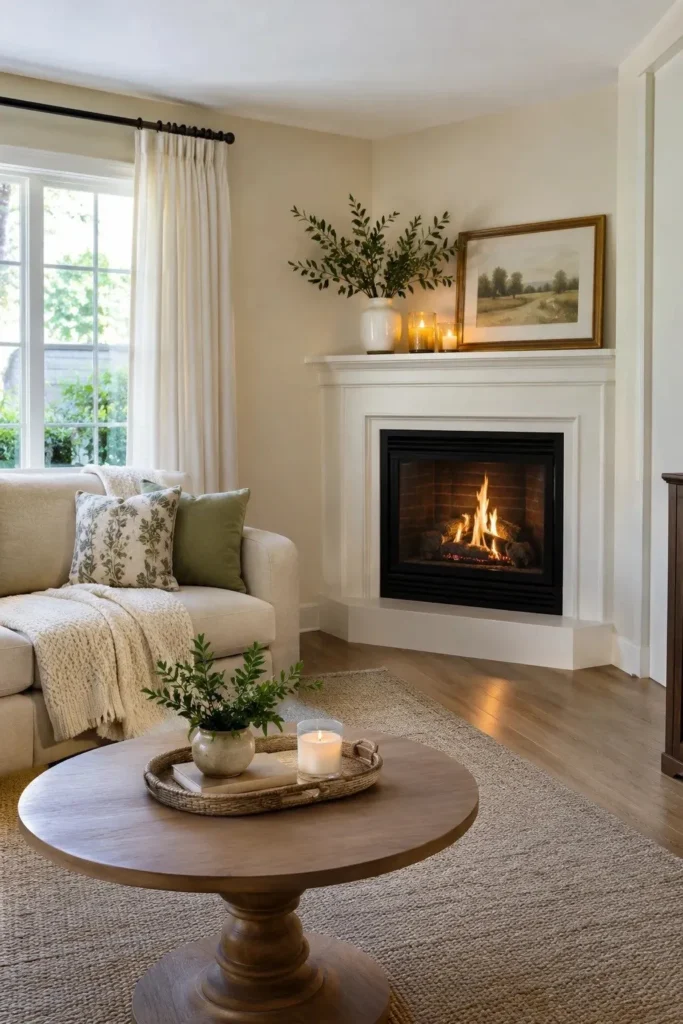
A corner fireplace feels more connected to the room when you can see it as you enter. You do not need a completely empty path to the hearth, just a clear view through the furniture. Make this your final check after arranging the larger pieces and everyday accessories.
Conclusion
Your corner fireplace does not need an entirely new room around it to feel intentional. A clearer walkway, a better furniture fit, or a quieter mantel can help you enjoy the space you already have.
Start with the problem you notice most often, then choose one or two ideas that address it. Measure before buying, and keep the fireplace’s required clearances in mind.
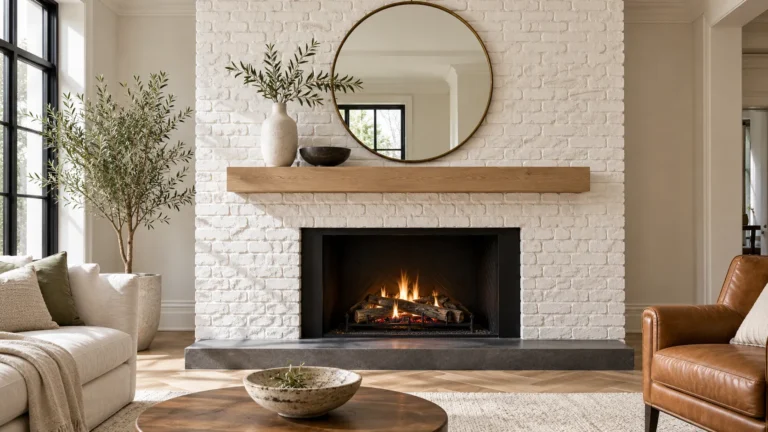
If you prefer a different finish, see our white brick fireplace ideas and black fireplace ideas.
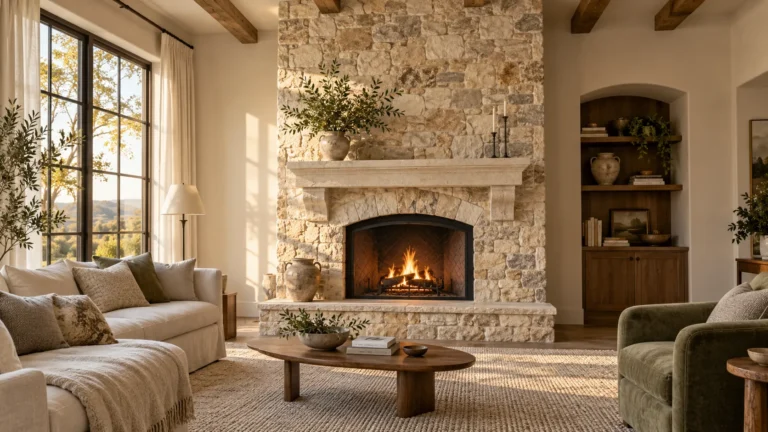
You may also love our stone fireplace ideas for a natural, textured finish.
Save this post on Pinterest so your favorite looks are easy to revisit, and share it with someone working around an awkward hearth. Pick one manageable change today and give your small room a more comfortable starting point.