
30 Blissful Covered Patio Ideas for Outdoor Dining
The best outdoor dinners are the ones where nobody wants to leave the table. A comfortable covered patio can make that possible, whether you’re sharing weekend brunch or a quiet meal after work.
But a roof alone doesn’t solve everything. Afternoon glare can hit guests from the side, chairs can block the walkway, and a lovely table can quickly disappear beneath serving dishes. The right details make the space easier to enjoy: thoughtful lighting, durable furniture, shade where you need it, and room to move.
These 30 ideas include simple updates, such as striped rugs and potted herbs, alongside larger projects like built-in seating and sliding glass panels. Start with the problem you notice most often, then choose a look that suits your home and budget. You’ll find practical ways to make outdoor dining feel more comfortable, welcoming, and personal.
Cedar Beam Dining

A cedar roof instantly gives outdoor meals a sense of place. Leave the beams visible, then pair them with a sturdy wood dining table and woven chairs. Choose a solid roof rather than open slats if you want dependable shade and better protection from passing showers.
For a covered patio that feels relaxed instead of heavy, balance warm timber with pale stone flooring and cream seat cushions. Keep at least three feet of clearance behind dining chairs so guests can move comfortably. A simple ceiling fan can help on still, humid evenings.
Bistro String Lighting

- Even a plain roof feels festive after sunset when warm bulbs come on. Choose shatter-resistant, outdoor-rated string lights.
- Hang the strands high enough that taller guests can walk underneath without brushing them.
- Create a loose zigzag pattern above the table rather than crowding all the bulbs in one corner.
- Choose warm white bulbs around 2200K to 2700K for a softer dinner setting.
- Plug the lights into a GFCI-protected outdoor outlet and use connections rated for the conditions.
Aim for a gentle glow that makes food and faces easy to see without harsh glare. Layer the overhead lights with a small lantern or rechargeable table lamp for serving dishes. A dimmer or smart plug lets you change the mood after dinner without rearranging the entire setup.
Retractable Awning Dining

Quick Tip:
Midday sun can turn a lovely lunch into a squinting contest. Extend the awning far enough to shade every chair, not just the tabletop. Retract it during strong winds and follow the manufacturer’s rain guidance.
A retractable awning suits patios where you want shade at lunchtime but open sky later in the day. Choose a fabric color that complements the house exterior and measure how far the awning needs to extend past seated guests. Keep furniture clear of the moving arms and controls.
Outdoor Curtain Panels
BEFORE:
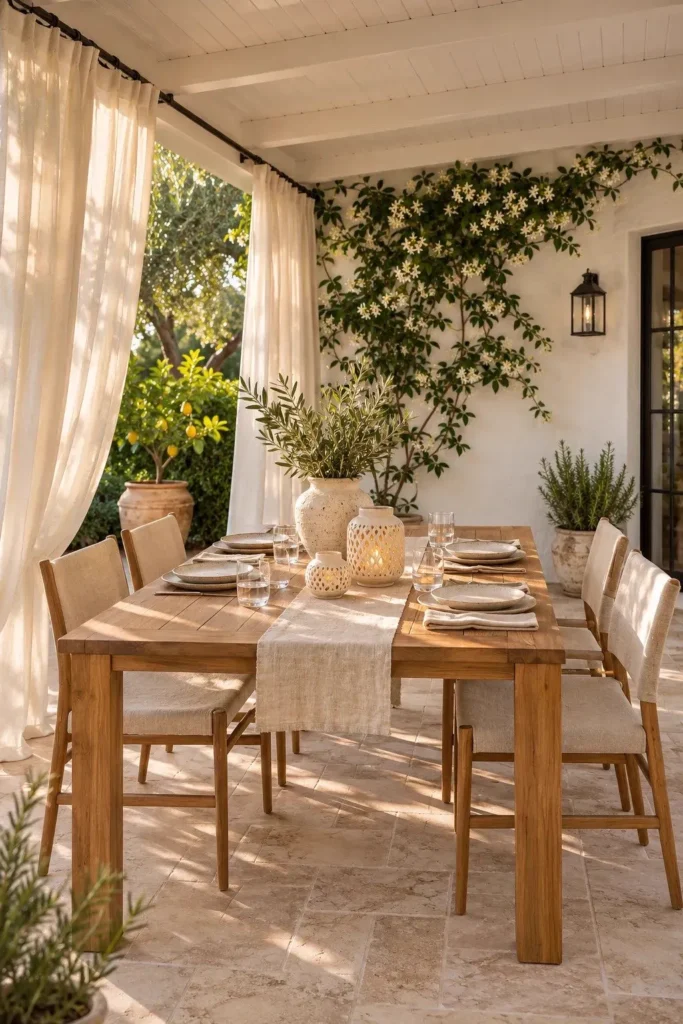
Harsh afternoon sunlight reaches the dining table from the side, making guests uncomfortable during meals. Nearby windows also leave the seating area feeling exposed, even beneath a protective roof.
AFTER:
Flowing ivory curtains soften the incoming sunlight and create a more private dining atmosphere. Lightweight fabric adds movement and texture while allowing the outdoor space to feel open and welcoming.
Curtains work best when you need shelter from low sun or a little privacy from neighboring windows. Choose panels labeled for outdoor use, and install a rust-resistant ceiling track or rod. Tie the fabric back while serving food, and leave space around grills or other heat sources.
Built-In Banquette Seating

- Measure the corner: A compact dining corner can hold more guests than expected. Measure both walls and allow enough clearance for comfortable table access.
- Build the seating base: Choose weather-resistant framing materials and provide drainage beneath the bench to prevent trapped moisture.
- Add comfortable cushions: Select quick-drying foam and removable outdoor fabric covers in sage, cream, or warm beige.
- Position the dining table: Choose a pedestal table that allows guests to slide into the bench without bumping into bulky table legs.
Built-in seating keeps the dining arrangement organized while making good use of awkward corners. Pair the bench with lightweight chairs on the open sides for flexible seating. Consider hinged storage beneath the bench for outdoor linens, but include ventilation so damp cushions and accessories are not stored without airflow.
Porcelain Tile Flooring
| Feature | Outdoor Porcelain Tile | Standard Concrete |
|---|---|---|
| Appearance | Stone-look finishes and varied colors | Simple, understated surface |
| Cleaning | Easy to wipe after food spills | Easy to sweep, but porous finishes may stain |
| Durability | Dense, low-absorption surface | Strong, with possible cracking over time |
| Installation | Requires suitable substrate and drainage | Often simpler for basic patio slabs |
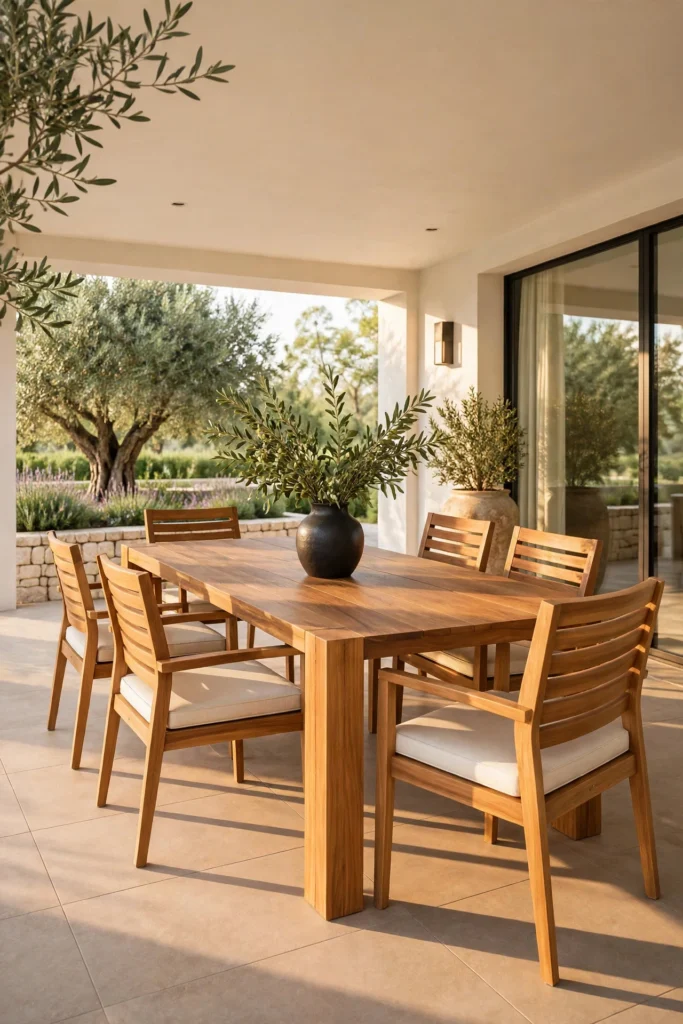
Dining spills are much easier to handle when the floor has a practical, washable finish. Choose exterior-rated porcelain with suitable slip resistance, particularly near wet areas. Larger tiles create a calmer visual effect, while warm beige or light gray tones complement wood furniture without competing with colorful table settings.
Vertical Herb Garden

DO:
- Fresh herbs beside the dining table bring greenery and useful ingredients within arm’s reach.
- Install sturdy wall-mounted planters where herbs receive sufficient natural sunlight.
- Grow rosemary, thyme, and oregano in containers with proper drainage.
- Arrange taller plants above smaller varieties to create a layered display.
DON’T:
- Hang heavy planters from weak wall fixtures or decorative hooks.
- Place dripping containers directly above dining chairs or food.
- Crowd herbs together where airflow is limited.
- Choose plants that need full sun for a permanently shaded wall.
A vertical herb garden adds natural color without taking up valuable floor space. Use matching terracotta pots for a cohesive appearance, or mix neutral ceramic containers for subtle contrast. Position the garden near your serving area so fresh herbs remain convenient during summer lunches and relaxed family dinners.
Outdoor Ceiling Fan

Best For: Warm afternoons and humid evenings when guests need gentle airflow.
Cost: Moderate, depending on the fan model and electrical installation.
Skill Level: Professional electrical installation recommended.
Works In: Roofed dining patios with sufficient ceiling clearance and appropriate electrical connections.
A ceiling fan helps keep air moving around the dining table during warmer months. Choose a damp-rated or wet-rated model based on exposure to rain and moisture. Match the finish to your furniture hardware, and check the manufacturer’s mounting requirements before installation. Comfort matters just as much as appearance.
Striped Outdoor Rug

A striped rug gives an outdoor dining arrangement a clear visual boundary. Choose narrow cream and sage stripes for a relaxed coastal feel, or go with bold navy and ivory for stronger contrast. Place the rug beneath the table so the entire dining arrangement feels connected. Flatwoven polypropylene is particularly practical because it handles everyday spills and regular outdoor use.
Measure carefully before ordering. The rug should extend approximately 24 to 30 inches beyond the table edges so dining chairs stay on the surface when pulled out. Choose a breathable outdoor rug that dries quickly, and lift it periodically to check for trapped moisture underneath. A subtle striped pattern also helps disguise small crumbs between cleanings.
Woven Pendant Lanterns

- A cluster of woven lanterns creates an inviting focal point above the dining table. Choose natural rattan-style shades for a relaxed, organic appearance.
- Hang three pendants at slightly different heights to introduce visual depth without overwhelming the seating area.
- Select warm white LED bulbs that provide comfortable illumination during evening meals.
- Coordinate the woven textures with dining chairs, baskets, or natural fiber accessories for a balanced design.
- Choose outdoor-rated fixtures suitable for your patio’s moisture exposure, and have permanent wiring installed by a qualified electrician.
Pendant lighting can become the focal point without crowding the tabletop. Keep the lowest fixture high enough that seated guests can see one another comfortably, and use a dimmer for brighter serving light and softer dinners. In exposed locations, choose fixtures and wiring specifically rated for the installation conditions.
Cedar Lattice Privacy Screen
Quick Tip:
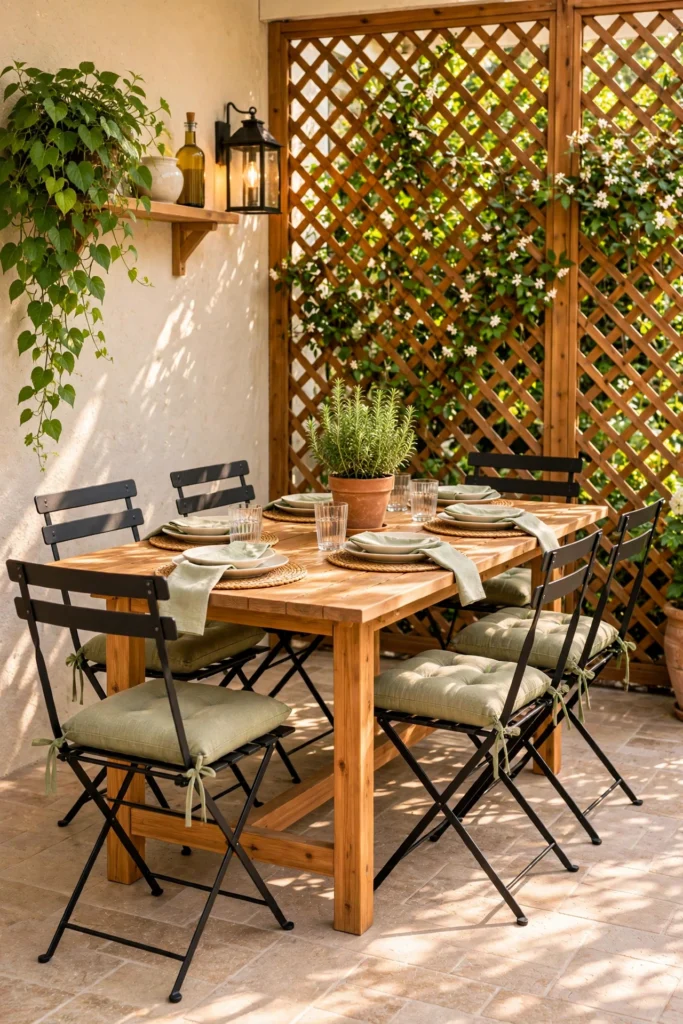
A dining area feels much more relaxing when neighboring windows are less visible. Position a cedar lattice panel where privacy is needed most, and choose narrower openings if you want more screening. Secure the structure properly so it remains stable during windy weather.
A lattice screen gives the dining corner definition without making it feel enclosed. Cedar keeps the look warm, while painted panels suit modern patios. Position the screen on the side facing neighbors or harsh afternoon sun, and leave enough space for cleaning, maintenance, and healthy airflow around nearby plants.
Outdoor Serving Sideboard

BEFORE:
Serving a family dinner becomes frustrating when every plate, drink, and serving bowl competes for space on the dining table. Guests constantly move dishes around, and the host makes repeated trips into the kitchen.
AFTER:
A slim outdoor sideboard provides a dedicated surface for drinks, extra dishes, and serving accessories. The dining table stays organized, while guests can easily help themselves without interrupting conversations.
A narrow sideboard keeps the main table clear for plates and conversation. Choose powder coated aluminum, exterior grade cabinetry, or another material suited to your climate. Store only weather safe items outside, and bring linens indoors after meals. Place the unit close to the house for simpler serving and cleanup.
Extendable Dining Table

- Measure Your Dining Area: A table that grows with your guest list saves valuable floor space between gatherings. Measure the patio with chairs pulled out before selecting a table.
- Choose an Extension Style: Look for a butterfly leaf or removable extension design that operates smoothly and suits your seating needs.
- Arrange Flexible Seating: Pair the table with lightweight dining chairs that can be moved or stored easily when fewer guests are visiting.
- Complete the Table Setting: Use a simple runner, neutral dinnerware, and small ceramic centerpieces that work with both the compact and extended table sizes.
An extendable table makes a sheltered dining area practical for both weekday meals and weekend gatherings. Keep the extension leaves somewhere dry and accessible, and test the mechanism before guests arrive. A neutral tablecloth can unify the surface when extra leaves have a slightly different wood tone.
Teak Dining Furniture
| Feature | Teak Furniture | Aluminum Furniture |
|---|---|---|
| Appearance | Warm natural grain and rich golden tones | Sleek finishes with modern silhouettes |
| Maintenance | Needs cleaning and optional color-preserving care | Typically requires simple washing |
| Weight | Usually heavier and more substantial | Generally lighter and easier to rearrange |
| Weathering | Develops a silver-gray patina over time | Quality powder-coated finishes resist corrosion |
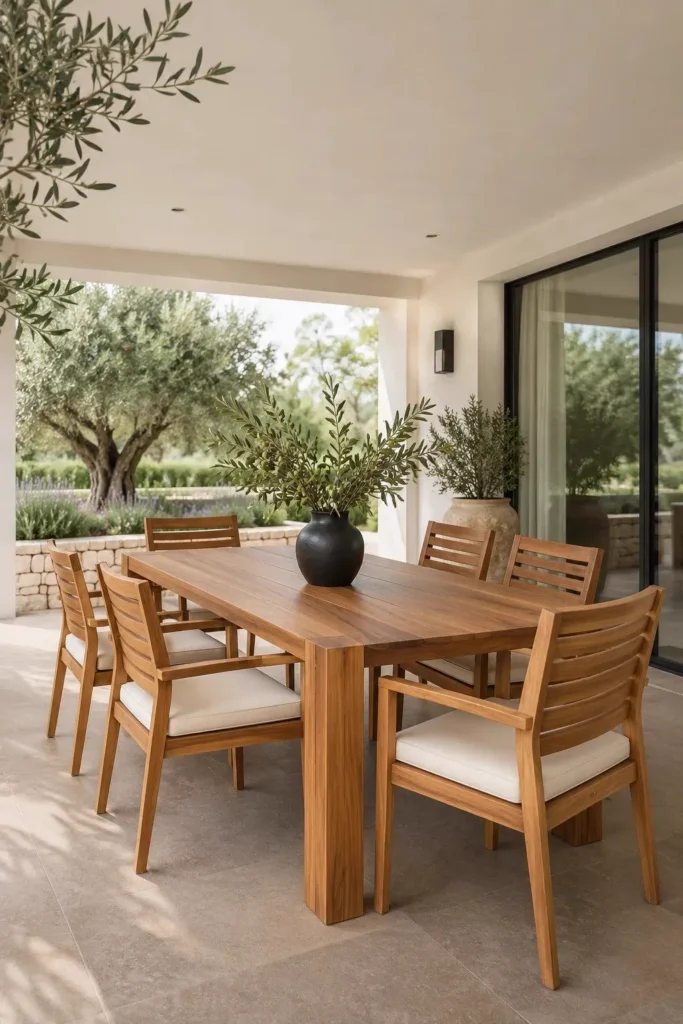
Teak brings warmth and visible grain to an outdoor dining arrangement, while aluminum usually feels lighter and needs less routine care. If you choose teak, expect its color to weather toward silver gray unless maintained. Test chair comfort before buying, especially if meals often stretch into long conversations.
Linen Table Layers

DO:
- A thoughtfully layered table makes even casual outdoor lunches feel inviting.
- Choose washable linen-look fabrics in cream, sage, or warm beige.
- Combine woven placemats with simple ceramic plates for natural texture.
- Add small bud vases that leave enough room for serving dishes.
DON’T:
- Overcrowd the tabletop with oversized centerpieces.
- Choose delicate fabrics that cannot handle frequent washing.
- Mix too many competing patterns or bright colors.
- Leave lightweight napkins unsecured during breezy weather.
Layered table linens give an everyday outdoor meal a finished look without expensive decorations. Keep the palette to two or three coordinated shades, and use washable fabrics for frequent gatherings. For breezy days, secure the runner with discreet clips or replace it with weighted woven placemats.
Potted Citrus Border

Best For: Creating a lush Mediterranean dining atmosphere with natural greenery.
Cost: Moderate, depending on plant sizes and decorative containers.
Care Level: Moderate, with regular watering and seasonal maintenance.
Works In: Sunny patio edges and warm climates, with winter protection where needed.
Cluster two or three dwarf citrus trees along the sunniest outside edge of the dining area. Their glossy leaves soften hard surfaces, while terracotta containers introduce warm color. Choose pots with drainage holes and move frost-sensitive varieties into protection when temperatures drop. Keep walkways clear for guests.
Translucent Roof Panels

A roof that lets daylight through can make a narrow patio feel noticeably more spacious. Consider UV-protected, exterior-rated translucent panels rather than fully clear sheets if glare is a concern. They bring natural brightness to breakfast gatherings while helping keep passing showers away from the dining table.
Before choosing a roof material, check how it handles summer heat, heavy rain, and local wind loads. Ask an experienced installer about slope, drainage, fasteners, and building requirements. Pair the brighter ceiling with a darker table or woven chairs so the dining area retains warmth and visual definition.
Mixed Dining Chairs
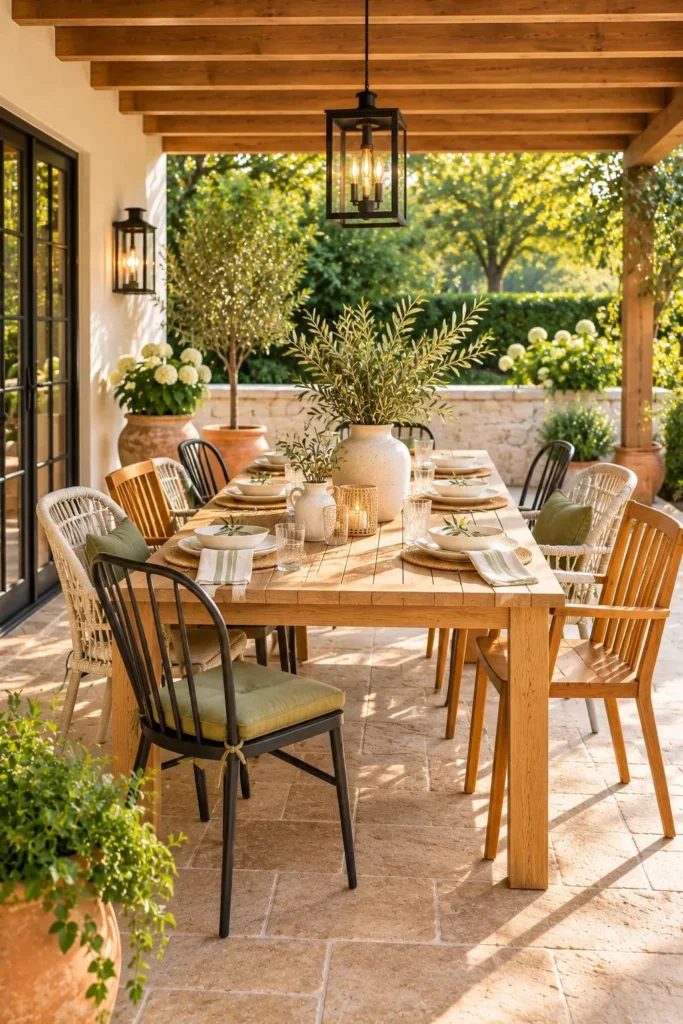
- Matching chairs aren’t necessary for a coordinated outdoor dining setup. Combining different materials creates a relaxed, collected appearance.
- Select two or three chair styles that share a similar seat height so everyone sits comfortably around the table.
- Balance heavier black metal chairs with lighter woven designs to prevent the arrangement from feeling visually crowded.
- Repeat one cushion color across different chair styles to bring the overall design together.
- Choose furniture specifically rated for outdoor conditions, especially if rain can reach the seating area.
Mixed seating works particularly well around long rectangular tables where chairs can be arranged symmetrically. Place matching styles at opposite ends and alternate complementary designs along the sides. Test the chairs beneath your table before committing, since armrests and seat heights can affect comfort during longer meals.
Retractable Mesh Screens

Quick Tip:
Mosquitoes can ruin an otherwise lovely outdoor dinner. Install retractable mesh screens along the open sides of your dining area, focusing on openings where insects enter most often. Choose fine mesh with secure edge seals to reduce gaps around the panels.
Retractable screens make evening dining more comfortable without permanently closing off garden views. Select frames that complement the patio posts, and check that the tracks allow smooth opening and closing. Keep nearby plants trimmed away from the mesh, and clean the screens regularly to maintain airflow and visibility.
Painted Beadboard Ceiling

BEFORE:
A plain, unfinished patio ceiling makes the dining area feel incomplete despite having attractive furniture. Exposed surfaces and mismatched materials draw attention away from the carefully arranged table setting.
AFTER:
Soft blue beadboard creates a charming overhead feature with a subtle coastal influence. Crisp white trim frames the ceiling, while painted grooves add architectural texture without overwhelming the outdoor dining arrangement.
Painted beadboard works especially well with natural wood furniture and light-colored flooring. Choose moisture-resistant panels approved for sheltered exterior use and finish them with suitable outdoor paint. Pale blue offers a gentle coastal appearance, while warm white creates a brighter, more traditional dining atmosphere beneath the roof.
Counter Height Dining Bar

- Choose the Location: A narrow patio can still offer comfortable dining with a slim counter along an open wall or garden-facing edge. Keep the main walkway clear.
- Select the Countertop: Choose weather-resistant stone, sealed concrete, or suitable exterior-grade composite material that can handle everyday spills and moisture.
- Arrange Comfortable Stools: Match the stool height to the counter and provide sufficient legroom beneath the surface.
- Add Simple Accessories: Place small ceramic planters, woven placemats, and compact rechargeable lanterns along the counter without overcrowding it.
A counter height dining bar provides a casual spot for morning coffee, quick lunches, and relaxed conversations. It works especially well on narrow terraces where a traditional dining table would interrupt movement. Use stools with supportive backs, and secure the counter properly for safe everyday use.
Herringbone Brick Pavers

| Feature | Herringbone Pattern | Running Bond Pattern |
|---|---|---|
| Appearance | Dynamic zigzag arrangement | Simple staggered brick rows |
| Design Style | Traditional European courtyard charm | Classic farmhouse simplicity |
| Installation | More cutting and careful alignment | Generally easier to arrange |
| Visual Effect | Creates movement and detailed texture | Produces a calm, orderly surface |
Herringbone brick adds movement and warmth beneath outdoor dining furniture, while a running bond pattern feels quieter and is often simpler to lay. For either layout, start with a properly prepared base and plan drainage away from the house. Test a sample arrangement before committing to the entire patio.
Natural Stone Accent Wall

DO:
- A textured stone wall creates an elegant backdrop for outdoor dining.
- Choose natural limestone, sandstone, or exterior-rated stone veneer.
- Coordinate the stone color with existing flooring and furniture.
- Add subtle wall lighting to highlight the natural surface texture.
DON’T:
- Mix several competing stone patterns within a small dining area.
- Install heavy stone cladding without checking structural support.
- Choose interior-only stone products for exposed outdoor surfaces.
- Place oversized decorations that hide the stone’s natural texture.
A stone wall gives a dining corner texture without adding clutter to the table. Use a small section behind the main seating area as the focal point, then repeat its warm or cool undertones in cushions and pottery. Exterior-rated materials and proper installation matter more than dramatic stone size.
Gabled Dining Roof

Best For: Spacious outdoor dining areas and traditional farmhouse-inspired homes.
Cost: High, especially for a custom-built roof structure.
Skill Level: Professional design and construction recommended.
Design Feature: Sloped ceiling with exposed beams and generous overhead space.
A gabled roof gives a larger dining patio extra overhead space and a defined architectural shape. Light ceiling finishes keep the structure feeling open, while exposed timber trusses add warmth. Have a qualified professional check structural design, drainage, and local permit requirements before building, especially in windy or snowy climates.
Outdoor Dining Fireplace

Cool evenings feel far more inviting when the dining area has a sheltered fireplace nearby. Position an outdoor-rated unit against a suitable noncombustible wall, with the dining table outside its required clearance zone. Repeat the fireplace stone in nearby planters or flooring for a coordinated, architectural appearance.
Choose seating fabrics that tolerate occasional ash and temperature changes, and keep a clear route between the table and fire. Wood-burning fireplaces need properly designed venting and regular cleaning, while gas models require approved installation. Check local codes, roof compatibility, and manufacturer clearances before settling on the layout.
Sliding Glass Panels

- Rainy-day dinners become more comfortable when sliding glass panels provide protection without hiding the garden view. Choose panels designed for exterior use.
- Install large glass sections between existing structural posts to maintain a clean, open appearance without altering their support.
- Select tempered or laminated safety glazing suitable for the installation and local building requirements.
- Include operable sections that allow fresh air to circulate during warmer afternoons.
- Coordinate slim black or bronze frames with the dining furniture for a polished contemporary finish.
Sliding glass panels help extend the use of an outdoor dining area during windy or rainy weather. Keep drainage channels clear and clean the tracks regularly for smooth operation. Remember that enclosed glass spaces can become hot in direct sunlight, so suitable ventilation and shading remain important.
Garden Fountain Corner

Quick Tip:
A gentle water feature can soften distracting background noise during outdoor meals. Position a small recirculating fountain several feet from the dining table so its sound remains subtle. Empty and clean the reservoir regularly to prevent stagnant water and mosquito breeding.
A compact fountain adds movement and a calming sound to a dining terrace without taking up much space. Choose natural stone or weather-resistant ceramic that complements the flooring. Surround the fountain with low planters, and position its electrical connection safely away from splashing water using appropriate outdoor protection.
Hanging Fern Planters

BEFORE:
A bare patio ceiling can make an otherwise inviting dining area feel surprisingly flat. The dining furniture looks attractive, but the space lacks natural greenery and visual interest above eye level.
AFTER:
Lush hanging ferns soften the roofline and create a refreshing garden atmosphere around the dining table. Their trailing leaves introduce beautiful texture while leaving valuable floor space available for chairs and movement.
Hanging planters work especially well beneath white ceilings and exposed timber beams. Choose sturdy hooks secured to structural supports, and select containers with removable drip trays. Position plants away from overhead fans and dining plates. Boston ferns appreciate humidity, but they need consistent watering and protection from harsh sunlight.
Fold Down Dining Table
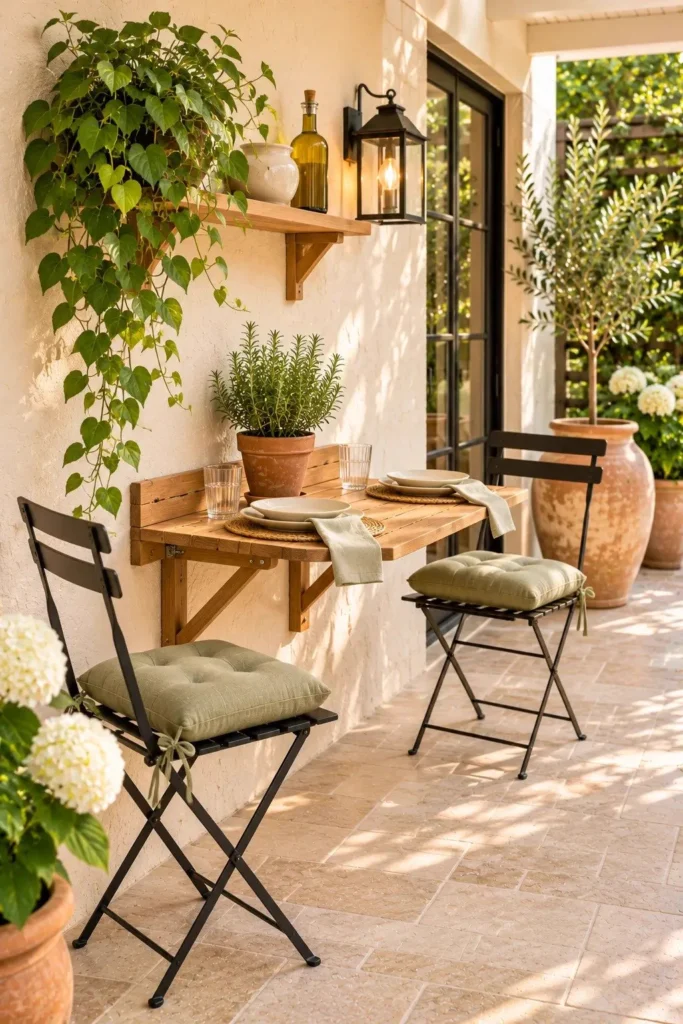
- Choose the Wall: A fold down table can turn an overlooked patio corner into a practical breakfast spot. Select a sturdy wall with enough clearance for chairs and comfortable movement.
- Measure the Dining Surface: Allow approximately 24 inches of table width per person and choose a depth that accommodates plates and glasses.
- Install Strong Supports: Use exterior-rated folding brackets and appropriate anchors suitable for the wall material and expected weight.
- Add Compact Seating: Pair the table with lightweight folding chairs that can be stored against the wall when not needed.
- Style the Surface: Finish with simple ceramic dishes, a small planter, and washable placemats that can be removed before folding.
A folding table makes a compact covered patio useful for coffee, breakfast, or casual dinners without permanently occupying the walkway. Choose weather-resistant materials and check the manufacturer’s weight limit before use. Keep the surface free of heavy decorations, and fold it away whenever you need additional floor space.
Modular Dining Layout

| Feature | One Large Dining Table | Two Modular Tables |
|---|---|---|
| Seating | Fixed arrangement for larger groups | Flexible seating for small or large gatherings |
| Layout | Requires one continuous open area | Tables can separate into smaller dining zones |
| Everyday Use | Spacious but may feel oversized | One table can serve smaller daily meals |
| Entertaining | Keeps everyone at one table | Allows separate dining or activity stations |
Large outdoor gatherings become easier to manage when furniture can adapt to the occasion. Two matching tables offer flexibility for family dinners, children’s activities, or buffet-style entertaining. Choose similar heights and finishes so they align neatly, and secure lightweight tables where strong winds are common.
Bamboo Roller Shades
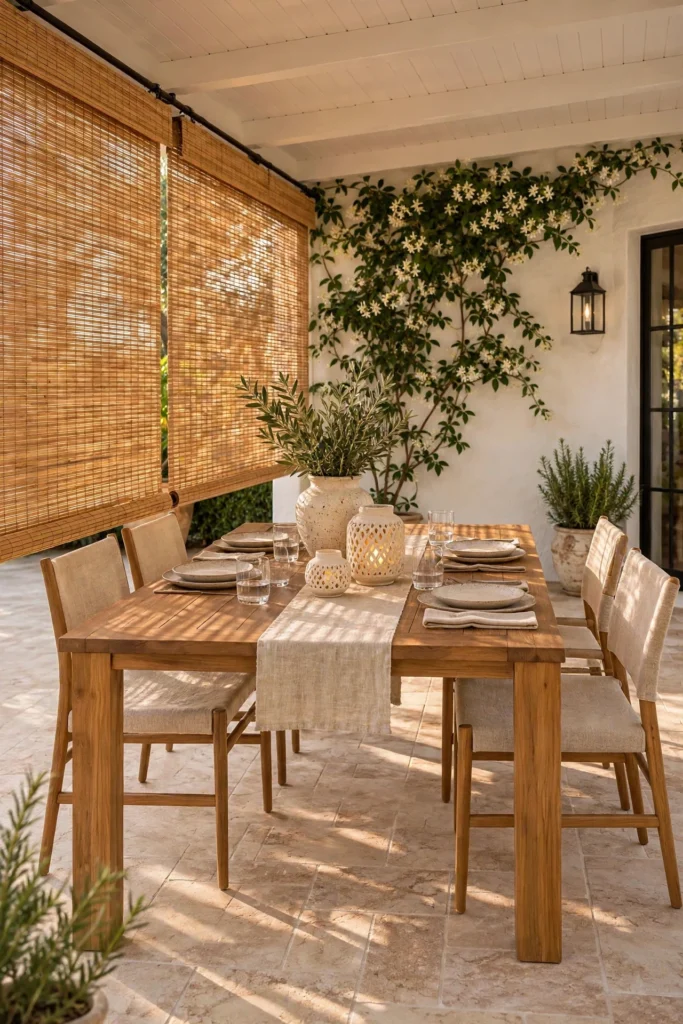
DO:
- Block harsh afternoon glare by lowering the shades before guests arrive.
- Choose bamboo shades specifically rated for outdoor conditions.
- Install secure mounting brackets on sturdy structural supports.
- Coordinate the natural woven texture with wooden tables and neutral cushions.
DON’T:
- Hang untreated indoor bamboo shades where rain can reach them.
- Allow loose shades to swing against dining furniture in strong winds.
- Install the shades too close to grills or open flames.
- Choose completely opaque panels if you want to preserve garden views.
Bamboo shades are useful when the low sun reaches diners from the side, especially on west-facing terraces. Select exterior-rated woven materials and anchor the bottom edge to reduce movement in breezy weather. Roll the shades fully up during storms, and keep them away from grills or open flames.
Outdoor Beverage Cart

Best For: Easy drink refills during relaxed outdoor dinners and family gatherings.
Cost: Low to moderate, depending on materials and cart size.
Skill Level: Beginner, with little assembly required for most models.
Works In: Patios with smooth, level flooring and convenient sheltered storage.
A rolling beverage cart keeps drinks close without using up the dining table. Choose locking wheels, an easy-clean surface, and a lower shelf for spare glasses. Set it beside the table during meals, then move it to a sheltered storage spot afterward. Keep perishables properly chilled.
Kitchen Pass Through
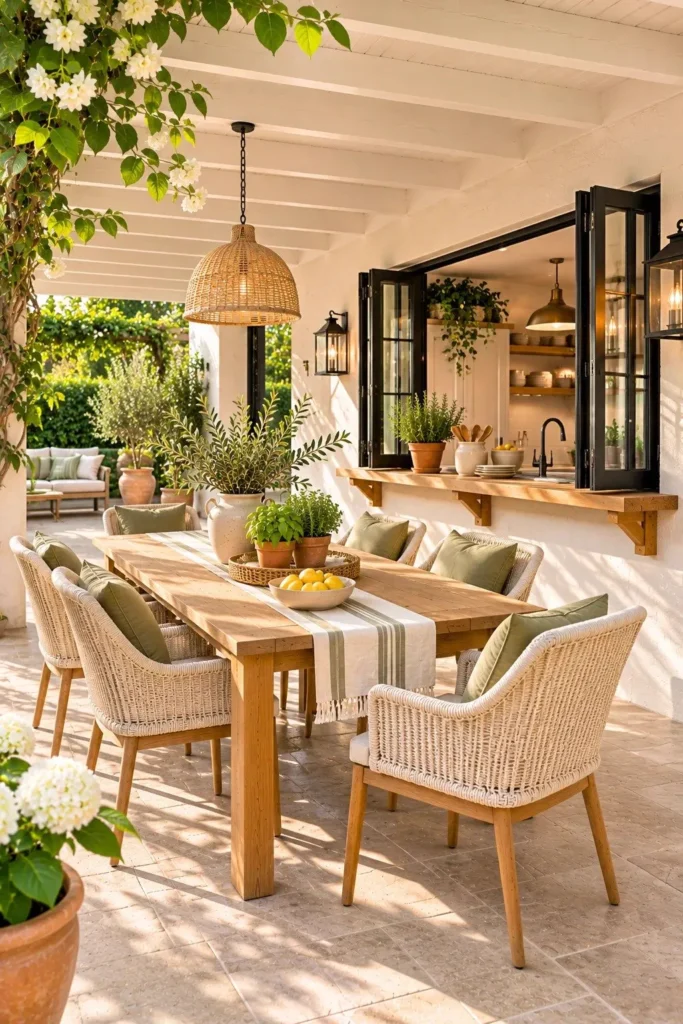
Serving dinner outdoors becomes easier when the kitchen opens directly onto the patio. A pass-through window with a sturdy serving ledge lets you hand out dishes, refill glasses, and clear plates without carrying everything through a doorway. Black metal frames add definition against light plaster walls.
Position the opening near the dining table but away from crowded chair backs. Choose a weather-resistant sill that wipes clean, and leave enough ledge space for serving trays. Because new window openings can affect structure and insulation, consult a qualified contractor before changing an exterior wall.
CONCLUSION
A welcoming outdoor dining area doesn’t have to begin with a major renovation. Sometimes better lighting, more comfortable chairs, or a little extra privacy is enough to make meals outside feel special. The best covered patio is one that fits how you actually live, from quick breakfasts to long dinners with friends.
Save this post on Pinterest so you can return to your favorite details. Choose one idea to try this weekend, then build on it as your budget allows. Share the article with someone planning an outdoor refresh, and make your next meal outside one worth lingering over. And when the cold arrives, our winter planters for front porches keep the entry looking alive.
One Comment