
33 Striking Black Fireplace Ideas That Define a Room
Your room can have lovely furniture and still feel like something is missing. A black fireplace gives the eye a place to settle, whether your style leans toward soft cottage layers or crisp modern lines.
The challenge is making that dark finish feel connected to the rest of the space. A shade that looks warm beside oak can read cooler against bright white walls, while a mantel crowded with small objects can hide the shape you wanted to highlight. If black feels too bold, our white brick fireplace ideas soften the same texture, while these modern fireplace ideas keep the lines sleek and minimal.
Matte Brick Finish

Dark brick gives a plain living room an anchor without hiding its texture. A matte black fireplace pairs especially well with warm white walls, oatmeal upholstery, and a faded wool rug. Keep the surrounding palette quiet so the brickwork becomes the detail your eye settles on.
Compare finish samples beside the walls in morning and evening light, since some blacks read blue against creamy paint. Keep mantel styling simple: one framed print and a low ceramic bowl are enough. Leave sections of brick visible around the opening so the texture stays part of the design.
Pale Oak Mantel

- Give a dark surround a warmer edge with a pale oak shelf. Choose a simple rectangular profile that keeps the wood grain visible.
- Repeat the oak tone in a nearby coffee table or picture frame so the shelf feels connected to the room.
- Keep the surface mostly clear. Place a rounded ivory vase toward one end and a low bowl near the other.
- Check the fireplace manufacturer’s clearance requirements for combustible wood before deciding where to install the mantel.
This pairing suits rooms where a dark surround feels too heavy beside pale furniture. The oak creates a visual link to the rest of the room, especially when its tone appears in another piece nearby. Skip orange varnish if your existing wood finishes are muted or softly weathered.
Full Height Slate
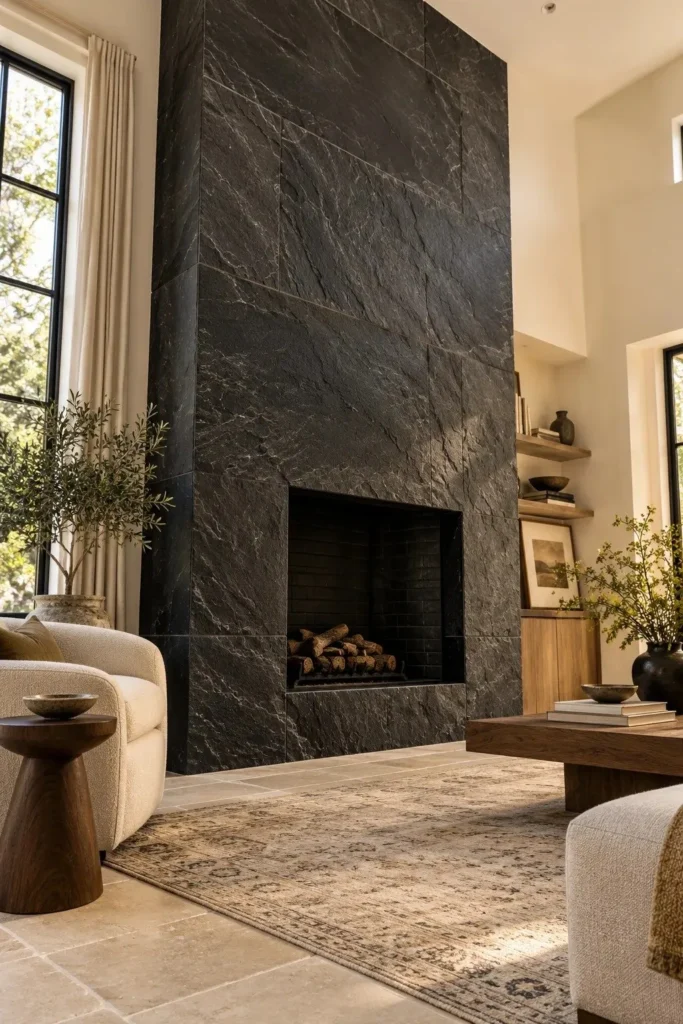
Quick Tip:
Does your fireplace wall feel cut short? Extend the stone cladding to the ceiling for a continuous vertical line. Mark the proposed width with painter’s tape first, then check the proportions from your main seat.
A tall stone surface gives the room a strong vertical focal point, especially beside low seating. Repeat a little black in a lamp base or picture frame to connect it with the wider space. For a quieter result, choose subtle texture and restrained seams rather than dramatic contrasting veining.
Arched Plaster Surround

BEFORE: A chunky mantel can make a compact fireplace wall feel crowded. Strong horizontal edges compete with nearby doorways and shelving, leaving the opening visually boxed in.
AFTER: A smooth arched surround replaces the heavy outline with a softer curve. The charcoal finish keeps the hearth prominent, while an uncluttered wall lets its shape stand out.
Trace the proposed arch on paper and tape it above the opening before committing. A broad, shallow curve feels different from a tall, narrow one, especially beneath a low ceiling. Keep nearby wall decor simple, and have an installer confirm suitable materials and clearances before changing the surround.
Layered Mantel Artwork

- Let one pale landscape break up the dark wall above your mantel. Choose a frame narrower than the shelf so it leaves breathing room on both sides.
- Position a smaller abstract print slightly in front of one lower corner, leaving most of the larger image visible.
- Repeat one frame finish, such as pale oak or aged brass. Let the artwork provide the variation.
- Secure both frames against slipping or tipping, and keep artwork outside the fireplace’s required clearance zone.
Layering works best when the pieces differ in size but share one or two colors. Pull a shade from your rug or cushions into the larger artwork to connect the arrangement with the seating area. Leave visible wall around the frames so the mantel still has room to breathe.
Veined Marble Frame

| Design Detail | Slim Marble Border | Broad Marble Frame |
| Main focal point | Keeps attention on the firebox | Makes the stone pattern more prominent |
| Wall coverage | Leaves more painted wall visible | Creates a larger area of dark contrast |
| Pattern visibility | Shows smaller sections of veining | Reveals longer, more continuous veins |
| Nearby decoration | Leaves room for wall accents | Benefits from fewer competing accessories |
Fine veining gives a dark surround movement without introducing another strong color. Compare the actual slab or tile samples with your wall paint, since white veins can look surprisingly cool beside creamy walls. Ask to review the proposed vein layout before cutting, particularly where separate pieces meet at the corners.
Matching Built-In Bookcases

DO
- Carry the surround color across both bookcases to give the whole wall one clear outline.
- Leave some shelves lightly styled so the wall retains open space.
- Repeat a few pale ceramics at different heights to break up the dark background.
DON’T
- Pack every shelf with books and ornaments.
- Introduce a different accent color on every shelf.
- Extend combustible cabinetry into the appliance’s required clearance zone.
Matching cabinetry can help an off-center hearth feel more connected to the room. Balance the visual weight with similar amounts of open space on each side, even if the units differ in width. Closed lower cupboards are useful for hiding board games, cables, and everyday clutter.
Aged Brass Screen

Visual Effect: A fine brass outline brings a quiet glow to dark masonry.
Finish: Aged or brushed brass for softer reflections.
Shape: A flat panel for a crisp outline, or folding panels for a traditional look.
Compatibility: A screen designed for your fireplace type and opening.
Let the screen be the main metallic detail near the hearth. Repeat its finish in one lamp or picture frame, then keep other accessories matte. Against dark brick, a simple mesh design adds contrast while letting the texture of the masonry remain visible through the fine metal weave.
Herringbone Tile Surround

Small tiles can make a dark surround feel detailed without adding more colors. A herringbone layout creates a repeating zigzag that rewards a closer look, especially in a room with plain upholstery. Choose narrow rectangular tiles and tonal grout to keep the pattern crisp rather than busy.
Lay out a sample section before installation to see where the pattern meets the opening and outer edges. Small slivers at the corners can make the finish look awkward. Ask your installer to plan balanced cuts and confirm that the tile and setting materials suit the fireplace application.
Olive Wall Pairing
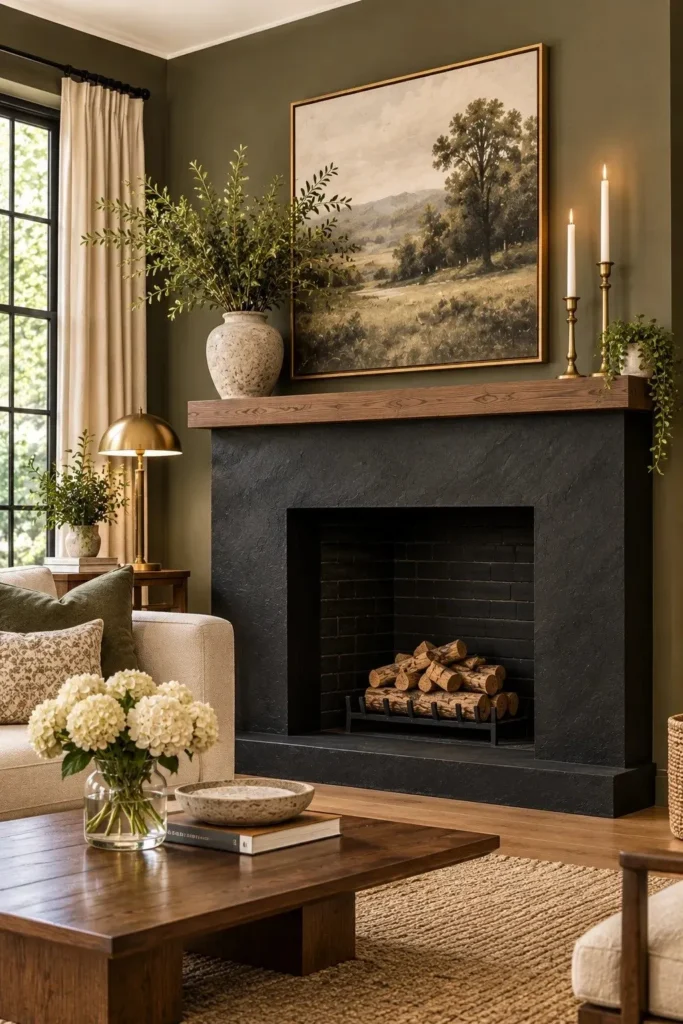
- Soften the contrast around dark masonry with muted olive walls. Choose a shade with gray undertones for a quieter background.
- Compare large paint samples beside the surround in daylight and under your evening lamps.
- Keep the ceiling warm white if you want a lighter boundary above the deeper walls.
- Repeat the green once in a patterned cushion, then use cream and wood tones for the remaining pieces.
Olive creates a gentler transition between black surfaces and the rest of the room than bright white does. It works especially well with tobacco leather, walnut, and oatmeal fabric. Before painting every wall, check the sample behind your sofa too; upholstery can change how warm the green appears.
Oversized Round Mirror
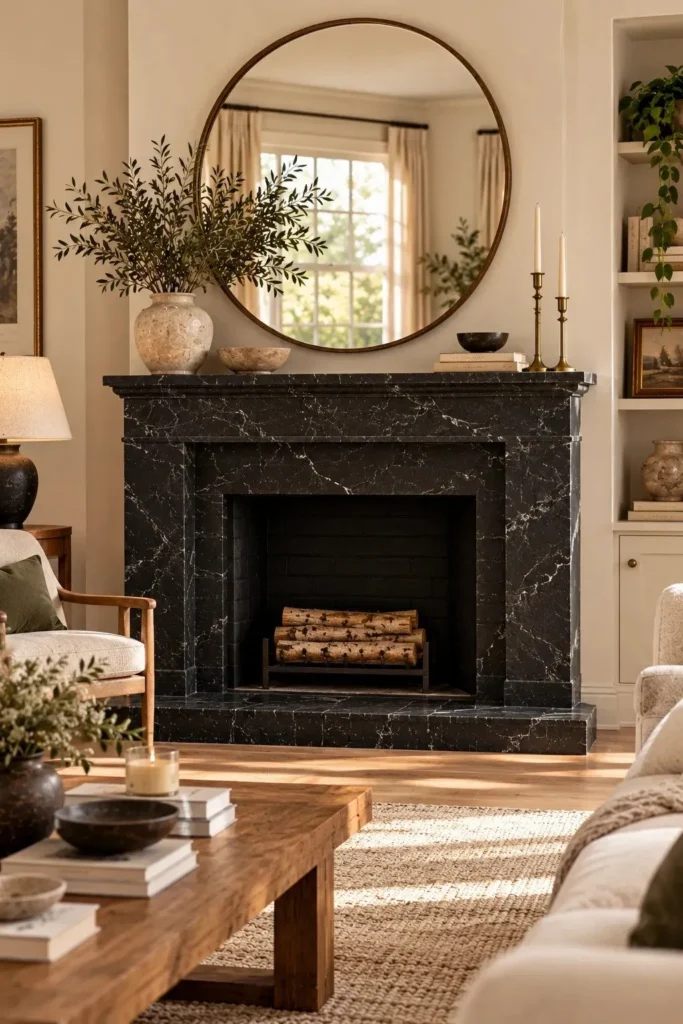
Quick Tip:
Could the view above your mantel use a softer shape? Choose a round mirror slightly narrower than the shelf to contrast with a square firebox. Check what it reflects from your main seat before fixing its position.
A round mirror interrupts the straight edges of a mantel, firebox, and chimney breast without adding another strong pattern. Choose a slim frame if the stone already has visible veining. Keep nearby ornaments low so they do not crowd the glass, and use fixings suited to the wall.
Extended Stone Hearth

BEFORE: A tiny tiled hearth can leave a wide chimney breast looking top-heavy. Several contrasting floor finishes make the base feel even more fragmented.
AFTER: An extended stone slab gives the dark surround a broader, calmer foundation. Its continuous edge creates a clear horizontal line that connects the hearth with the rest of the wall.
Have an installer confirm the required hearth dimensions, materials, and support, then mark the proposed footprint on your floor. Walk your usual route past the sofa before settling on its length. The finished slab should give the wall presence while leaving everyday movement through the room comfortable.
Paired Wall Sconces

- Frame a black fireplace with two matching sconces instead of relying only on the ceiling light.
- Mark possible positions with paper templates, balancing the fixtures around the surround rather than the entire wall.
- Choose shaded or diffused fittings to soften glare when viewed from the sofa.
- Have an electrician confirm wiring and suitable placement. Include dimming if the fittings allow it.
Paired lights give the hearth a clear outline after sunset, when dark finishes can lose their detail. Repeat the same metal finish in one nearby object to tie the arrangement together. In a room with a television, check that the light sources will not reflect directly in the screen.
Ribbed Ceramic Surround
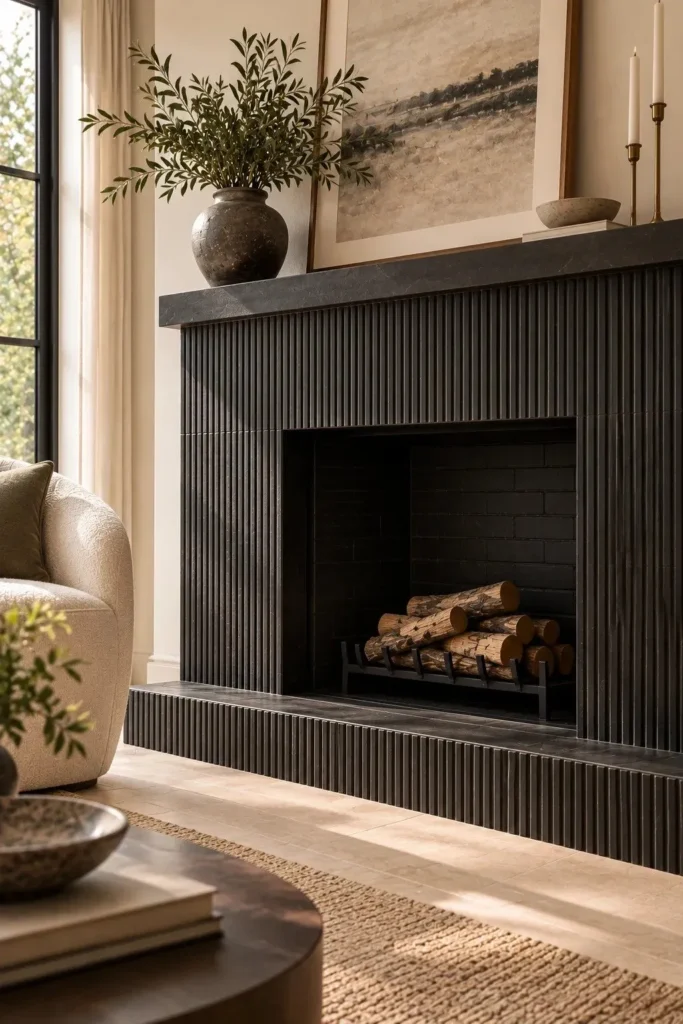
| Design Detail | Fine Ribs | Wide Flutes |
| Surface pattern | Closely spaced vertical lines | Broader sculpted channels |
| Light and shadow | Small, repeating highlights | Wider bands of light and shade |
| Visual character | Subtle texture that rewards a closer look | A more pronounced architectural pattern |
| Sample check | Check whether the texture reads from the sofa | View from the side to assess depth and edges |
Side lighting makes the grooves more visible, so judge a sample where it will actually sit. Turn it toward and away from the window to see how the grooves read. Keep grout close to the tile color so the vertical texture stays more noticeable than the joints.
Charcoal Color Drenching

DO
- Wrap the walls, trim, and ceiling in one charcoal tone to blur their boundaries.
- Choose a slightly deeper finish for the surround so its outline remains readable.
- Bring in pale upholstery and a textured rug to keep seating easy to distinguish.
DON’T
- Assume your chosen charcoal will look identical on plaster, wood, and stone.
- Use shiny finishes on every surface.
- Rely on one bright overhead bulb for the whole room.
Color drenching suits a room where you want the hearth to belong to a larger moody setting. Different textures become especially useful here: soft linen, worn leather, and honed stone keep similar shades from looking flat. The result feels most balanced when the seating remains lighter than the walls.
Cast Iron Insert

Character: Raised ironwork gives a plain chimney breast an ornamental focal point.
Finish: Soft black with restrained highlights on the raised edges.
Best For: Victorian, cottage, and vintage-inspired interiors.
Pair With: Cream walls, simple timber furniture, and a plain mantel.
Let the cast detailing carry the decoration rather than surrounding it with more ornate pieces. A simple mirror above and one low ceramic vessel nearby are enough. For a reclaimed insert, have a fireplace specialist assess its condition and compatibility before planning to use it.
Checkerboard Hearth Tiles
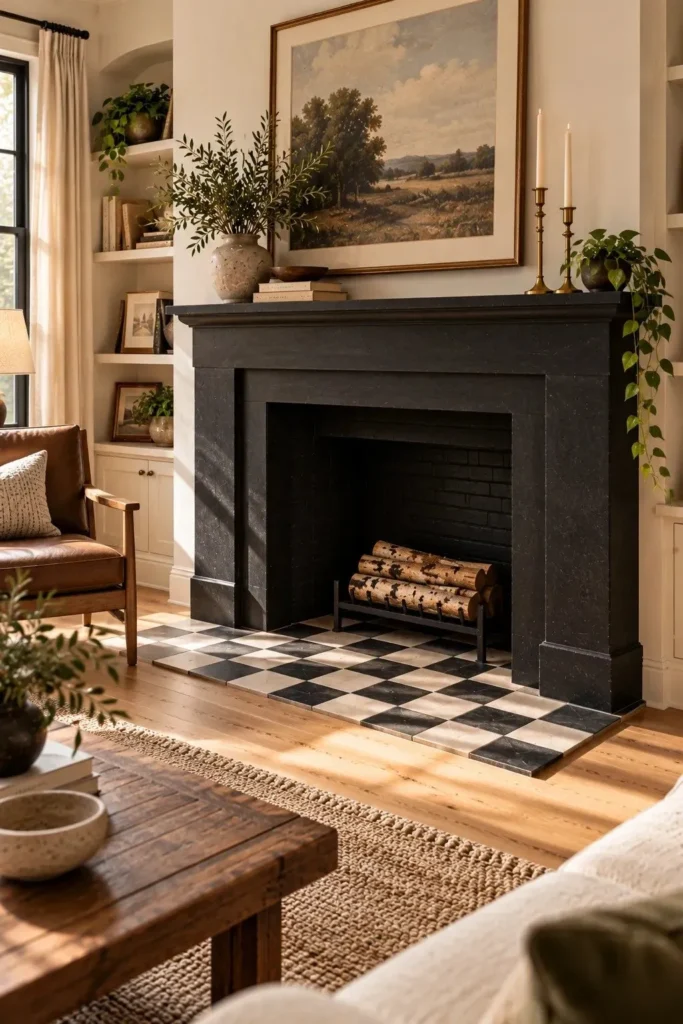
A small checkerboard hearth delivers pattern without asking the whole room to join in. Black and ivory squares connect the dark surround with pale walls, making the contrast feel intentional. Keep the nearby rug plain so the tiled area remains a distinct feature against the timber floor.
Test the tile size with paper squares laid inside the proposed hearth outline. Larger checks read clearly from the sofa, while smaller ones create a busier pattern. Aim for balanced cuts along the edges, and compare warm ivory with bright white beside your existing paint before ordering.
Corner Hearth Arrangement

- Turn an awkward corner into a clear focal point with a compact dark surround.
- Angle the sofa slightly toward the hearth while keeping it connected to the rest of the seating.
- Use one small armchair to complete an open seating group, keeping the route through the room clear.
- Mark furniture footprints with tape, allowing the clearances specified for the fireplace before settling on the layout.
A corner arrangement helps when windows and doorways leave little uninterrupted wall space. A slight turn of the sofa is often enough to acknowledge the hearth while preserving a comfortable conversation area. Choose a round coffee table if sharp furniture corners make the remaining walking space feel cramped.
Linear Ribbon Firebox
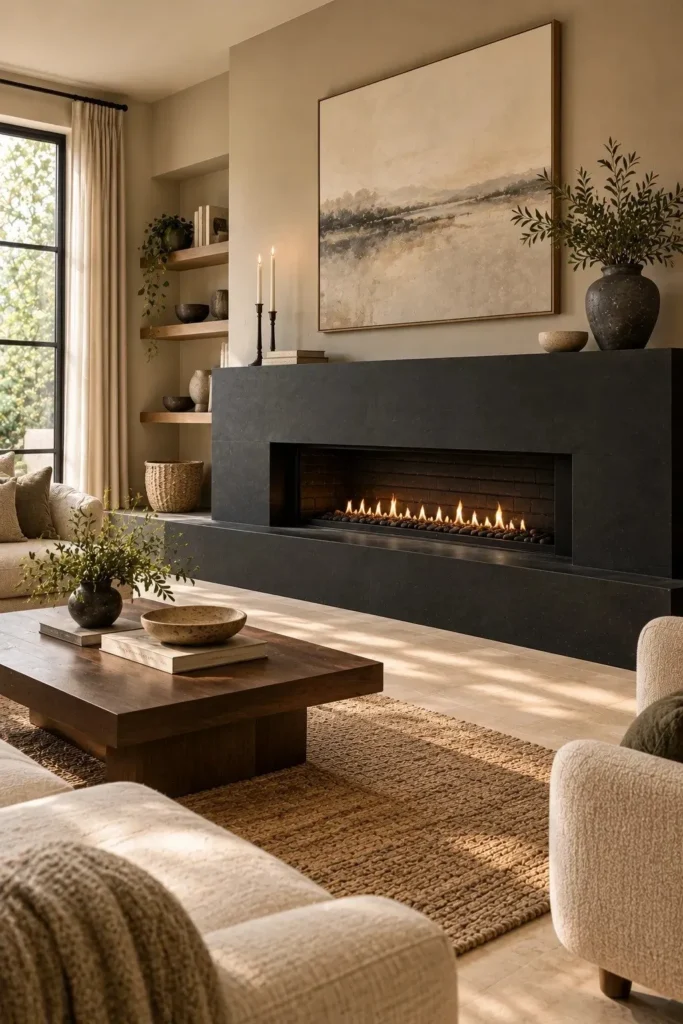
Quick Tip:
Is a tall chimney breast competing with a low ceiling? Choose a wide, slim firebox to give the wall a horizontal emphasis. Tape its outline at the proposed height and view it from your usual seat before finalizing the design.
A narrow opening leaves more uninterrupted wall above the fire, which suits rooms with low furniture and simple lines. Keep the surround close to the width of a nearby console or sofa for a deliberate relationship. Choose an appliance and installation position that meet the manufacturer’s requirements for your room.
Botanical Wallpaper Panels
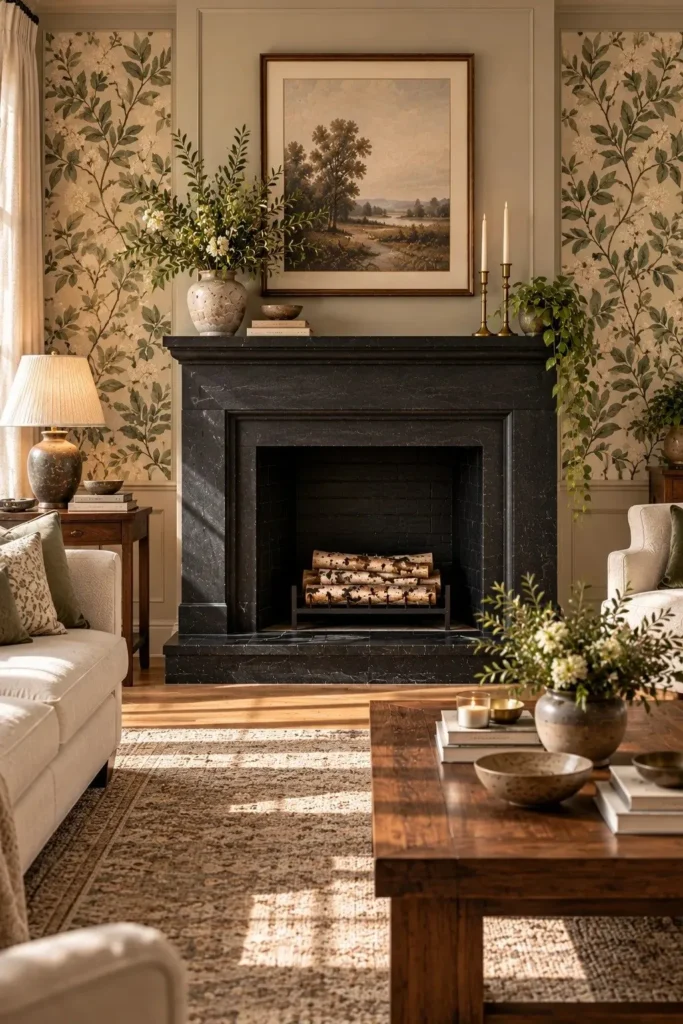
BEFORE: A dark mantel can look stranded between two empty stretches of wall. A few small pictures leave the surrounding areas feeling disconnected.
AFTER: Botanical wallpaper panels give the adjacent walls a consistent pattern and color palette. The plain central chimney breast keeps the hearth prominent while leafy details soften its edges.
Choose a paper with plenty of background space between the leaves so the pattern feels light beside the masonry. Hold a full sample against each side wall to judge its scale. Confirm the wallpaper’s location meets the fireplace manufacturer’s requirements for combustible wall finishes before hanging it.
Asymmetrical Side Shelves
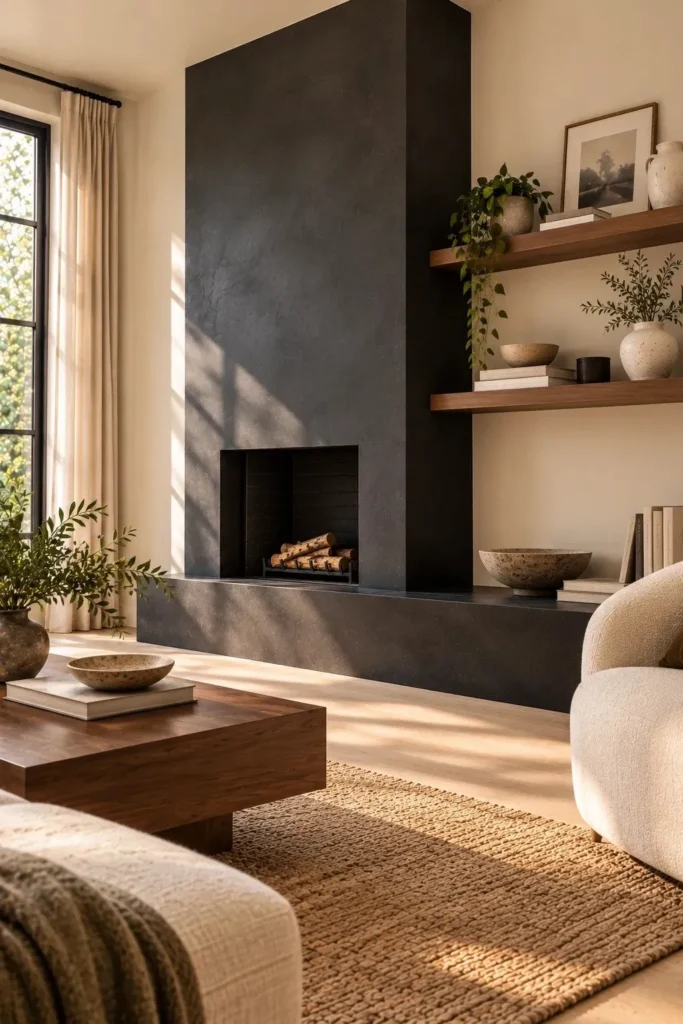
- Let one side stay open so the hearth anchors an intentionally uneven arrangement.
- Plan two shelves on the adjacent wall, keeping timber outside the fireplace’s required clearance zone.
- Place a small group of books on the lower shelf and a rounded ceramic vase above. Leave visible space around both.
- Balance the open side with a single floor lamp, leaving the surrounding wall bare.
Asymmetry helps when a doorway or window prevents matching storage on both sides. The shelves add useful display space without requiring an entire wall of cabinetry. Keep their styling lighter than the dark surround, so the eye still returns to the hearth rather than stopping at the accessories.
Double-Sided Room Divider

| Layout Detail | Centered Divider | Offset Divider |
| Walking routes | Allows routes around both ends | Leaves one larger passage on the open side |
| Visual balance | Creates a symmetrical division between zones | Suits a room with unevenly sized zones |
| Furniture placement | Supports seating arrangements on either side | Leaves a larger uninterrupted area for furniture |
| Sightlines | Places the hearth prominently between both spaces | Preserves a wider view across part of the room |
A shared hearth gives two zones a common focal point without filling the entire opening between them. Map walking routes on both sides before choosing the divider’s position. This layout needs professional planning for the appliance and required clearances, especially when furniture faces the glass from opposite directions.
Rustic Beam Mantel
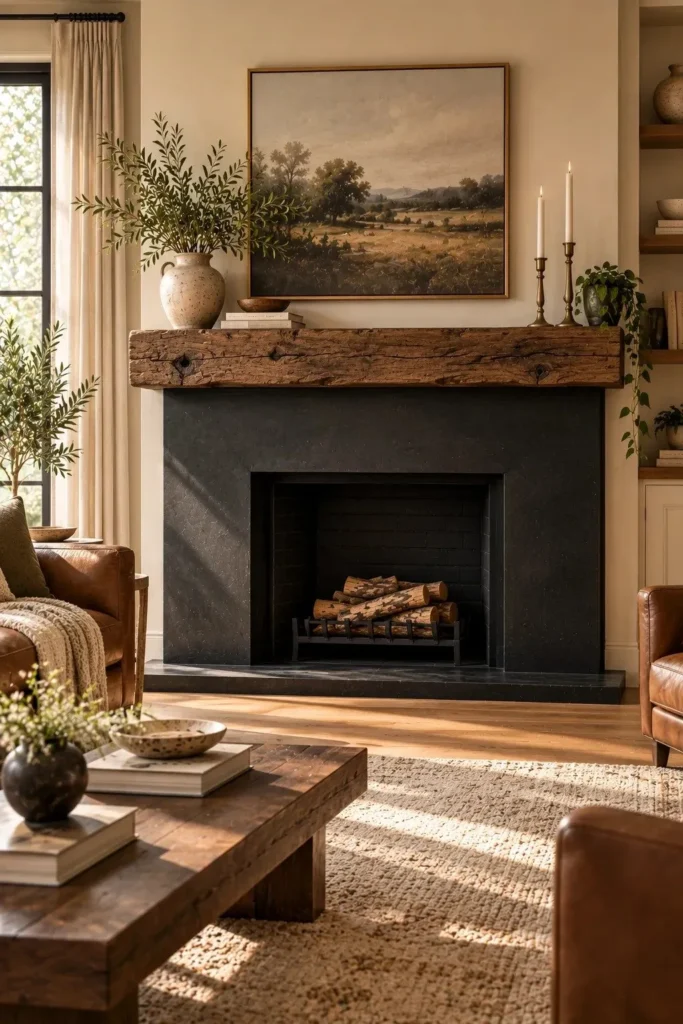
DO
- Use a weathered timber beam to give a smooth dark surround a rougher, warmer edge.
- Compare the beam’s undertone with your floorboards before choosing a finish.
- Have its weight, fixings, and required clearance checked before installation.
DON’T
- Treat deep cracks or soft patches as purely decorative details.
- Fill the entire shelf with rustic ornaments.
- Mix several competing wood finishes beside the mantel.
The contrast works because the beam and surround bring different textures to the same small area. Let the timber remain the main rustic detail, then use simple upholstery and plain curtains nearby. The grain will read most clearly against smooth plaster or a simple painted wall.
Blackened Steel Panels

Visual Effect: Fine panel seams turn a plain surround into a crisp architectural feature.
Surface: Matte or softly brushed steel with subtle tonal variation.
Best For: Industrial, loft, and pared-back modern rooms.
Pair With: Linen, wool, and warm timber to soften the metal.
Steel panels look more orderly when their seams align with the firebox edges. Ask to see the panel layout before fabrication, especially around the opening and corners. A full finish sample helps you judge reflections and fingerprints. Keep nearby accessories rounded to offset the sharper geometry.
Textured Stone Surround

Rough stone makes shadows part of the design, especially where daylight reaches the wall from one side. Choose irregular blocks in closely related charcoal shades to keep the texture prominent. Pale linen and simple timber furniture let the masonry feel substantial without crowding the room.
Look at several pieces together before approving a sample, since a single stone cannot show the full variation. Keep the mantel profile plain so it does not compete with the uneven face. A soft brush makes routine dusting around the recessed joints and textured edges more manageable.
Terracotta Accent Seating

- Warm the area around a charcoal hearth with one terracotta chair or a pair of rust-colored cushions.
- Choose muted clay tones if your walls are creamy; very bright orange will create a much sharper contrast.
- Repeat the accent in a small ceramic bowl on a side table to connect it with the rest of the seating.
- Balance the warm color with sand, oatmeal, or ivory across the larger upholstered pieces.
Terracotta draws attention to the seating beside the hearth, making the focal wall feel connected to everyday use. Start with a cushion cover if you are unsure about committing to a chair. Check the fabric against the surround at night, when warm lamps can make orange undertones stronger.
Suspended Round Firebox
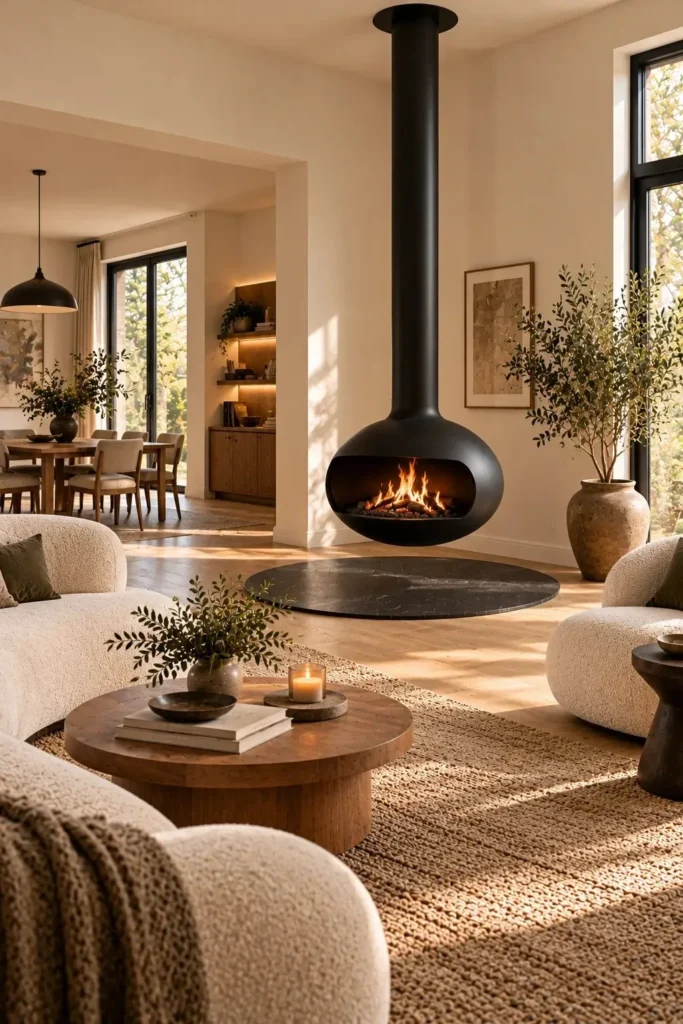
Quick Tip:
Want the hearth to feel more like a sculpture? Keep the surrounding wall simple and plan open space around the suspended body. Confirm the model’s structural support and clearance requirements before deciding where seating can go.
A rounded firebox softens rooms filled with square windows, straight sofas, and rectangular tables. Repeat its curve in a coffee table or rug to connect the shape with the furniture. This approach suits an open room where the hanging form can be seen clearly from more than one angle.
Glossy Square Tiles

BEFORE: A flat dark surround can disappear into a shaded wall, especially when nearby furniture is also deep in tone. Its outline becomes harder to read from across the room.
AFTER: Glossy black tiles catch nearby window light and reveal the shape of the surround. A simple square layout lets the reflections and subtle glaze variations become the main details.
Bring a tile sample into the room and tilt it toward your windows and lamps before choosing the glaze. Reflections that look gentle in a showroom can feel sharper beside a bright window. Keep grout close to the tile color, and use a plain mantel to keep the wall from feeling busy.
Sculptural Ceramic Grouping

- Give the mantel a clear silhouette with three ceramic pieces in different heights.
- Choose a tall narrow vase, a rounded vessel, and a shallow bowl in related ivory or sand shades.
- Gather them loosely toward one end, leaving enough space to see each outline against the dark backdrop.
- Check the grouping from the sofa and remove anything that overlaps awkwardly. Keep each piece fully supported by the shelf.
Pale ceramics stand out against a dark chimney breast even when their surfaces are completely plain. Vary the proportions more than the colors to keep the group cohesive. A matte finish makes the objects feel softer beside stone or metal, while the empty shelf space gives each shape a clear outline.
Rounded Plaster Edges
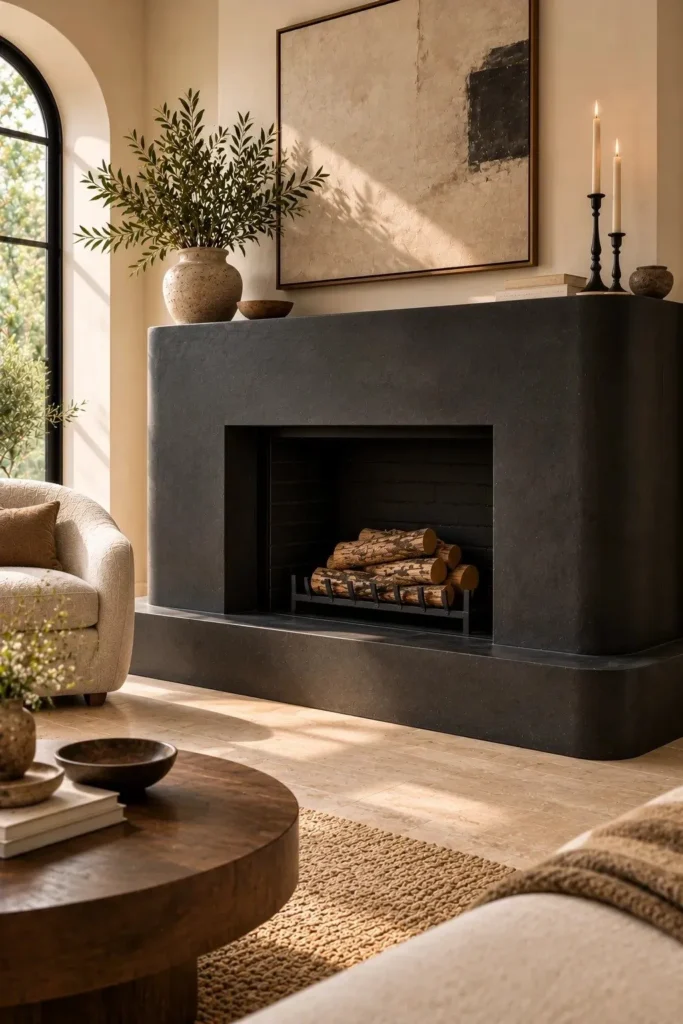
| Design Detail | Subtle Rounding | Broad Curves |
| Overall outline | Keeps a mostly rectangular shape | Creates a more sculptural silhouette |
| Light and shadow | Produces narrow bands of soft shade | Creates wider gradients around the corners |
| Furniture pairing | Sits comfortably beside tailored, straight furniture | Echoes curved seating and oval tables |
| Sample to request | A small section showing the edge detail | A larger mockup showing the overall proportions |
Rounded edges change how a dark surround catches light, giving the corners a gentler transition into the room. Ask for a sample profile before the finish is applied, since a small curve and a broad one look quite different. Keep the firebox opening crisp to preserve definition.
Arched Display Niches

DO
- Frame a dark hearth with shallow arched niches to add shape without bulky furniture.
- Keep the recesses in the wall color so their shadows define the arches.
- Display one substantial object per niche, leaving its outline clear.
DON’T
- Cut recesses into a chimney breast without a professional assessment.
- Fill every recess with small ornaments.
- Add competing patterns to the niche backs and surround.
Arched niches give a plain fireplace wall depth while keeping the floor clear. Their curved tops contrast with a rectangular firebox, especially when the surrounding finishes are simple. Sketch the niches beside the opening first so you can compare their height and spacing before commissioning the work.
Cobalt Accent Pairing
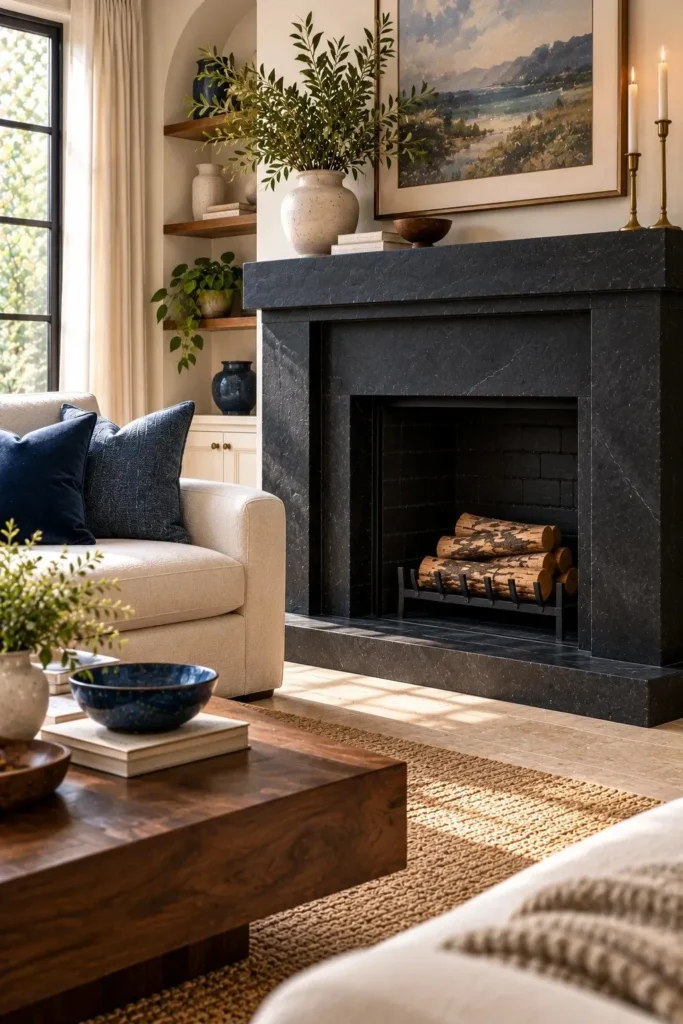
Color Effect: Cobalt gives a dark hearth a vivid companion.
Starting Point: Two cushion covers or one ceramic bowl.
Supporting Palette: Warm white, black, and walnut.
Best For: Simple rooms that need one concentrated burst of color.
Keep the blue concentrated near the seating so it reads as an accent beside the darker masonry. Choose cushions with a visible weave to give the strong color some texture. Repeat the shade once in a small ceramic piece, then leave the remaining accessories neutral to keep the arrangement clear.
Dining Room Hearth

Dinner feels more intimate when the room has a focal point beyond the table. A dark hearth gives the dining area that extra layer, especially beside warm wood and upholstered chairs. Keep the mantel arrangement simple, using one substantial object that reads clearly from the far end of the table.
Check the layout with every chair pulled back, allowing the appliance’s required clearances as well as comfortable walking space. A simple pendant can light the table while leaving the hearth visually distinct. Keep tabletop decorations below eye level so the hearth remains visible across the room during meals.
Conclusion
Let your black fireplace set the mood, then build around it with details that feel right for your home. A timber mantel, a softer wall color, or a few simple ceramics can give the hearth a clearer connection to the room.
Choose one idea to try first, and check the colors and proportions in your own light before committing. Save this post on Pinterest so your favorite combinations are easy to find, and share it with someone planning a room refresh. Start with one thoughtful change this week and give your hearth the attention it deserves.
For a tight room, our corner fireplace ideas show how to style the same look in a corner.
For a natural, textured look, explore our stone fireplace ideas.
2 Comments