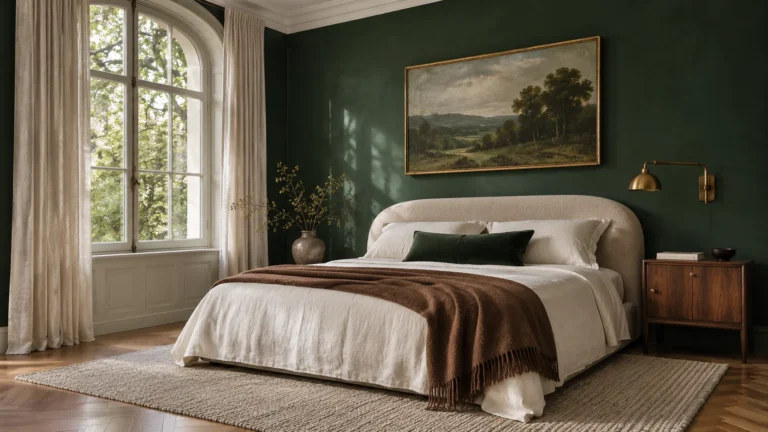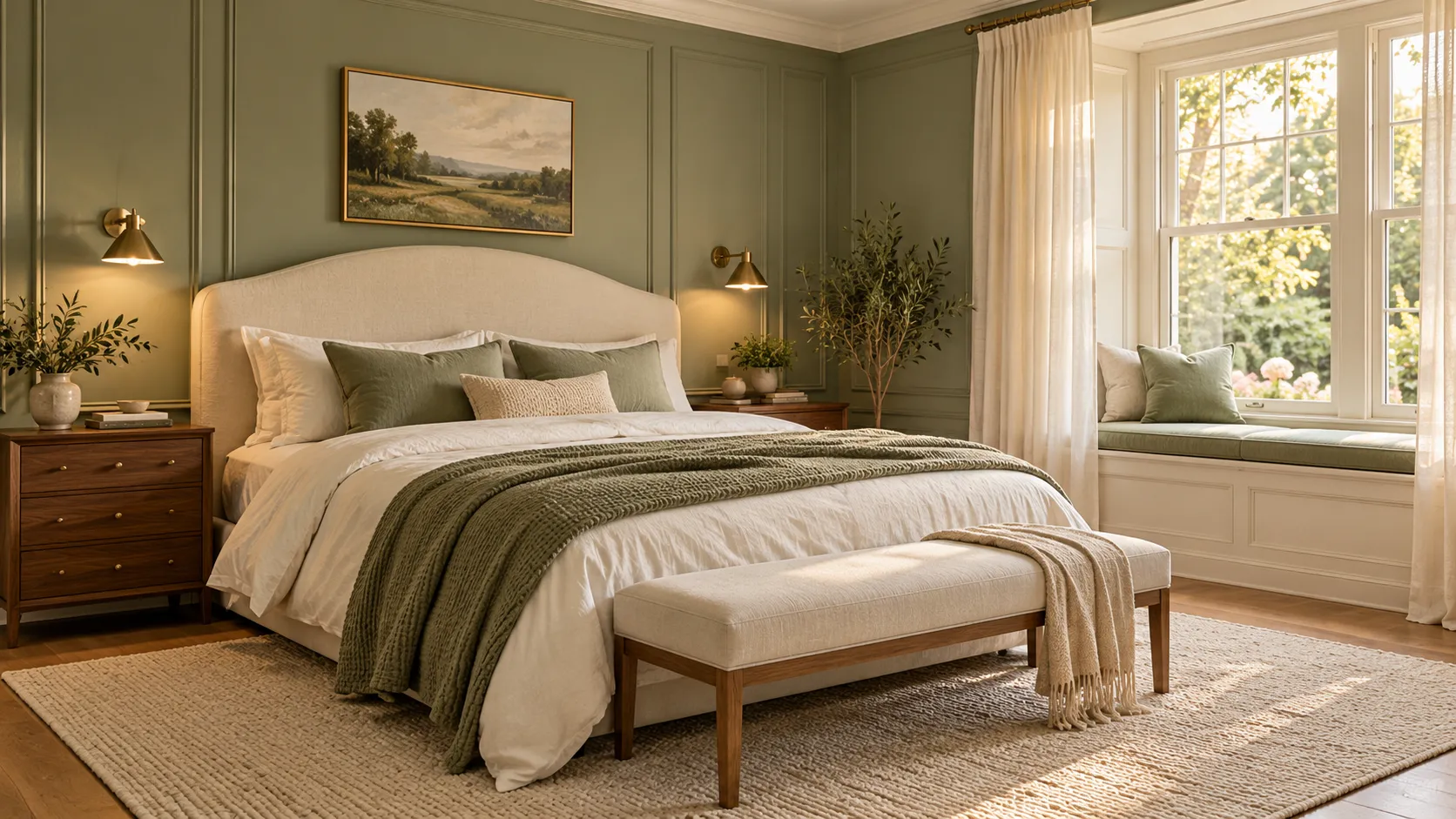
32 Soothing Sage Green Bedroom Ideas for Calm Nights
Your bedroom can look tidy and still feel a little restless. A sage green bedroom brings soft color into the spaces you see first in the morning and last at night.
The tricky part is choosing a shade that works with your light, furniture, and budget. Green that looks gentle in a saved photo may appear gray beside your curtains or yellow under a bedside lamp. That is why the details matter as much as the paint color.
The following 32 ideas cover everything from linen bedding and warm wood accents to painted storage and simple finishing touches. Whether you rent or own, you can find a manageable starting point and build a room that feels comfortable, personal, and easier to unwind in.
Sage Accent Wall
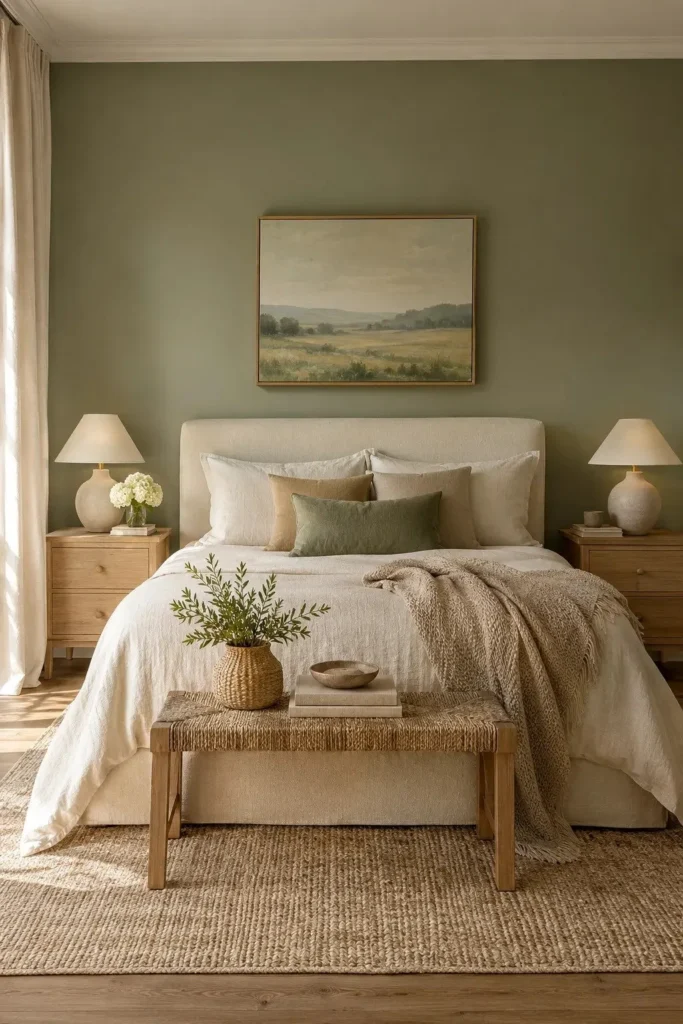
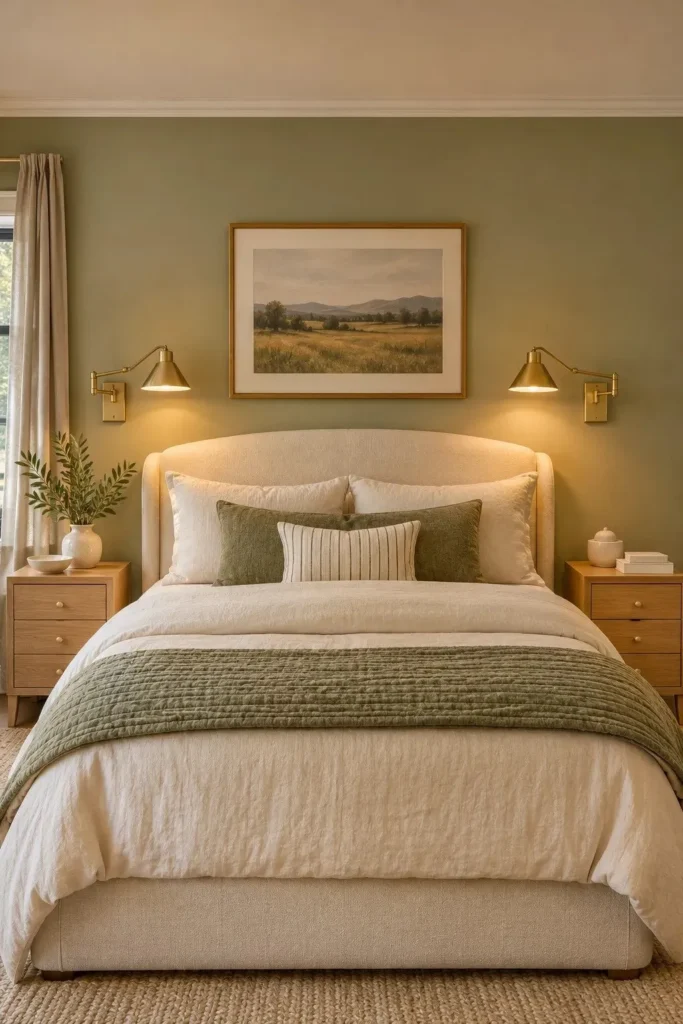
A sage wall behind the bed gives the whole room a focal point without asking you to redecorate everything. For a balanced sage green bedroom, keep the surrounding walls warm white and repeat the green once in a cushion or throw. Existing oak furniture fits comfortably alongside it.
Paint a large sample board before committing, then check it beside your bedding in daylight and under your bedside lamp. Sage can lean gray, yellow, or blue depending on the light. Choose the version that feels balanced with your existing finishes, especially your flooring and headboard.
Layered Sage Bedding
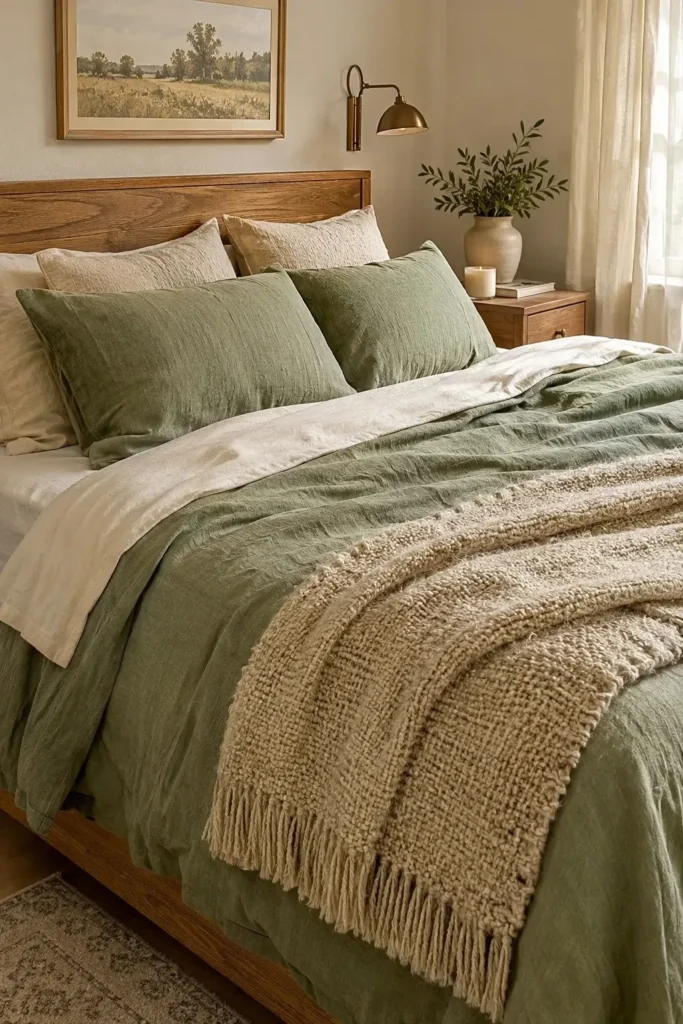
- Let the bed carry the color if painting is off the table. Start with a washable sage duvet cover or quilt.
- Fold back the top edge to reveal warm ivory sheets. This light border breaks up the green and gives the bedding definition.
- Lay an oatmeal blanket across the bottom third of the mattress. Choose a woven texture that contrasts with the main bedcover.
- Finish with one muted olive cushion for a slightly deeper green accent. Keep your sleeping pillows in matching cream cases to avoid a crowded mix.
Keep the layers useful rather than piling on decorative pieces you remove every night. In a warm room, a sheet and lightweight quilt may be enough. In cooler weather, add a blanket you already own. The finished bed should feel inviting and take only a minute to straighten.
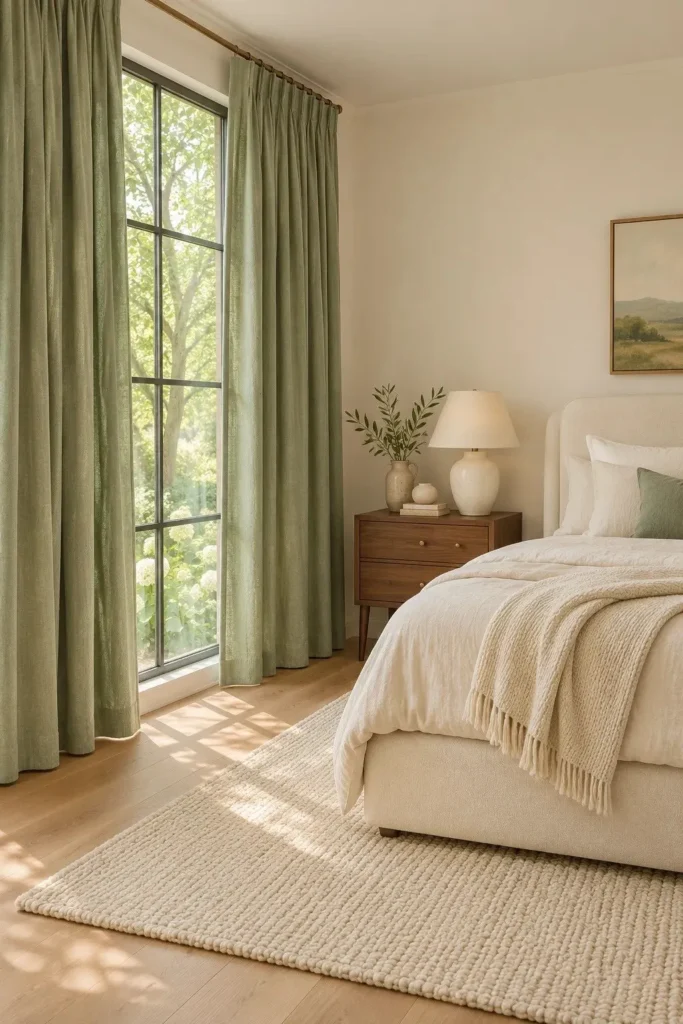
Sage Linen Curtains
Quick Tip:
Is your window wall feeling a little bare? Choose sage linen or a linen blend with a lining suited to your light needs. Hang the rod above the frame and extend it beyond both sides, where wall space allows.
For a fuller look, choose panels with a combined width around twice the curtain rod’s width. Measure from the actual hanging point before ordering. Unlined linen filters light but usually does not darken the room enough for sleep, so pair it with a blackout blind if morning light wakes you.
Sage Upholstered Headboard
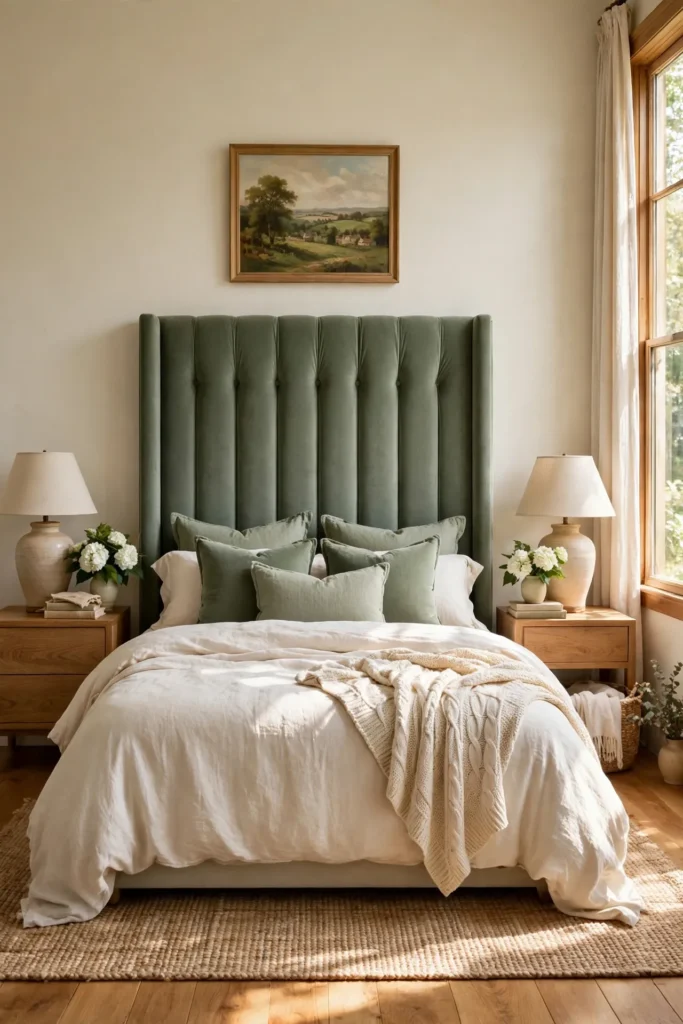
BEFORE: A bare wall can make even freshly washed bedding look unfinished. Pillows resting directly against it leave the sleeping area without a clear visual anchor.
AFTER: A padded sage headboard gives the bed a defined outline and a soft backdrop. Against warm white walls, the muted green becomes a focal point while cream pillows keep the arrangement light.
Measure the bed frame before choosing a headboard, and check that its mounting system is compatible. Request a fabric swatch to compare against your bedding in daylight. For everyday upkeep, a smooth, tightly woven cover is usually easier to vacuum than deep tufting or heavily textured fabric.
Botanical Print Trio
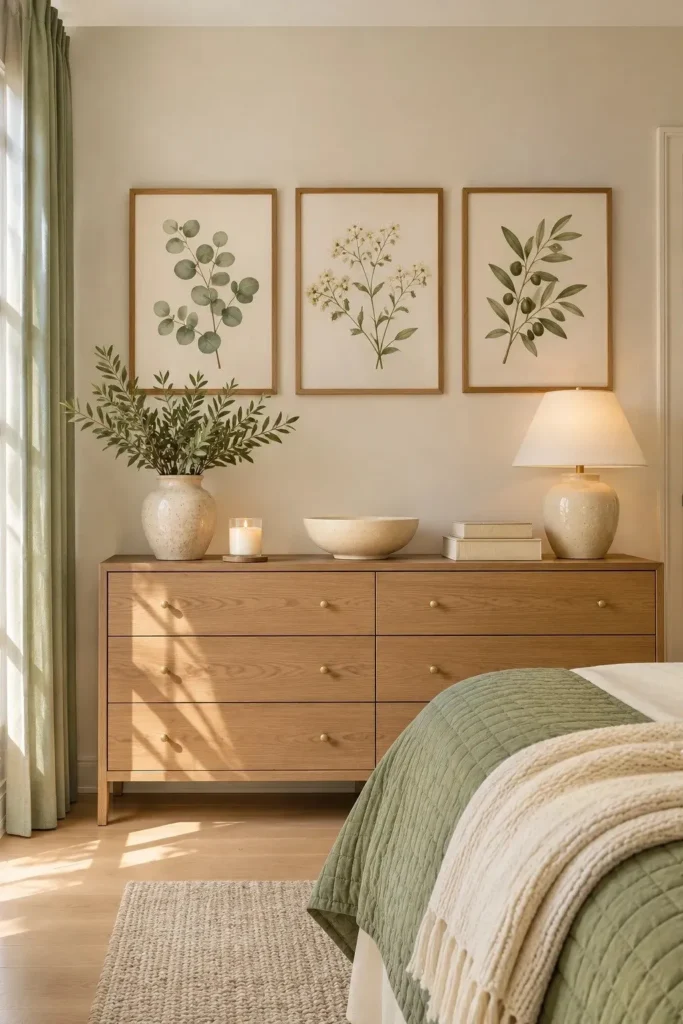
- Give a blank dresser wall a touch of green with three botanical prints. Choose simple leaf illustrations with muted sage tones rather than bright emerald backgrounds.
- Measure the available wall space and cut paper templates to match your frames. Start with a grouping narrower than the dresser so the arrangement feels balanced.
- Use matching frames and generous ivory mats to give each illustration breathing room. Affordable downloadable artwork works well if you check the recommended print size before ordering.
- Center the grouping above the dresser and leave equal gaps of about two to three inches between frames. Check alignment with a level before securing them.
Keep the artwork connected through one shared detail, such as sage leaves, ivory backgrounds, or matching frames. Different plant shapes will still look cohesive. Before making holes, tape the paper templates in place and check the arrangement from the doorway, where uneven spacing is often easier to spot.
Warm Wood Nightstands
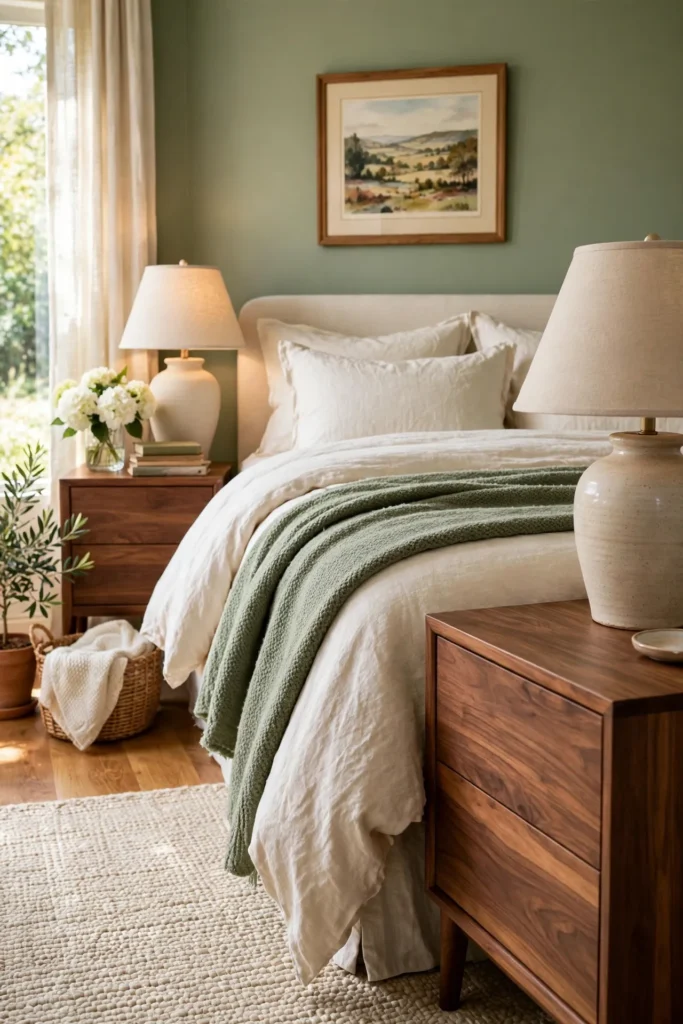
| Comparison | Pale Oak | Walnut |
|---|---|---|
| Visual effect | Need a lighter bedside corner? Pale oak keeps the palette bright. | Prefer a stronger outline? Walnut adds depth beside muted green. |
| Color pairing | Works with pale sage, ivory, and oatmeal. | Suits gray sage, cream, and muted clay accents. |
| Texture balance | Adds visible grain beside smooth painted walls. | Adds a rich wood surface beside linen bedding. |
| Finishing detail | Pair with a cream ceramic lamp for a gentle contrast. | Pair with a brass lamp for a warm accent. |
Before buying, compare the tabletop height with the top of your mattress so your lamp and water are comfortable to reach. Repeat your chosen wood tone in a frame or mirror nearby. The furniture does not need to match exactly, but a repeated finish makes the room feel connected.
Brass Bedside Sconces
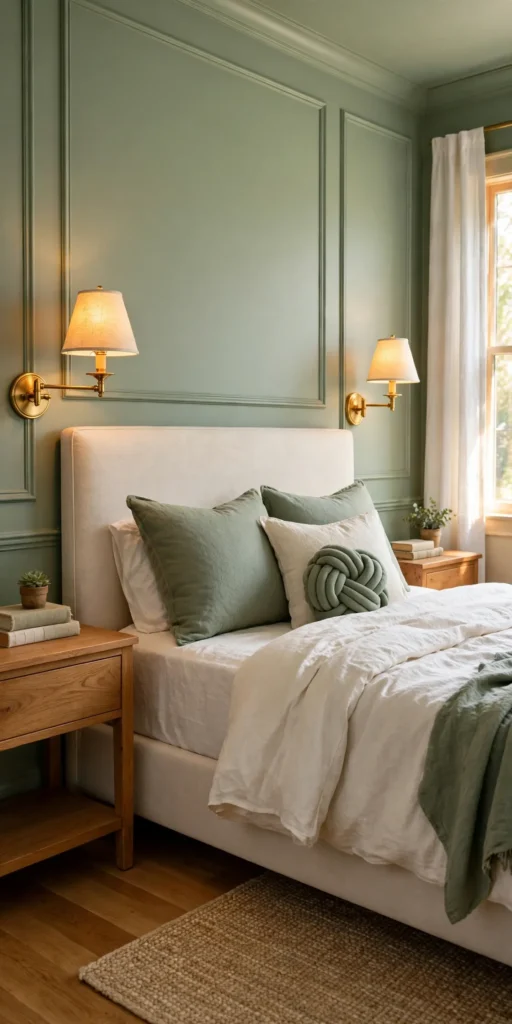
DO
- Free your nightstand from a bulky lamp by choosing an adjustable wall sconce.
- Mark the mounting position while sitting against your pillows so the shade stays clear of your head.
- Choose a shaded fitting that directs light toward your book rather than your face.
DON’T
- Do not buy a pair before checking the width available beside your headboard.
- Do not leave plug-in cords stretched across a walkway.
- Do not place exposed bulbs at eye level.
Brushed brass brings a warm highlight to sage walls without adding another strong color. For a simpler update, choose plug-in sconces with accessible switches and route their cords neatly down the wall. Check the light from both sleeping positions before fixing the final placement, especially beside a shared bed.
Sage Reading Nook
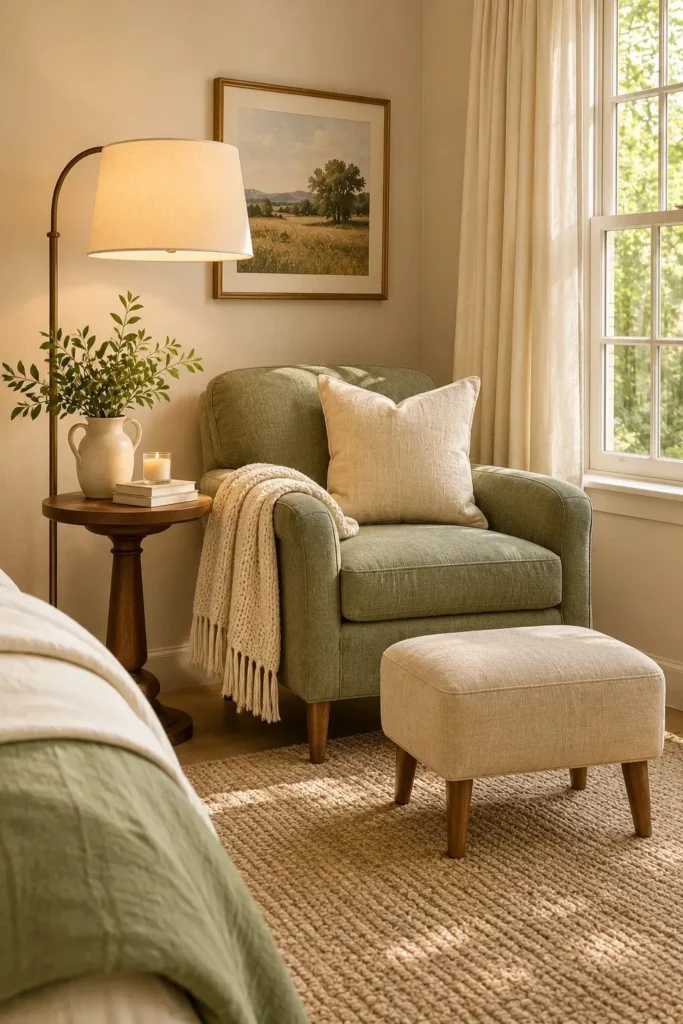
Best For: Giving an overlooked bedroom corner a reason to be used.
Key Piece: A compact sage armchair with a supportive back.
Lighting: Window light by day and a shaded reading lamp after dark.
Space Check: Enough clearance to open drawers and walk around the chair.
Before ordering a chair, mark its footprint on the floor with painter’s tape. Include space for your feet and a small side table, then walk past the outline. Skip the footstool if it crowds the route to the bed. A comfortable seat matters more than a complete furniture set.
Sage Leaf Wallpaper
Small leaf patterns can give plain walls detail without making the room feel busy. Choose a wallpaper with plenty of ivory space between the sage stems, then keep the bedding mostly solid. A simple headboard gives your eye somewhere to rest against the more detailed backdrop.
Order a sample and hold it behind your actual pillows before buying several rolls. Tiny prints can disappear from the doorway, while dense patterns may dominate a small sage green bedroom. Check the manufacturer’s surface requirements too, since removable wallpaper is not compatible with every painted or textured wall.
Sage Vintage Rug
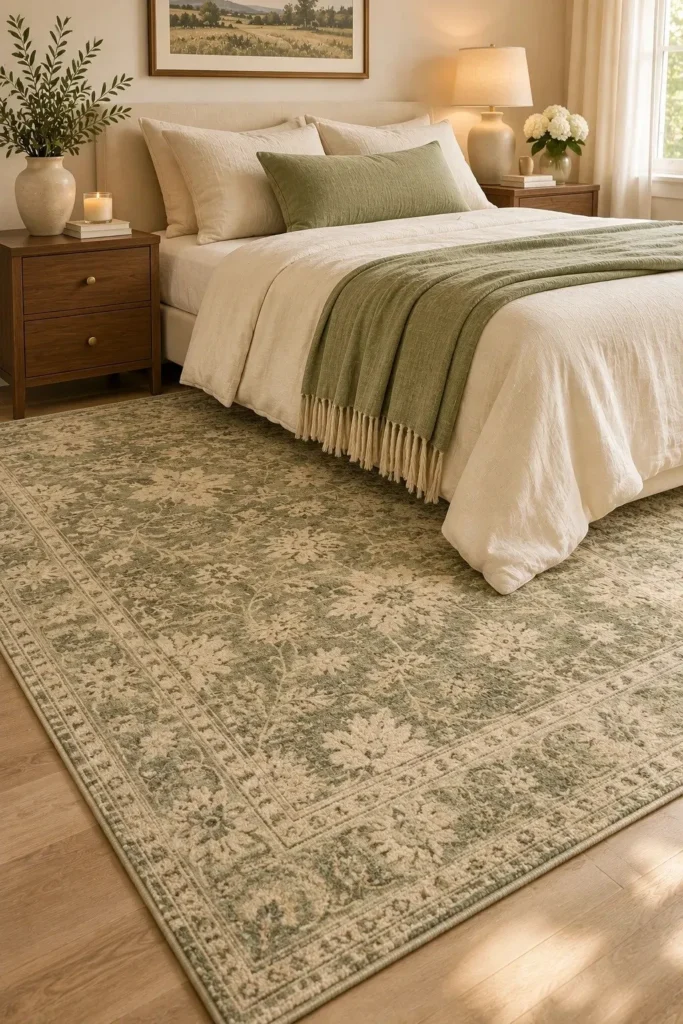
- Cold floors deserve more than a tiny bedside mat. Choose a faded sage rug that reaches beyond both sides of the bed.
- Use painter’s tape to test the footprint before ordering. Aim for roughly 18 to 24 inches of exposed rug where you step out of bed, adjusting for your room.
- Look for an ivory background with muted green details. This combination introduces pattern while keeping the floor visually light.
- Check that nearby doors can open over the rug and its pad. Choose a pad suitable for your flooring to help prevent slipping.
A faded pattern brings variation to a room filled with solid bedding and painted walls. Let one green detail in the rug echo a cushion or curtain, without trying to match every shade. If your bedding already has a busy print, choose a quieter rug with a wider ivory background.
Soft Terracotta Accents
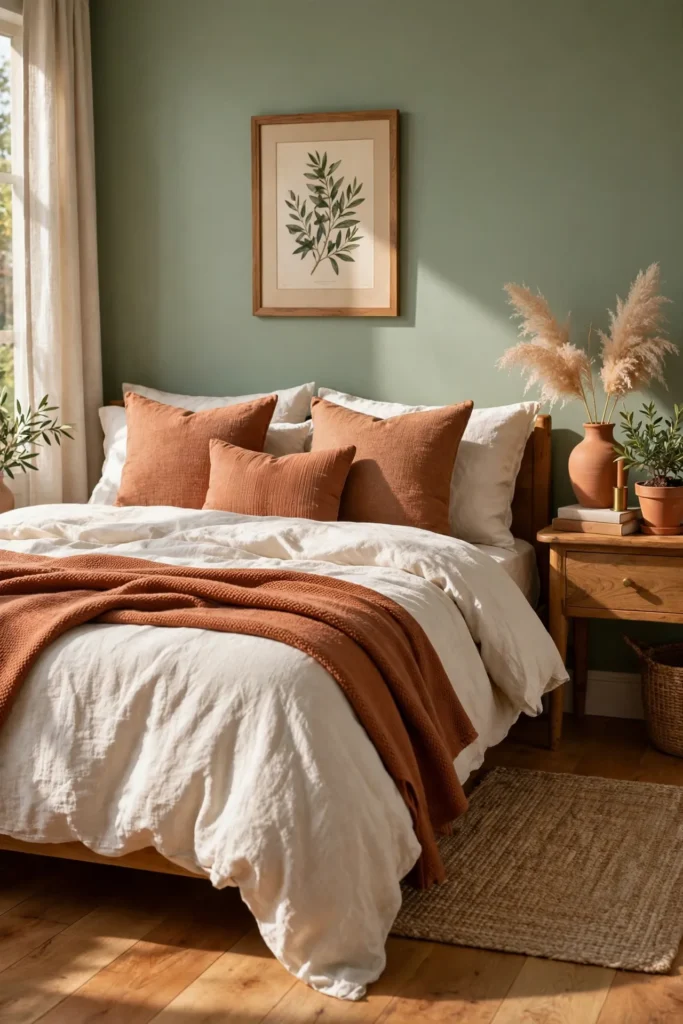
Quick Tip:
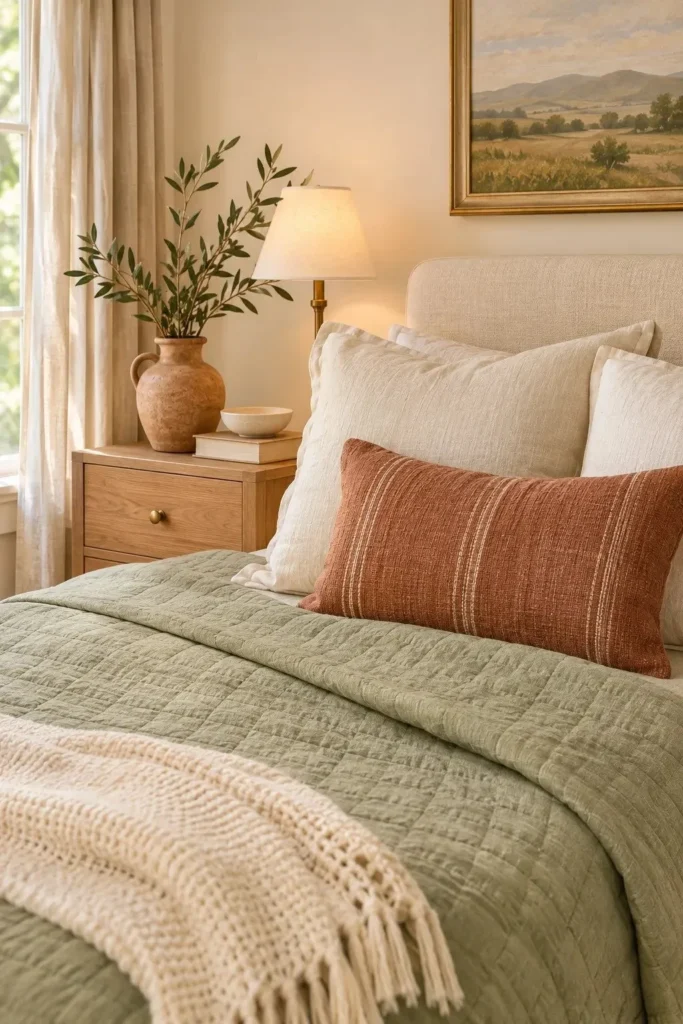
Does your green palette feel a little chilly? Introduce dusty terracotta through one cushion and one small ceramic piece. Keep both accents muted so the orange undertone warms the room without becoming its main color.
Start with small, movable pieces so you can adjust the color balance throughout the room. A clay vase beside sage bedding gives you a useful preview of the pairing. If the contrast feels too strong, separate the colors with an ivory pillow or a cream tray for the ceramic piece.
Sage Wardrobe Doors
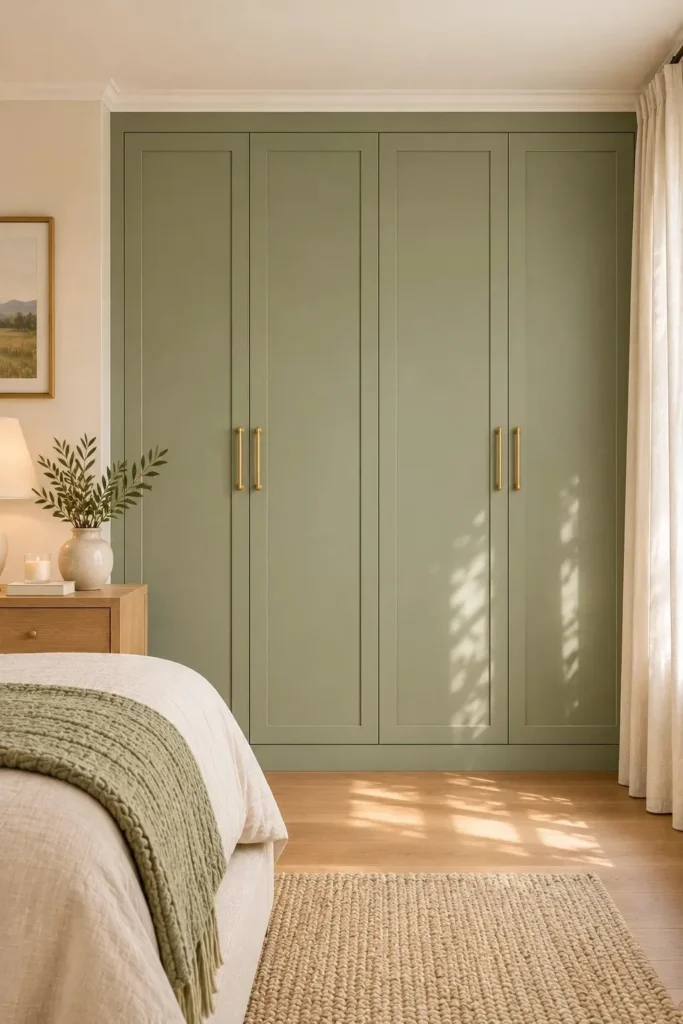
BEFORE: A wall of mismatched wardrobe doors can dominate an otherwise settled bedroom. Different paint colors and scattered handle styles make the storage feel visually busy.
AFTER: Matching sage doors turn the storage wall into one calm block of color. Consistent brass handles add a warm detail and make separate cupboards feel like a coordinated set.
Check what the doors are made from before choosing paint, since laminate and previously painted wood may need different preparation. Follow the coating manufacturer’s instructions for cleaning, primer, and curing. Remove the handles first, and label them if you plan to return each one to its original position.
Sage Picture Frame Molding
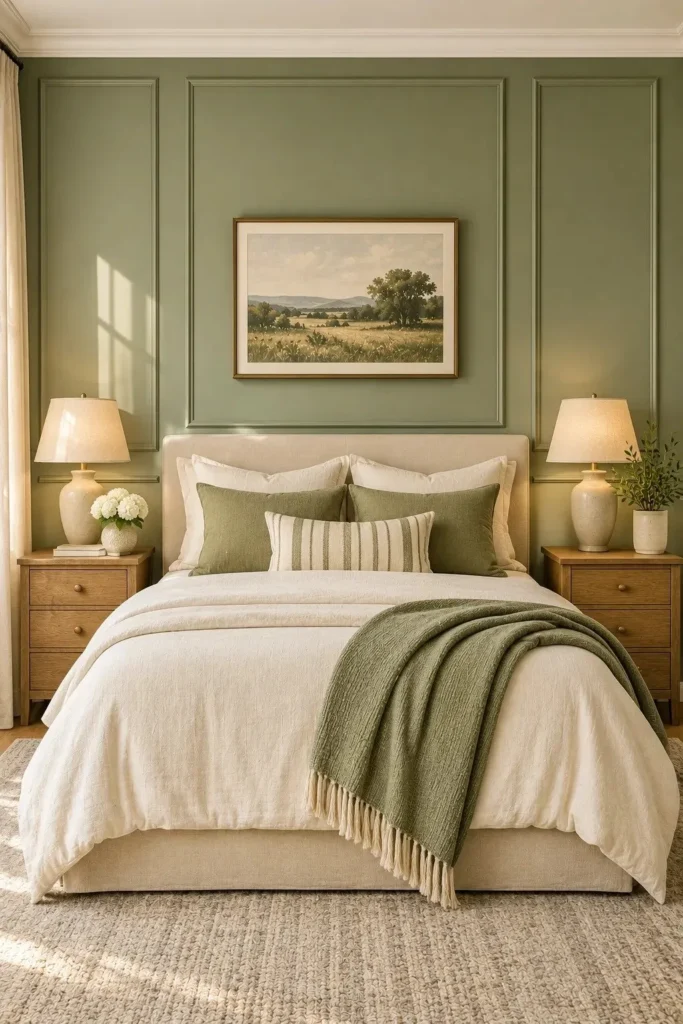
- Flat walls can gain character from a few simple rectangles. Sketch a symmetrical molding layout centered on the bed, leaving space around outlets and switches.
- Mark the rectangles with removable painter’s tape. Check that the headboard leaves enough of each panel visible for the arrangement to feel balanced.
- Choose slim trim that suits the room’s scale, then cut and fit it using a level. Follow the fixing method recommended for your wall and molding material.
- Fill visible joints and paint the wall and trim in the same sage shade. A single color lets the raised edges supply the detail.
Keep the pattern simpler on a narrow wall, where many small panels can look crowded. Two or three broad rectangles are often enough behind a double bed. Check the taped layout with your lamps and artwork in place so the finished moldings remain visible around the furniture.
Pale Sage Ceiling
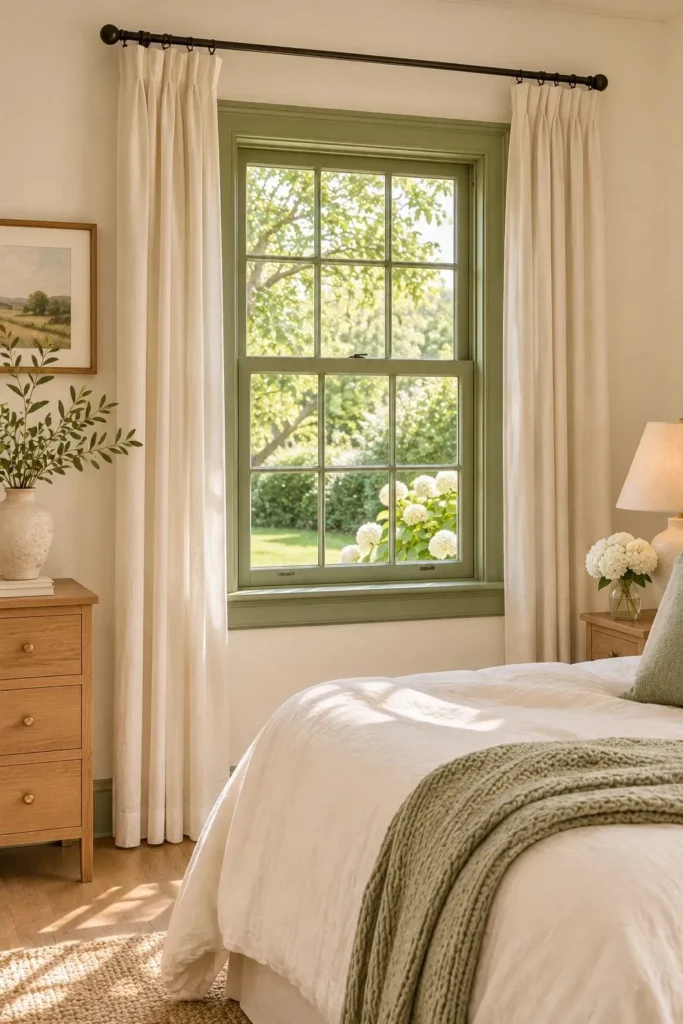
| Comparison | White Ceiling | Pale Sage Ceiling |
|---|---|---|
| Visual effect | Let the walls take the spotlight. | Give the room a soft canopy of green. |
| Wall pairing | Suits sage walls or patterned wallpaper. | Suits warm ivory walls with simple bedding. |
| Trim treatment | Matching white trim keeps the edges quiet. | Matching sage trim creates a continuous ceiling edge. |
| Sample check | Compare the white against your wall color. | View the green sample horizontally above eye level. |
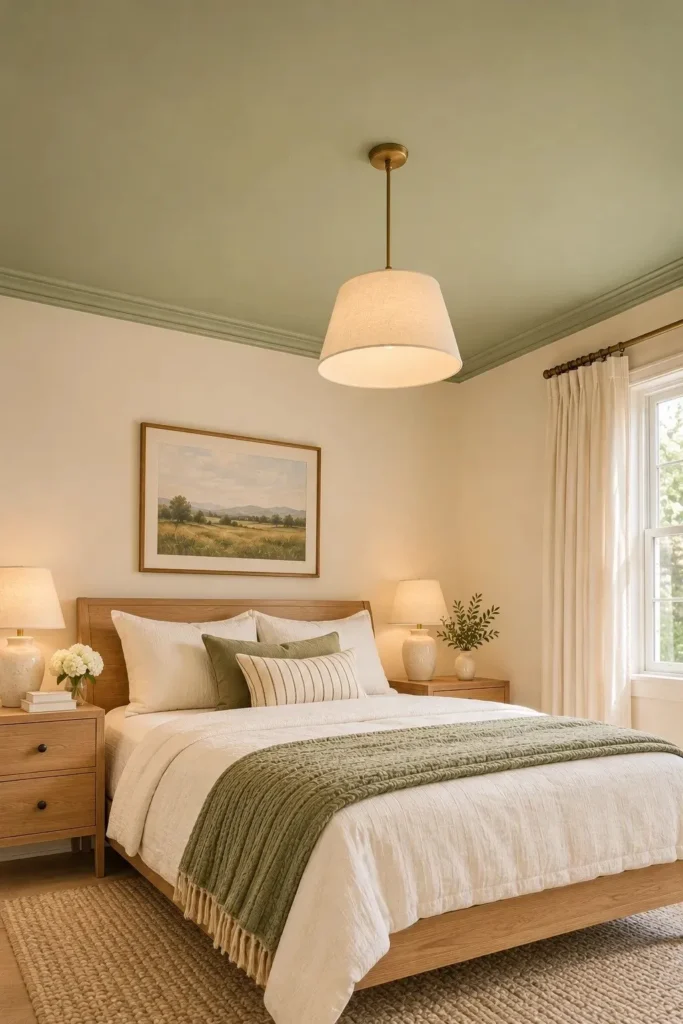
Ceiling color is easiest to judge from the bed, where you will actually see it. Place a painted sample board overhead and check it in daylight and lamplight. A shade that looks almost white on the wall may read noticeably greener above you because the light reaches it differently.
Black Accent Details
DO
- Give pale sage a crisp outline with one slim black mirror or picture frame.
- Repeat the finish in one small functional item, such as a reading lamp.
- Leave cream or wood surfaces around each accent so its shape stays distinct.
DON’T
- Do not introduce several large black furniture pieces at once.
- Do not crowd a black framed mirror with several dark ornaments.
- Do not replace useful furniture just to match a new accent.
A slim black frame outlines pale green without covering much of it. Start with something you already own, then view the room from the doorway. If the dark accents dominate, remove one and check again. The aim is a little definition while sage remains the main color.
Sage Storage Bench
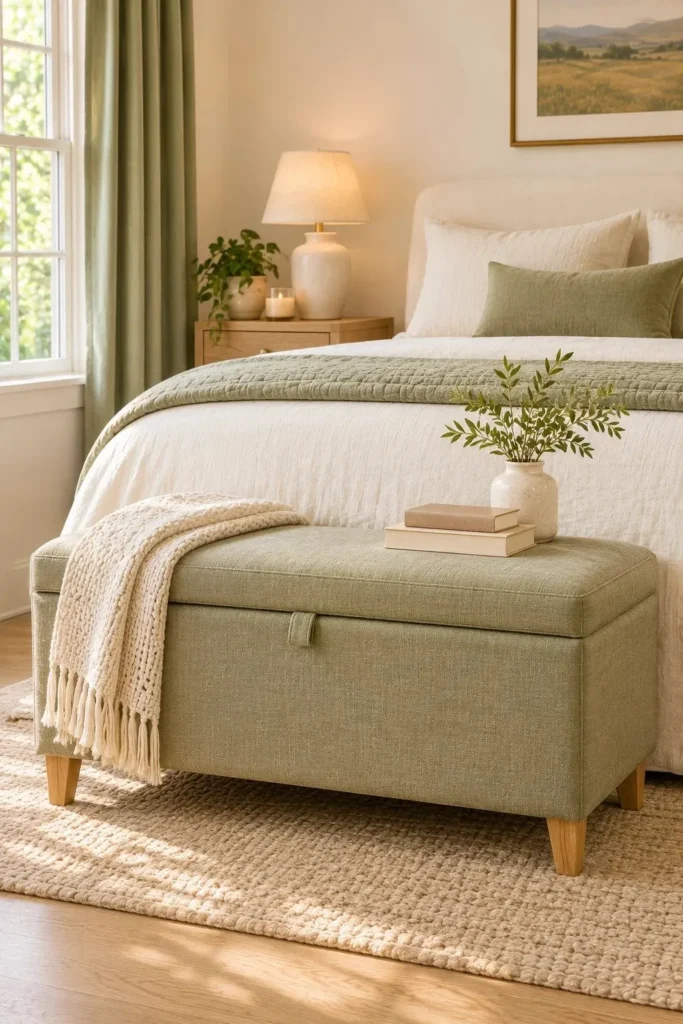
Best For: Giving spare blankets a home beyond the bedroom chair.
Placement: At the foot of the bed, with a clear walking route.
Useful Feature: A supported lid and a lined storage compartment.
Color Pairing: Muted sage upholstery, ivory bedding, and pale wood.
Measure the space with the bench lid open, especially if it sits opposite a dresser. You should still be able to reach drawers and walk around the bed. Store only a few frequently used textiles inside, so retrieving a blanket does not mean unpacking the whole compartment every evening.
Sage Color Drenching
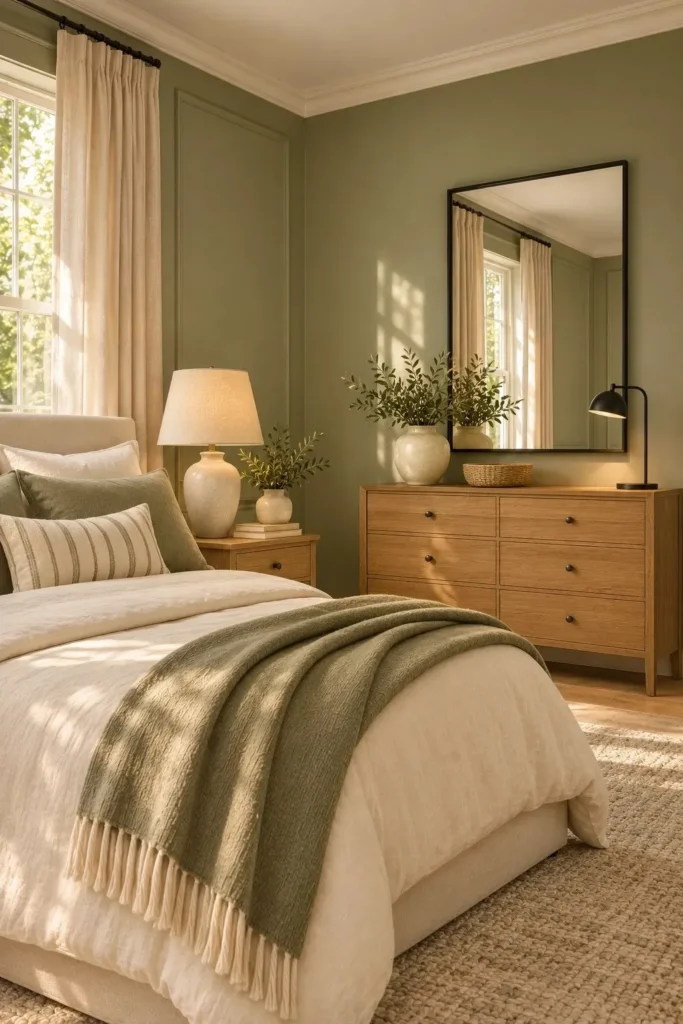
Wrapping the walls, ceiling, and trim in one muted green gives the room a more enclosed, restful appearance. With fewer contrasting edges, doorways and moldings become less prominent. Keep larger textiles light so the bed stays visible within the color, especially in rooms with limited natural light.
Choose a sage softened with gray if you prefer a subdued finish, and test it on more than one wall. Matching color does not require identical paint finishes: walls and woodwork may need different products. Check how their sheen levels look together before committing to the entire room.
Rattan Pendant Shade
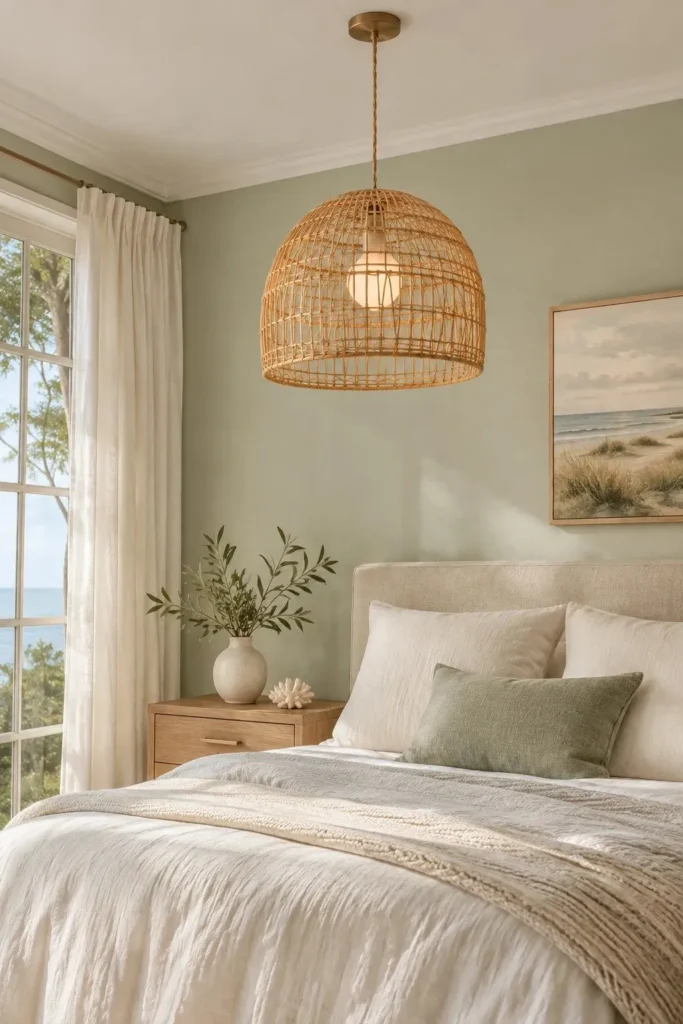
- Could your ceiling light use a softer outline? A rounded rattan shade adds warm texture against pale green walls.
- Check the shade’s diameter and hanging height before ordering. Allow clearance for wardrobe doors and anyone walking beneath it.
- Look for a diffuser or a compatible frosted bulb if an exposed light source feels harsh from the bed.
- Repeat the woven texture once in a small basket or chair detail. Keep nearby lampshades plain so the ceiling fixture has room to stand out.
Open weave shades can cast patterned shadows, which some people enjoy and others find distracting. Check the shade with its light switched on before deciding. If you read in bed, keep a separate reading lamp so the ceiling fixture can provide a softer background glow at night.
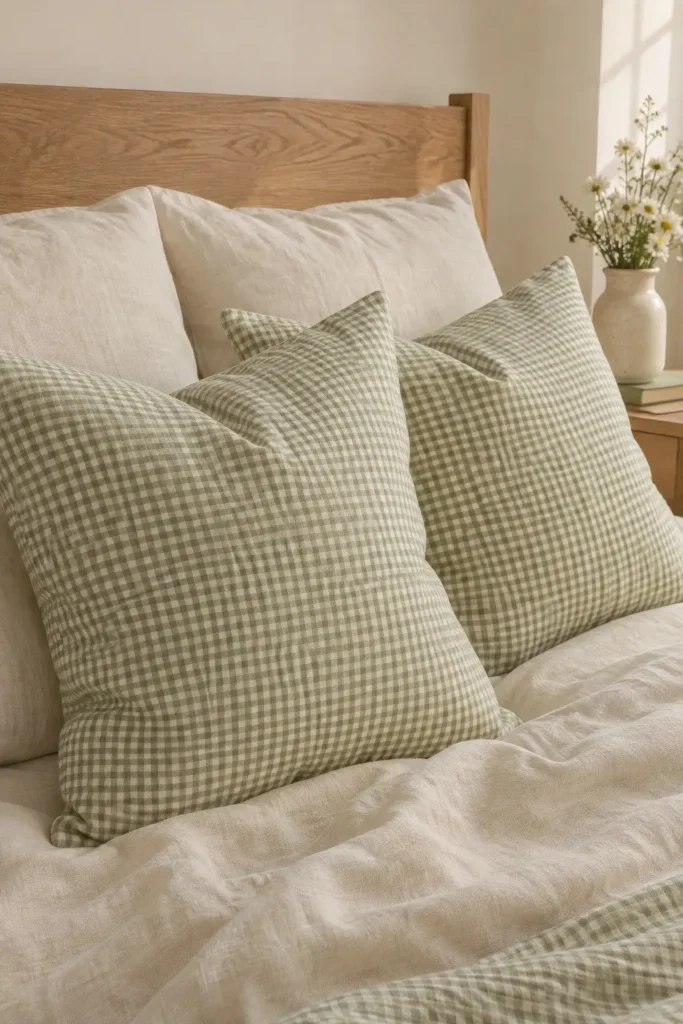
Sage Gingham Cushions
Quick Tip:
Two checked cushions can give a plain bed a cheerful cottage note. Choose sage and ivory checks in one scale, then place the cushions against solid pillowcases so the pattern stays easy to read.
Keep the checked fabric on removable covers so it is easy to wash or switch with the seasons. If you already have botanical wallpaper, hold a cushion against it before buying a pair. Leave a band of plain bedding between patterns to keep the arrangement from feeling crowded.
Painted Vintage Dresser

BEFORE: That sturdy old dresser may already have the shape your bedroom needs. A mismatched finish and crowded top can hide its character, even when the drawers work well.
AFTER: A muted sage finish brings the piece into the room’s palette while keeping its original silhouette. Retained brass knobs and a mostly clear top let curved drawers or shaped legs become the detail.
Start by checking that drawers slide properly and the surface is sound. Identify the existing finish before choosing a compatible preparation and paint system. For a valuable antique, seek advice before refinishing. On an everyday piece, keeping the original hardware can preserve character and reduce the makeover cost.
Arched Oak Mirror
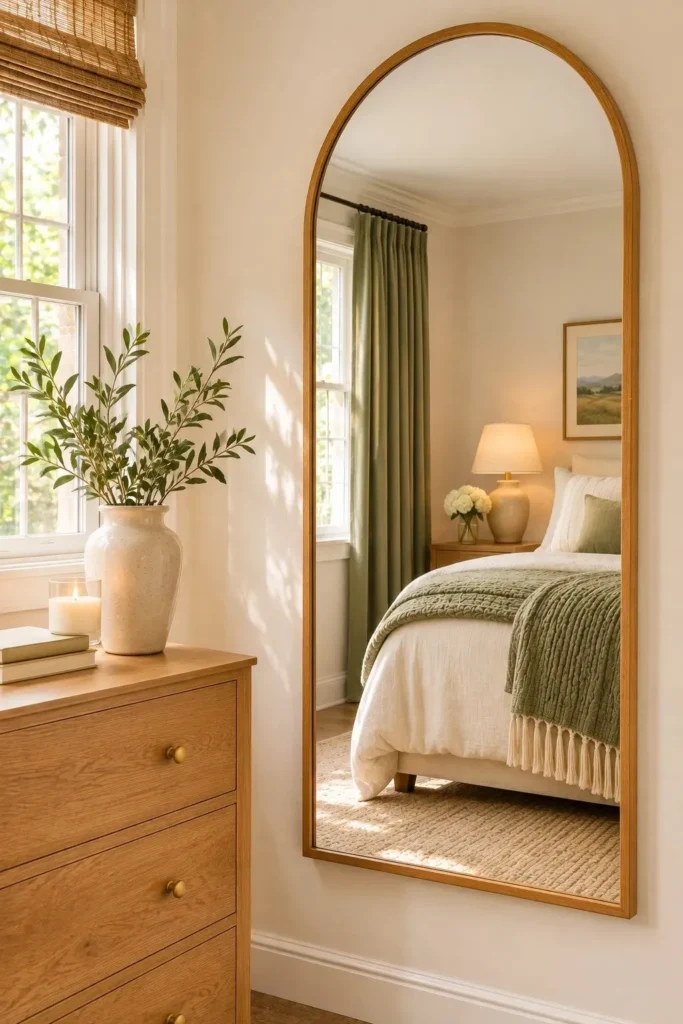
- Make a narrow dressing spot feel more open with a tall arched mirror. Choose a slim oak frame that relates to the room’s existing wood tones.
- Test a position beside or perpendicular to the window. Look at the reflection from the doorway and the bed before deciding where to mount it.
- Set the height using your actual standing position. Check that you can see your full outfit from the available floor space.
- Secure the mirror with fixings suitable for its weight and your wall type. Follow the manufacturer’s mounting instructions to keep the installation stable.
A mirror repeats whatever sits opposite it, including laundry piles and open shelves. Aim its reflection toward your sage textiles or a simple painted wall to reinforce the palette. Keep the floor in front clear so the mirror earns its place as a useful dressing feature.
Blush and Sage Pairing
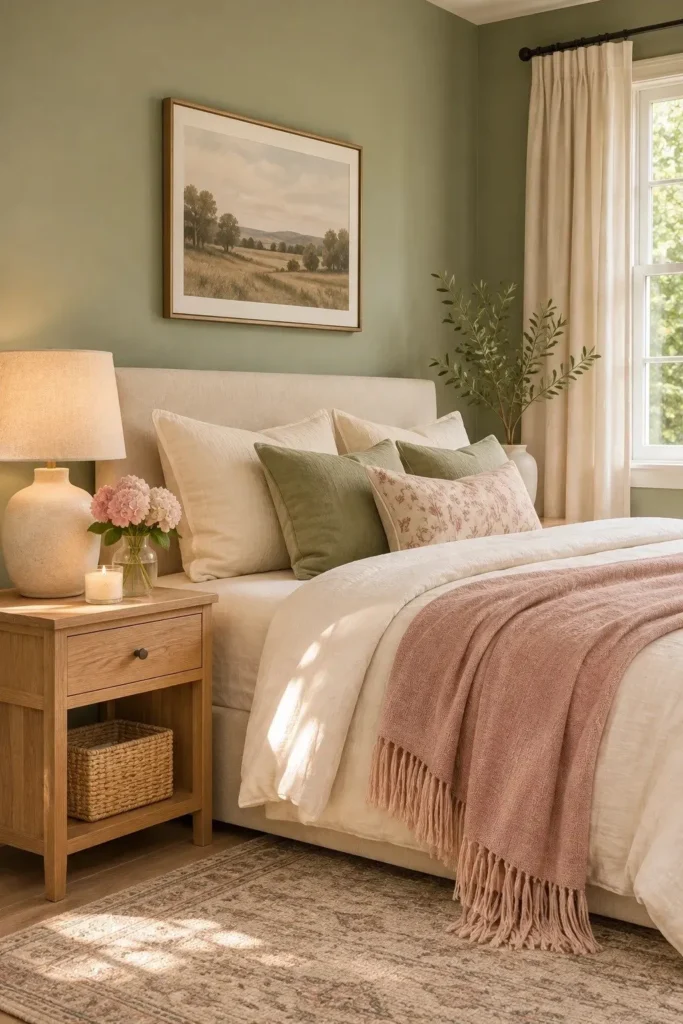
| Comparison | Blush Duvet Cover | Small Blush Accents |
|---|---|---|
| Color effect | Give the bed a generous layer of soft pink. | Introduce a gentle pink note through cushions or a throw. |
| Sage placement | Keep sage on walls or curtains to balance the bedding. | Let sage bedding remain the main colored surface. |
| Neutral balance | Fold back the duvet to reveal ivory sheets. | Separate pink and green cushions with cream pillowcases. |
| Flexibility | Suits a lasting commitment to the color pairing. | Makes the combination easy to test or change seasonally. |
Choose a blush with a muted brown or gray undertone to keep the pairing gentle. Bright candy pink can look much stronger beside dusty green. Place fabric samples together on your bed before choosing, and include your existing white or cream bedding in the comparison for a realistic view.
Leafy Window Corner
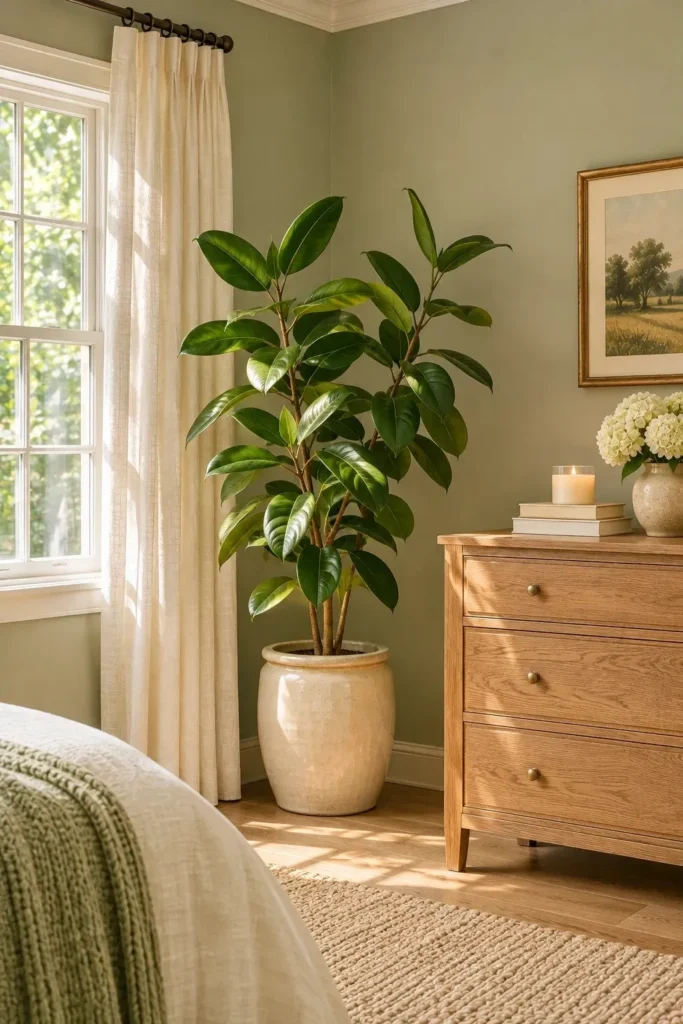
DO
- A single leafy plant can soften an empty corner; choose one suited to the available light.
- Use a nursery pot with drainage inside a decorative container, and empty any collected water.
- Leave enough space for curtains to move without catching on the leaves.
DON’T
- Do not select a plant only because its leaves match the room.
- Do not crowd several pots into a narrow route beside the bed.
- Do not block window handles or access to your blinds.
Repeat the room’s cream or warm wood tones in the planter so the leaves provide the main contrast. A plant stand can give smaller foliage more presence, but keep the base stable. If the corner receives too little light, move the plant closer to a suitable window.
Sage Bedside Tray
Purpose: A landing spot for the little things that disappear at bedtime.
Size: Large enough for daily essentials, with room left for your lamp.
Finish: Muted sage ceramic with a shallow raised edge.
Placement: Within easy reach, away from the table’s edge.
Gather only the items you reach for most evenings, then choose a tray that holds them comfortably. Keep loose receipts and spare cables in a drawer so the surface stays useful. Felt pads beneath an unglazed ceramic base can help protect the tabletop from scratches during daily use.
Sage Half Wall
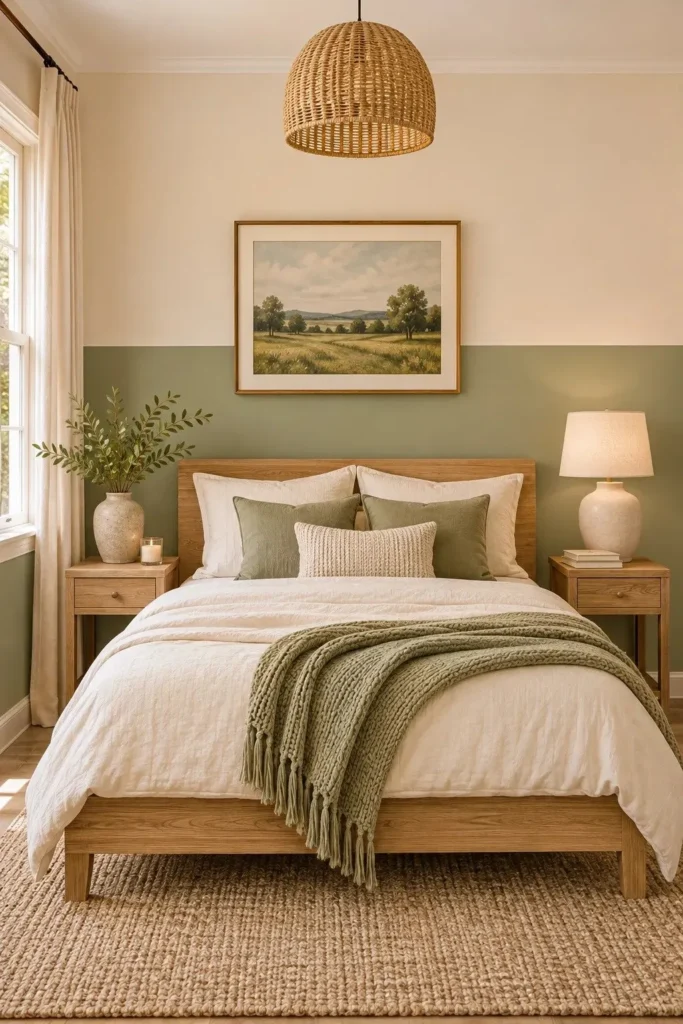
A band of sage can wrap around the room while leaving the upper walls bright. Set the dividing line in relation to your headboard or window sill, using these existing features to guide the proportions. The result feels more connected to the furniture and surrounding architectural details.
Run a strip of painter’s tape around the room to preview the height before painting. Use a level to keep the boundary consistent, including behind doors and beside wardrobes. Keep wall decorations mostly above the line so the color division remains clear without competing with several small objects.
Sage Alcove Shelves
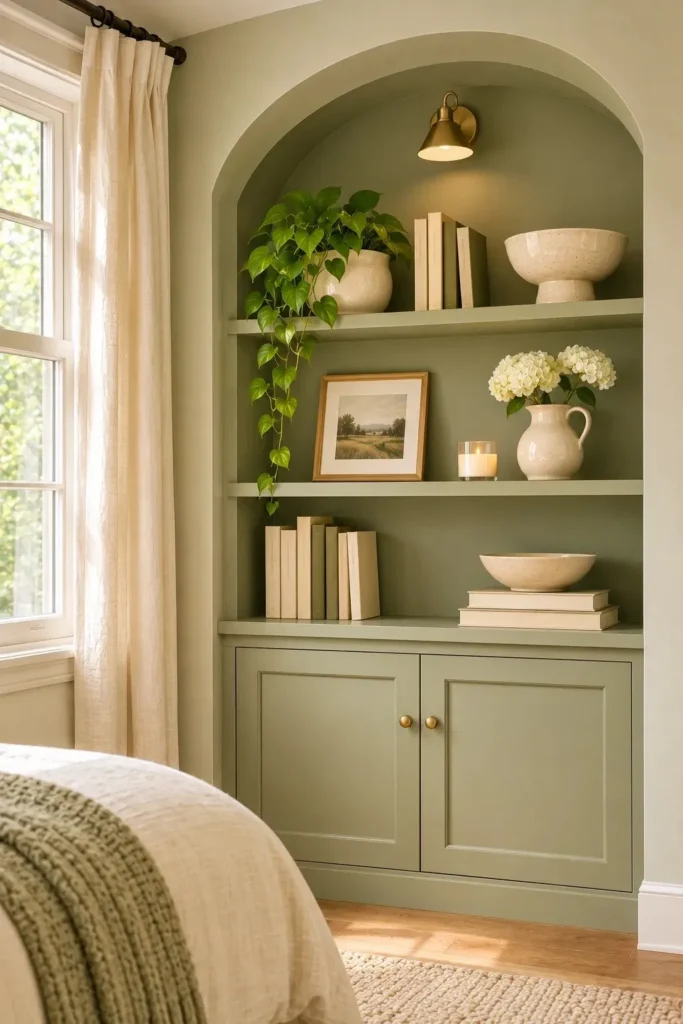
- An unused recess offers storage without projecting furniture into the room. Paint the shelves and backing dusty sage to define the nook.
- Measure your tallest books before deciding on shelf spacing. Leave enough clearance to lift them out comfortably.
- Group books together on one side and place a small ceramic piece nearby. Repeat cream or wood finishes already present in the bedroom.
- Place heavier items on lower shelves. Use fixings rated for your wall type and the expected load.
Leave some open space around the objects so the painted backing stays visible. A shelf filled edge to edge can look busy even in soft colors. Keep everyday items within comfortable reach, and reserve the highest shelf for a few light pieces you rarely need to move.
Sheer Canopy Panels
Quick Tip:
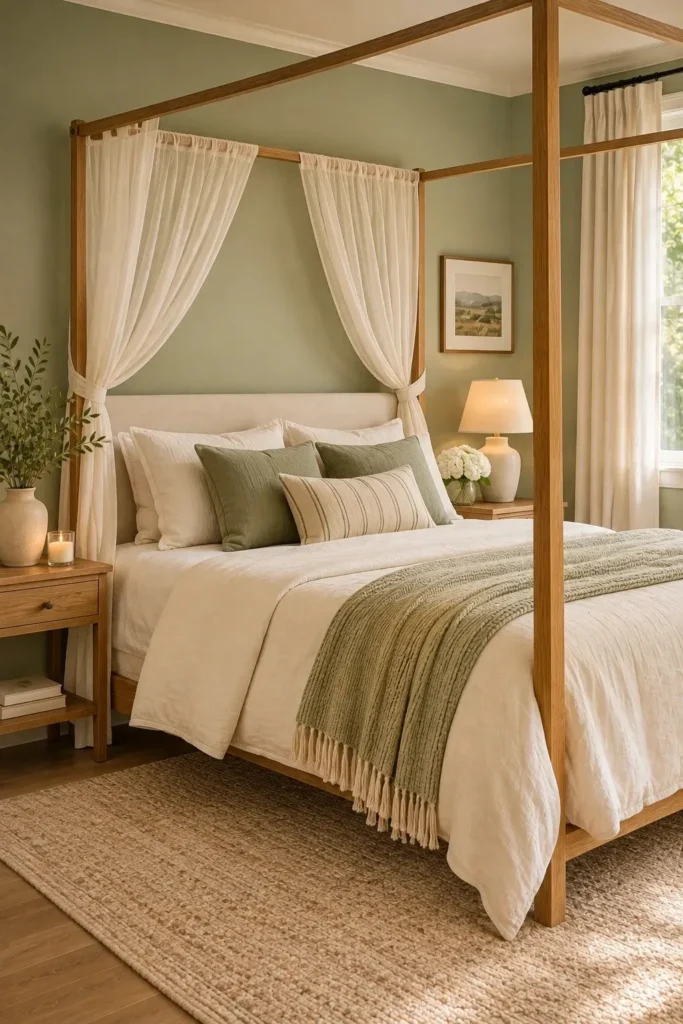
Love the softness of a canopy but worry about bulk? Dress only the two rear posts of an existing canopy bed with lightweight ivory panels. Keep the side openings clear so the sage walls and bed frame remain visible.
Choose panels that stop above the floor so they stay clear of your feet and vacuum. Gather the panels loosely at pillow height and leave enough slack for soft folds. With sage walls behind the canopy, ivory fabric adds softness while keeping the palette light and simple.
Sage Secretary Desk
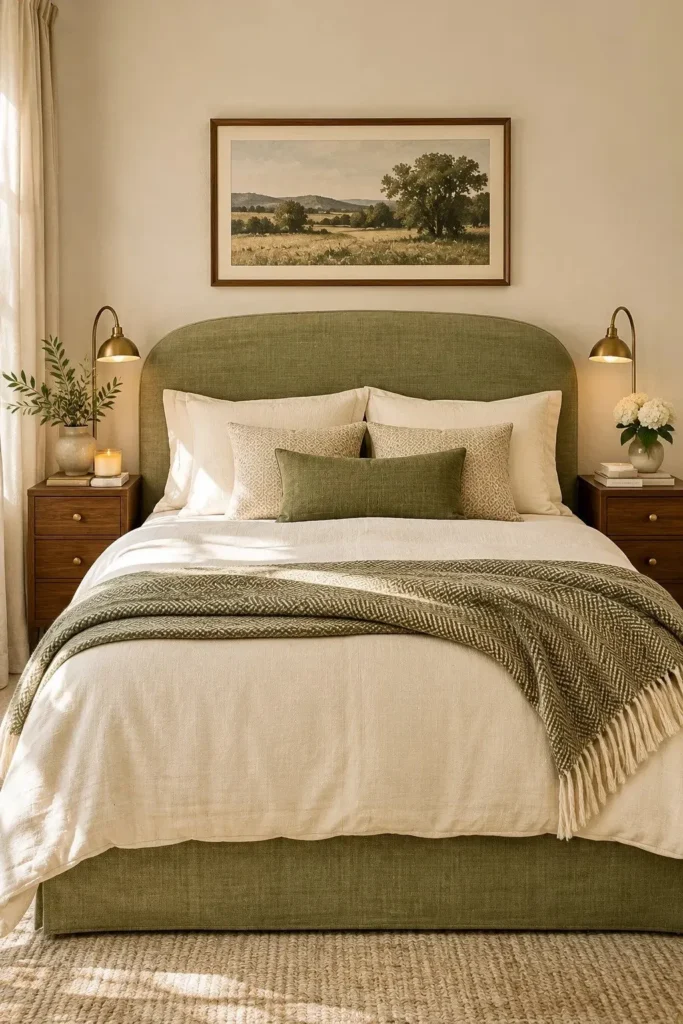
BEFORE: An open laptop can make the bedroom feel like the workday never ended. Papers and charging cables spread across a desk keep practical clutter in view from the bed.
AFTER: A sage secretary desk contains those supplies behind a closed writing flap. With a tucked stool and a clear top, the furniture reads as a quiet cabinet once work is finished.
Choose a desk deep enough for the tasks you actually do, and check the support beneath its writing flap. Reserve one internal shelf for notebooks and a shallow tray for loose papers. Returning supplies to those spots makes closing the desk a quick part of your evening routine.
Sage Window Trim
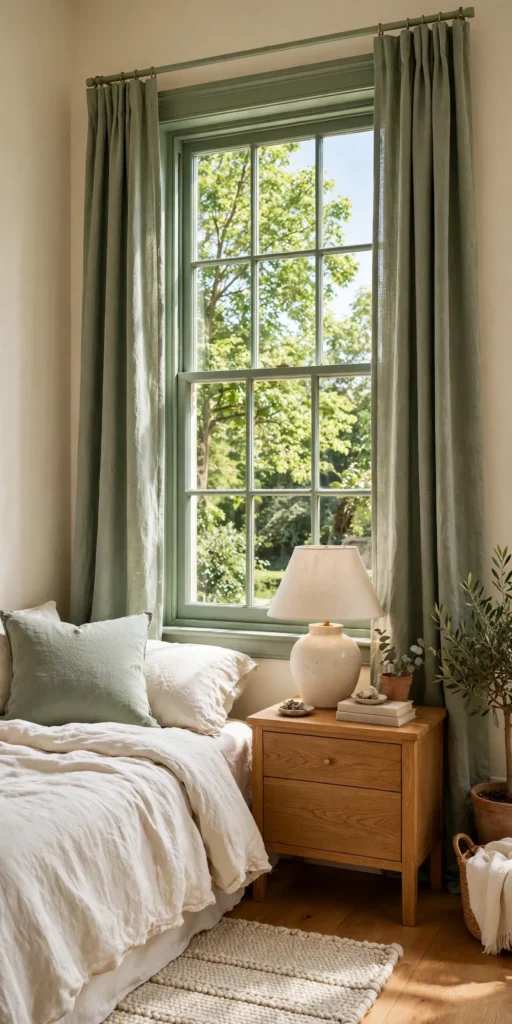
- Give a plain window its own frame of color. Choose a sage tone that repeats a small detail in your bedding or artwork.
- Decide whether to paint just the outer casing or the sill and inner trim as well. Keep that choice consistent across windows in the same room.
- Identify the trim material and select a suitable coating system. Prepare the surface according to product guidance, protecting the glass and hardware.
- Pair the finished trim with plain ivory curtains. Position the panels so some of the painted frame remains visible when they are open.
Colored trim is especially useful when you like white walls but want a visible link to green textiles. Keep the curtain fabric simple so the painted outline remains distinct. In a room with several windows, the repeated sage edges can create rhythm without covering a large wall area.
Textured Sage Throw
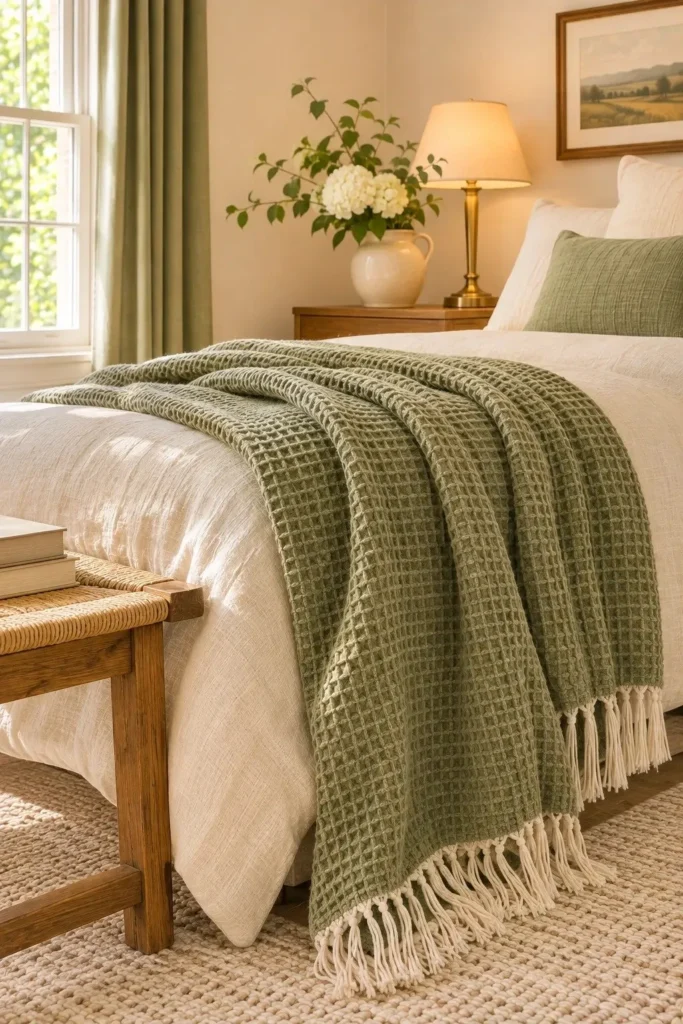
| Comparison | Waffle Weave Throw | Chunky Knit Throw |
|---|---|---|
| Visual effect | Add fine texture through a regular grid. | Make the bed’s foot more prominent with large loops. |
| Styling | Fold into a neat band across the quilt. | Drape in one loose fold over a corner. |
| Storage | A lightweight version folds compactly. | A thick version needs more storage room. |
| Before buying | Check fiber content, weight, and the care label. | Inspect loose loops and washing instructions. |
Texture lets you repeat sage without making every fabric look identical. Choose a throw a little lighter or darker than your other green accents, and place it against plain bedding. Match the fabric weight to how you will use it, since appearance alone does not tell you its warmth.
Sage Landscape Mural
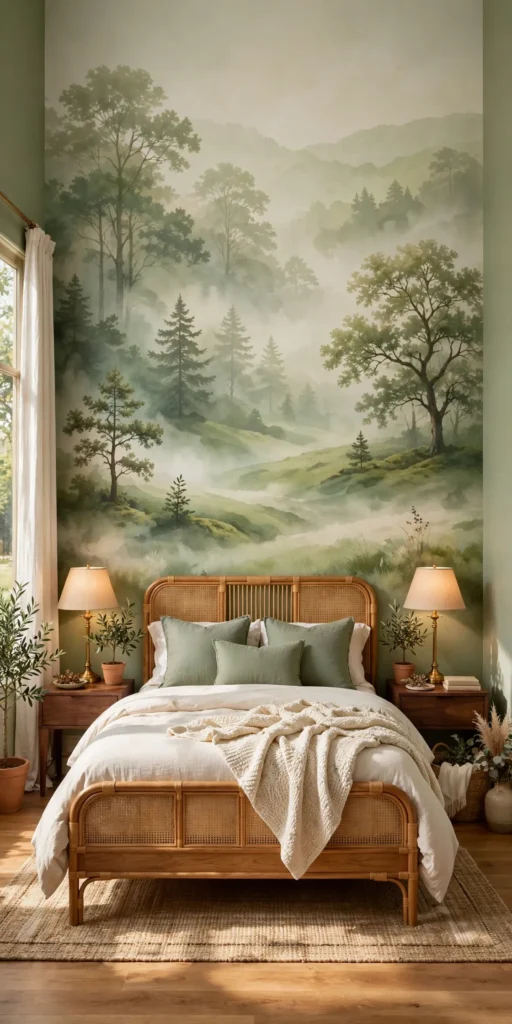
DO
- Let distant hills give the bed wall a sense of depth with a softly blended sage mural.
- Choose a design with open sky above the headboard so the wall has visual breathing room.
- Request a scaled preview using your exact wall measurements before ordering.
DON’T
- Do not place the main landscape detail where a tall headboard will hide it.
- Do not combine a detailed mural with several competing prints on the bedding.
- Do not order panels without confirming their sequence and the required wall preparation.
View the full design and a printed sample before committing, because both pattern scale and surface finish affect the result. A matte surface keeps reflections subtle. Repeat just one green from the landscape in your bedding to connect the room without covering every surface in pattern.
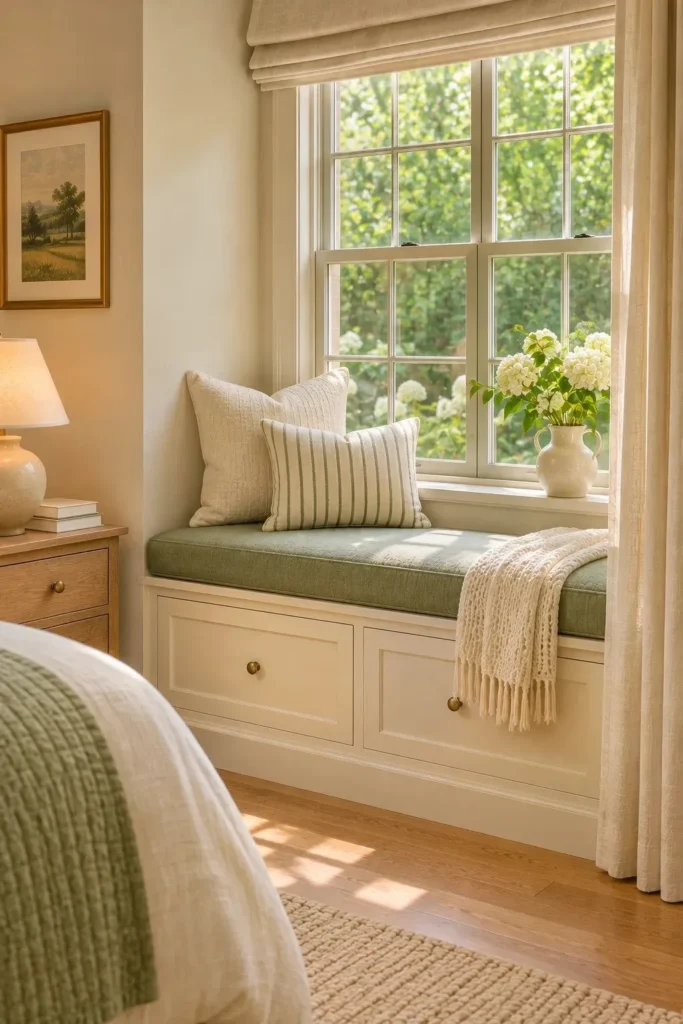
Sage Window Seat
Best For: Turning a deep window recess into a comfortable place to read.
Seat Finish: A fitted sage cushion with a removable cover.
Storage Option: Drawers beneath the seat for spare bedding.
Layout Check: Clear access to window handles, curtains, and nearby furniture.
Check that the base is designed to support seated weight before adding cushions. Choose a cushion firm enough to sit on comfortably, and test the finished seat height with your feet on the floor. Keep one end free of pillows so there is always room to settle in.
Conclusion
Creating a sage green bedroom starts with one choice that suits your everyday life. That might be softer bedding, a painted dresser, or a clear bedside surface with a small green accent. Let your existing furniture guide the palette, and give each change time before adding more.
Save this post on Pinterest so your favorite ideas are easy to revisit. Try one update this week, then share the article with someone planning a bedroom refresh. You can build a room that welcomes you at the end of the day. Choose your first detail and make it your own. If you love soft colors, see our serene bedroom inspiration ideas and dark blue bedroom ideas next. See which shades are taking over next in our 2026 paint color trends guide.
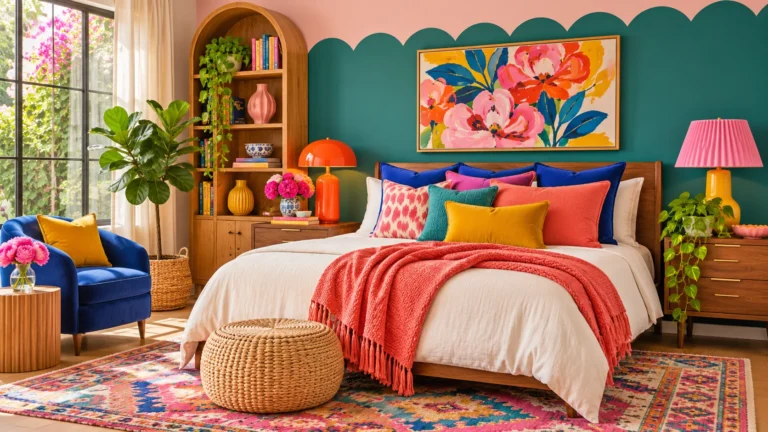
Want the opposite mood? These colorful bedroom ideas go bold.