
24 Serene Bedroom Inspiration Ideas for Better Rest
Introduction
Your bedroom can look tidy and still feel too busy to unwind. If your “room inspiration bedroom” search keeps leading to spaces that feel out of reach, start with the details you use every day.
A lamp that shines into your eyes, curtains that leave a bright gap, or a chair buried under blankets can make the room harder to enjoy. These 24 bedroom ideas pair gentle colors and inviting textures with practical fixes for those everyday frustrations.
You’ll find small updates using pieces you already own, plus larger projects worth planning around your space and budget. Choose the ideas that suit your routine, and build a bedroom that feels welcoming when the day winds down.
1. Soft Neutral Palette

Image Description: Vertical 2:3 wide angled photograph of a bedroom with warm ivory walls, an oatmeal upholstered bed, pale oak nightstands, and cream linen curtains. Soft morning daylight reveals woven bedding, matte plaster, and subtle wood grain. A simple ceramic vase completes the restrained, calm neutral palette.
Three repeating colors can give a busy bedroom a quieter, more settled look. Start with warm ivory on the largest surfaces, then introduce oatmeal bedding and pale oak furniture. Keep the ceiling and trim close in tone so your eye moves gently around the room.
Check paint samples beside your bedding in both daylight and lamplight before buying a full can. A beige that looks creamy at noon may read pink after sunset. For a smaller budget, keep your existing walls and repeat one warm neutral across curtains, pillowcases, and a throw.
2. Lightweight Bedding Layers

Image Description: Vertical 2:3 close angled photograph of an inviting bed with ivory cotton sheets, a sand colored quilt, and a muted sage blanket folded across the foot. Two sleeping pillows rest against a pale oak headboard. Diffused window light emphasizes fabric weaves, relaxed folds, and soft earthy tones.
- Does your bed feel crowded before you even climb in? Start with your sleeping pillows and add just one small accent cushion.
- Choose cotton percale or linen sheets if you prefer a crisp or textured feel. Check fabric samples when possible, since softness varies.
- Layer a lightweight quilt over your sheets, then fold a separate blanket across the foot. Pull it up only when you need extra warmth.
- Keep the palette close, such as ivory sheets, a sand quilt, and a muted sage blanket. Let the different weaves provide the detail.
The useful part of layered bedding is control: you can remove one piece without remaking the whole bed. Keep a basket within reach for the spare blanket so it stays off the floor. Before purchasing anything, check whether an existing lightweight quilt or cotton throw already gives you the layer you need.
3. Shaded Bedside Lamps
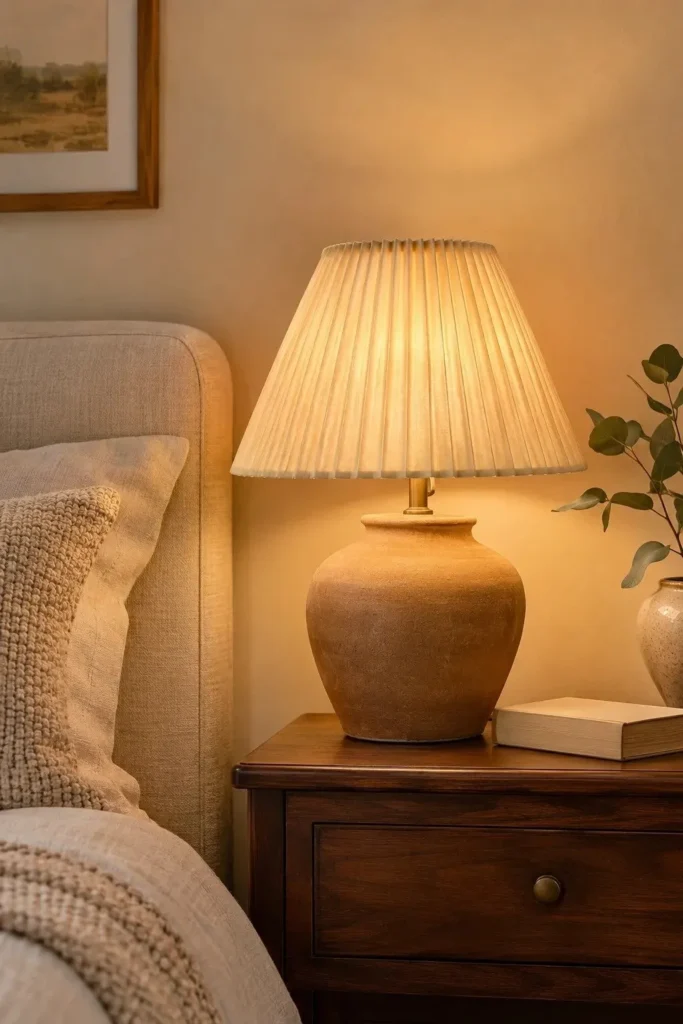
Image Description: Vertical 2:3 close angled photograph of a warm bedside lamp with a pleated ivory fabric shade and matte clay base on a walnut nightstand. An upholstered cream headboard, closed paperback, and pale beige wall frame the scene. Gentle evening lamplight creates soft shadows and a cozy glow.
Quick Tip:
Bare bulbs at eye level can make a cozy bed feel surprisingly harsh. Choose a shaded lamp, then sit against your pillows to check that the bulb stays hidden and the switch is easy to reach.
For a shared bedroom, give each side its own switch so one person can read while the other settles down. A compact lamp with an opaque shade can keep light more contained. Measure your nightstand first, leaving enough room for a glass of water and your usual bedside essentials.
4. Layered Window Curtains
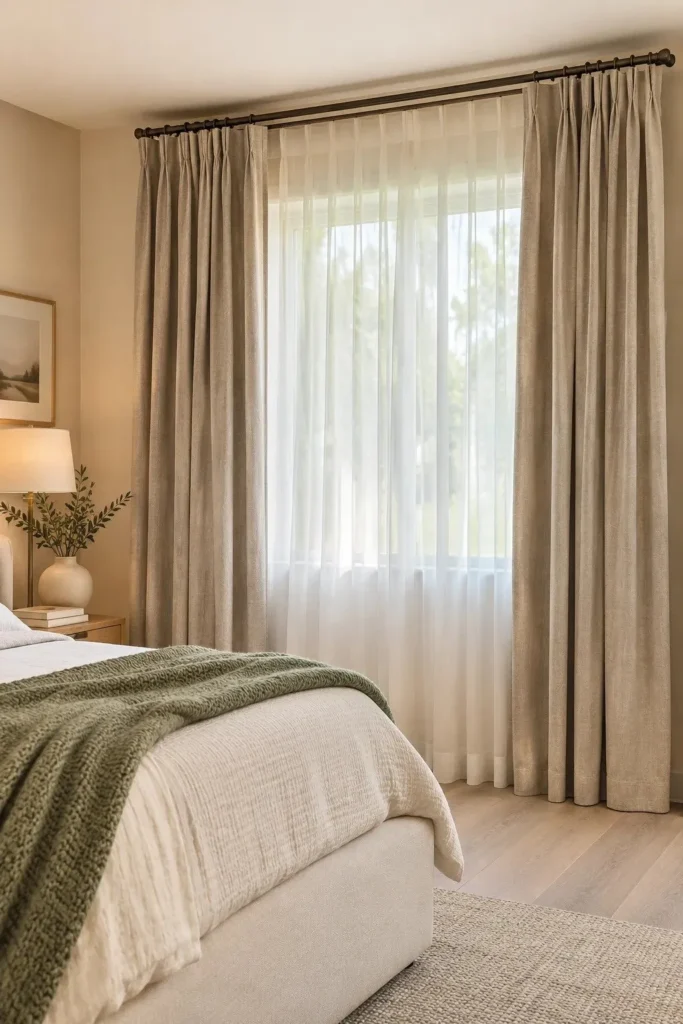
Image Description: Vertical 2:3 angled photograph of a bedroom window with ivory sheer curtains behind full length oatmeal blackout drapes on a double rod. Pale oak flooring, a cream upholstered bed, and matte beige walls surround the window. Filtered afternoon daylight reveals linen textures and soft, evenly spaced folds.
BEFORE: A stripe of streetlight lands directly across your pillow. Your single curtain layer also forces a choice between an open window view and daytime privacy.
AFTER: Sheers soften daylight while heavier blackout panels close across the window at night. Matching the outer panels to the wall color keeps the larger fabric area visually quiet.
Measure beyond the window frame so the closed panels overlap at the center and cover the side edges. Light often finds its way through those gaps. Choose a hem that clears the floor slightly, especially beside a walking route, and check that the fabric stays clear of heaters.
5. Clear Nightstand Surfaces
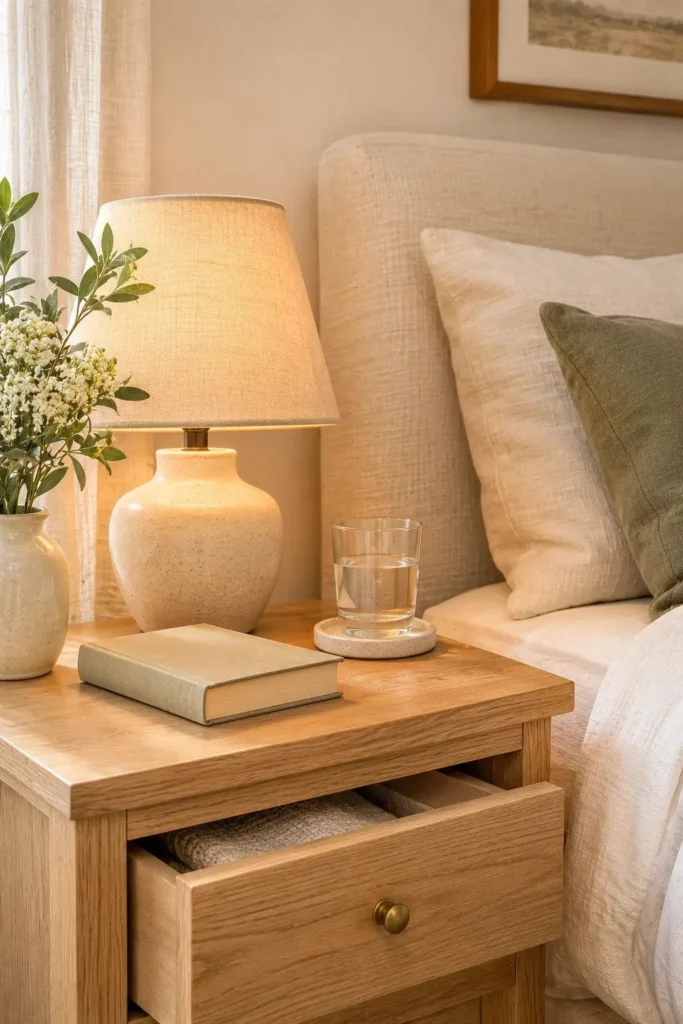
Image Description: Vertical 2:3 close angled photograph of a pale oak nightstand beside a cream upholstered bed, holding a small shaded lamp, a water glass on a ceramic coaster, and one closed book. A shallow drawer sits slightly open with a fabric organizer inside. Soft morning light highlights clean surfaces.
- Make room for your water glass without a nightly balancing act. Clear the surface and return anything unrelated to bedtime to its proper place.
- Put back only your everyday essentials, such as a lamp, a coaster, and your current book. Keep them within comfortable reach from your pillow.
- Place smaller items, including an eye mask and spare charging cables, inside a shallow drawer organizer. Give each item its own compartment.
- Attach a cable clip behind the nightstand to hold your charging lead. Leave enough slack to connect your device without pulling the cable tight.
A clear nightstand is easier to wipe down and gives everyday objects a reliable home. Leave some open space instead of filling every corner with decor. If your table has no drawer, use one small basket on its lower shelf for the items you reach for each evening.
6. Soft Bedside Rugs

Image Description: Vertical 2:3 low angled photograph of an ivory wool rug extending beside a walnut bed dressed in cream cotton and muted blue bedding. Bare oak floorboards remain visible around the rug edges. Gentle side daylight reveals a dense woven pile, rounded furniture legs, and a calm contemporary bedroom.
| Detail | Bedside Runner | Large Under-Bed Rug |
| Underfoot comfort | A soft landing along one side of the bed. | A soft landing on both sides when sized appropriately. |
| Placement | Beside the bed, covering your usual stepping area. | Beneath the bed, extending beyond its sides and foot. |
| Best layout | A bed against a wall or a narrow bedroom. | A bed with accessible floor space on both sides. |
| Cleaning access | Easier to lift and move separately. | May require moving the bed for a thorough clean underneath. |
The first step out of bed deserves a softer landing. Mark the rug edges with painter’s tape before choosing a size, and check nearby door clearance. A suitable rug pad helps limit sliding. Keep a visible border of flooring around the edges to give the bed area a clear outline.
7. Quiet Landscape Artwork
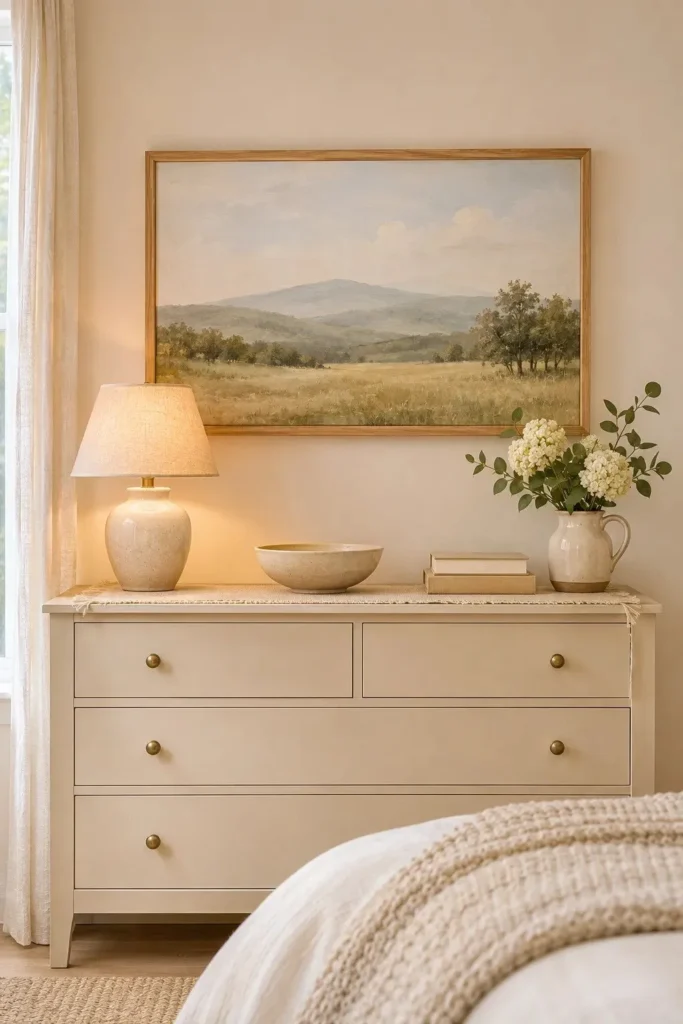
Image Description: Vertical 2:3 straight-on photograph of a muted landscape print centered above a cream bedroom dresser. Misty olive hills, pale blue sky, and warm ivory tones sit inside a slim oak frame. Soft window light reveals a matte plaster wall, ceramic bowl, and gently textured linen runner.
DO
- Give a busy wall one clear focal point with a landscape in muted colors.
- Repeat one color from your bedding within the artwork.
- Test the frame position with a paper template before making holes.
DON’T
- Crowd the print with several smaller frames.
- Choose a glossy finish for a spot that catches strong window glare.
- Hang heavy artwork with fixings unsuited to your wall type.
Empty wall space around the frame helps the artwork hold its place without competing with other objects. Above a dresser, center it within the furniture’s width and check the view from the bed. An inexpensive print can feel considered when its frame echoes the wood tone already in the room.
8. Dusty Blue Accents

Image Description: Vertical 2:3 angled photograph of a cream bedroom with two dusty blue pillow covers, a faded blue cotton throw, and a small blue ceramic dish on a walnut dresser. Warm afternoon daylight falls across ivory walls, linen bedding, and a woven rug, creating a restrained coastal palette.
Result: A plain cream bedroom gains a gentle touch of color.
Commitment: Removable textiles and small accessories.
Palette: Dusty blue, warm ivory, and walnut.
Starting Point: One pillow cover you can compare with your existing bedding.
Search “room inspiration bedroom” on Pinterest, then compare blue accents against wall colors similar to yours. Start with one pillow cover and repeat its shade in a throw or ceramic dish. Choose slightly different textures so the pieces feel related without looking like a matching bedroom set.
9. Padded Fabric Headboards

Image Description: Vertical 2:3 straight-on photograph of a softly padded headboard upholstered in oatmeal woven fabric behind a bed with ivory sheets and clay colored cushions. Slim walnut nightstands flank the bed against a warm white wall. Diffused morning light emphasizes rounded corners, subtle stitching, and a tailored contemporary style.
Your bed’s largest vertical surface can soften the whole room. A padded fabric headboard adds texture behind plain bedding and provides a more comfortable leaning surface for evening reading. Choose a simple rectangular or gently curved shape, then keep surrounding accessories small enough to let it stand out.
Before buying, measure from the floor to the top of your mattress so the padded section sits where your back will rest. Check that the mounting method suits your bed frame or wall. For easier upkeep, look for removable covers or upholstery with clear cleaning instructions.
10. Woven Blanket Baskets
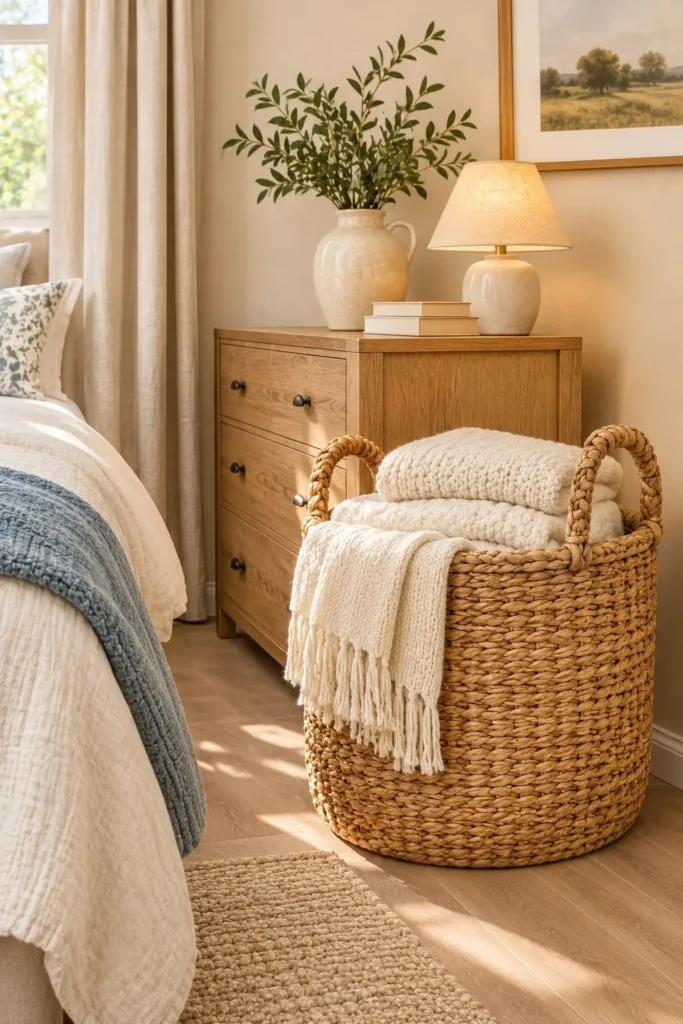
Image Description: Vertical 2:3 angled photograph of a large honey toned woven basket holding folded ivory blankets beside a low oak bedroom dresser. A cream bed, warm beige walls, and pale floorboards form the background. Soft afternoon daylight reveals braided fibers, cotton textures, and a tidy, relaxed cottage aesthetic.
- Spare blankets look calmer when they have one clear home. Place a roomy basket beside your dresser or in an unused corner.
- Choose a basket with a smooth fabric lining to protect delicate knits from rough fibers. Check the inside for exposed ends before filling it.
- Store only clean, dry textiles inside. Fold thicker blankets loosely and keep your most frequently used throw near the top.
- Measure the basket’s widest point, including its handles. Make sure it fits without blocking a drawer or narrowing your route around the bed.
Match the basket’s tone to one existing wood finish, such as pale oak or warm walnut, to keep the room cohesive. A lid helps hide mixed colors, while an open top makes everyday blankets easier to grab. Leave some spare capacity so putting bedding away doesn’t become a wrestling match.
11. Compact Reading Corner
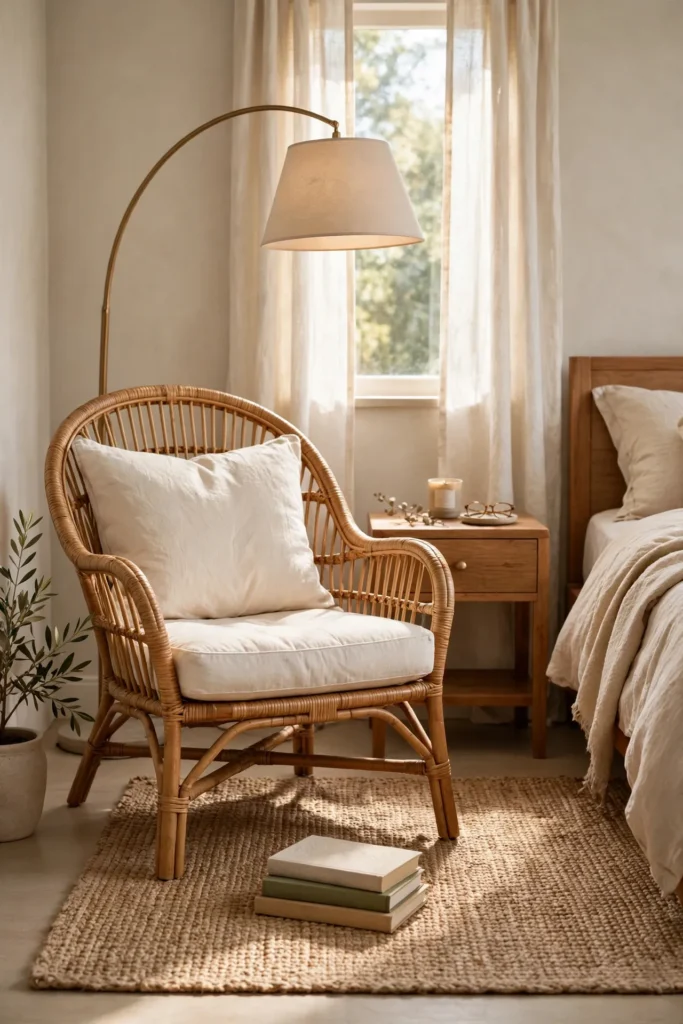
Image Description: Vertical 2:3 angled photograph of a compact bedroom reading corner with an oatmeal armchair, a small round walnut table, and a slender bronze floor lamp. An open paperback rests beside a ceramic mug. Filtered window light illuminates sage cushions, cream walls, and the chair’s softly textured upholstery.
Quick Tip:
An unused corner only needs a comfortable seat and reachable light to become a reading spot. Test the chair’s footprint with painter’s tape, including enough space to sit down without brushing the bed.
Angle the chair toward the room so the corner feels connected to the rest of the bedroom. Keep the table close enough to set down a book without leaning forward. A single lumbar cushion can add support, but leave the seat clear so the chair stays ready for use.
12. Balanced Bed Placement
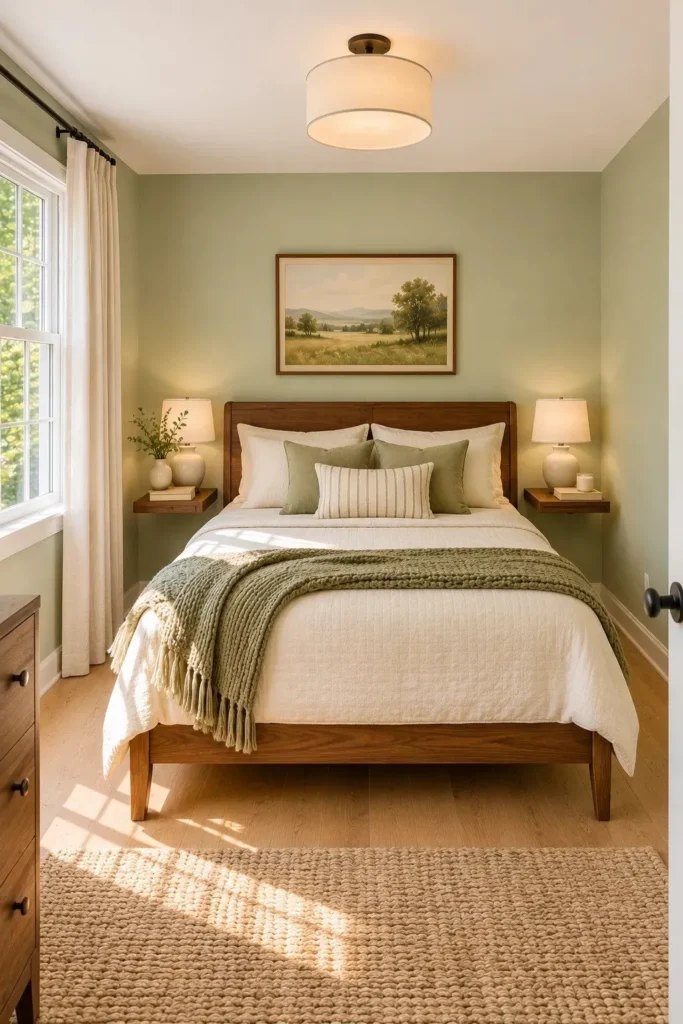
Image Description: Vertical 2:3 wide angled photograph of a small bedroom with a walnut bed centered on the main wall and clear walking space along both sides. Narrow bedside shelves, ivory bedding, and pale sage walls keep the layout light. Natural morning daylight highlights oak floorboards and simple, balanced furnishings.
BEFORE: Getting into bed involves squeezing past a dresser and turning sideways around a bulky nightstand. The mattress sits off center, leaving one cramped walkway and a strip of wasted space on the other side.
AFTER: Repositioning the bed creates usable routes along both sides. Slim bedside shelves replace deep tables, opening the floor while keeping a place for nighttime essentials.
Start by checking door swings, drawer openings, and access to curtains before moving heavy furniture. Walk through the proposed arrangement with a laundry basket to spot awkward turns. In a very narrow room, placing one side against a wall may work better; prioritize a comfortable route over perfect symmetry.
13. Painted Headboard Arch
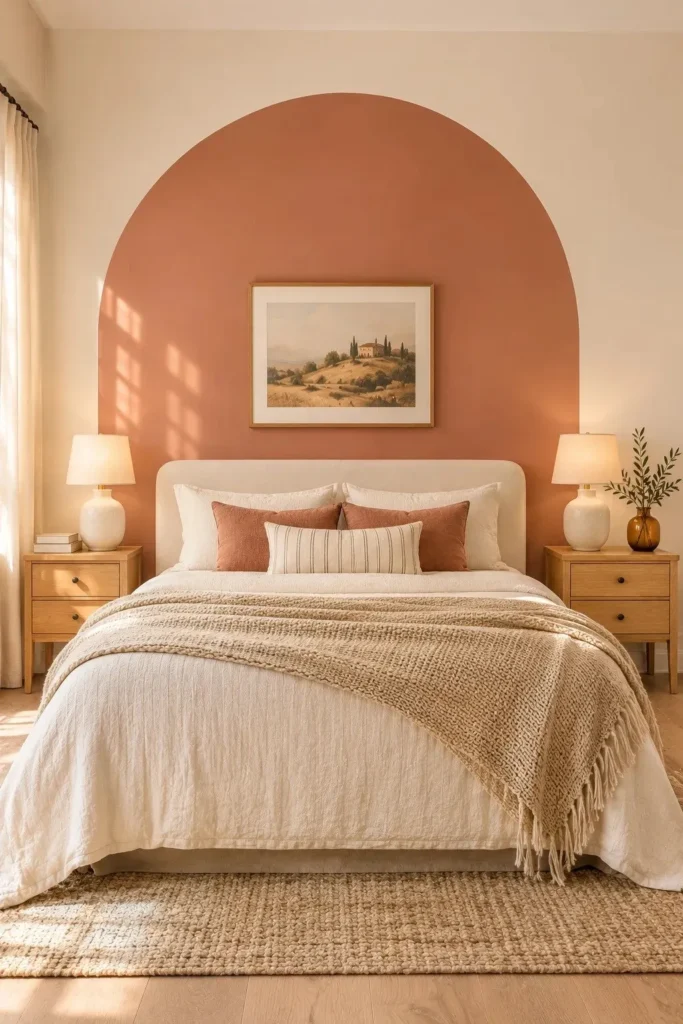
Image Description: Vertical 2:3 straight-on photograph of a dusty clay painted arch behind a low ivory bed, framed by warm white bedroom walls. Pale oak nightstands, cream cotton bedding, and a small amber vase complete the setting. Soft afternoon daylight reveals matte paint, gentle curves, and a calm Mediterranean inspired palette.
- Give a plain bed wall a focal point with one softly colored arch. Center the shape over your mattress and mark two vertical sides with a level.
- Tie a pencil to a string half the arch’s width, anchoring the other end midway between the tops of those lines. Keep the string taut as you draw the curved top.
- Tape the straight edges and paint the curved edge carefully with a small angled brush.
- Fill the shape with a small roller, following the paint’s drying and recoating instructions.
Keep the arch color close in depth to the surrounding wall for a gentle outline. Dusty clay against warm ivory creates definition without a sharp contrast. Before painting, photograph your pencil outline from the doorway to check its proportions, especially if pillows will cover much of the lower section.
14. Slim Bedroom Bench

Image Description: Vertical 2:3 angled photograph of a slim oak bench with an oatmeal upholstered seat at the foot of a cream bed. Clear floor space separates the bench from a low dresser. Warm window light highlights rounded wooden legs, woven upholstery, ivory bedding, and pale beige walls.
| Detail | Open-Leg Bench | Storage Bench |
| Everyday use | A convenient seat for putting on socks or slippers. | A dressing seat with enclosed space for spare bedding. |
| Visual effect | Visible flooring beneath keeps the outline light. | A solid base gives the bed area a fuller appearance. |
| Storage capacity | No enclosed storage beneath the seat. | Capacity depends on the interior compartment dimensions. |
| Space to check | A comfortable walking route around the legs. | A walking route plus clearance for the lid or drawers. |
A bench should earn its place before you give it floor space. Choose one slightly narrower than the bed and leave room to walk past it comfortably. Check that a storage lid can open fully without touching the bedding. Keep the seat available for dressing each morning.
15. Single Corner Plant
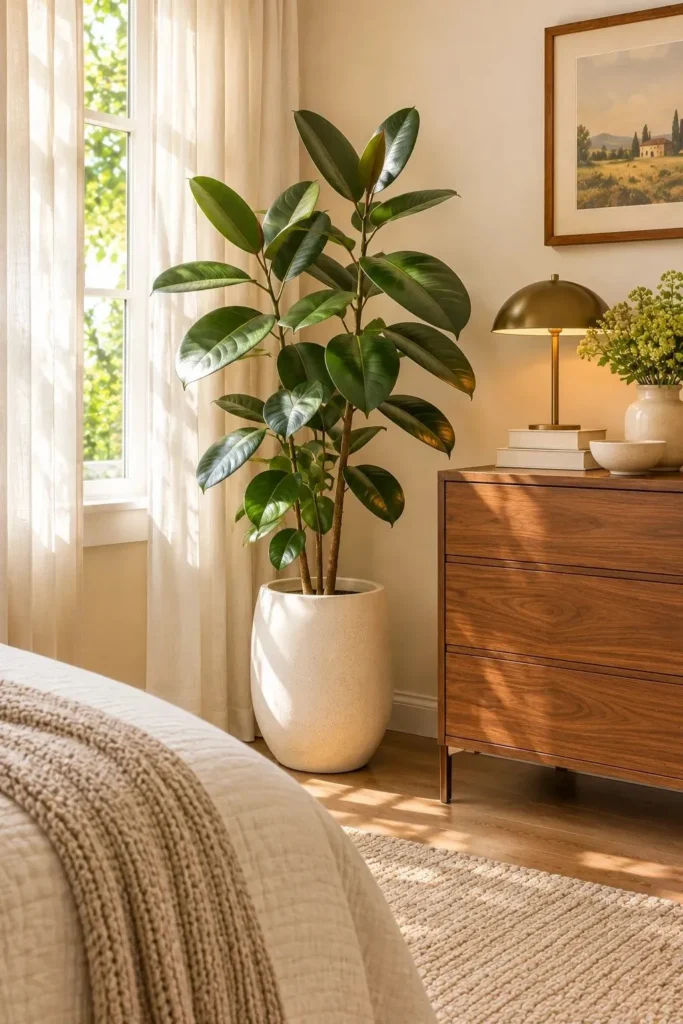
Image Description: Vertical 2:3 angled photograph of a healthy rubber plant with glossy deep green leaves in a matte cream planter beside a bedroom window. Sheer ivory curtains, a walnut dresser, and oatmeal bedding surround the corner. Bright filtered daylight reveals leaf veins, natural wood grain, and a simple contemporary setting.
DO
- Soften an empty corner with one plant suited to the daylight it receives.
- Use an inner pot with drainage holes inside your decorative planter.
- Leave enough space for the leaves to spread without pressing against curtains or furniture.
DON’T
- Choose a dark corner solely because it looks good in a photo.
- Let drained water collect inside the outer planter.
- Crowd the same corner with several small pots and decorative stands.
A single larger plant often reads more clearly than several tiny pots scattered around the bedroom. Keep its container within your existing palette so the foliage becomes the main accent. If regular plant care feels unrealistic, a realistic artificial stem in a weighted vase offers a simpler decorative alternative.
16. Concealed Bedroom Workspace
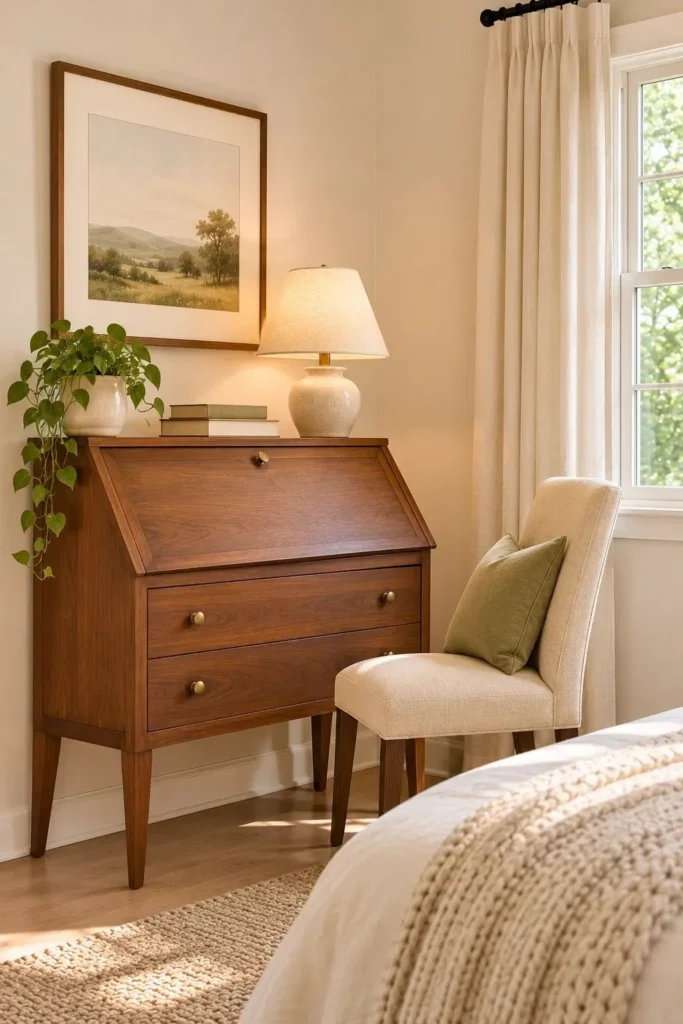
Image Description: Vertical 2:3 angled photograph of a compact walnut secretary desk with its writing panel closed in a cream bedroom. A slim upholstered chair sits beside the cabinet, with a framed print above. Soft morning daylight reveals pale walls, linen bedding, and neatly concealed work storage.
Result: Work supplies disappear behind a closed cabinet door.
Furniture: A foldaway secretary desk with enclosed storage.
Best For: Bedrooms that also serve as home offices.
Daily Reset: Put away papers and close the writing surface.
Choose a cabinet deep enough for your laptop and everyday supplies, then check the height and legroom with the writing surface open. Keep one compartment for unfinished paperwork so clearing up takes fewer decisions. A desk that closes neatly helps the bedroom look ready for evening, even during a busy week.
17. Subtle Botanical Wallpaper
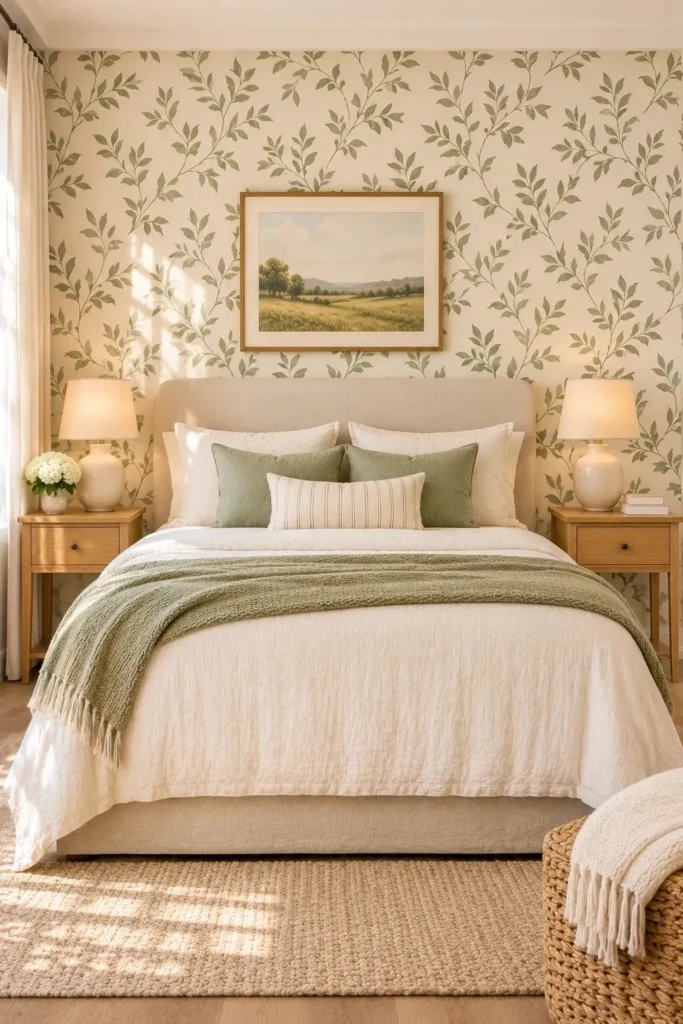
Image Description: Vertical 2:3 straight-on photograph of a bedroom with delicate sage leaf wallpaper on an ivory background behind a cream upholstered bed. Plain linen bedding, pale oak nightstands, and small ceramic lamps balance the pattern. Diffused daylight highlights fine botanical outlines, woven fabrics, and a gentle cottage inspired aesthetic.
Could a patterned wall still feel quiet? Choose a botanical print with fine lines, generous background space, and colors close to your bedding. Limit it to the wall behind the bed, then keep neighboring surfaces plain so the pattern has room to breathe without taking over.
Order a sample large enough to show the repeat and view it from your usual sleeping position. Tiny details can disappear at that distance, while strong outlines may feel busier than expected. Follow the wallpaper maker’s surface preparation instructions, and test removable products before committing to a whole wall.
18. Rounded Bedroom Mirror
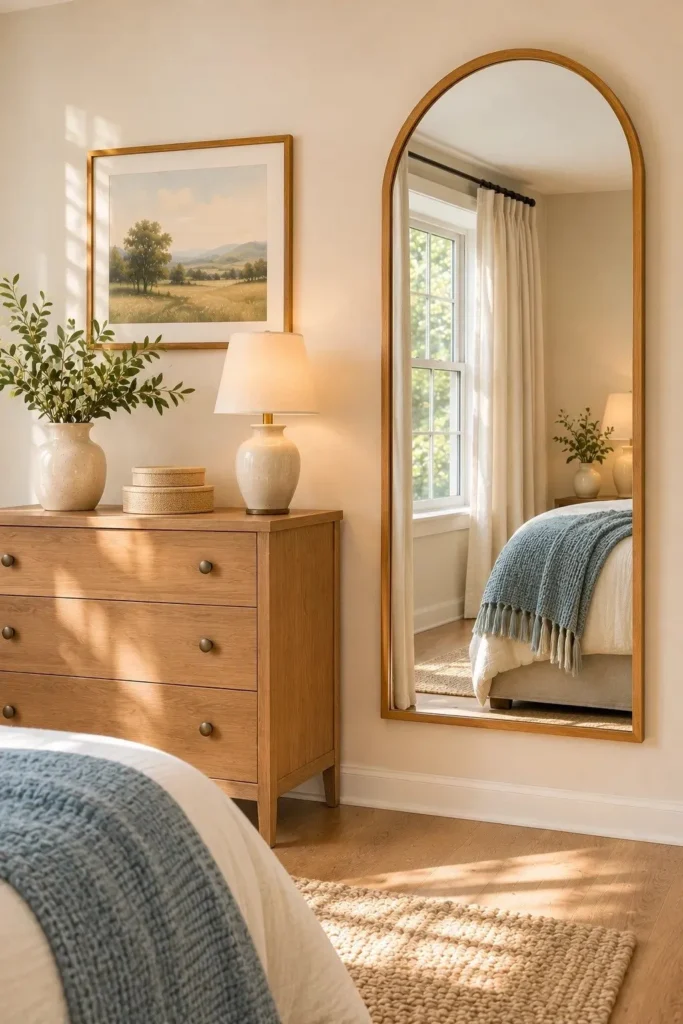
Image Description: Vertical 2:3 angled photograph of a tall arched mirror with a slim oak frame mounted beside a bedroom dresser. Its reflection shows cream curtains and a softly lit ivory wall. Muted blue bedding, warm wood flooring, and gentle side daylight create a balanced, uncluttered contemporary setting.
- A mirror repeats whatever sits opposite it, including the laundry pile. Choose a position that reflects curtains, artwork, or an uncluttered wall.
- Pick a rounded or arched frame to soften a room full of rectangular furniture. Repeat an existing wood or metal finish for a consistent look.
- Check the reflection from the bed in daylight and with lamps switched on. Adjust the position if a bright light appears directly in your sightline.
- Secure the mirror using hardware suitable for its weight and your wall. Follow the manufacturer’s mounting instructions.
For a dressing spot, leave enough room to stand back and see your whole outfit. A mirror beside the wardrobe can be more useful than one placed purely for symmetry. Keep the surrounding surface simple, with a small dish for jewelry or a brush, so the reflection stays visually calm.
19. Linen Bed Canopy

Image Description: Vertical 2:3 angled photograph of a bedroom with a slender oak four poster bed and sheer ivory linen panels tied loosely to its rear posts. Cream bedding, pale clay walls, and a small walnut nightstand complete the scene. Diffused daylight reveals airy fabric folds and warm wood grain.
Quick Tip:
A little fabric around the pillows can make the bed feel more sheltered. Use lightweight panels on a canopy frame designed for drapes, and keep the sides where you enter the bed open.
Choose washable panels that skim clear of the floor, then secure them where they cannot brush a bedside lamp or ceiling fan. Keep the fabric close to your wall color for a quieter outline. Check the view from the doorway before adding more fabric; the bed frame should still be visible.
20. Closed Wardrobe Fronts
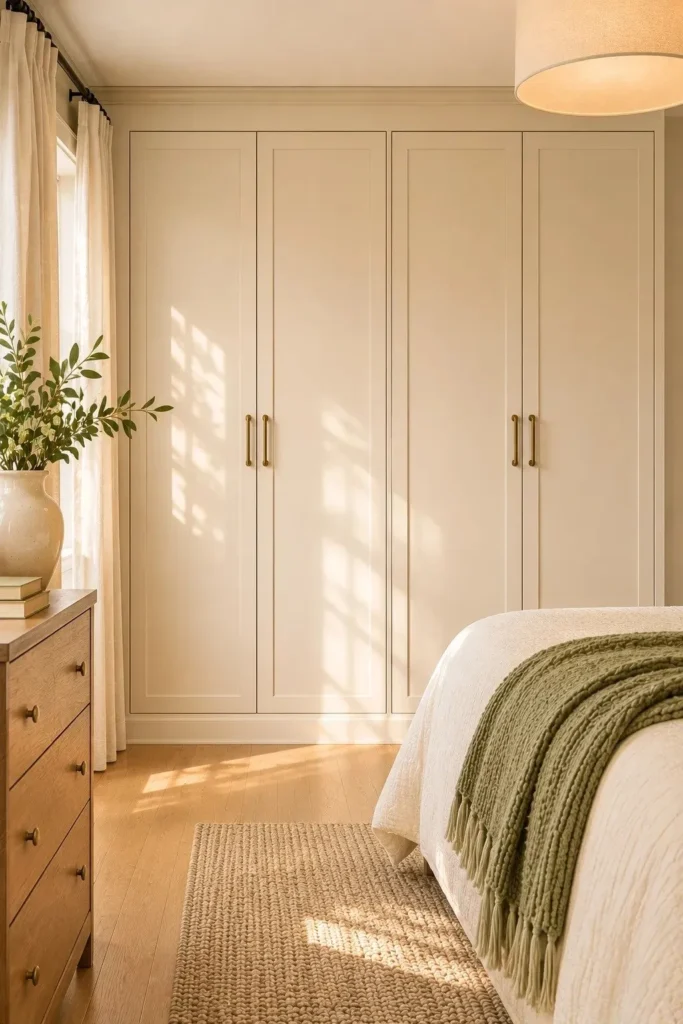
Image Description: Vertical 2:3 straight-on photograph of bedroom wardrobes with flat warm ivory doors and small brushed brass handles. A pale oak floor, cream upholstered bed edge, and muted olive throw soften the setting. Gentle side daylight creates subtle shadows across the cabinetry, emphasizing clean lines and a calm, orderly layout.
BEFORE: Rows of hanging clothes turn the storage wall into a patchwork of colors. Even folded stacks look busy when every shelf remains visible from the pillows.
AFTER: Plain wardrobe doors give the room one continuous surface. Clothes and daily clutter stay accessible behind fronts that blend with the surrounding walls.
Choose hinged or sliding doors according to the space available in front of the wardrobe. Check that handles will clear nearby furniture and that every drawer opens fully. Before replacing existing doors, consider whether repainting them and updating the hardware would give you the same calmer finish.
21. Tonal Painted Ceiling
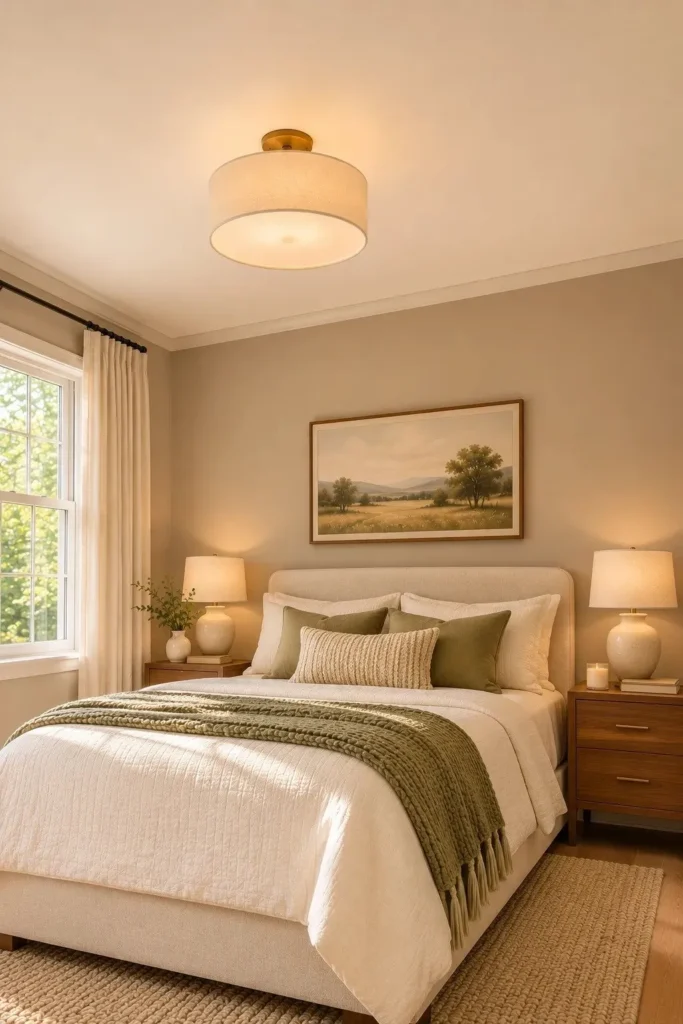
Image Description: Vertical 2:3 upward angled photograph of a bedroom with pale mushroom walls and a slightly lighter ceiling in the same warm color family. An ivory upholstered bed, walnut nightstands, and cream curtains sit below. Soft window light reveals matte painted surfaces and a gently enclosed, cohesive bedroom palette.
- Look up: the ceiling is another surface you can bring into the room’s palette. Choose a lighter shade from the same color family as your walls.
- Paint a sample board and hold it flat overhead to judge the color in that position. Check it during daylight and with your usual evening lamps.
- Clear or cover furniture and protect the floor before preparing the ceiling. Follow the paint maker’s instructions for cleaning, repairs, and primer.
- Cut in around the edges with a brush, then roll the main area in manageable sections. Allow the specified drying time between coats.
Use your saved “room inspiration bedroom” images to compare ceiling shades with similar wall colors. A close tonal match can make the corners feel less sharply outlined. Keep crown molding within the same palette if you want that continuous effect, and test carefully before choosing a deeper shade.
22. Natural Wood Wall Panels

Image Description: Vertical 2:3 straight-on photograph of a bedroom with wide pale oak wall panels behind a low cream bed. Subtle vertical seams, ivory bedding, walnut bedside tables, and a muted olive cushion create a warm natural palette. Soft side daylight reveals gentle wood grain and a restrained contemporary interior.
| Detail | Wide Oak Panels | Narrow Wood Slats |
| Visual effect | Broad wood grain brings warmth to a plain bed wall. | Repeated narrow lines add texture and deeper shadows. |
| Bedding pairing | Plain fabrics or a delicate pattern complement the broad surfaces. | Simple, mostly plain textiles balance the stronger linear pattern. |
| Routine cleaning | Wipe the panel faces and seams. | Dust the faces and spaces between individual slats. |
Wood gives a plain bed wall texture without requiring several decorative objects. Compare panel samples beside your flooring before choosing a finish, since two similar woods can still look mismatched. Check the finished panel thickness around outlets and trim, and arrange the layout so the bed sits comfortably within it.
23. Discreet Charging Corner
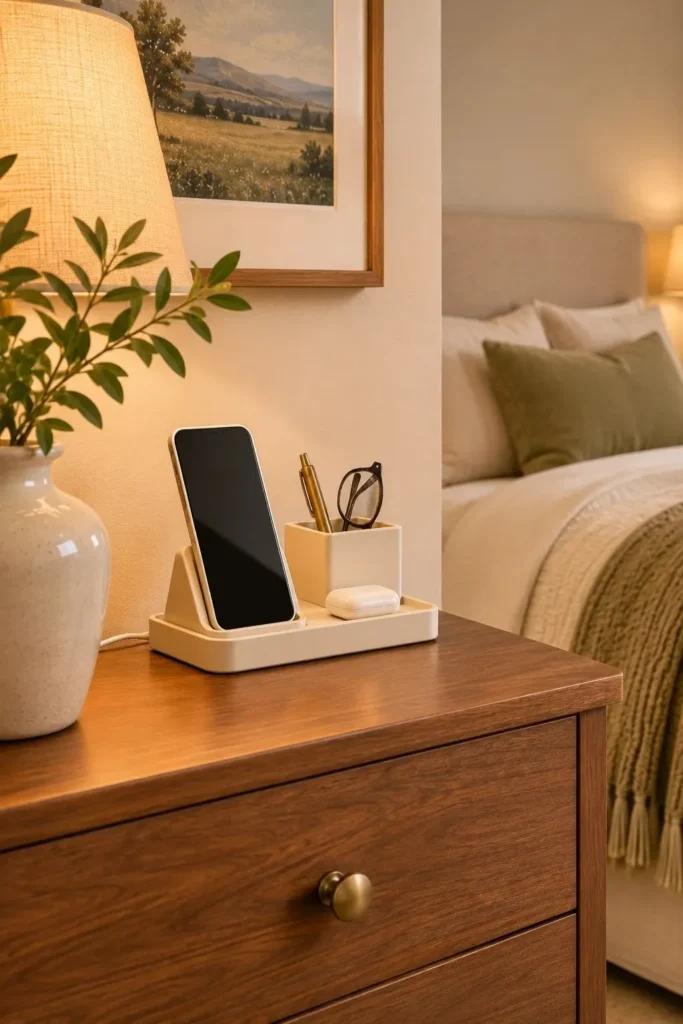
Image Description: Vertical 2:3 close angled photograph of a small charging station on a walnut bedroom dresser, with a phone resting upright on a cream stand and one cable routed behind the furniture. An ivory wall, closed drawer, and distant linen covered bed appear in warm evening lamplight, creating an orderly scene.
DO
- Give your phone a regular landing spot on a dresser away from your pillow.
- Keep the charger uncovered on a firm surface with airflow around it.
- Guide the cable behind the furniture with clips, leaving enough slack for easy access.
DON’T
- Hide a charging phone under bedding or inside a closed drawer.
- Run cables across the route between your bed and the door.
- Fill the station with devices you rarely use.
Place the station where plugging in feels convenient as you enter the room. That small placement choice makes it easier to leave the phone there while you get ready for bed. If you use a separate alarm clock, choose one with a dimmable display or a light that activates only when needed.
24. Personal Keepsake Display
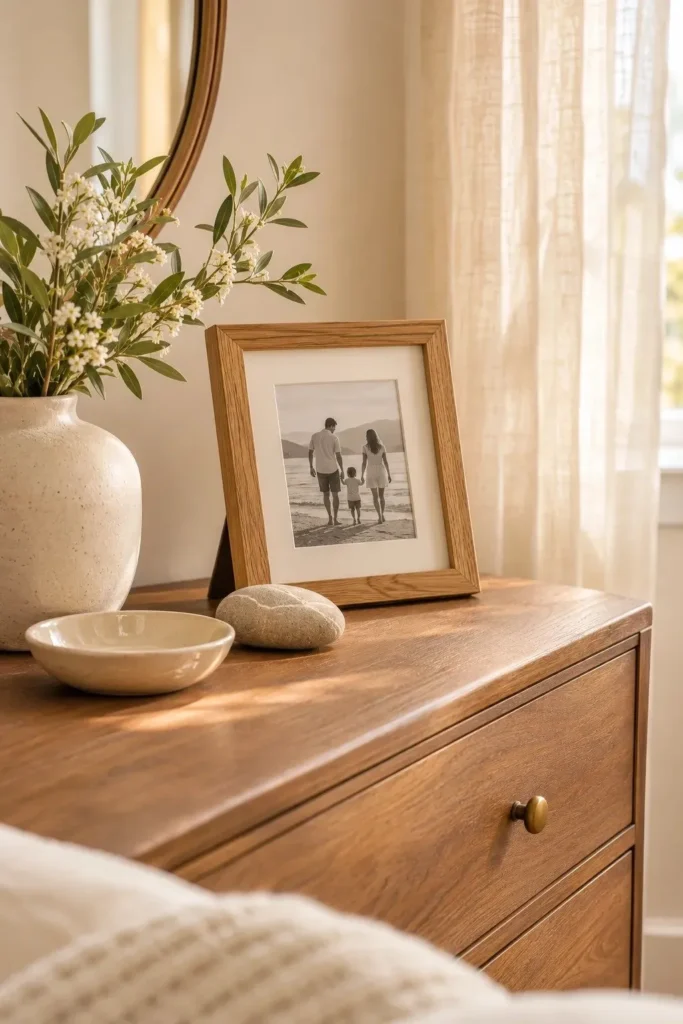
Image Description: Vertical 2:3 close angled photograph of a bedroom dresser displaying one small oak framed family photograph, a smooth beach stone, and a shallow cream ceramic dish. Warm ivory walls and softly blurred linen curtains form the background. Gentle morning daylight highlights natural textures and a simple, personal arrangement.
Mood: A quiet bedroom still has room for the things that feel like you.
Pieces: One photograph, one keepsake, and a shallow dish.
Placement: A dresser corner visible from the bed.
Budget: Start with meaningful objects you already own.
Select objects that bring back an easy, pleasant memory, such as a beach stone or a small bowl from a favorite trip. Group them on one end of the dresser and leave the rest open. The display should feel personal enough to notice and simple enough to dust.
Conclusion
A calmer bedroom begins with a change you can enjoy every day. Choose softer bedside lighting, give spare blankets a home, or refresh the bed with colors you love. Let your saved “room inspiration bedroom” pins guide you toward details that fit your space and routine.
Start with one idea this week and notice what makes the room easier to use. Save this post on Pinterest so your next project is easy to find, and share it with someone planning a bedroom refresh. Pick your first small update today and give yourself a more welcoming place to end the day.
Prefer richer color instead? These jewel tone bedroom ideas show the bold, luxurious side of bedroom design. For a soft green palette instead, explore our sage green bedroom ideas. For a darker, more romantic take, explore these dark feminine bedroom ideas.