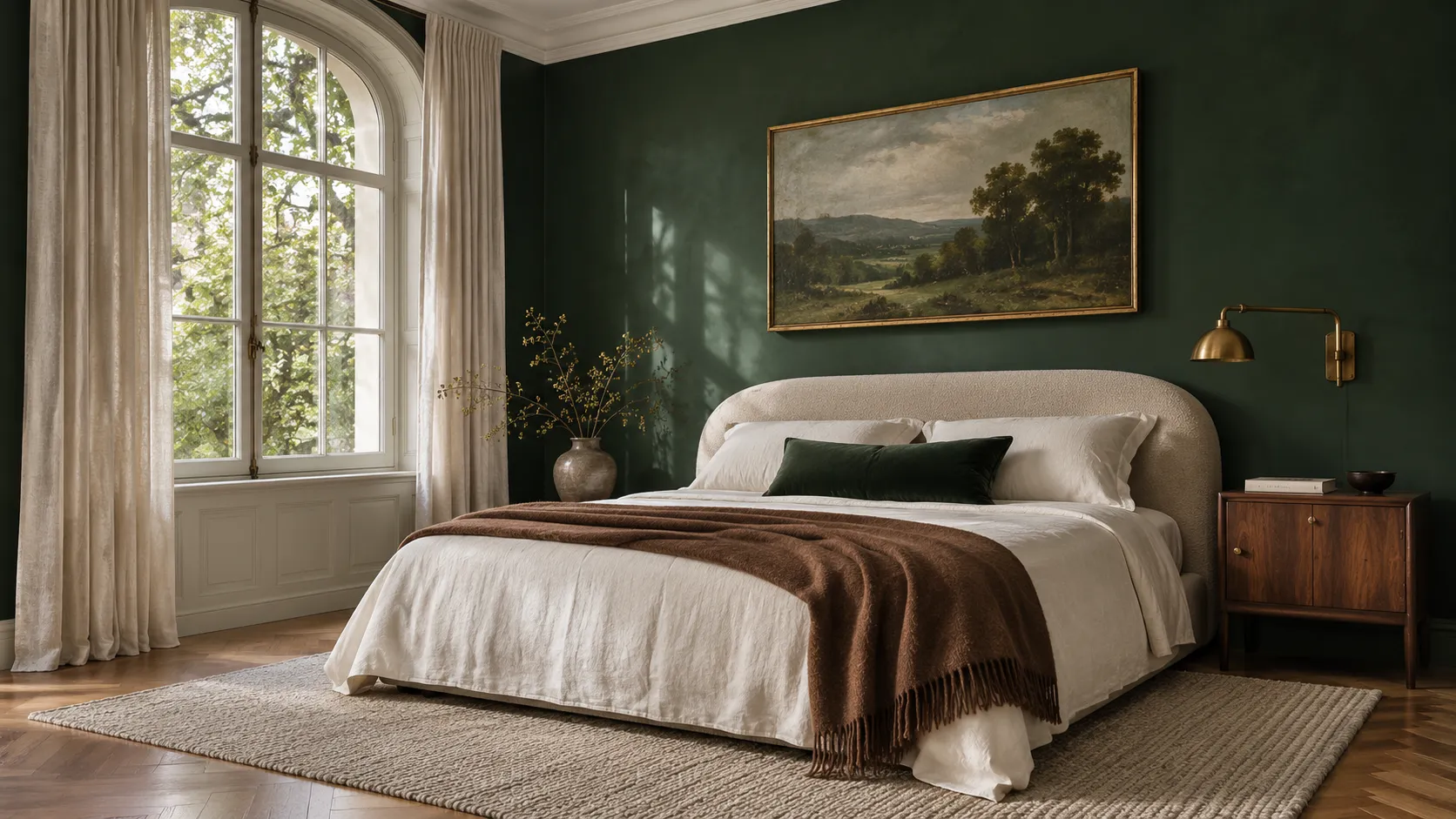
33 Restful Dark Green Bedroom Ideas for Quiet Nights
The best time to choose a paint color for a dark green bedroom might be ten minutes before bed. A pine green you love at noon can look almost black once you close the curtains and switch on your reading lamp.
Start with the view from your pillow. Would you enjoy seeing an oak headboard outlined against forest green? Or would it feel better to draw a laurel green curtain across the desk where tomorrow’s work is waiting?
These 33 ideas give you ways to work with the light, furniture, and floor space you already have. If you rent, a pine linen duvet can bring in all the green you need. If you’re ready to paint, you’ll find ideas for everything from a wardrobe door to the slope above an attic bed.
Forest Green Accent Wall

A forest green wall makes the outline of an oak spindle headboard visible from across the room. For a dark green bedroom that still feels bright when you walk in, paint the wall behind the bed and carry a warm ivory around the rest of the room.
Before you commit, brush two coats of each sample onto separate pieces of card, right up to the edges. Prop them behind the headboard. Check them from the doorway in daylight and again with your bedside lamp on. Which shade still looks green in the dimmest corner?
Pine Green Linen Layers
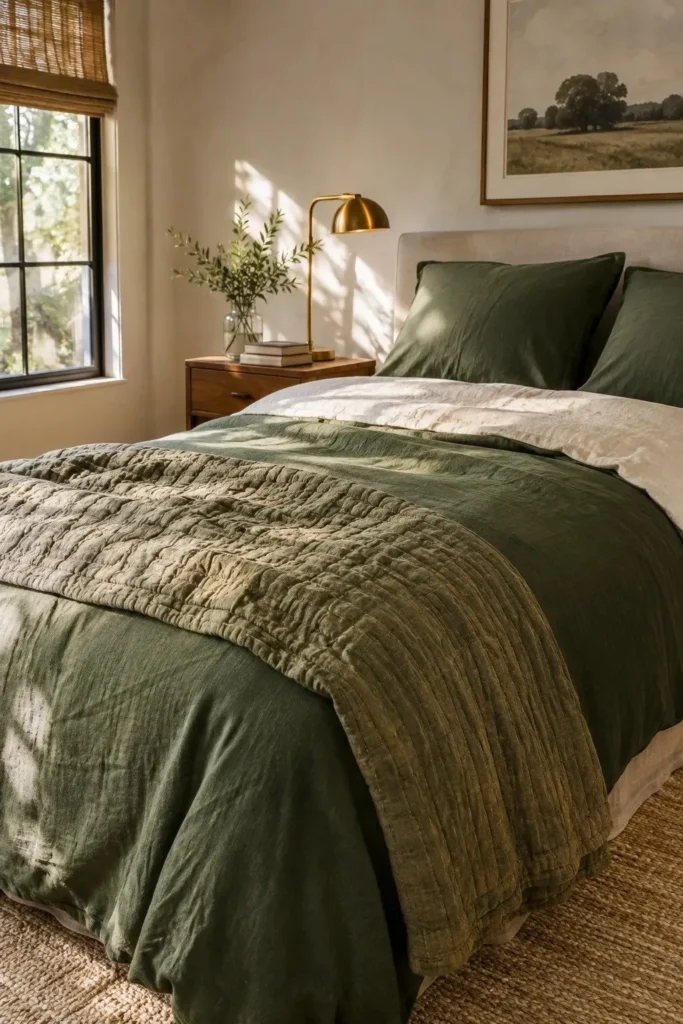
- Let the duvet do most of the decorating. A solid pine green cover creates a broad sweep of color, even against plain white walls.
- Fold an ivory top sheet over the duvet so a handspan of pale fabric shows beneath the pillows.
- Lay a faded olive quilt across the foot. Fold it loosely enough that you can pull it up on a chilly night.
- Keep the pillowcases to two colors already on the bed. A pair in pine behind a pair in ivory gives the layers a clear order.
Lay the quilt and duvet together by the window before you buy matching shams. An olive that looks brown beside pine might be just the warm note the bed needs. If you already own a quilt with a tiny floral print, pull the pillowcase color from one of its leaves.
Pleated Bedside Shades
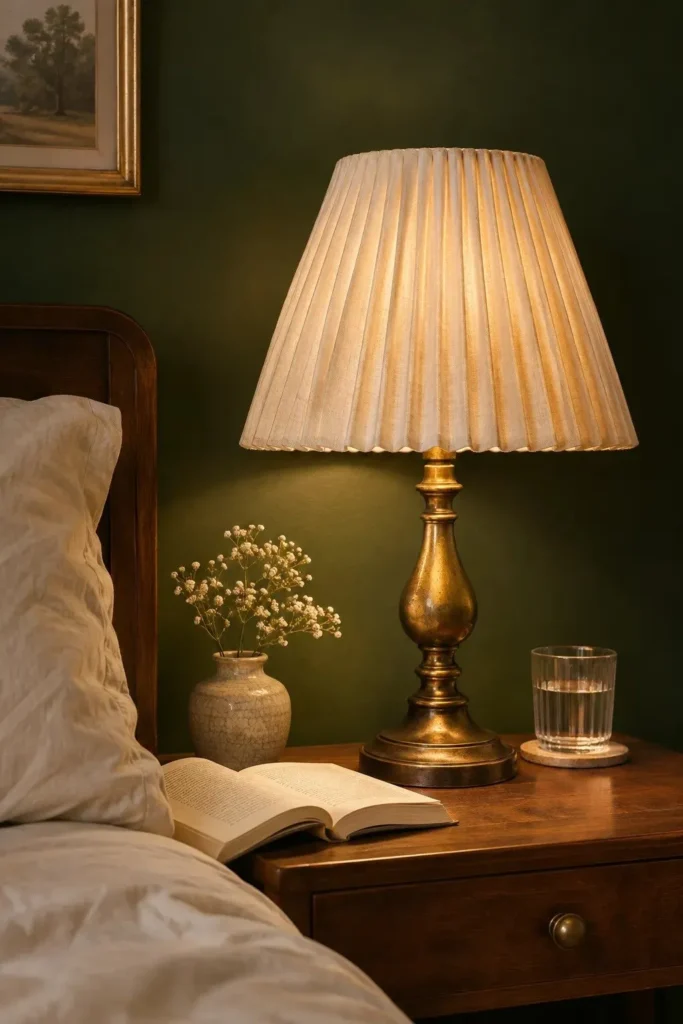
Quick Tip:
Can you see the bare bulb from your pillow? Sit in your usual reading position and choose a shade deep enough to hide the bulb from that angle.
Ivory linen gives the lamp a soft outline against bottle green paint, and each pleat catches a slightly different amount of light. Take your usual paperback to the bedside when you test the shade. You want a clear pool of light across both pages while the wall above stays dim.
Tonal Green Wardrobe
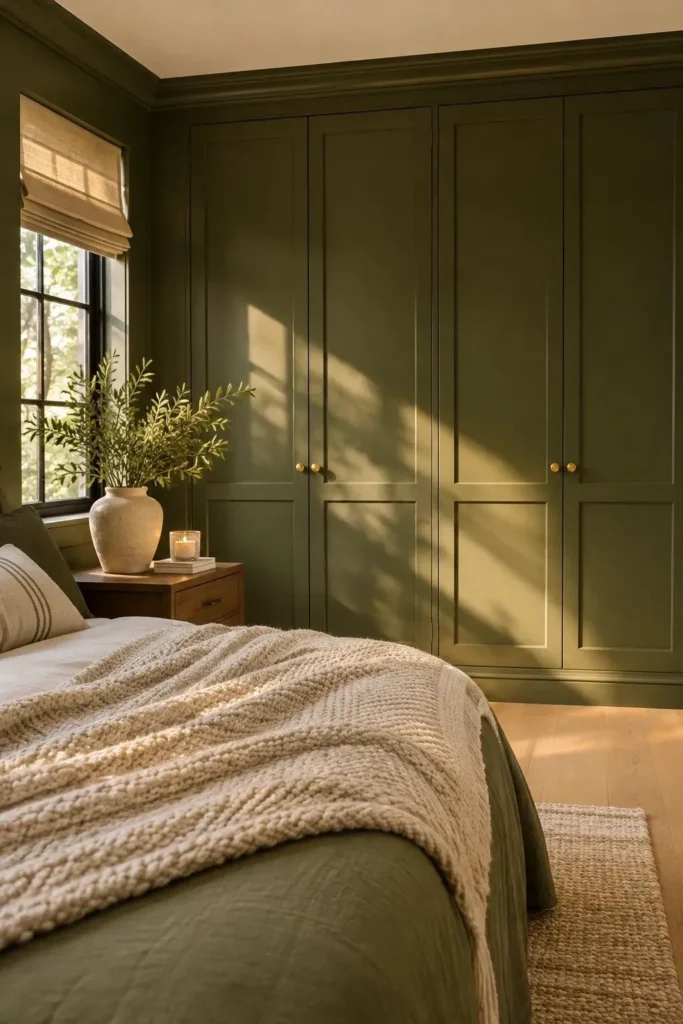
BEFORE
From the pillow, the brightest thing in the room is a pair of white wardrobe doors. Against olive walls, their sharp outline draws your eye straight to the closet.
AFTER
Paint the doors and surrounding trim the same olive as the walls, and the wardrobe recedes. A satin finish lets the edges of each panel catch the light, so you can still appreciate the woodwork.
Take one door off first and test your primer and cabinet paint on the back. Once the finish has cured according to the label, check the color beside the wall with the door upright. The same green can look a little lighter on a smooth door than on textured plaster.
Framed Fern Pair

- Give two fern silhouettes room to show their differences. Choose one print with a broad, arching frond and another with a narrow, upright stem.
- Place both in matching walnut frames with ivory mats. Check that the mat openings leave the leaf tips visible.
- Cut paper templates the size of the frames and tape them above the dresser. Start with a gap about the width of two fingers.
- Check the pair from the bed, then mark the hanging points once both prints clear anything you keep on the dresser.
Fine botanical lines can disappear against deep paint, which is where the ivory mats earn their place. They give each leaf a pale border you can see from your pillow. For a personal touch, choose a fern that grows near home or one you remember from a family garden.
Olive Check Rugs

| Detail | Bedside runner | Large rug under the bed |
|---|---|---|
| First step in the morning | Put the checks right where your bare feet land. | Let the rug extend beyond both sides so each sleeper has a soft landing. |
| Pattern scale | Small checks stay readable across a narrow strip. | Broader checks show clearly around the edges of the bed. |
| Best layout | A bed against the wall with one open side. | A centered bed with walking space on both sides. |
Mark the rug outline with painter’s tape before ordering, then open the bedroom door and pull out any underbed drawers. A flat weave is handy where clearance is tight. Hold a sample against the floor, too. An oatmeal check looks softer beside honey oak than a bright white square.
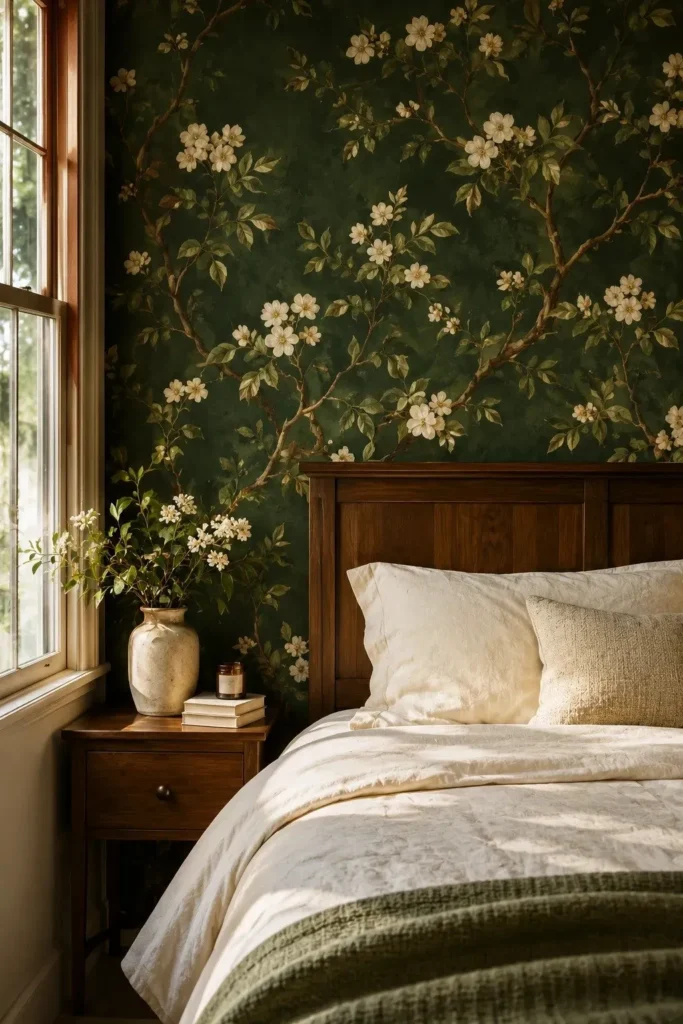
Woodland Floral Wallpaper
DO
- Let one flowering branch show above the headboard, where you can see its shape from the doorway.
- Tape a full pattern repeat to the wall and check how the cream blossoms look under your bedside lamp.
- Match the bedding to one of the quieter colors in the print.
DON’T
- Don’t judge the scale from a swatch that shows only a few leaves.
- Don’t start hanging until you know where the pattern will meet both edges of the alcove.
- Don’t order by wall area alone. Check the roll’s repeat and how much paper you’ll need to match each drop.
Take a photo of the sample with your bed made as usual. You might find that a favorite rose quilt picks up the tiny buds in the paper, while a striped pillow cuts across the branches. It’s easier to spot that from the doorway than with your nose against the sample.
Rust Velvet Bench
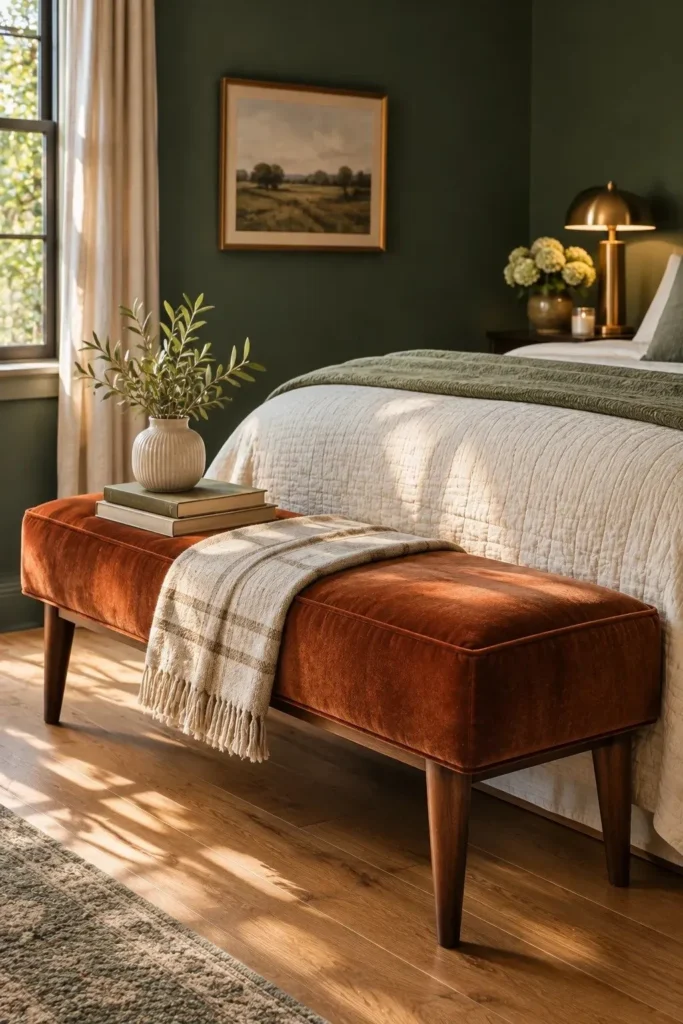
Color pairing: Rust velvet brings a copper glow to cool spruce green walls.
Best placement: At the foot of a bed with walking space beyond it.
Useful detail: A firm, level cushion makes a comfortable perch for pulling on socks.
Finish: Walnut legs echo the reddish undertone of the upholstery.
Outline the bench on the floor with tape, then carry a laundry basket past the bed. That quick test tells you more about clearance than looking at the measurements alone. If the corners catch you on the turn, look for a shorter bench with rounded ends.
Juniper Window Seat
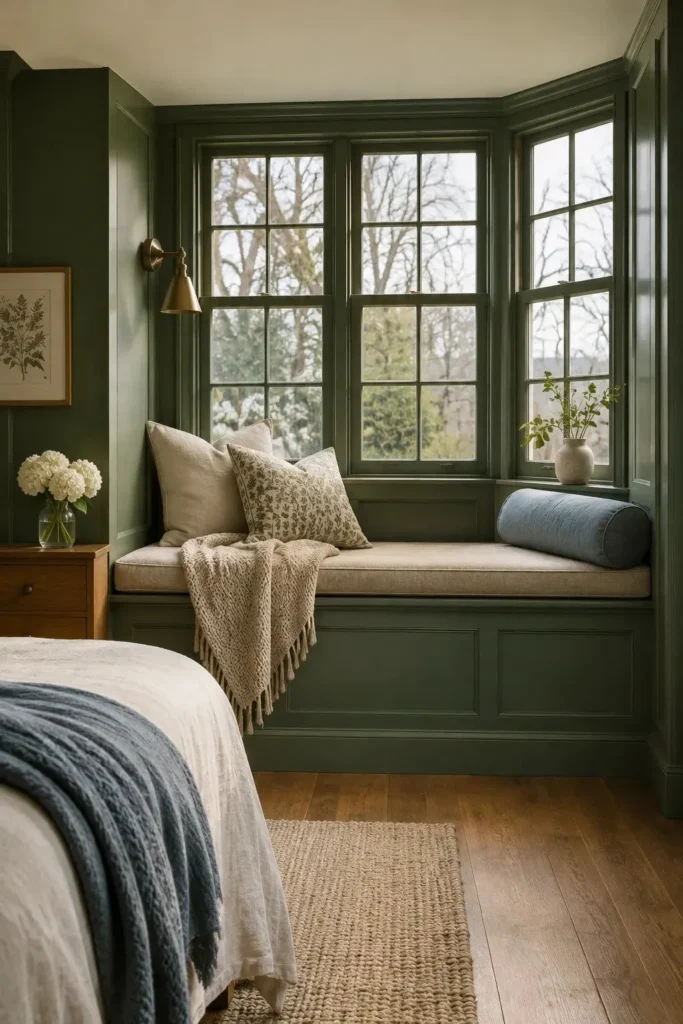
Even on a gray morning, the window end of a bedroom gets enough soft light to show the blue in juniper paint. Carry the color across the front of a built-in seat and up the window trim. A flax cushion makes the shaded recess feel brighter and gives you a comfortable reading spot.
Before ordering a cushion, measure the seat at the front and back. Older bays can taper just enough to leave a noticeable gap. Choose a removable cover, then set a single bolster at the end where you lean. The rest of the seat stays clear for stretching out.
Flax Canopy Panels

- Frame the pillows with two narrow flax panels on the rail behind the headboard. Leaving the foot of the canopy open preserves the view across the room.
- Choose an open weave so a little green shows through the fabric in daylight.
- Thread both panels onto rings and slide them apart until a strip of green wall appears between the pillows.
- Hem each panel just above the floor so the ends stay clear when you vacuum.
Borrow a pair of curtains from another room to test the fullness before buying linen. Stand in the doorway and draw the panels apart a few inches at a time. On a narrow bed, a loose fall of fabric behind each pillow may be all you need.
Blackened Green Ceiling

Quick Tip:
The best place to judge a ceiling color is from your pillow. Paint a large piece of card and have someone hold it flat against the ceiling while you look up, first in daylight and again with the lamps on.
Choose a matte finish if you like an even field of color above the bed. A glossier surface can pick up a bright reflection from an exposed bulb, especially when you lie directly beneath it. A milk glass globe gives the dark paint a soft circle of light at night.
Skirted Bedside Table

BEFORE
Where does the overnight clutter go when your bedside table has no drawer? A charger, tissue box, and stack of paperbacks end up around the legs, in full view against the green wall.
AFTER
A striped linen skirt gives the little table a tidy outline and hides a low basket underneath. A box pleat facing the bed opens with one hand when you reach for a book.
Measure from the tabletop to the floor in two places before hemming the skirt. Leave the edge about half an inch above the boards so it clears your slippers. For an easy first version, drape a washable round tablecloth over the table and pin the pleat while it hangs.
Painted Headboard Arch

- Give a plain bed a headboard with a single painted arch. Mark its width on the wall, letting the green extend a few inches beyond each side of the mattress.
- Choose where the straight sides will start to curve. Mark the midpoint between them at that height and pin one end of a string there.
- Tie a pencil to the string at half the arch’s width. Hold the string taut and trace the semicircle from one side to the other.
- Tape the two vertical sides. Follow the penciled curve with a small angled brush, then fill the center with a roller.
Put your tallest pillows in place before you settle on the arch height. From the foot of the bed, you should see where the straight sides begin to curve. If the pillows hide that turn, raise the pencil guide a few inches so the arch keeps its shape when the bed is made.
Woven Wood Shades
| Detail | Unlined woven shade | Blackout-lined woven shade |
|---|---|---|
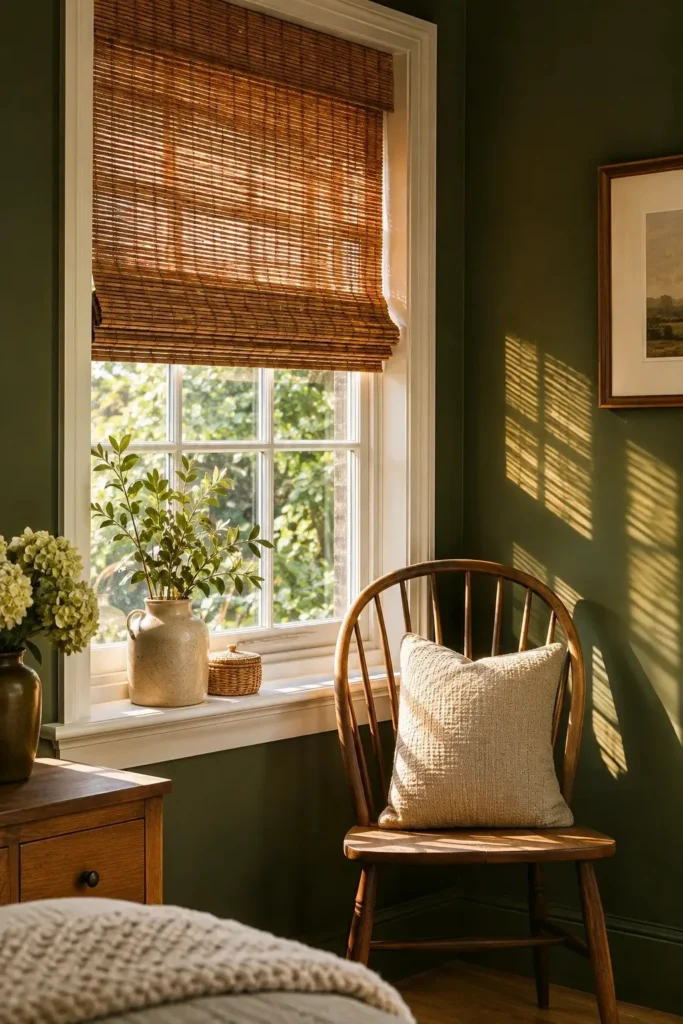
| Morning light | Slivers of sun show between the reeds. | The backing blocks light through the weave, though light can still enter at the edges. |
| Privacy after dusk | Gaps can reveal more of the room once the lamps are on. | An opaque backing screens the view through the weave. |
| Visible texture | Daylight outlines the individual strands. | The weave reads as a more solid field of warm brown. |
Hold a sample against the window after sunset with your bedside lamps on. If the window faces a sidewalk, have someone check what’s visible from outside. For a softer contrast with moss green paint, look for a reed close in color to the room’s oak floor or dresser.
Antique Brass Mirror
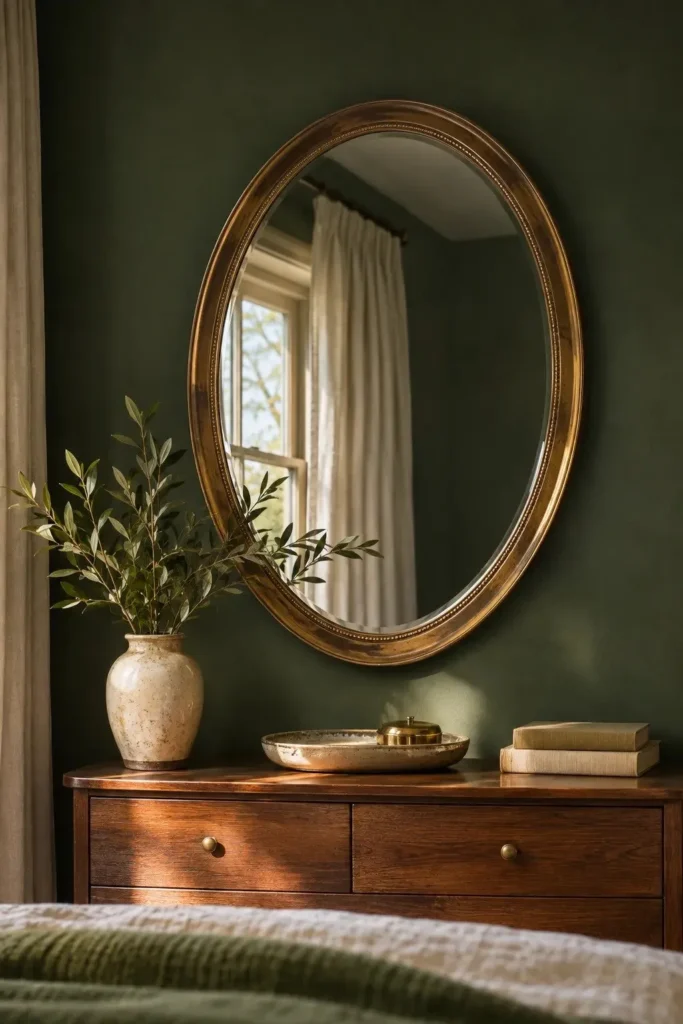
DO
- Catch a slice of sky in the glass by testing the mirror on a wall beside the window.
- Look for a mellow brass rim with a few rubbed highlights that stand out against deep green paint.
- Check the reflection from your pillow as well as from the doorway.
DON’T
- Don’t center the mirror over the dresser until you’ve checked what appears in the glass.
- Don’t aim it at a bare bedside bulb that will reflect at eye level after dark.
- Don’t crowd the lower edge with tall bottles if you use the mirror while getting dressed.
Have someone hold the mirror in place while you sit on the bed. A shift of a few inches can swap a view of the hallway for the folds of a linen curtain. Mark that spot on the wall before measuring for the hook, especially if the hanging wire has some slack.
Bottle Green Beadboard
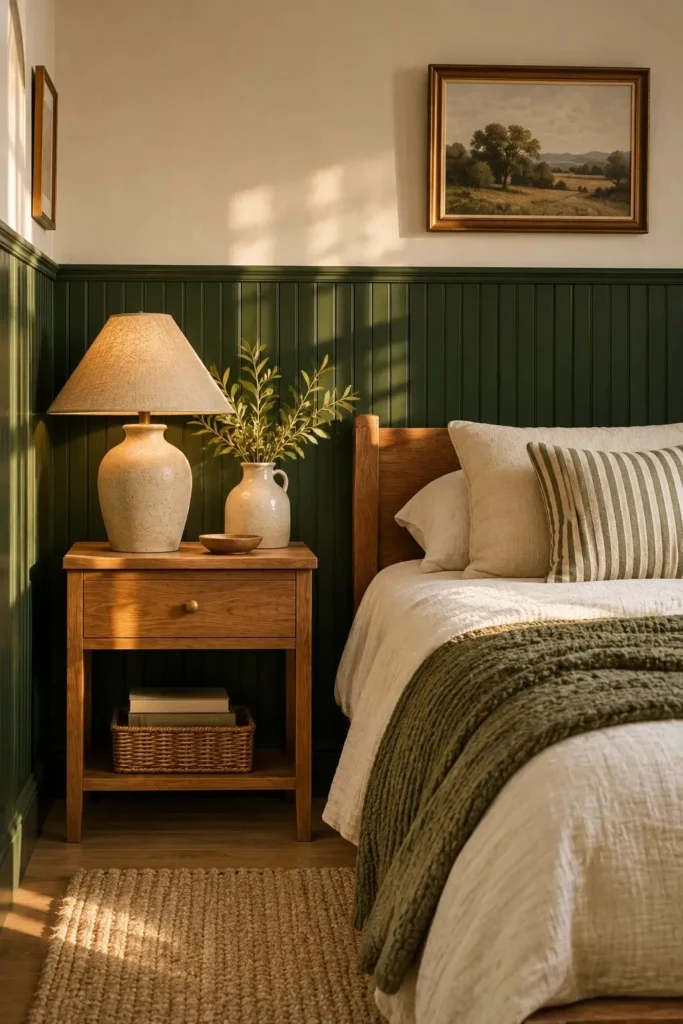
Texture: Each narrow groove catches a sliver of shadow when daylight crosses the wall.
Paint finish: A soft satin sheen brings out the ridges in bottle green.
Best placement: Wrap the paneling around a corner so the color continues beside the bed.
Finishing detail: Paint the cap rail green for a crisp edge against pale plaster.
Before choosing the panel height, run a strip of painter’s tape around the room and put your pillows in place. A rail that lines up exactly with the headboard can make their edges blur together. Move the tape a few inches until each outline is easy to see from the doorway.
Faded Indigo Quilt

A faded blue quilt has an advantage over a brand-new matching bed set. Its patches already carry several shades, from inky blue along a seam to almost gray at a worn corner. Against hunter green walls, those little shifts keep two deep colors from blending into one.
Spread the quilt across the mattress and turn the top edge back once to show the reverse print. If the darkest patches disappear into the wall behind the pillows, bring in the ivory cotton sheets you already own. A narrow fold of white is enough to separate blue from green.
Shaker Peg Rail

- Give the robe that always lands on your chair its own oak peg. Choose a spot on the route between the bed and the door.
- Hold your longest robe against the wall to find a height that keeps the hem off the floor and the loop within reach.
- Swing the door fully open before mounting the rail so the handle clears the peg ends.
- Leave a peg free beside a bulky robe. The fabric will hang loosely, and the oak will still show against the spruce paint.
In a shared bedroom, assign a peg at each end to a different person. That leaves the middle clear for tomorrow’s shirt, which is easier to see against dark paint than on a crowded chair. A short rail you use every night earns its place even in a small room.
Moss Velvet Reading Chair

Quick Tip:
Run your hand across a moss velvet swatch in both directions before choosing the fabric. Hold it upright for the chair back, then flat for the seat so you can see both shades in your bedroom light.
For a reading corner in a dark green bedroom, leave the chair angled toward the window so daylight falls across the page. Put a stool within reach of your usual reading hand. The best test is whether you can set down a full mug without leaning over the arm.
Pine Green Folding Screen

BEFORE
From the bed, an open clothes rack fills the corner with shirt sleeves and wire hangers. Even when everything is neatly hung, the mix of patterns draws the eye.
AFTER
A pine green folding screen gives that corner one quiet color. Set it just far enough forward that the canvas clears the clothes, with one end open so you can still reach your shirts.
Measure the width with the panels folded into a gentle zigzag. A screen that spans the rack when stretched flat will cover less once it’s standing. In a rental with cream walls, this also gives you a generous patch of green you can take along when you move.
Amber Glass Bud Vases

- Find the patch of afternoon light on your dresser. Set a single amber bottle there and look for the golden reflection it casts across the wood.
- Add two smaller vases of different heights. Leave a finger’s width between them so each glass outline shows against the green wall.
- Cut one slender stem just tall enough to bend above the group. Tuck a shorter cream flower into the second vase and leave the third empty.
A single grocery-store carnation works here because its pale petals show up clearly against hunter green, even as the daylight fades. Keep the bottles grouped at the back of the dresser and leave the front edge clear. You’ll still have somewhere to set your watch or fold a sweater.
Evergreen Blackout Curtains
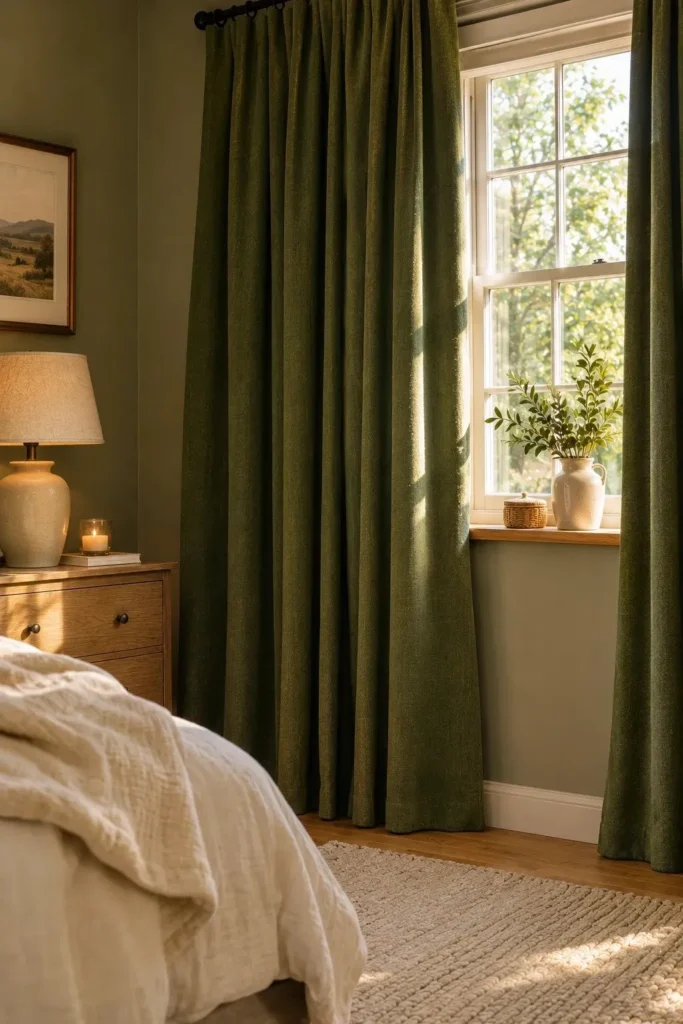
| Detail | One wide panel | Two split panels |
|---|---|---|
| Morning view | Pull the whole curtain toward a blank wall to uncover the glass. | Draw the pair apart to frame the view on both sides. |
| Best window layout | Useful when a wardrobe leaves little room on one side. | Works when there’s space for open curtains on both sides. |
| Light at the edges | Check where the moving edge meets the window trim. | Allow the panels to overlap in the middle so a bright slit doesn’t face the bed. |
Before you hang the rod, bunch one panel in your hands to see how much room the folds take up. Thick blackout fabric can cover a surprising amount of glass even when it’s open. Give the folds somewhere to sit beyond the frame so you get the morning light back.
Olive Limewash Walls

DO
- Watch where daylight travels across the wall. Light from the side makes the soft changes in color easier to see.
- Make a generous sample with the same brush and base coat you plan to use on the wall.
- Choose a primer suited to both your existing wall finish and the limewash you’ve picked.
DON’T
- Don’t judge the olive shade while the sample is wet.
- Don’t repeat identical brush marks in rows, which can leave a visible pattern behind the bed.
- Don’t position your sample only in the brightest corner if most of the wall sits in shade.
Leave the sample up for a full day and look at it from bed that evening. What reads as a faint olive cloud near the window may look like a distinct patch under a reading lamp. Choose the amount of variation you enjoy at the hour you use the room most.
Mulberry Piped Shams
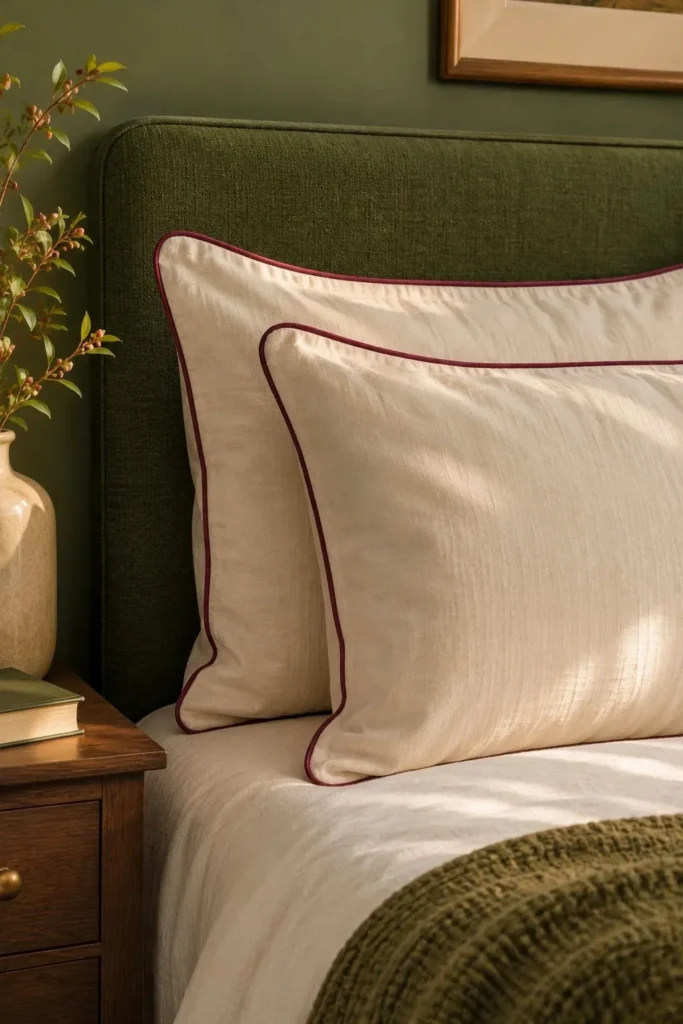
Color detail: A pencil-thin line of mulberry gives cream pillows a distinct outline against fir green.
Budget option: Start with one piped sham placed in front of your everyday pillows.
Best fabric: Plain cotton or linen keeps the small corded edge easy to see.
Fit check: The insert should fill the corners without pulling the piping crooked.
Pull the mulberry shade from something you already love, perhaps a faded rug or the darkest petal in a floral quilt. Lay that item beside the sham before buying a pair. If the colors look good together from the doorway, the piping has done its job.
Olive Checkerboard Floor

A checkerboard can feel surprisingly quiet underfoot when its two greens are close in color. Pair deep olive with a lighter lichen shade on painted wood floorboards. From the doorway, you’ll see the whole grid. From bed, you’ll catch just a few squares beside the quilt.
Cut several full-size squares from paper and arrange them along the open side of the bed. Adjust their size until you like how they meet the threshold, where a sliver of a square can look awkward. For the painted finish, choose a floor paint suited to your existing boards.
Woodland Wall Tapestry
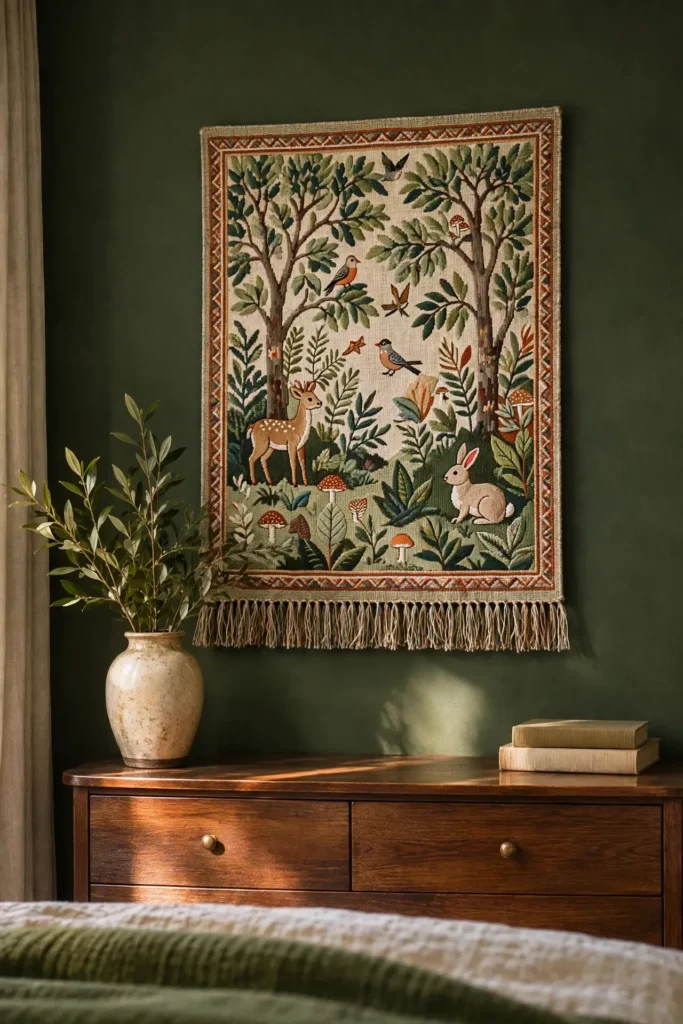
- Bring forest green into a pale rental bedroom with one woven landscape. Look for broad tree shapes that you can recognize from the doorway.
- Choose a scene with a lighter detail, such as a river or a clearing. It gives your eye somewhere to settle among the darker threads.
- Hold the tapestry above the made bed before marking its position. Keep the most interesting part of the scene clear of your tallest pillows.
- For a textile with a sewn rod pocket, slip a wooden rod through it so the top edge hangs evenly.
Look at the weave as closely as the picture when shopping secondhand. A little fading can soften the greens, while a stretched top edge may leave the river or horizon looking crooked. Ask to see the piece hanging upright if the listing only shows it folded on a table.
Cognac Leather Drawer Pulls

Quick Tip:
Take one handle off before you shop for leather pulls. A single-hole loop fits many knob-style drawers, while a two-hole strap needs to match the distance between the existing screw holes.
Cognac leather gives a spruce green drawer a warm detail you can feel when you reach over from bed. Test one loop on the drawer you use most before replacing the rest. It should leave room for your fingers and feel comfortable even when the drawer is full.
Curtained Desk Alcove

BEFORE
The last thing you see from bed is tomorrow’s to-do list propped against the monitor. Even with the desk lamp off, the white paper stands out in the shadow of the alcove.
AFTER
A laurel green curtain slides across the opening once the chair is tucked in. From the bed, the soft folds look like part of the room, and the desk is ready to use again in the morning.
Close your laptop and push the chair in before deciding where the curtain should hang. The chair back is often the part that sticks out farthest. Hold a sheet across the opening at that depth to check that the fabric falls straight and you can still walk comfortably past it.
Sage Scallop Border
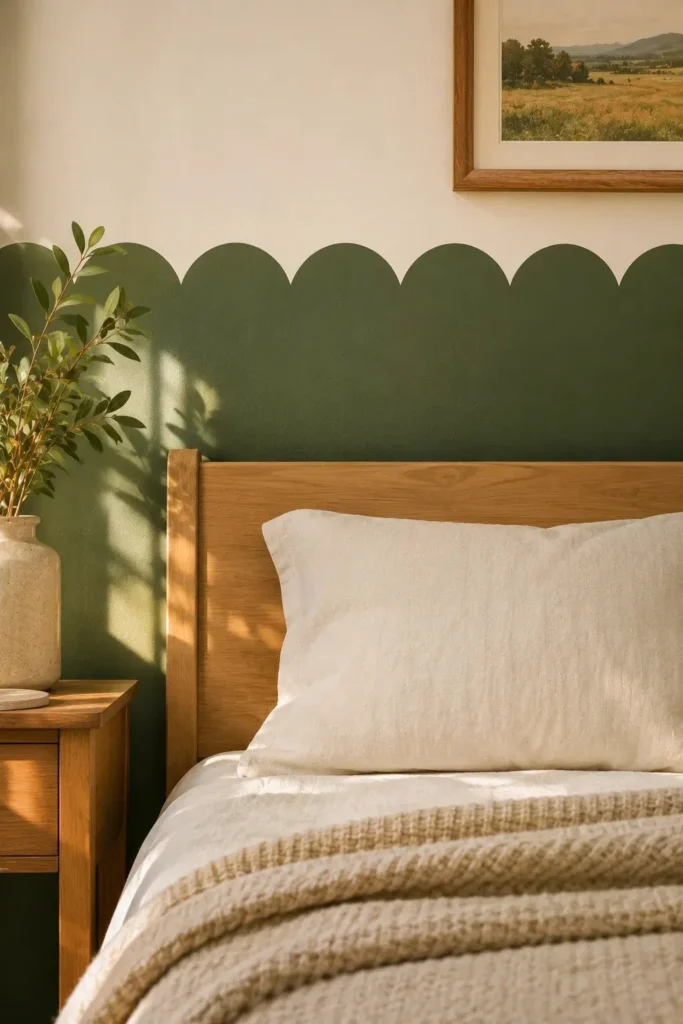
- Give a straight paint line a softer edge. On a two-tone wall, use the boundary between the pine lower half and ivory upper half as the baseline for a row of sage scallops.
- Cut a semicircle from card using a small plate as your guide. Trace several scallops on paper first to see whether you like their size from the bed.
- Start at the center of the wall and trace outward in both directions. Keep the flat edge of the template on the paint line so the curves sit level.
- Outline each curve with a small artist’s brush, then fill it with sage paint. Let the first coat dry before deciding whether it needs another.
Choose a sage a shade or two lighter than the pine for a subtle border. Before painting, check where the row meets each corner. If you end up with a tiny slice of a scallop at either end, adjust the template width slightly and trace the layout again.
Underbed Wicker Baskets
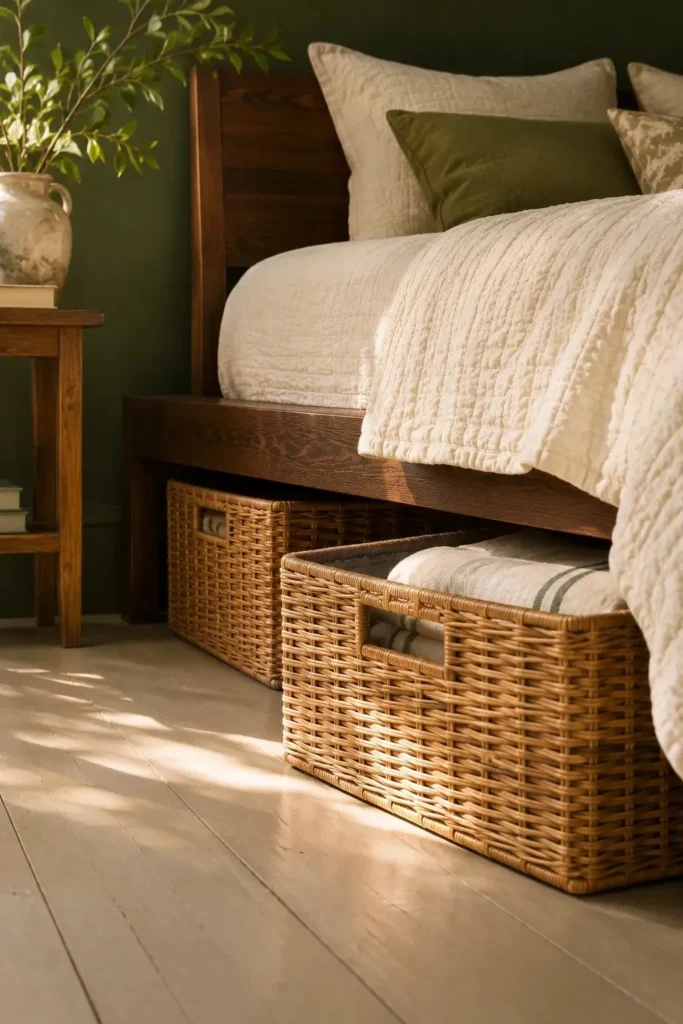
| Detail | Open wicker basket | Lidded wicker basket |
|---|---|---|
| Best contents | A spare throw you pull out on chilly evenings. | Guest sheets you want to keep covered between visits. |
| Ease of access | Slide it out partway and lift the throw straight up. | Leave enough floor space to pull it clear of the bed before opening. |
| What to measure | Check the tallest part of the rim or handles. | Measure the full height with the lid closed, including its knob. |
Run your hand around the inside of a basket before putting good linen in it. A rough willow end can catch a loose thread, and an old cotton pillowcase makes a simple liner. Leave a little of the honey-colored weave visible below the quilt to warm up the green room.
Window-Facing Bed
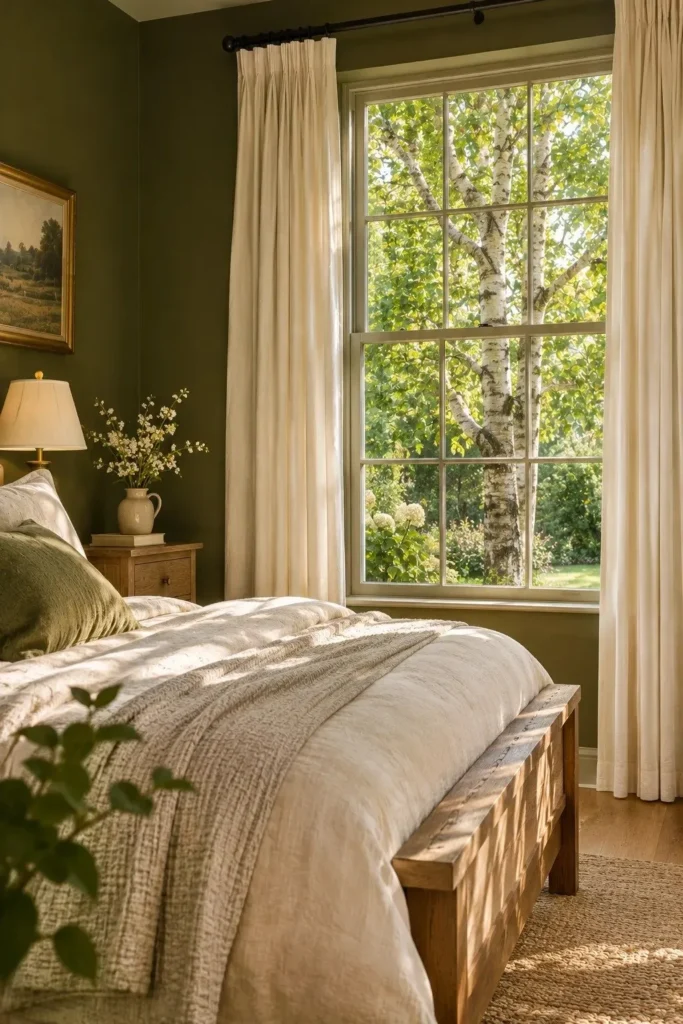
DO
- Check the view at pillow height. Branches you can see while standing may disappear behind the sill when you lie down.
- Mark the bed’s footprint with painter’s tape before moving furniture.
- Leave enough room at the foot of the bed to reach the curtains comfortably.
DON’T
- Don’t judge the view with the window open if you usually sleep with it closed.
- Don’t overlook a streetlight that shines toward the pillows after dark.
- Don’t place a tall footboard between you and the part of the garden you want to see.
Sit where the pillows would go with your morning coffee before you move the frame. A slight shift to one side might bring a favorite tree into view. Once the bed is in place, open the curtains fully so the olive wall frames a patch of sky as well as leaves.
Green Marble Nightstand

Pattern: A single pale vein can carry the whole bedside arrangement.
Color pairing: Cream bedding picks up pale streaks in the marble, while walnut brings warmth to its green surface.
Small-room option: A stone-topped pedestal table leaves more visible floor beside the bed.
Everyday detail: A cork coaster gives your water glass a quiet landing at night.
Take a paper outline of your lamp base when you shop. Set it on the marble to see which veins will still show once the lamp is in place. If your favorite marking runs along one edge, turn that edge toward the pillows so you can enjoy it from bed.
Pine Painted Eaves
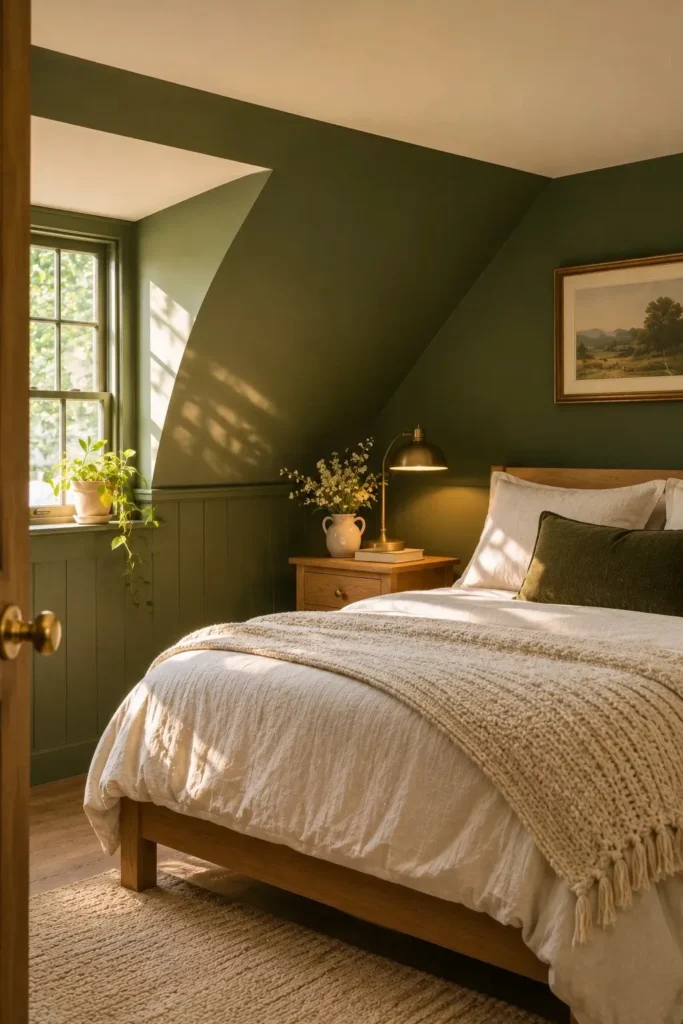
An attic slope can look like an awkward strip of ceiling until you give it the same pine green as the low wall beneath it. Carry the paint up to the next clear change in angle. That continuous stretch of color makes a natural backdrop for a low bed.
Before settling the bed under the eaves, stack your pillows the way you use them for reading. Sit up and check where your head meets the slope. Pull the frame forward until you’re comfortable, then look at the green from the doorway to see where the painted angle frames the pillows.
Conclusion
Start with the detail you’d most enjoy in the half hour before sleep. That might be a pleated shade that keeps the bulb out of your eyes or a soft quilt you can pull up on a cool night. A dark green bedroom feels personal when the colors you love also suit the way you use the room.
Save this post on Pinterest so your favorite combinations are easy to find, and share it with someone choosing their first deep green. Then try one idea tonight, even if it’s just holding a paint sample beside your pillow with the lamp on.






One Comment