34 Inviting Modern Rustic Living Room Ideas to Try
Your living room should make you want to put your feet up. A modern rustic living room pairs that comfort with clean shapes, weathered wood, and soft, inviting fabrics.
Finding the balance can be tricky. Too many rough finishes can make the room feel busy, while plain furniture and bare walls may leave it feeling unfinished. The answer often starts with what you already own: a sofa that needs textured cushions or a corner missing a useful lamp.
These 34 ideas show you how to build that balance, from layered rugs and reclaimed tables to practical storage and welcoming seating arrangements. You will find clear styling choices, visual inspiration, and small details worth checking before you buy, so you can choose changes that suit your budget and everyday life.
Reclaimed Wood Coffee Table

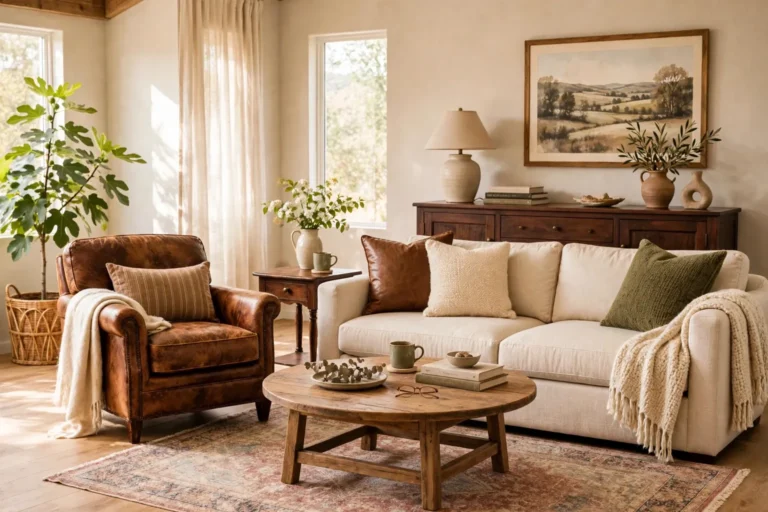
A weathered coffee table gives a plain seating area something worth gathering around. In a modern rustic living room, its worn grain balances a sofa with simple lines. Choose a low, rectangular shape for a long couch, or a round table where walkways feel tight.
Let the timber do most of the decorating. Place one ceramic bowl and a short stack of books on top, leaving room for drinks. Before buying secondhand, check for wobbling legs, splinters, and a finish that feels tacky. Rustic character should still be comfortable to use.
Warm Neutral Layers

- Beige feels richer when the textures do the work. Pair a smooth cotton sofa cover with nubby cushions and a loosely woven throw.
- Choose one light base, such as warm ivory, for the largest surfaces. Repeat it in curtains or a rug to connect the room.
- Bring home fabric swatches before buying. Hold them beside your flooring and check them in daylight and under your evening lamps.
- Add a small amount of walnut brown through a frame, tray, or side table. It gives pale fabrics a clear point of contrast.
A neutral room can feel flat when every surface has the same smooth finish. Spread texture across the sofa, floor, and windows so the interest is visible from the doorway. Keep the palette narrow, but vary the weave and depth of color for a softer, more layered result.
Black Metal Accents
Quick Tip:
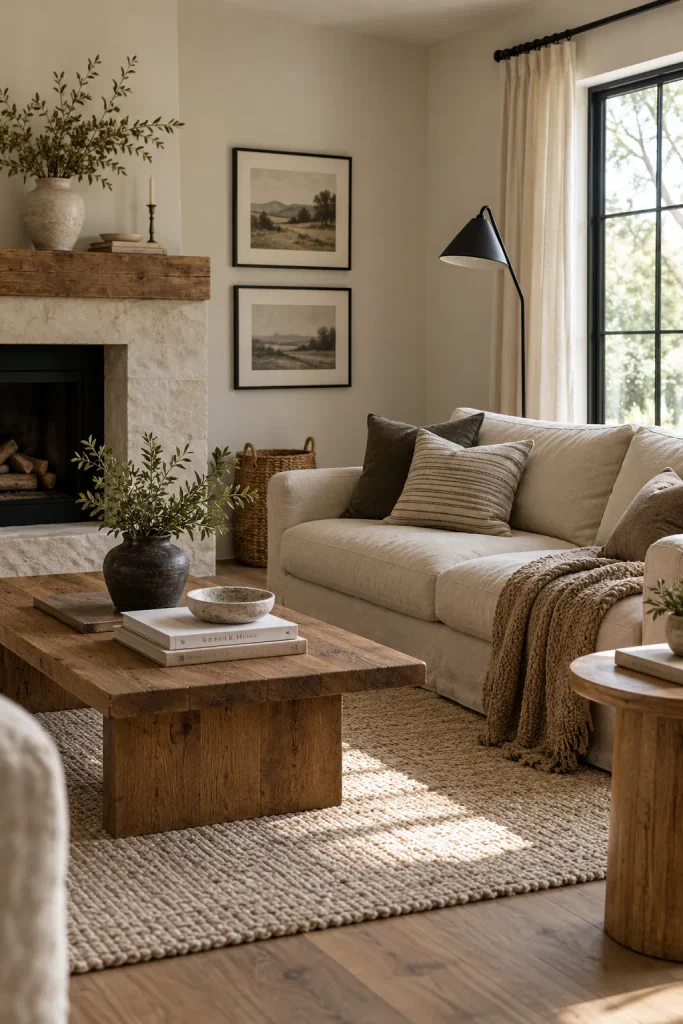
Give pale wood a crisp outline with just a few black metal details. Start with a slim floor lamp and repeat the finish in a curtain rod or picture frame.
Thin metal profiles keep the room feeling open while contrasting with rough timber and soft upholstery. For a small space, choose an open metal table base instead of a bulky dark cabinet. Match the sheen across nearby pieces, such as matte black frames and a matte lamp, for consistency.
Stone Fireplace Surround

BEFORE: A flat fireplace wall can leave the seating area without a clear focal point. A glossy tiled surround and several small mantel ornaments may also feel disconnected from weathered wood furniture.
AFTER: Choose a stone surround with gentle color variation and a simple mantel profile. Let the texture stand out by limiting the display to one substantial ceramic vase or a single framed artwork.
Choose stone with cream, gray, or sandy tones that already appear in your rug. Strong veining and deep joints create more visual activity, so balance them with plain upholstery. Before committing to a finish, view a sample upright against the fireplace wall in both daylight and lamplight.
Layered Living Room Rugs

- Give a small favorite rug a larger presence with a plain base underneath. Choose a base that reaches beneath the front legs of your main seating.
- Select a smaller patterned rug in faded rust, charcoal, or cream. Check that its colors repeat at least one shade already in your cushions or artwork.
- Center the smaller rug beneath the coffee table, leaving a visible border of the base rug. Keep both rugs out of door swings.
- Check for sliding and curled edges before putting furniture back. Use an underlay designed for your flooring and rug combination.
The lower layer connects the seating area, while the smaller rug introduces pattern without covering the whole floor. This approach also gives a favorite rug that feels undersized a useful place. Keep the combined thickness modest near busy walkways, and straighten any edges that lift after vacuuming.
Leather Accent Chair

| Detail | Cognac Leather | Espresso Leather |
| Visual effect | Warm caramel tones break up an all-beige room. | Deep brown gives pale upholstery a bold outline. |
| Wood pairing | Light oak or medium walnut | Pale oak or weathered gray wood |
| Useful silhouette | Open wood arms and a slim frame | Narrow arms and raised legs |
| Color companions | Ivory, rust, and olive | Cream, oatmeal, and muted sage |
A leather chair gives soft fabrics a smoother counterpoint without requiring a matching sofa. Choose the color beside your existing wood finishes, then check seat depth and arm height in person if possible. In a compact room, exposed legs help keep more of the floor visible.
Linen Curtain Panels

DO
- Give the windows a taller frame by mounting the curtain rod above the window trim where space allows.
- Choose panels wide enough to form soft folds when closed.
- Let hems skim the floor for a tidy, relaxed finish.
DON’T
- Do not let open panels cover more of the glass than necessary.
- Avoid buying fabric before checking a swatch against your wall color.
- Skip pooled fabric where pets, children, or frequent vacuuming would disturb it.
Linen curtains soften the straight edges of windows without hiding the wood and stone elsewhere in the room. For privacy, check the fabric with an indoor lamp on after dark. A loose weave may look opaque during the day yet reveal more than expected once the lighting changes.
Woven Storage Baskets
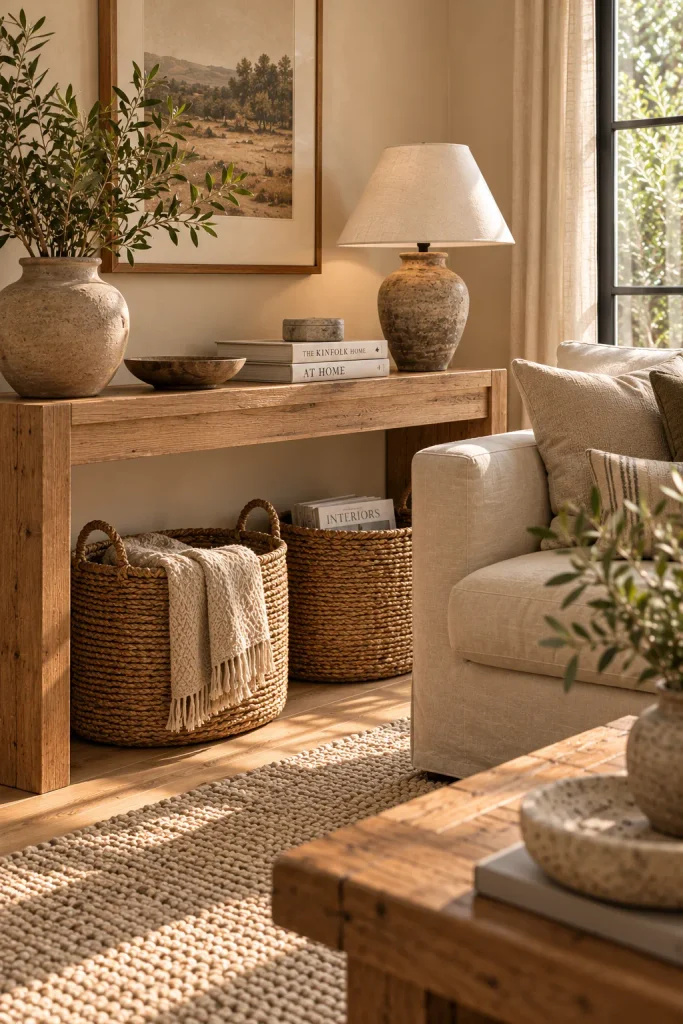
Result: Everyday clutter gets a home that still looks like decor.
Best For: Spare throws, cushions, and magazines.
Placement: Beside the sofa or beneath an open console.
Useful Detail: A smooth fabric liner for delicate throws.
An open basket works best when putting things away feels easy. Place it within reach of the seat where blankets usually collect. Check the inside for rough fibers before storing knitwear, and choose a broad opening so a folded throw drops straight in without snagging on the rim.
Oversized Landscape Art

A single generous landscape can give a quiet seating area a view of its own. Look for muted hills, fields, or woodland in colors already present in the room. A simple wood frame keeps the artwork connected to rustic furniture while leaving the scene itself as the focus.
Before ordering, mark the artwork’s outline above the sofa with removable paper. Sit across the room to judge its scale, then sit on the sofa to check that the frame will clear your head. Keep nearby accessories small and sparse so the wall has one clear focal point.
Layered Evening Lighting
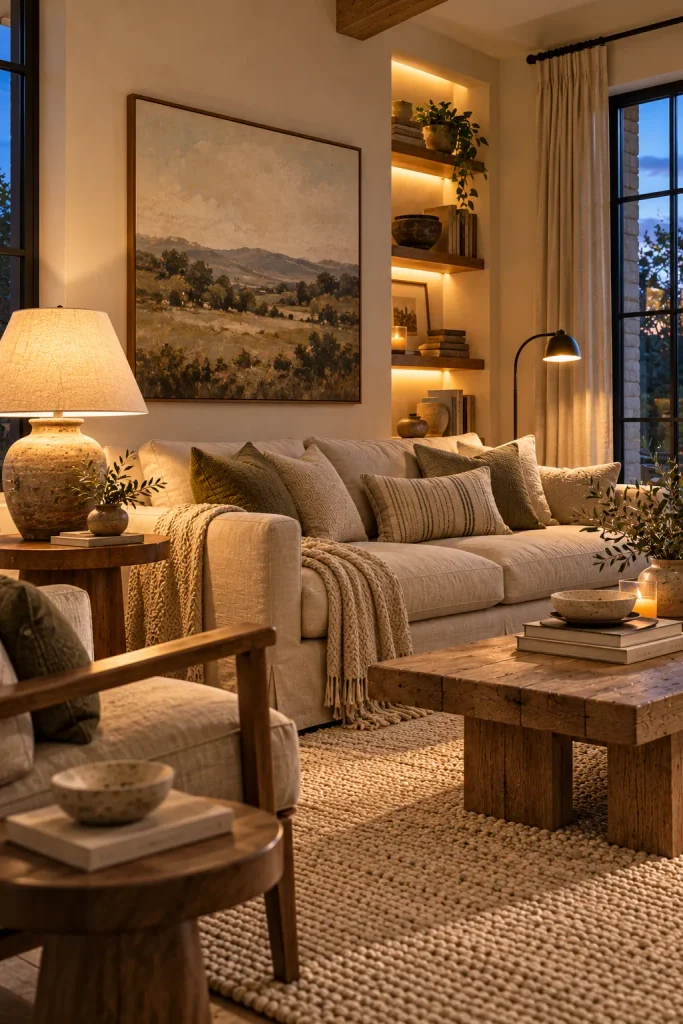
- A single ceiling light can make a cozy room feel stark after sunset. Place a shaded table lamp beside the sofa to bring light closer to where you sit.
- Add an adjustable reading lamp next to your favorite chair. Aim it at the page instead of across the room.
- Choose the same warm bulb color for lamps that are visible together. Compare them after dark, since different lampshades can affect how the light looks.
- Put the most frequently used lamp within reach of the main seat. A convenient switch makes the setup useful every evening.
Evening lighting should support what actually happens in the room. A reader needs focused light beside a chair, while conversation benefits from gentler light around the seating area. Test the arrangement after sunset with the ceiling fixture switched off, then adjust any lamp that shines directly into someone’s eyes.
Ceramic Tabletop Grouping
Quick Tip:
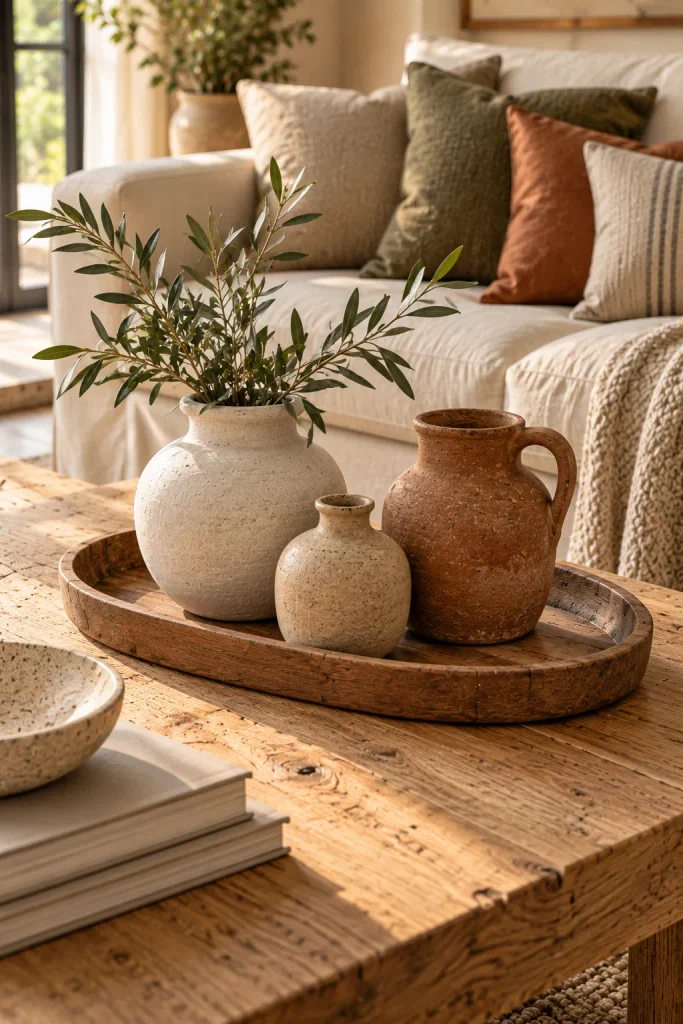
Give small objects a stronger presence by gathering them on one tray. Vary the heights, then repeat one color or finish so the pieces feel connected.
Matte pottery introduces softer color beside wood, leather, and metal. Choose a sandy vase, a chalky bowl, and one clay colored piece, then leave part of the tray empty. A useful bowl for remotes or reading glasses keeps the arrangement connected to everyday life, especially on a frequently used table.
Window Reading Nook

BEFORE: A spare chair sits by the window, yet nobody settles there for long. Without a nearby light or somewhere to set a mug, it offers little reason to stay.
AFTER: Angle a comfortable chair toward the window and place a small table beside the arm. Add a reading lamp and one wool throw, keeping the path into the nook clear.
Measure the corner with the chair pulled into its intended position, including any space needed to recline. Sit down and check whether the table is within easy reach. A compact seat with exposed legs can preserve an open feeling, but comfort matters more than squeezing in a fashionable shape.
Floating Wood Shelves

- Give a blank wall a purpose with two simple wood shelves. Mark their outlines with removable tape before choosing a length.
- Choose a wood tone that relates to an existing piece, such as the coffee table or console. Leave enough vertical clearance for your tallest planned object.
- Group books at one end and balance them with a bowl or framed sketch farther along. Keep part of each shelf empty.
- Step back to the doorway and remove anything that crowds its neighbor. Keep frequently handled objects on the easiest shelf to reach.
Shelves feel more personal when useful objects share space with decorative pieces. Display books you actually reach for and leave enough room to remove them without moving everything else. Before adding another object, look from the sofa; overlapping outlines can make a restrained arrangement appear busier at a distance.
Earthy Accent Wall
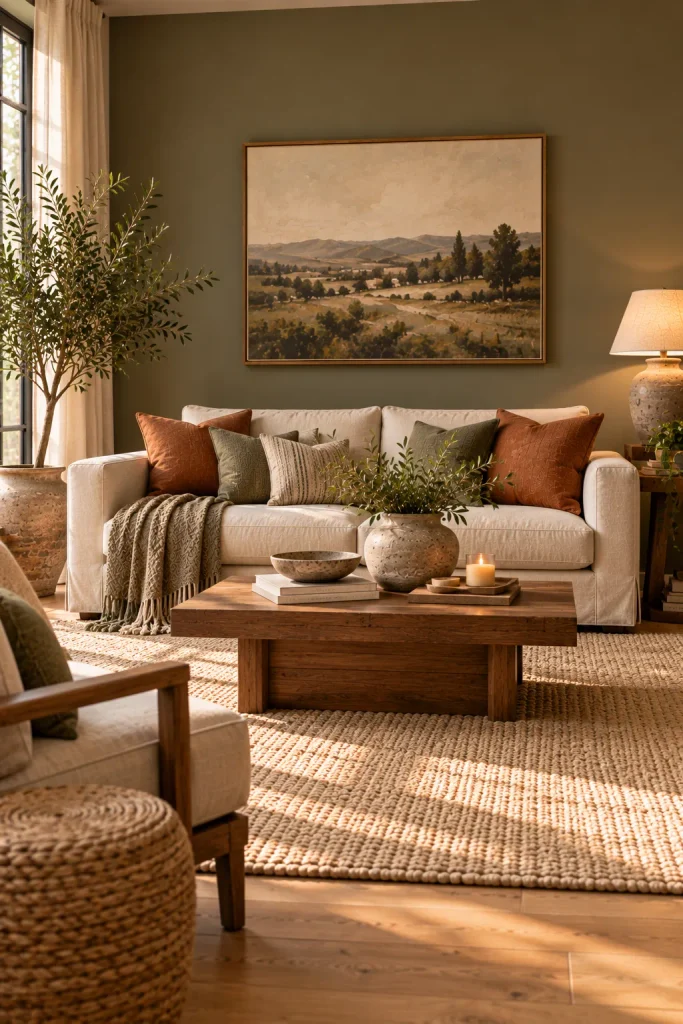
| Detail | Muted Olive | Soft Terracotta |
| Visual effect | Pale oak stands out against a quiet green backdrop. | A cream sofa becomes the focal point against warm clay. |
| Supporting colors | Oatmeal, ivory, and walnut brown | Cream, sand, and muted charcoal |
| Textile pairing | Natural linen and wool checks | Cream cotton and subtle woven stripes |
| Sample check | Look for unwanted yellow or gray undertones beside your flooring. | Check whether the color appears brighter or more orange than intended. |
Wall color can connect the natural materials in a modern rustic living room. Paint large sample boards and move them beside the sofa, flooring, and curtains throughout the day. Choose the shade that works with those existing surfaces, especially the ones you have no plans to replace soon.
Tall Indoor Tree
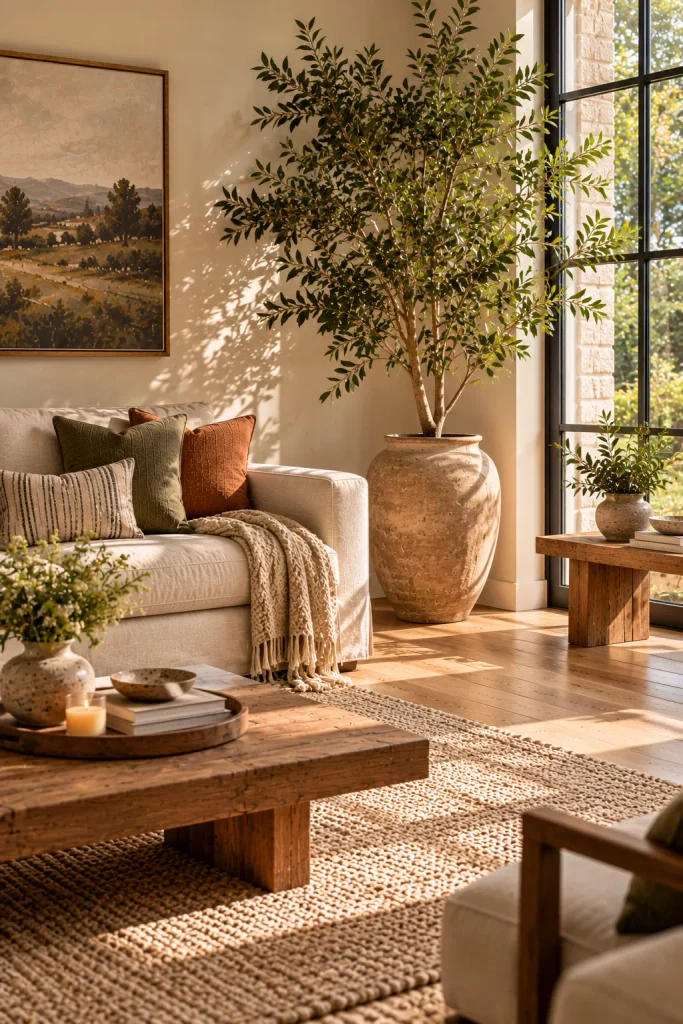
DO
- Soften an empty corner with one tall plant whose light needs match the window.
- Use a pot with drainage inside a decorative planter, and empty collected water after watering.
- Leave space for leaves to spread without brushing a lampshade or blocking a walkway.
DON’T
- Do not choose a plant on appearance alone without checking its mature indoor size.
- Avoid placing the pot on wood flooring without waterproof protection underneath.
- Skip a dim corner unless the chosen plant tolerates its light conditions.
A tall plant brings an irregular, living shape into a room dominated by straight furniture lines. Measure the available width as well as the height before choosing one. Leave enough access to water it and check the soil, so the arrangement stays practical after the initial styling is finished.
Console Behind Sofa

Result: A slim console makes the space behind your sofa worth using.
Best For: Open layouts with a sofa positioned away from the wall.
Useful Shape: A shallow console with an open base.
Style Detail: One small tray or bowl for everyday essentials.
A console works especially well when the back of the sofa faces an entrance or dining area. Keep its top at or below the sofa back for a tidy sightline. Measure the remaining walkway before buying; a useful surface should still leave comfortable room for people to pass.
Conversation Seating Layout

Good conversation gets easier when every seat faces someone. Arrange a sofa and two chairs around a shared table, turning the chairs slightly inward. Let the fireplace or window provide the backdrop, then check that people can speak comfortably without leaning forward or twisting toward each other.
Walk through the arrangement while someone sits in each chair. Knees, reclined seats, and a person carrying a mug take up more room than empty furniture suggests. Move the table or angle a chair until the route feels easy. In narrow rooms, one facing chair may be enough.
Earthy Cushion Mix
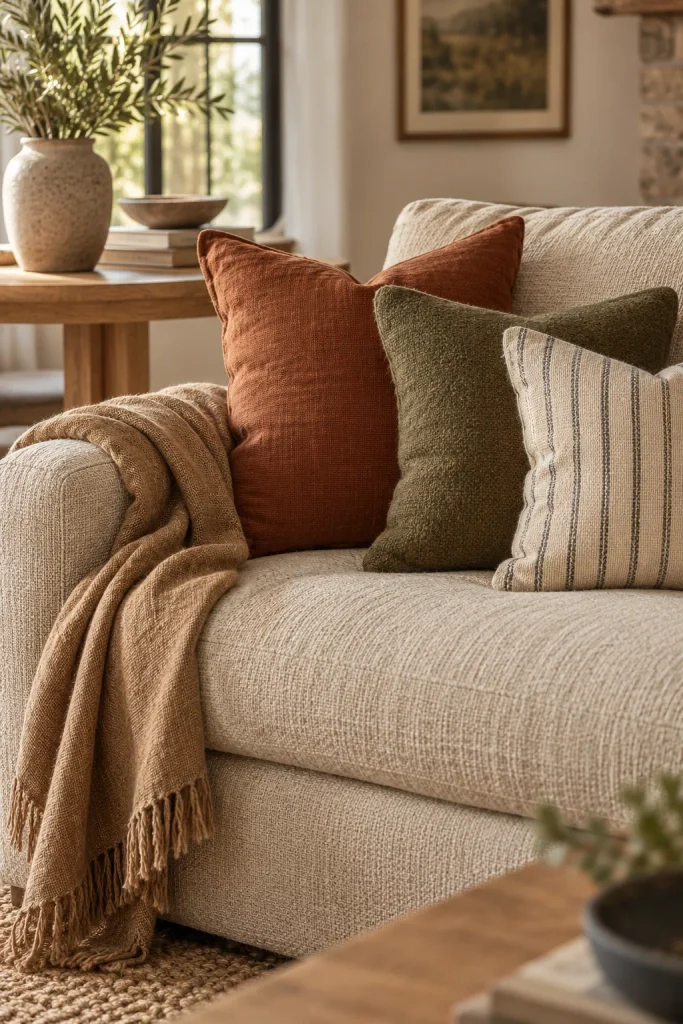
- Give a pale sofa a little depth with rust, olive, and warm cream. Pick one main accent color and use the others in smaller amounts.
- Pair a larger plain cushion with a smaller striped or checked design. Keep the pattern colors close to those in the solid fabrics.
- Balance a smooth linen cover with a textured wool or woven cotton cover. Check how each feels against your arm, especially on seats used for naps.
- Leave enough exposed seating for someone to sit down without rearranging the whole sofa. Store any extras in a nearby basket.
Cushions make it possible to test a stronger color before committing to paint or upholstery. Repeat a shade from your artwork or rug so the addition feels connected. Keep the arrangement easy to move, and choose removable covers with care instructions that suit how your household actually lives.
Exposed Ceiling Beams
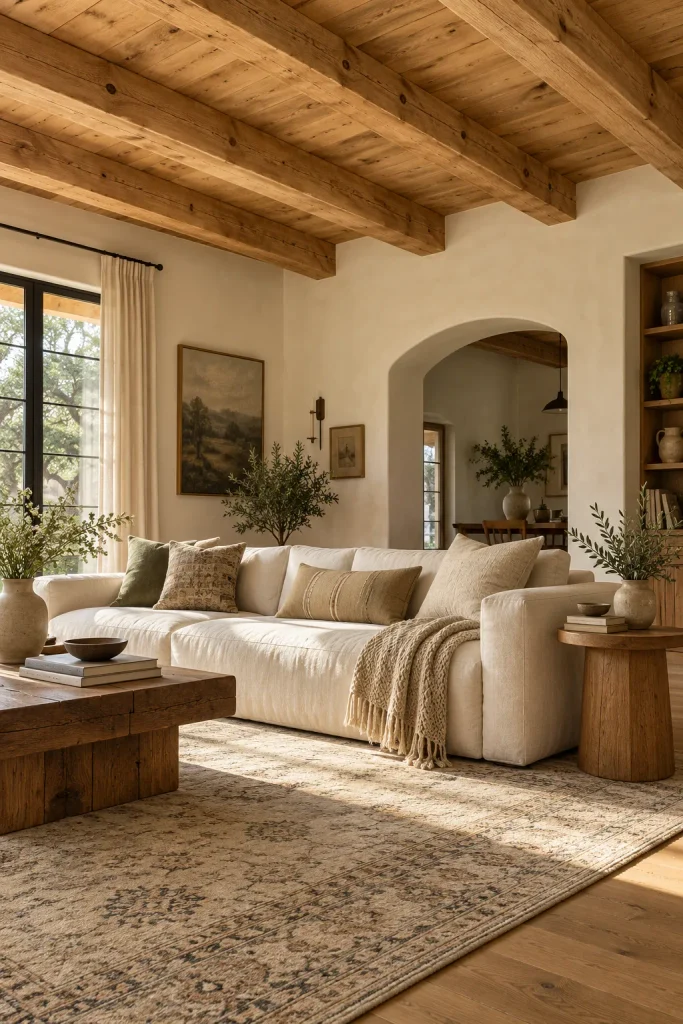
Quick Tip:
Already have timber overhead? Keep the ceiling between the beams a light, warm shade, and choose a light fixture that leaves the timber pattern visible.
Strong ceiling lines already give the room plenty of character. Balance them with a low sofa, plain curtains, and a rug with a quiet pattern. I’d repeat the beam color in one smaller piece, such as a side table, to connect the overhead timber with the seating below.
Wood Media Console

BEFORE: A dark television can dominate an otherwise soft, earthy room. Loose cables and several small media units make the wall feel busier than the rest of the seating area.
AFTER: Pair the screen with a low wood console that has closed storage and a simple front. Organize cables through the rear openings, and give remotes and spare accessories a dedicated drawer.
Choose a console with cable openings, and check the ventilation instructions for any devices stored inside. A cabinet wider than the screen can visually balance the arrangement. Before buying, sit in your usual seat and check the screen height; a beautiful unit still needs to support comfortable viewing.
Vintage Wall Mirror
- Give a quiet wall more depth with a mirror in a vintage wood frame. Hold a paper template against the wall to check the scale before choosing one.
- Stand where the mirror will hang and study the opposite wall. Look for a reflection of a window, artwork, or a tidy seating area.
- Choose a frame with a worn finish that relates to your other wood tones. Keep the profile simple if nearby furniture already has plenty of detail.
- Check the reflection from a seated position before settling on the final height. Secure the mirror with hardware suitable for its weight and your wall type.
The reflection becomes part of the decor, so placement matters as much as the frame. A mirror facing a busy kitchen counter can double the visual clutter. In an open living area, choose a wall that reflects a calmer view, and leave the surface below it lightly styled.
Slipcovered Sofa
| Detail | Relaxed Cover | Tailored Cover |
| Overall look | Loose folds soften a room full of straight wood lines. | A close fit gives rustic materials a cleaner outline. |
| Shape | Loose cushions and a softly draped skirt | Defined cushions and a neatly fitted hem |
| Furniture pairing | Simple oak tables and restrained accessories | Weathered timber and chunky woven rugs |
| Detail to check | Whether extra fabric bunches around the seat | Whether seams and cushion corners sit straight |
A removable cover can make a pale sofa easier to live with, but check the care label before assuming it is washable. Confirm whether replacement covers are available and how easily the seat cushions come out. For a busy household, those details matter as much as the fabric color.
Mixed Wood Tones

DO
- Let different woods add depth by choosing one dominant finish and one supporting tone.
- Use a rug or upholstered piece between strongly contrasting wood surfaces.
- Repeat the supporting tone in a frame, tray, or lamp base.
DON’T
- Avoid adding a third or fourth stain before checking the first two together.
- Do not assume woods with the same species name will have identical coloring.
- Skip comparing finishes only under a showroom’s lighting.
Start with the largest wood surface, often the floor, and build around it. A pale oak floor can sit comfortably beside a darker walnut table when softer fabrics separate the two. Take photos in daylight to judge the overall balance, then check the real samples again before buying.
Branch Vase Arrangement

Visual Effect: A few branching stems give a quiet corner a sculptural shape.
Best Location: A sideboard or console outside the main walkway.
Vase Shape: A broad, weighty base with an opening that supports the stems.
Height Check: Keep surrounding artwork and views across the room visible.
Begin with just a few stems and turn the vase until their outlines spread naturally. Remove any branch that crowds the others or projects into a walkway. Place the arrangement where it will be seen against a plain wall, allowing the irregular silhouette to provide the detail.
Textured Plaster Walls
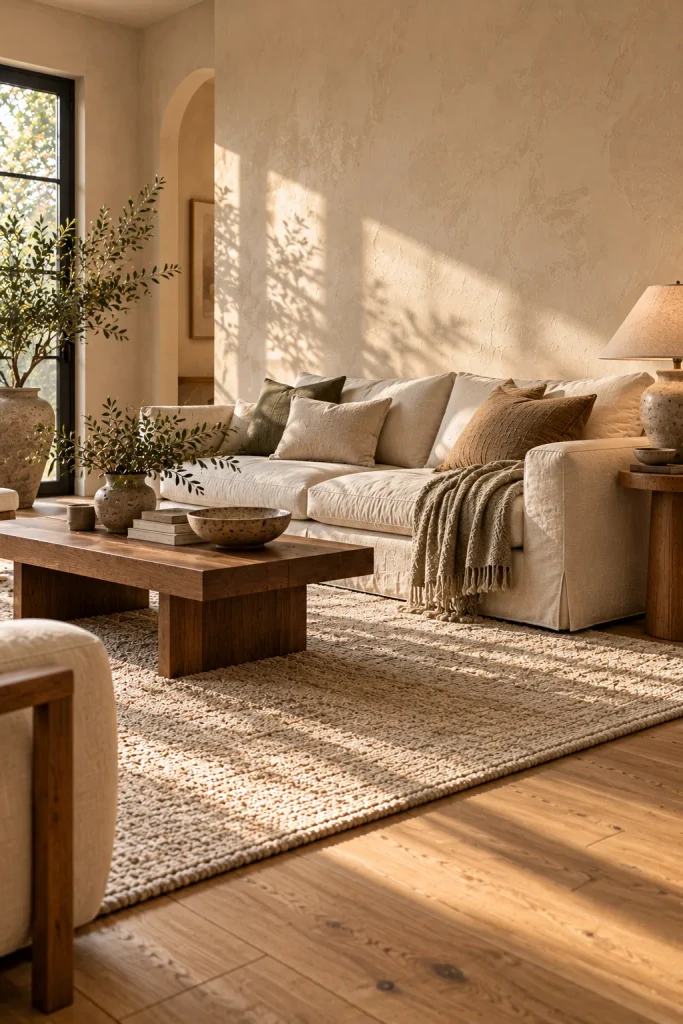
Even an empty wall can carry a room when its surface catches the light. A lightly textured plaster finish adds depth without a busy pattern. Choose warm chalk, pale sand, or soft mushroom, then keep the surrounding upholstery simple enough for the subtle surface variation to show.
Request a sample with the actual finish and texture before committing to a whole room. View it beside a window and under evening lamps, since shadows change its appearance. Ask the installer how to clean and repair it, particularly on walls behind frequently moved chairs or near play areas.
Upholstered Ottoman
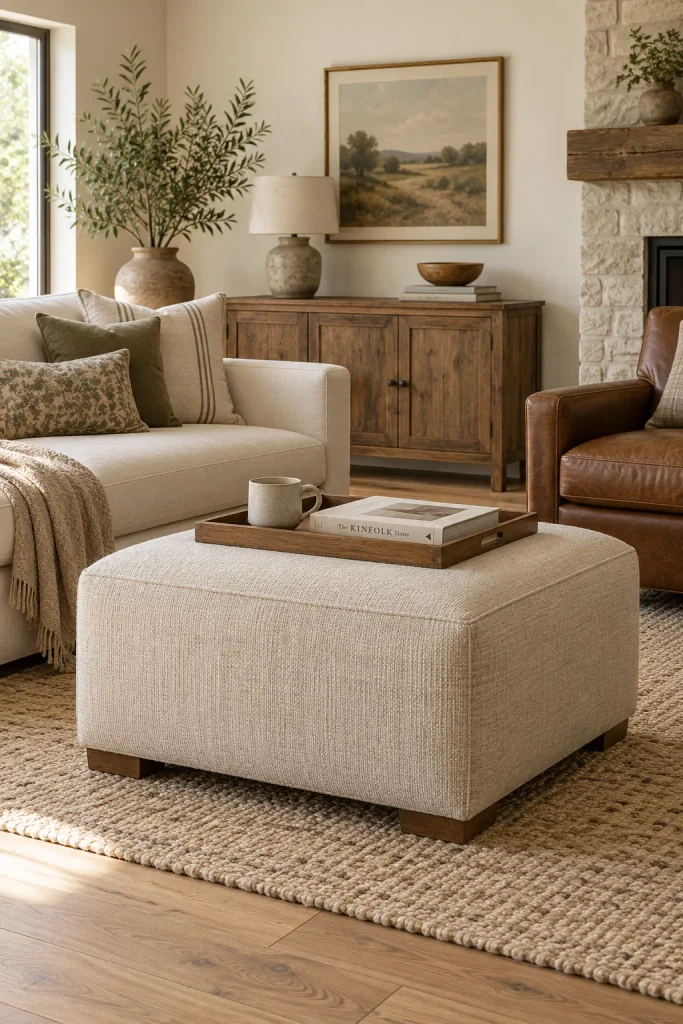
- Put your feet up without giving up a useful central surface. Choose a firm upholstered ottoman with a broad, level top.
- Match its height to how you plan to use it. For resting your legs, test whether it feels comfortable beside your sofa seat.
- Set a rigid tray on top when serving drinks. Check that it rests flat and cannot easily slide across the fabric.
- Choose a storage design if blankets regularly collect on the sofa. Check that the lid opens fully without moving the surrounding furniture.
An ottoman softens a seating area that already contains plenty of stone, metal, or angular wood furniture. It also suits households that use the room for lounging as much as entertaining. Before choosing the size, mark its footprint on the floor and walk around it with the sofa occupied.
Woven Pendant Light
Quick Tip:
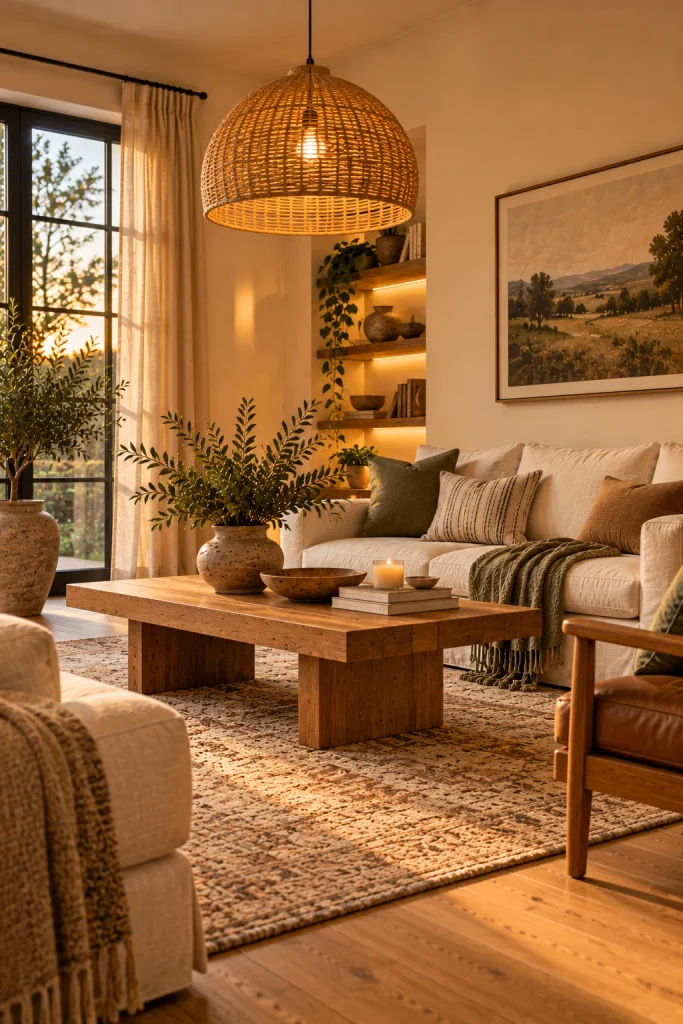
The ceiling deserves some texture, too. Choose an open woven shade that leaves enough visual space around existing beams or ceiling details.
A woven shade repeats the natural texture of baskets and timber at a different height. Before buying, check its dimensions against the ceiling height and the area below it. Look at photos of the shade illuminated; open weaving can cast distinct patterns that feel busier than its daytime appearance suggests.
Low Wood Wall Paneling
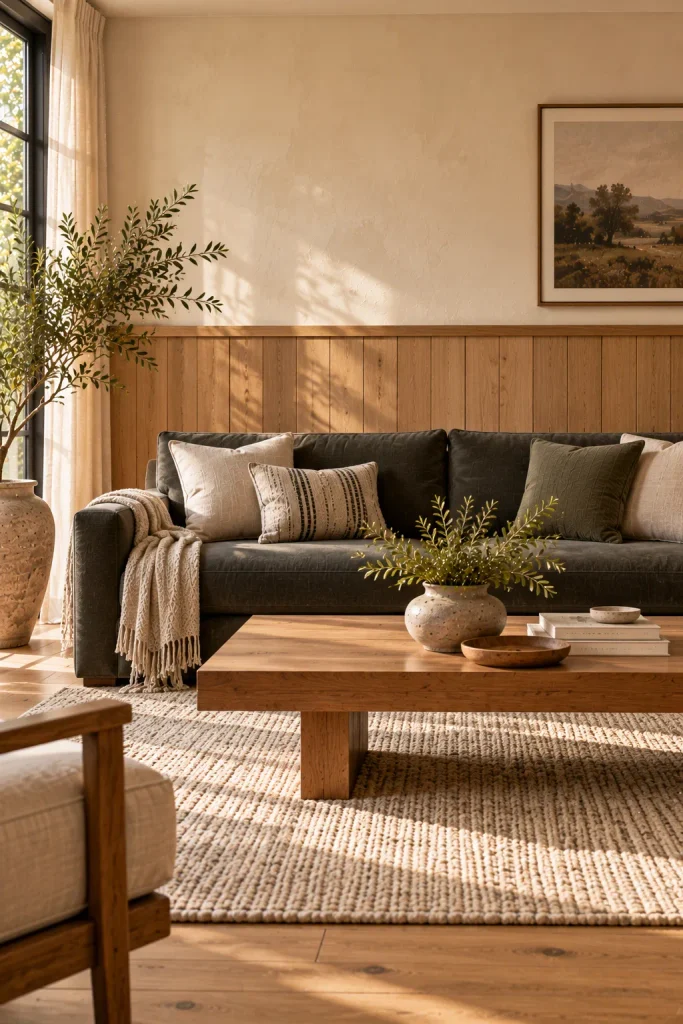
BEFORE: A low sofa can look lost against a tall, bare wall. Scattered small pictures often leave the lower half feeling unfinished.
AFTER: Line the lower portion with simple oak paneling and keep the upper wall light. A slim horizontal cap gives the furniture a continuous backdrop, while the wood grain supplies the detail.
Before settling on the panel height, tape a horizontal line along the wall and view it behind the sofa. Check where it meets window trim, outlets, and adjoining doorways. Keep the board pattern simple, especially in a small room, so the finish feels like part of the architecture.
Rustic Gallery Wall

- Give everyday memories a place beside your art. Gather a small group of landscapes, family photographs, or simple line drawings.
- Choose one repeating feature, such as walnut frames or cream mats. Let that shared detail connect pieces of different sizes.
- Arrange the frames on the floor and photograph two or three layouts. Keep the gaps visually consistent, then transfer the chosen arrangement to the wall with paper templates.
- Check the whole group from the main seat before hanging. Position the largest piece first and use suitable fixings for each frame.
A gallery wall feels settled when the collection has one clear outer shape, even if the frames differ. Keep the lowest row comfortably above the sofa back and avoid spreading tiny pieces across the entire wall. Leave room for one future addition so the display can grow with your household.
Stone Side Table

| Detail | Rounded Stone Table | Square Stone Table |
| Visual effect | Curves soften a room full of straight lines. | A crisp shape echoes the lines of nearby furniture. |
| Useful placement | Beside a curved sofa arm or angled chair | Alongside a straight sofa arm |
| Texture pairing | Woven throws and worn timber | Soft linen and rounded ceramics |
| Footprint check | Confirm the base leaves room for your feet. | Check that corners do not project into the walking route. |
Stone adds a cool, substantial accent beside warm wood and soft fabric. Before buying, check the table’s weight, base protection, and care instructions, since finishes vary. Match its height to the chair or sofa arm so setting down a drink feels natural, and keep a coaster within reach.
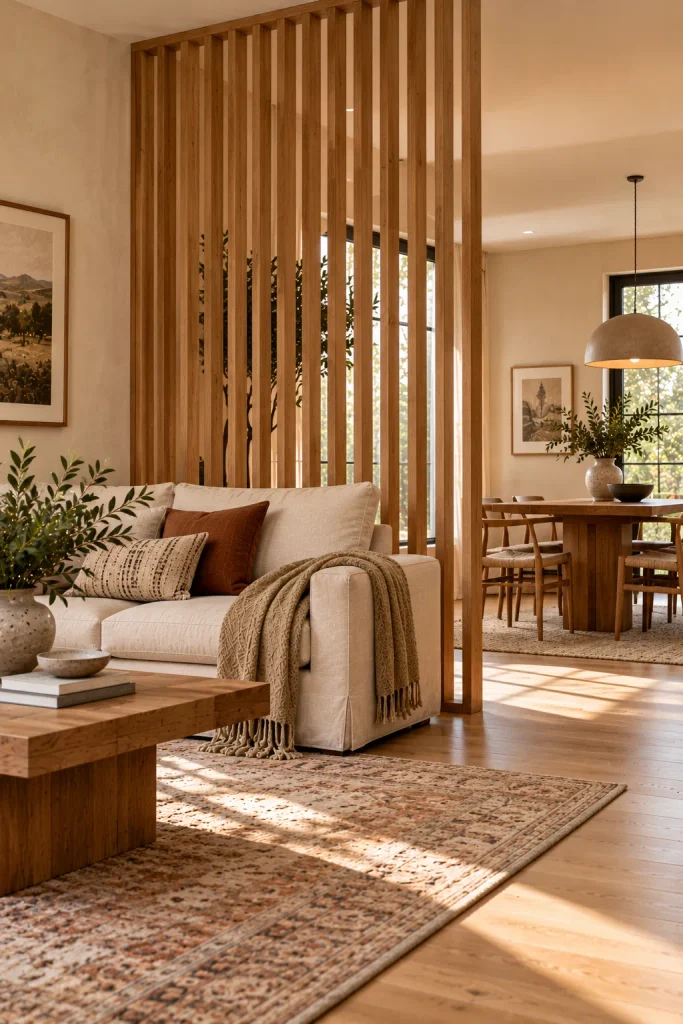
Slatted Room Divider
DO
- Give an open room a gentle boundary with a divider that still lets you see through.
- Choose a wood finish already used in the living area.
- Mark its footprint before buying and keep the main route between rooms open.
DON’T
- Do not place the divider where it blocks the room’s main source of daylight.
- Avoid a screen so wide that moving around it becomes awkward.
- Skip any freestanding design that feels unstable or cannot be secured as its maker directs.
A partial screen can define the seating area in a studio or shared living and dining room. Check its position from both sitting and standing height before deciding where it belongs. Open slats preserve views between the two areas, helping the boundary feel lighter than a solid partition.
Vintage Textile Wall Hanging

Visual Effect: Woven pattern gives a plain wall warmth without adding another shelf.
Best For: Rooms with simple upholstery and little existing pattern.
Color Guide: Repeat one shade from the textile in a cushion or rug.
Display Detail: Hanging hardware suited to the textile’s weight and condition.
Choose a textile with a pattern you can read from the sofa, then let the surrounding wall remain bare. Hang it evenly so folds do not hide the design. For a fragile or valuable piece, ask a textile framer about suitable support before attaching clips, nails, or adhesive.
Corner Game Table
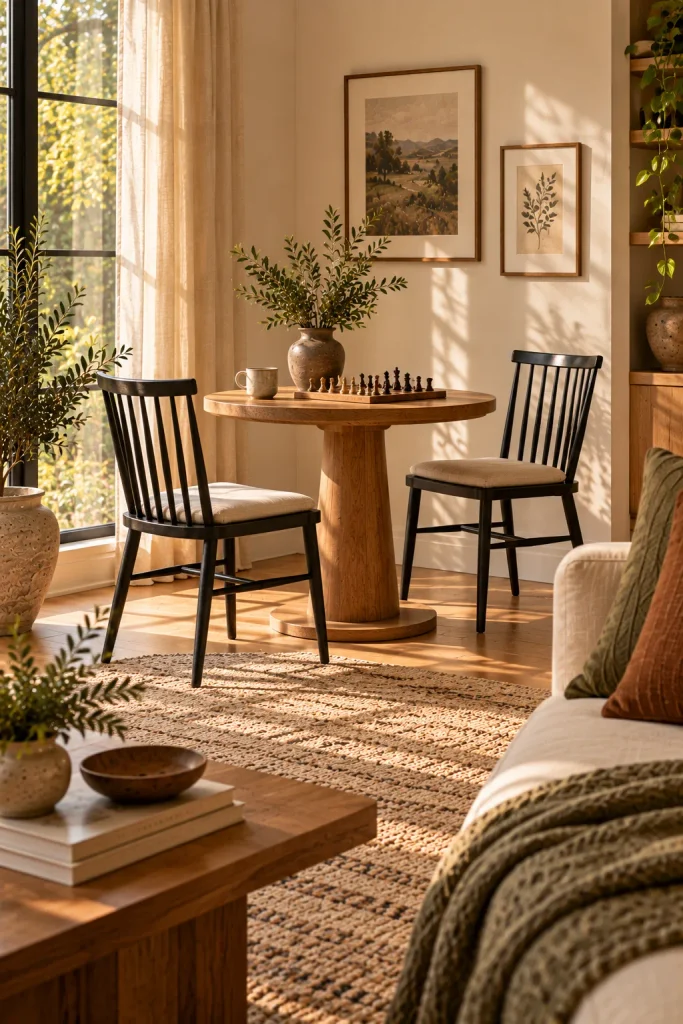
Give the living room a reason to gather beyond the television. A small game table in an unused corner creates a place for cards, puzzles, or a quick board game. Choose a simple wood table and comfortable chairs that relate to the main seating area without matching exactly.
Measure the table with both chairs pulled out, allowing room to sit down. Store game pieces in a nearby box and clear the surface between uses. In a compact room, a small drop leaf table can fold against the wall once everyone has finished playing.
A welcoming home grows through thoughtful choices, and your modern rustic living room can take shape one change at a time. Start with the detail that would improve daily life most, whether that means softer lighting, better storage, or a comfortable place to gather.
Save this post on Pinterest so your favorite ideas are easy to find. Choose one to try this week, and share the article with someone planning a warmer, more inviting home.
Keep the pieces that feel personal, leave space for everyday comfort, and let the room develop at your pace. Make one corner more inviting today.
Conclusion
A welcoming home grows through thoughtful choices, and your modern rustic living room can take shape one change at a time. Start with the detail that would improve daily life most, whether that means softer lighting, better storage, or a comfortable place to gather.
Save this post on Pinterest so your favorite ideas are easy to find. Choose one to try this week, and share the article with someone planning a warmer, more inviting home.
Keep the pieces that feel personal, leave space for everyday comfort, and let the room develop at your pace. Make one corner more inviting today.
Working with a smaller budget first? Start with these easy ways to refresh your living room for less.