33 Eclectic Maximalist Living Room Ideas to Mix Prints
Love your floral sofa but keep putting the striped curtains back on the shelf? Those two prints could be the start of a maximalist living room that feels like yours. Look closely at the flowers. That little streak of navy in a petal might be all you need to choose the right stripe.
These 33 ideas show how to mix prints around pieces you already own, whether you have a whole wall to decorate or just enough room for a reading chair. You’ll see why a broad plaid pairs well with small leopard spots and how a checked border gives a busy floral skirt a crisp finish. If a combination catches your eye, try it where you’ll actually see it. Two fabrics can look quite different from the doorway than they do side by side in your lap.
Floral Sofa Striped Curtains
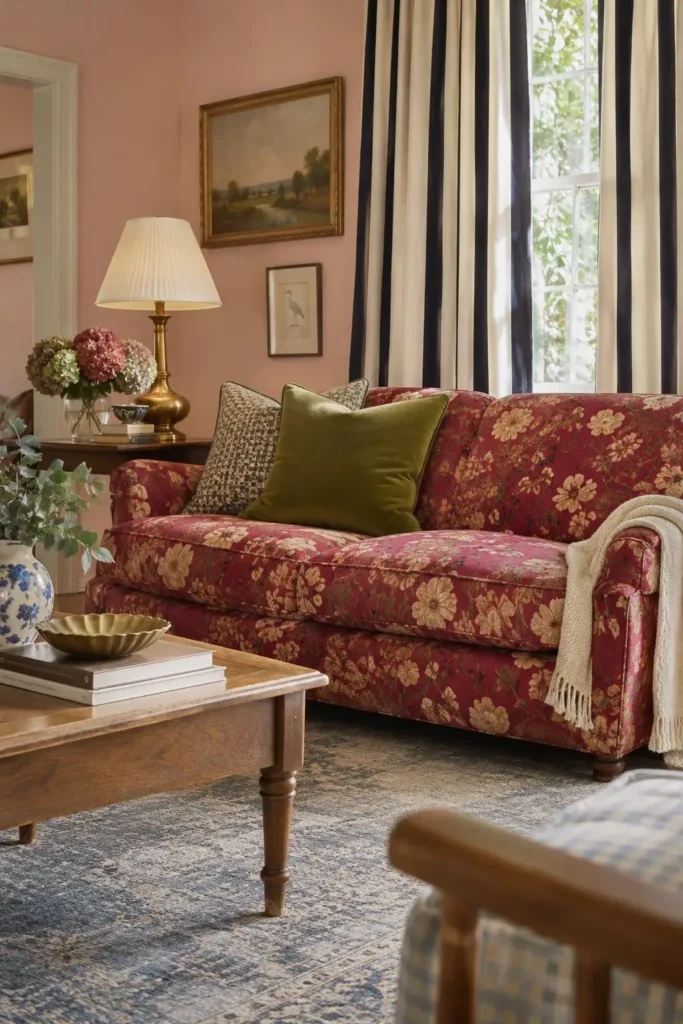
A floral sofa gives the room an instant focal point, while striped curtains bring order to the surrounding prints. Start with one color shared by both fabrics, such as navy blue. Choose curtains with broad stripes so their spacing stays distinct from the smaller flowers across the upholstery.
For a maximalist living room that feels connected, repeat that navy in a lamp base or rug border. Keep the coffee table surface mostly clear so the fabrics remain visible. Before buying curtains, hold a sample beside the sofa in daylight to check whether their background colors work together.
Leopard Cushions Plaid Chairs
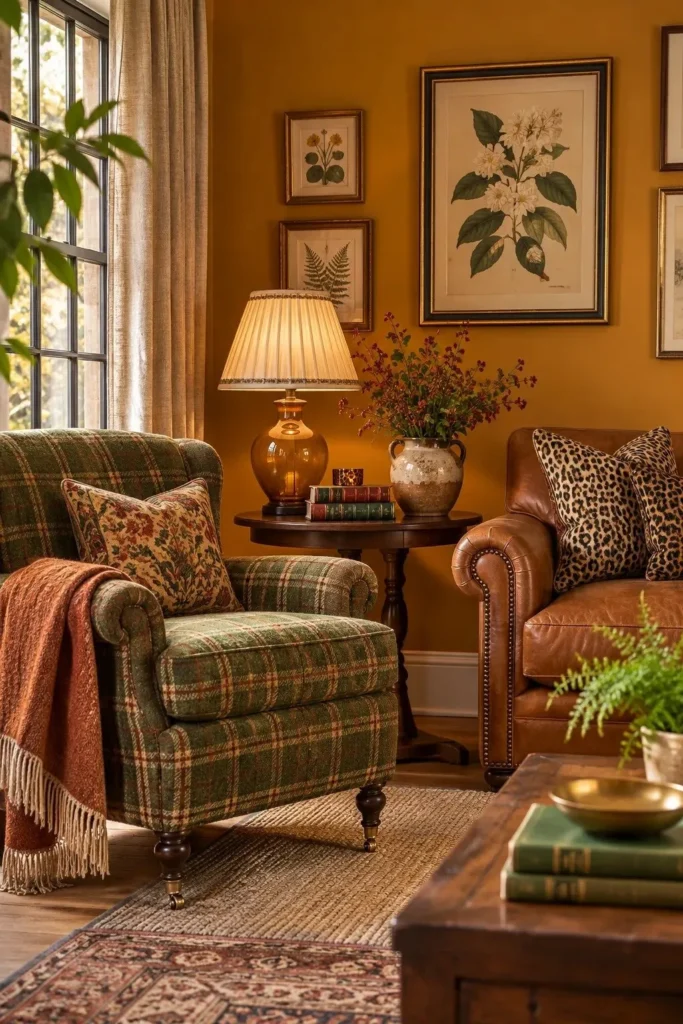
- Give a traditional plaid chair a playful companion with one leopard print cushion on the nearby sofa.
- Match the cushion’s tan background to a warm shade in the plaid, such as camel or ochre.
- Choose different pattern sizes. A broad windowpane plaid stays readable beside smaller leopard spots.
- Repeat a dark brown accent through a wooden frame or lamp base to connect the seating area.
Keep the first pairing small enough to rearrange easily. A cushion cover lets you test the combination before committing to more patterned upholstery. Stand in the doorway and check whether both prints remain recognizable. If they blur together, increase the difference between their sizes or move the cushion farther away.
Paisley Rug Geometric Ottoman
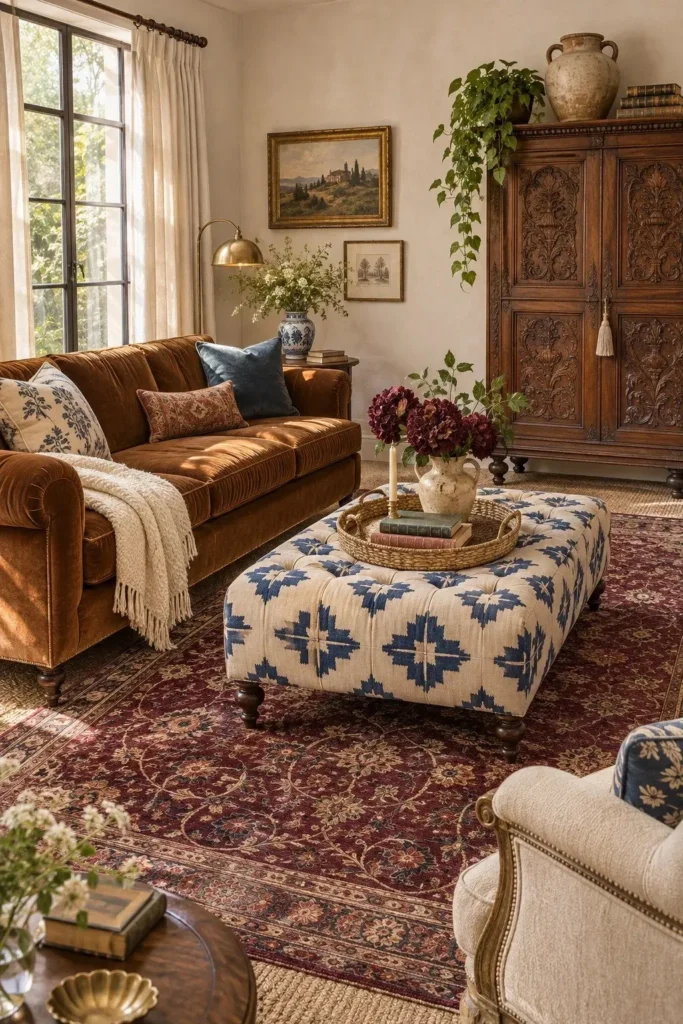
Quick Tip:
Let an oversized geometric print give a swirling paisley rug a clear counterpoint. Choose an ottoman fabric that repeats one rug color, then compare samples directly on the rug before ordering.
Leave a visible border of paisley around the ottoman so both patterns have room to register. An ottoman covered in tiny motifs can disappear against a detailed rug. For a practical starting point, select broad diamonds or generous checks, then keep the nearby sofa upholstery solid to frame the pairing.
Botanical Wallpaper Gingham Sofa
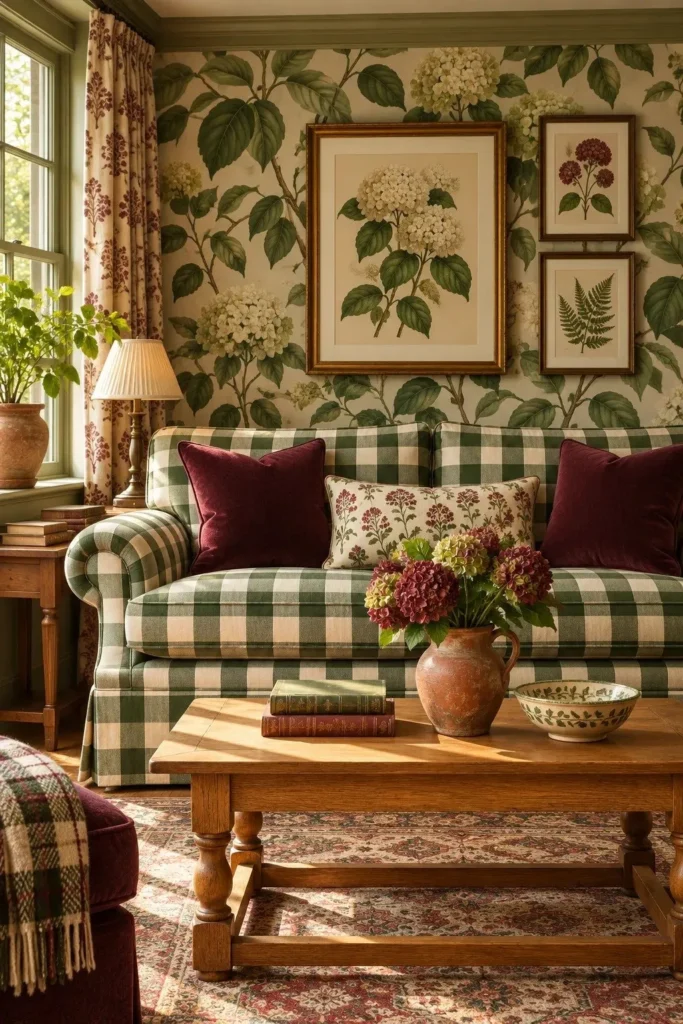
BEFORE
Small botanical prints and tiny checks compete across the seating area. From the doorway, the patterns merge into a busy patchwork with little definition.
AFTER
Oversized leaves spread across the wall behind a sofa in medium gingham checks. A shared green palette connects the surfaces, while the difference in scale makes each pattern easier to read.
Order a generous wallpaper sample and place it behind your sofa fabric before committing. Look at the pairing from your usual seat and from the entrance. Keep curtain fabric plain if the wallpaper reaches the windows, allowing the leafy repeat to remain visible around the frames.
Patchwork Curtain Panels
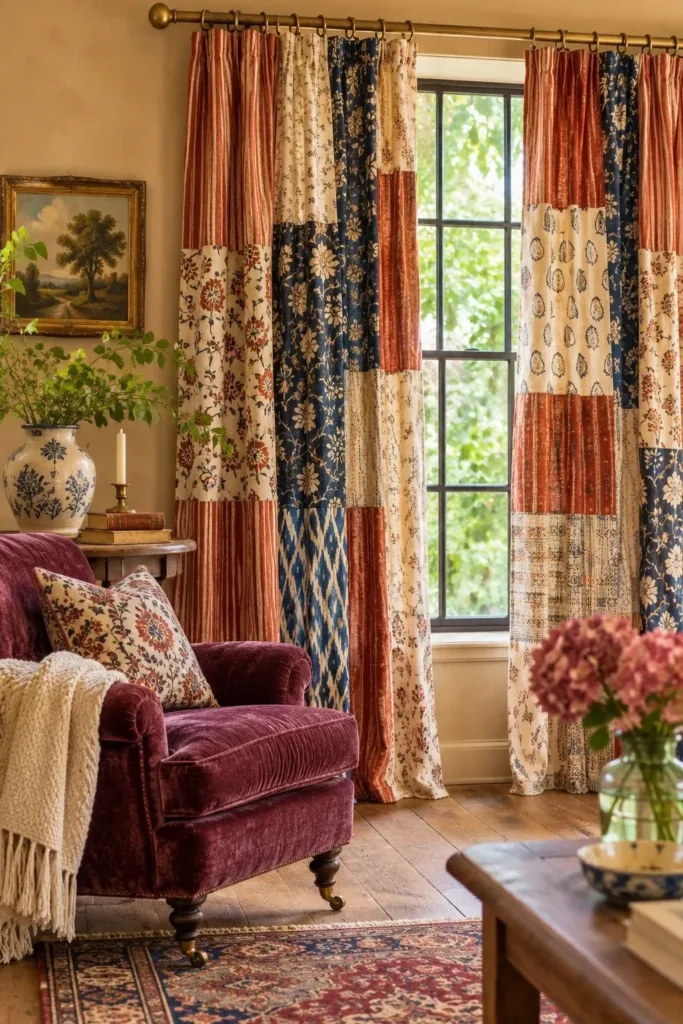
- Turn leftover fabric into a striking window treatment by choosing three prints that share a cream background.
- Arrange large fabric rectangles on the floor. Alternate stripes and florals, repeating each fabric across both curtain panels.
- Join pieces into panels with consistent finished lengths. Choose fabrics with similar weights so the seams hang evenly.
- Add lining suited to your light preferences, then hang both panels from matching rings to keep the top edge consistent.
For a simpler project, sew a broad patterned border onto ready-made curtains. The border introduces another print while keeping fabric costs manageable. Prewash washable materials according to their care instructions before cutting, since uneven shrinkage can pucker joined seams. Check that the finished panels still close comfortably across the window.
Toile And Abstract Prints
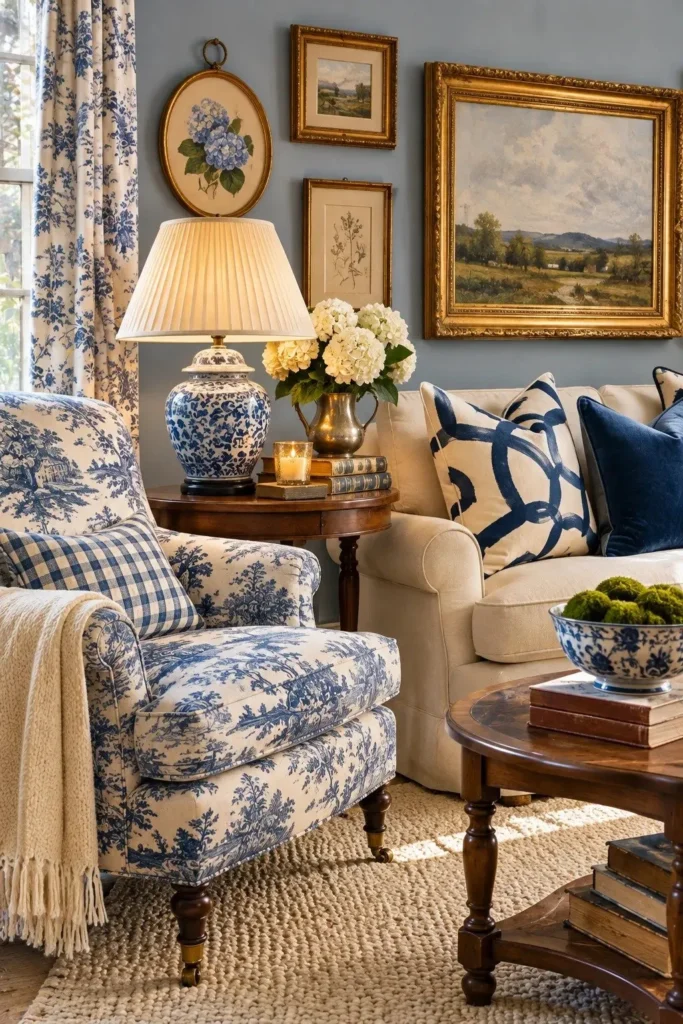
Delicate toile scenes gain a lively companion when bold abstract shapes enter the seating area.
| Design choice | Fine Abstract Lines | Large Abstract Shapes |
|---|---|---|
| Pattern relationship | Echo the toile’s detailed drawing | Introduce a broader, distinct pattern |
| Color pairing | Blue linework on cream | Solid cobalt forms on cream |
| Suggested placement | A cushion on a separate plain chair | A cushion near the toile armchair |
| Room effect | Detailed and delicate | Graphic and expressive |
Start with one abstract cushion and assess it beside the toile in daylight. Match the background whites carefully, since bright white can make an adjacent cream fabric appear yellow. Repeat the stronger blue once elsewhere, perhaps in a ceramic bowl, to carry the pairing beyond the two seats.
Patterned Gallery Mats
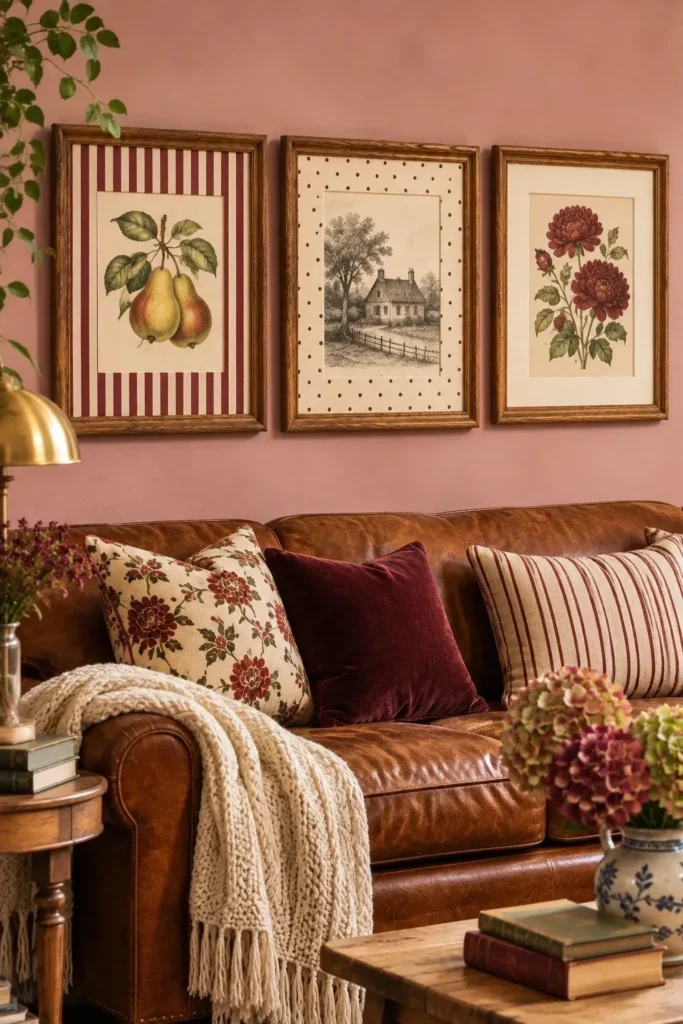
DO
- Give a single illustrated pear a striped border wide enough to show several stripes on each side.
- Pair a loose charcoal sketch with tiny dots that echo the marks in the drawing.
- Use the same oak frame finish across the group so the different borders feel related.
DON’T
- Crowd a detailed floral print with another intricate pattern around its edges.
- Cut a mat opening so small that it hides a signature or clips the subject.
- Glue patterned paper directly to original artwork.
Lay the frames side by side on the floor before hanging them. Slip a strip of gift wrap between a spare mat and the glass to test the width of the border. A narrow stripe that looks crisp in your hand can almost disappear when viewed from the sofa.
Speckled Lamp With Striped Shade

Pattern pairing: Broad stripes make tiny glaze speckles visible as a second, quieter pattern.
Best placement: A side table where the lamp base sits above the sofa arm.
Color cue: Pick a stripe close to the warm brown of the speckles.
Skill level: Beginner, especially if you already have a shade with the right fitting.
Take the old shade along when you shop so you can compare its diameter and fitting. At home, switch the lamp on after dark. Light passing through cream linen warms the stripe color, and the view from your reading chair will tell you whether the rim conceals the bulb.
Log Cabin Quilt Throw

That quilt at the foot of the guest bed might be just what a houndstooth sofa needs. Fold it lengthwise until a row of complete blocks shows. The wide bands of color give your eye a shape to follow across the much smaller checks in the upholstery.
Lay the quilt over the arm you use for reading, with one red center square facing the room. Tuck a little fabric beside the seat cushion if the quilt slides when you sit down. Leave the other arm bare so the outline of the sofa stays visible.
Wallpapered Shelf Backs

- Give a favorite striped pitcher its own patterned backdrop. Small saffron fans show through the pitcher’s curved handle and around its blue silhouette.
- Cut a piece of poster board to fit the back of one shelf, then wrap it in wallpaper. This makes the pattern easy to swap.
- Stand the pitcher beside a low stack of books so the top half of the wallpaper stays visible.
- Use the same paper behind a second shelf if the first looks isolated from the rest of the bookcase.
Check the shelf from your usual seat before making more panels. The fan shapes should still show above the books, even if only the saffron color reads clearly across the room. Move a tall stack down one shelf if it hides the part of the print you like best.
Marbled Tray on Stripes
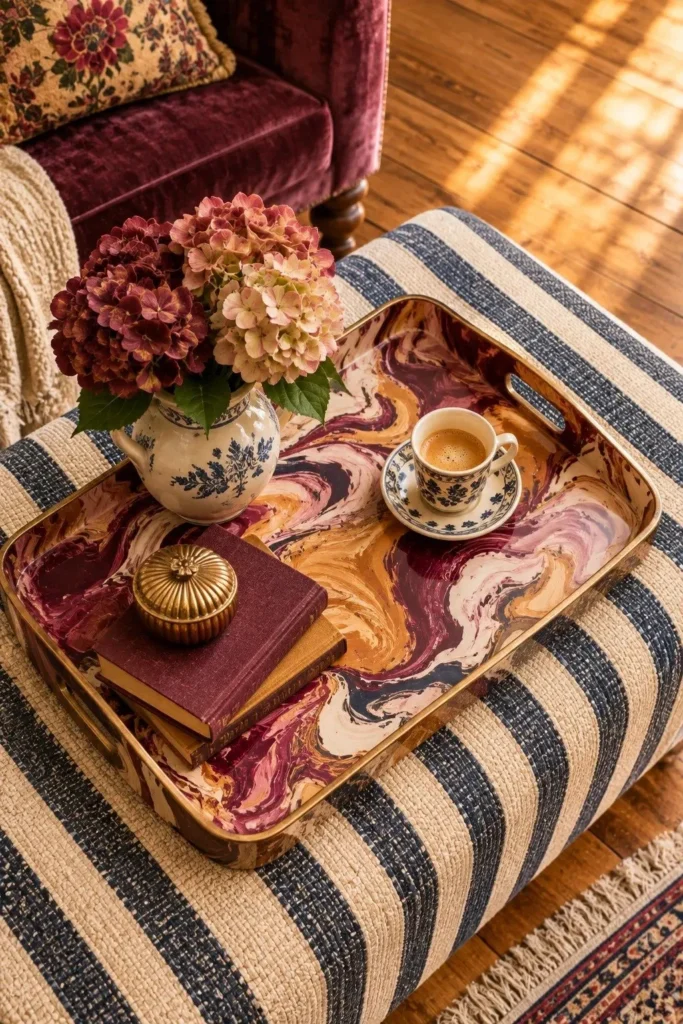
Quick Tip:
Turn a marbled tray until its longest vein cuts across the ottoman stripes. Leave a few stripes visible on every side so you can see where the swirls meet the straight lines.
Choose a tray with enough open space for the marbling to show beside your cup. A single cream mug picks up the pale streaks in the surface. Before serving coffee, press lightly on opposite corners of the empty tray to check that it sits level on the upholstered top.
Ikat Window Seat
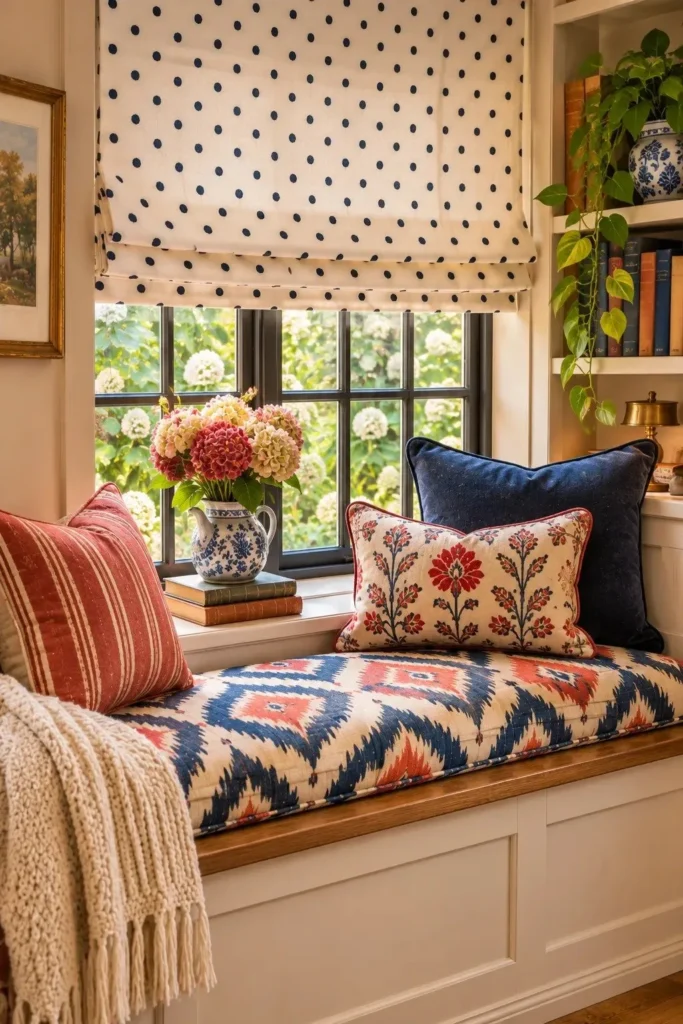
BEFORE
From the doorway, a stack of small patterned pillows hides the long line of the window seat. Sitting down with a book means moving half the stack to the floor.
AFTER
A single bench cushion carries a row of broad ikat diamonds across the seat. Indigo dots on the Roman shade pick up the blue in the weave, bringing a second pattern up to eye level and leaving room to stretch out.
If you already own a bench cushion, wrap it in a length of ikat fabric to test the placement. Center one whole diamond beneath the middle windowpane and check where the end motifs fall. Take a photo before you unfold the fabric so you have a guide for cutting the cover.
Chessboard and Kilim Diamonds
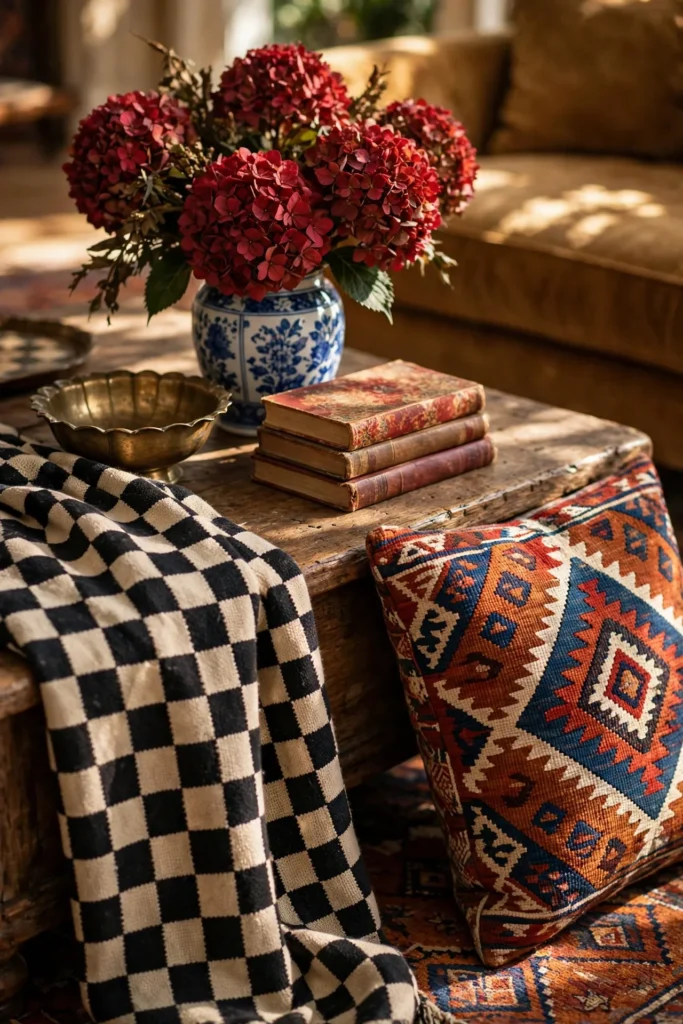
- Give the chessboard a permanent spot on a glass coffee table so the rug pattern shows around it.
- Turn the board until its straight rows run alongside the rug’s border. The diagonal sides of the kilim diamonds will stand out against the square grid.
- Slide the board toward one end of the table, leaving a patch of glass clear above a complete rug diamond.
- Set out the pieces for a game and check that both players can reach the back rows from their seats.
A board with pale maple squares picks up the cream wool in the rug, while walnut squares show up against rust or indigo. If your coffee table has a solid top, use the same pairing on a smaller scale. Leave the rug’s diamond border visible just beyond the table legs.
Mixed Transferware Plate Wall
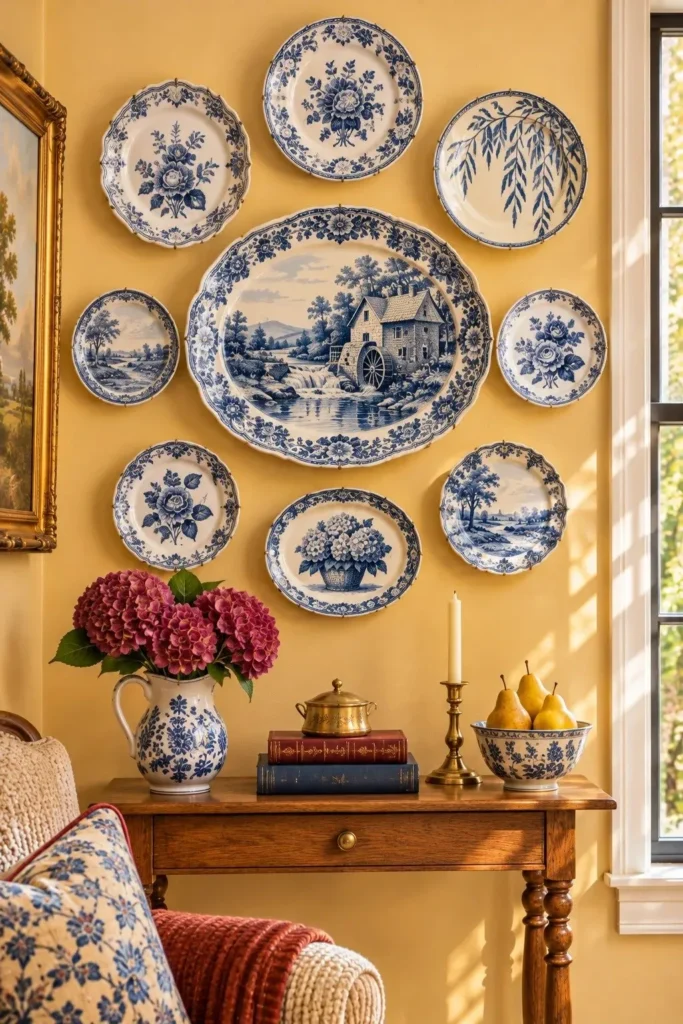
| Design choice | Scenic Centerpiece | Floral Ribbon |
|---|---|---|
| Starting plate | Let a riverside scene anchor the group. | Start with a pair of plates edged in blue roses. |
| Companion prints | Surround the scene with smaller leafy borders. | Alternate floral rims with fine blue landscapes. |
| Arrangement | Cluster the smaller plates around the center. | Hang the plates in a loose horizontal row. |
| Best spot | A narrow wall beside a reading chair | A long stretch of wall above a console |
Trace each plate onto paper and tape the outlines to the wall before choosing hanger positions. Mark the top of every landscape on its paper circle so a cottage or bridge sits level. From the sofa, look for a little wall color between neighboring rims, especially where two dark borders meet.
Block Print Console Skirt

DO
- Give the little carnations a crisp edge with a band of checked fabric along the hem.
- Fold the floral fabric into loose pleats so whole flowers remain visible between folds.
- Place the skirt opening between two pleats for easy access to baskets underneath.
DON’T
- Cut the floral panels to their finished length before allowing for the checked band.
- Stretch the border fabric as you sew, since tension can make the hem ripple.
- Let the skirt pool on the floor where it can catch under a basket.
Pin the checked band across one panel and hang it from the console before sewing. At ankle height, a narrow check can disappear into the folds. Make the band deep enough to show two complete rows of squares, then set the hem just above the floor for a clean line.
Bandana Floor Cushions
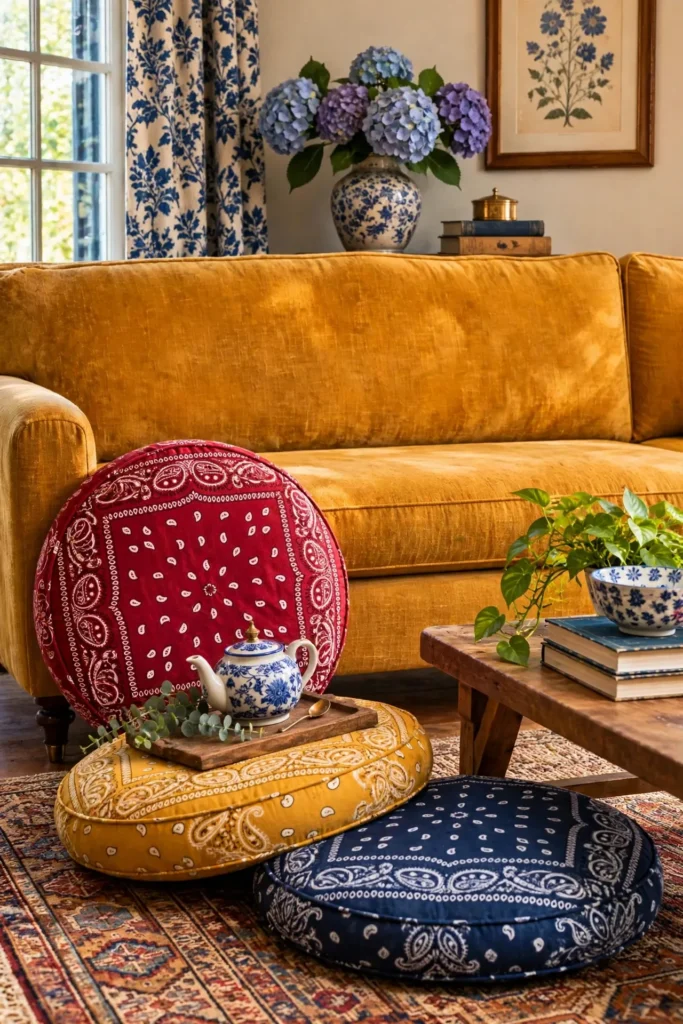
Pattern pairing: A red bandana cushion brings a little paisley to game night, while its striped neighbor echoes the lines on the backgammon board.
Best for: Extra seating around a low coffee table.
Fabric choice: Washable cotton covers with zippers for easy cleanup.
Finishing detail: A square cushion cover that shows the bandana’s whole border.
Measure across the paisley border before choosing a cushion size. If the corners of the design disappear into the seams, the bandana loses its familiar shape. For a smaller cushion, sew the bandana onto a larger square of denim as a centered patch and leave its printed edge intact.
Landscape Mural With Pinstripes

Where does the willow tree land once the sofa is in place? Before ordering a landscape mural, mark the height of your seat back on the wall with painter’s tape. Choose a scene with a recognizable detail, such as a bridge or leafy canopy, above that line.
Fine pinstripes give the seat a little definition against the soft shapes of painted hills. Pull their color from a shadow in the mural, such as olive beneath a tree. If you already own a plain sofa, a long pinstriped lumbar pillow gives you the same effect.
Mixed Tile Coasters
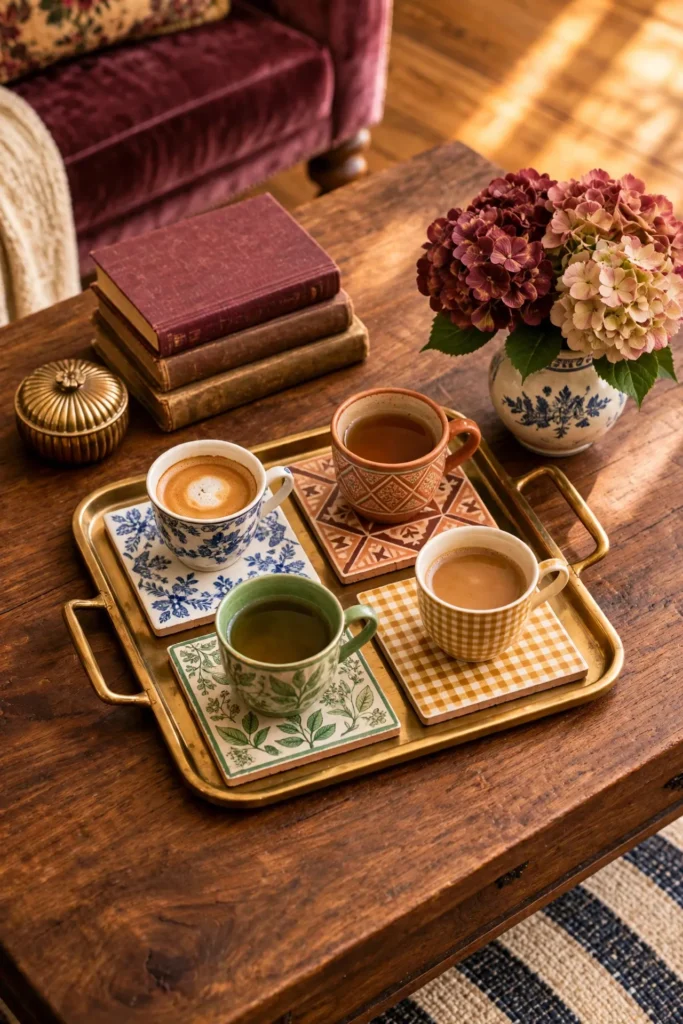
- Four leftover tiles can bring four different prints to a coffee table for the price of a sheet of cork.
- Choose flat glazed tiles wide enough to hold your largest mug. Raised decoration can make a narrow glass wobble.
- Pair one open motif, such as a cobalt star, with a denser design like tiny blue checks.
- Cut adhesive cork just inside the edges of each tile and cover the underside so rough spots stay clear of the tabletop.
Set the coasters out in pairs where people actually sit. A blue star beside yellow scallops gives each end of a long table its own little mix. If the table already has a bold grain, look for a generous cream margin around each design so the tile edges stay easy to see.
Striped Ties on Chintz
Quick Tip:
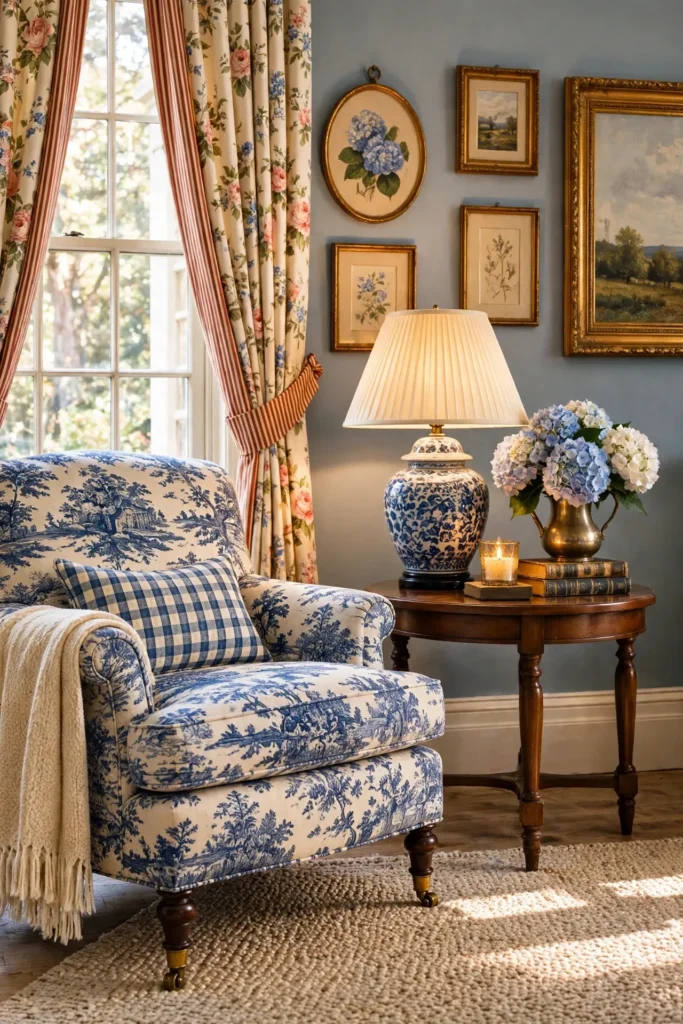
A single striped tie can bring out the smallest coral buds in a busy floral curtain. Loop a length of striped ribbon around the panel and check the color in daylight before cutting a matching tie for the other side.
Gather the curtain loosely enough that a whole rose still shows just above the tie. A flat knot keeps the stripes visible and suits a narrow window where a bow might crowd the trim. For curtains you close every evening, sew a loop at each end to slip over a tieback hook.
Harlequin Mantel Wall
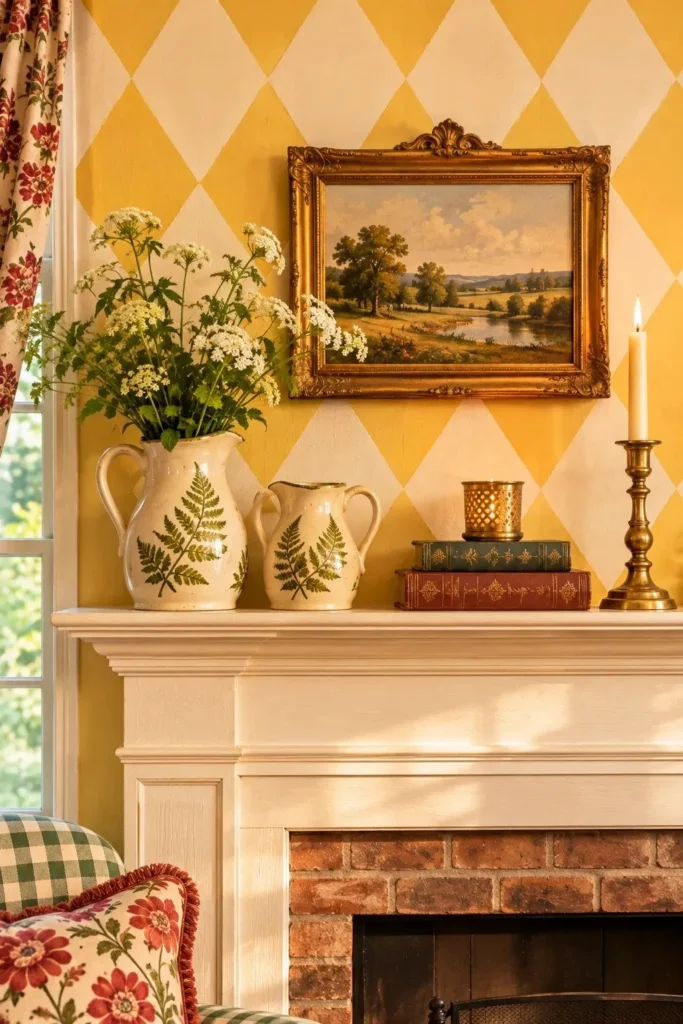
BEFORE
Two fern pitchers sit at opposite ends of a pale mantel. From the sofa, their fine green leaves are hard to make out against the blank wall.
AFTER
Large butter yellow diamonds give the mantel a pattern you can see from across the room. The pitchers sit together beneath one ivory diamond, where their delicate fern prints reward a closer look.
Cut a few diamonds from yellow paper and tape them above the shelf to test their size. Set the taller pitcher in place before settling on the layout. A diamond point that just touches the spout can look awkward, so shift the paper until a little ivory shows between them.
Mixed Print Folding Screen
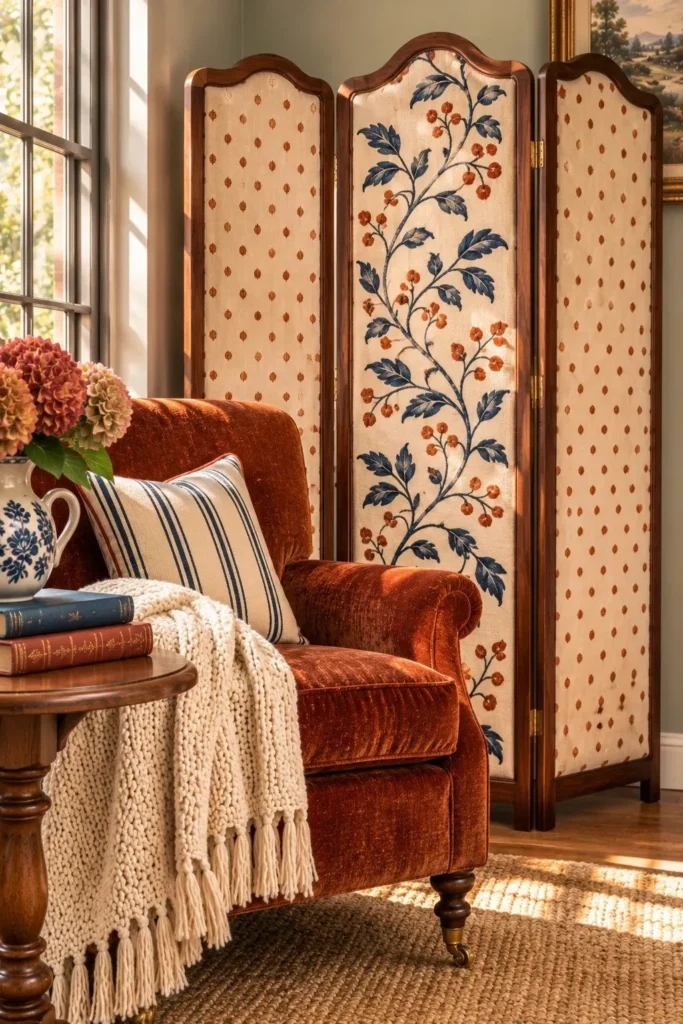
- Give one winding vine print the whole center panel so you can follow the stem from top to bottom.
- Pick a small print for the outer panels. Rust dots bring out the berries in an indigo vine and remain recognizable when the screen folds at an angle.
- Trace each recessed panel onto thin board and test the fit. Allow room around each insert for the thickness of the fabric.
- Wrap the inserts in fabric, fasten the edges on the back, and secure each insert within its panel using removable mounting tabs suitable for the finish.
Angle the screen beside your reading chair and check the view while seated. The outer panels look narrower from that height if they turn away from you. Open the folds just enough to see both dotted panels while keeping the screen stable and the path around the chair clear.
Flame Stitch Reading Chair
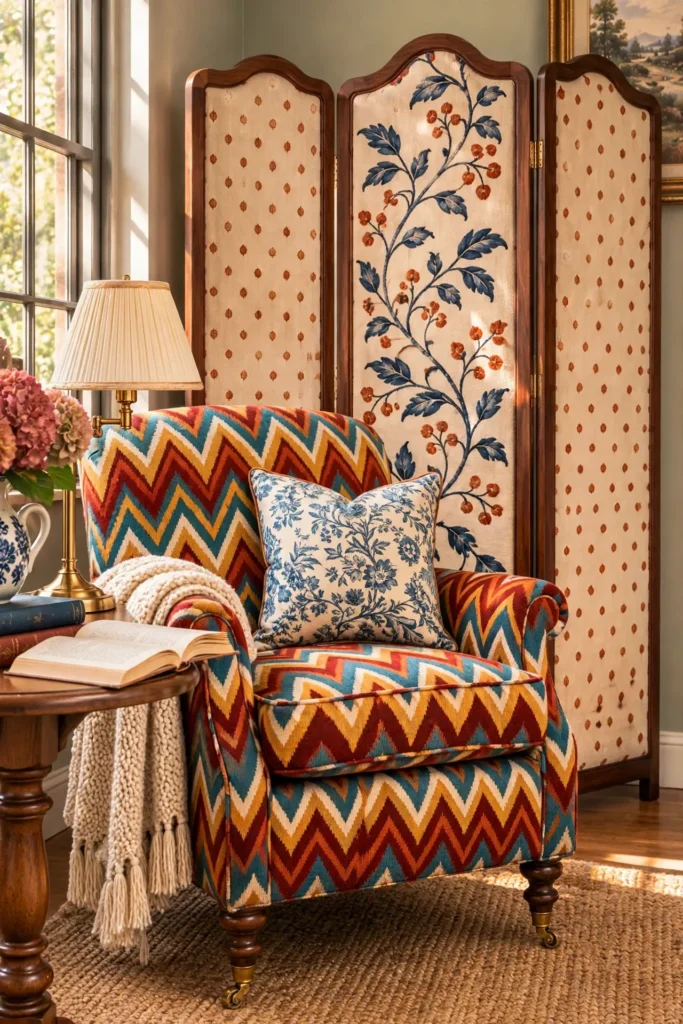
| Styling detail | Windowpane Throw | Dotted Throw |
|---|---|---|
| Pattern shape | Wide, open checks give the pointed flames a crisp outline. | Round dots soften the sharp peaks in the upholstery. |
| Color pairing | Plum lines on ivory pick up the darkest stitches. | Tangerine dots on oatmeal bring out the orange bands. |
| Best placement | Fold the throw over one arm to show a complete check. | Drape a corner over the seat so a few dots sit beside the zigzags. |
Open your book and sit in the chair before deciding where the throw belongs. A thick fold under your elbow can get uncomfortable after a few pages. Slide the throw toward the outside of the arm until your elbow rests on the upholstery and the second pattern still shows.
Tortoiseshell Mirror on Trellis
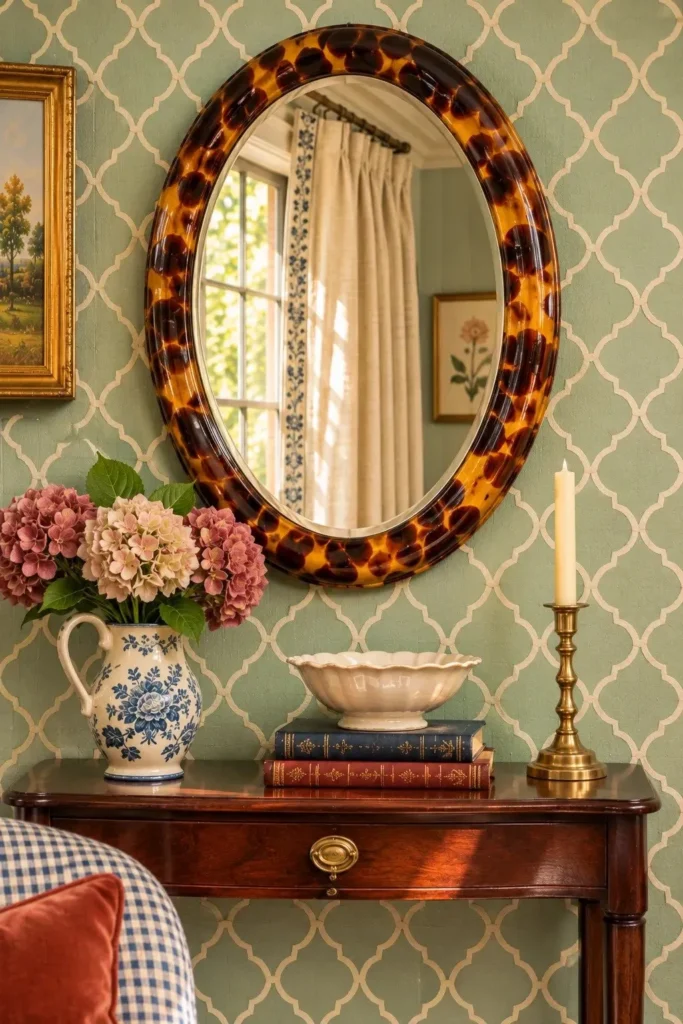
DO
- Use an oval frame to break up the straight lines of a wallpaper trellis.
- Choose a frame broad enough to show individual amber flecks from your usual seat.
- Hold a paper oval against the wall to see where the trellis meets the curved edge.
DON’T
- Squeeze the frame between tall lamps that hide the mottled sides.
- Position the mirror where it reflects a bare bulb at seated eye level.
- Crowd the console with small prints directly beneath the patterned frame.
Check the reflection from the sofa as well as from the doorway. A patch of plain linen curtain in the glass gives the eye somewhere to rest between the mottled frame and the trellis. A small shift to the left or right can bring that curtain into view.
Record Sleeve Pattern Display
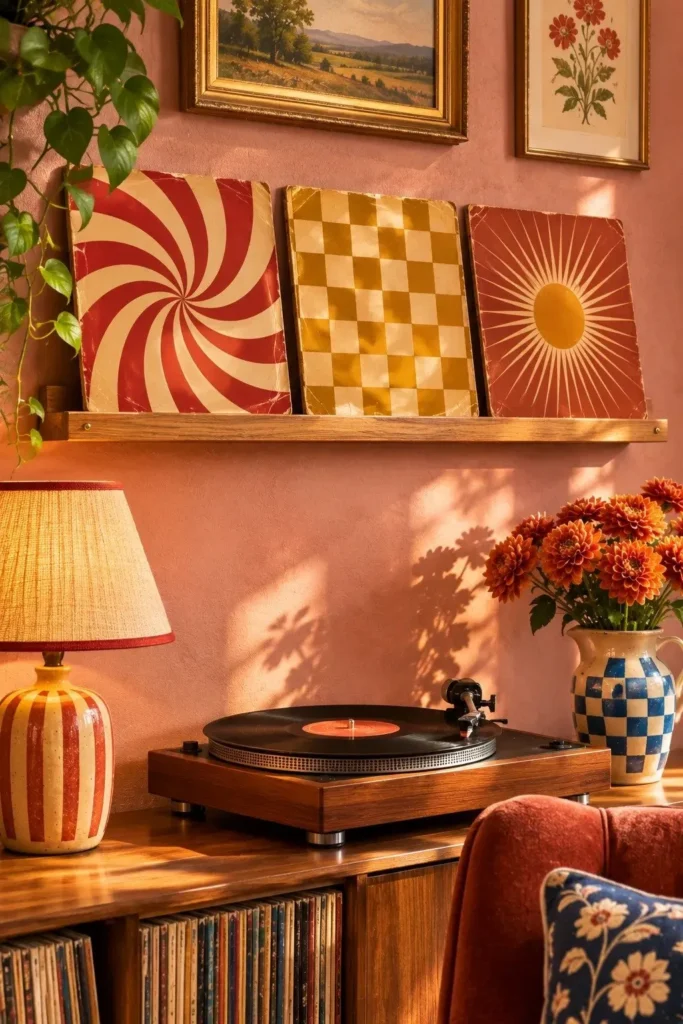
Best source: The next print for your wall might already be in your record collection.
Pattern mix: Pair a broad spiral with a tight checkerboard and a sunburst.
Color cue: Look for a trace of red or gold across at least two covers.
Easy swap: A shallow picture ledge lets you change the sleeves by hand.
Start with the sleeve of a record you play often and pull two others that look good beside it. Leave a finger’s width between covers so you can lift one without moving its neighbors. When friends come over, the display doubles as a short list of albums they can put on.
Layered Zebra and Border Rugs
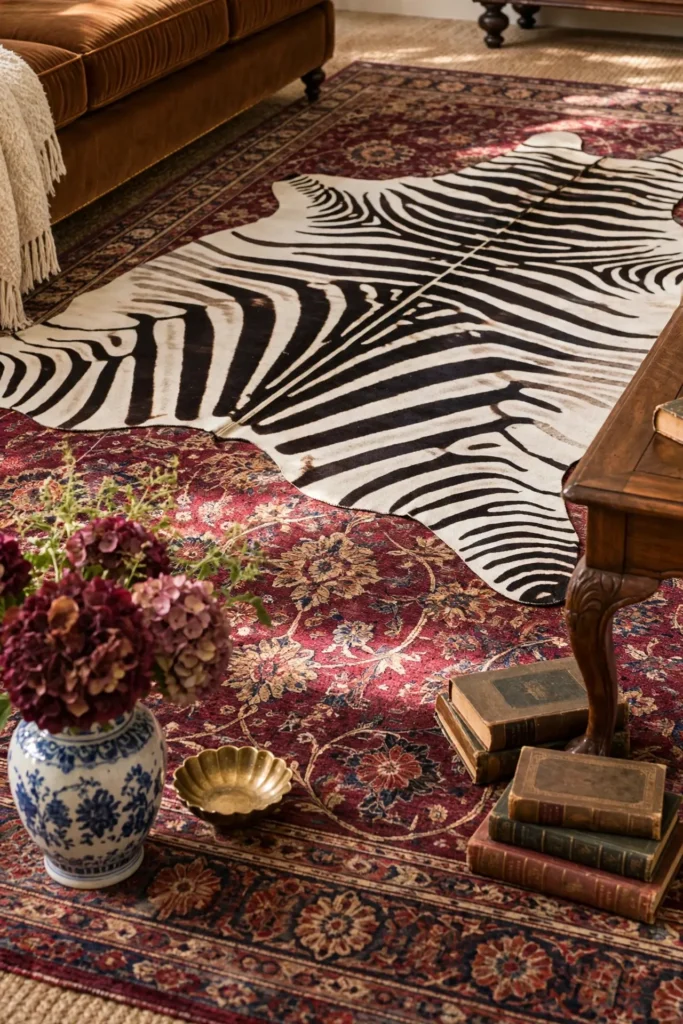
Zebra stripes look surprisingly at home inside the faded border of an old wool rug. Start with the larger rug under the sofa’s front feet, then lay the striped one beneath the coffee table. Leave the colored border visible on all sides so it frames the black and ivory stripes.
A round table works especially well here because its curved edge cuts across the straight rug borders. Sit down and check where your heels land. If they catch the edge of the upper rug when you stand, shift that rug farther under the table and secure it with a rug pad designed for layering.
Patterned Planter Cluster
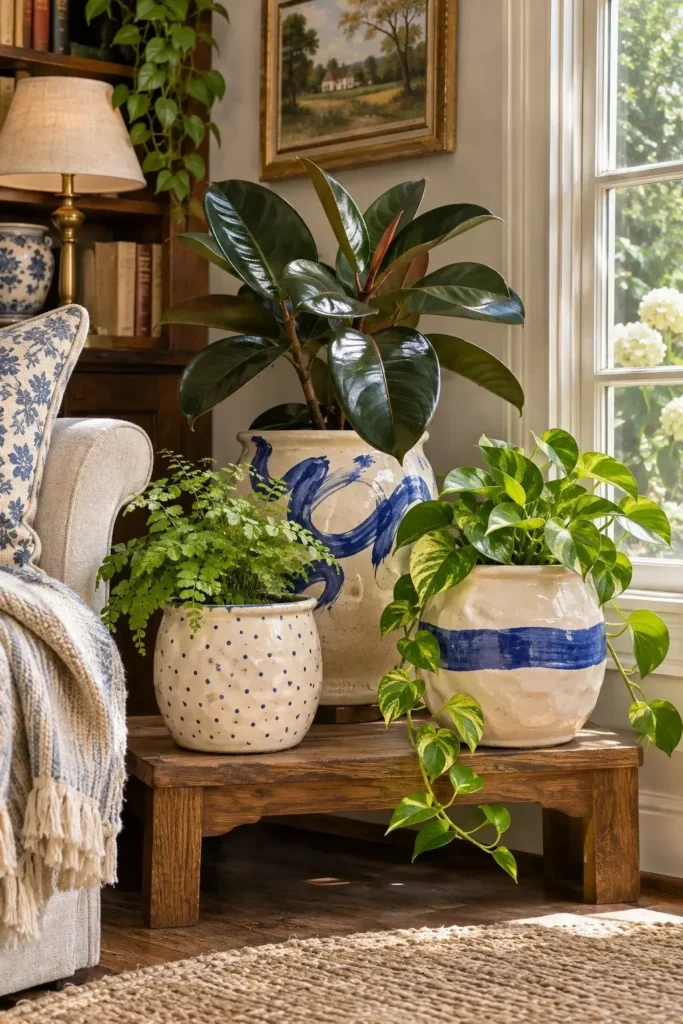
- Give the boldest pot to the plant with the simplest silhouette. Broad rubber plant leaves leave plenty of room below for loose cobalt brushstrokes.
- Set a trailing plant in the banded pot. A few vines can cross the band without hiding the whole design.
- Bring the smallest dotted planter forward so its fine marks are visible from the sofa.
- Keep each plant in a removable nursery pot so you can carry it to the sink and let it drain before putting it back.
Arrange the pots in daylight and turn each one by hand. A brushstroke that disappears behind a leaf from one angle may sit neatly between two stems from another. Leave enough room to lift each pot by itself, especially on a narrow stand where one trailing vine could snag its neighbor.
Greek Key Cushion Trim

Quick Tip:
Give a loose bird print a crisp border with Greek key ribbon. Pin the trim to the empty cushion cover first, keeping the corners clear of the cranes’ heads and wings.
Slip the cushion insert back inside before sewing. The filling rounds out the edges and can roll a narrow border out of sight, especially on a plump cushion. Move the ribbon inward until you can see a complete blue corner from your chair, then remove the insert and stitch the trim in place.
Star Stenciled Ceiling
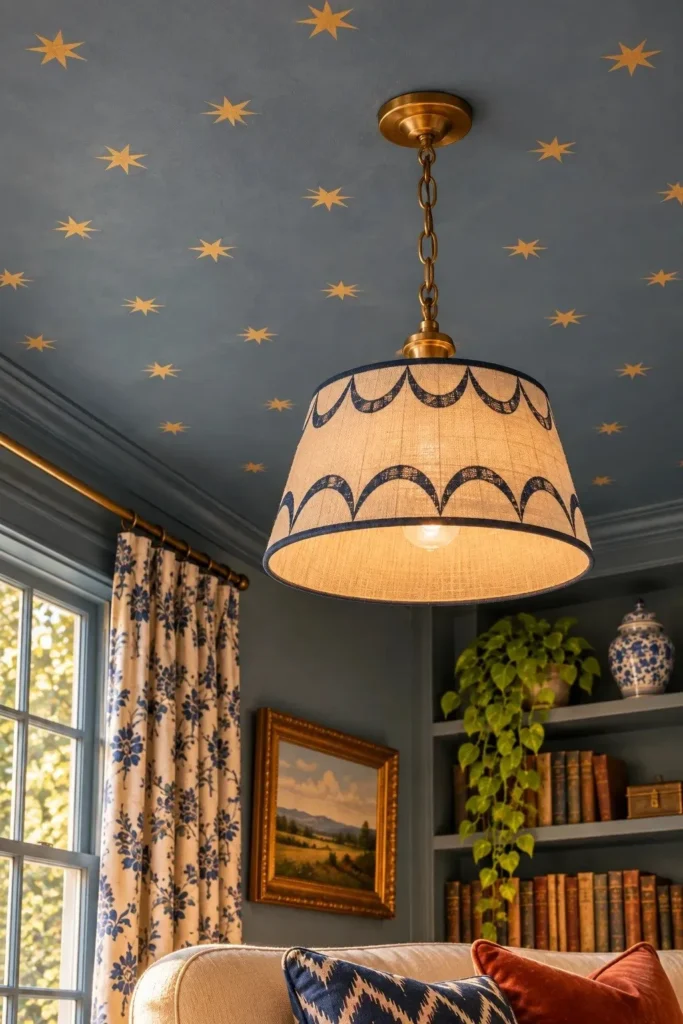
BEFORE
A scallop print pendant hangs against a plain white ceiling. From the sofa, the blue curves on the shade are the only pattern in the upper half of the room.
AFTER
Small ochre stars spread across a dusty blue ceiling behind the pendant. Their sharp points stand apart from the rounded scallops, and the wide gaps between stars give each shape room to show.
Stencil a few stars on a piece of blue poster board before choosing their size and spacing. Have someone hold it near the ceiling while you sit in your usual spot. At that distance, you should still be able to pick out the points of each star.
Wave Print Magazine Files

- Turn three plain magazine files into one rolling wave by lining up their tall spines and tracing them side by side on the back of wave print paper.
- Number the traced shapes from left to right before cutting. Leave a small margin around each shape to fold over the file edges.
- Wrap each spine with its paper piece, then stand the files together to check where the wave meets at each seam before gluing.
- Cover a fourth file in a narrow stripe that picks up the wave color. Set it at the end of the row for loose issues you’re still reading.
Put a small number inside each wave file so you can return it to the right spot after pulling out a magazine. The striped file can move freely between the shelf and your reading chair, while the three behind it still make a complete picture.
Suzani Tapestry Pairings
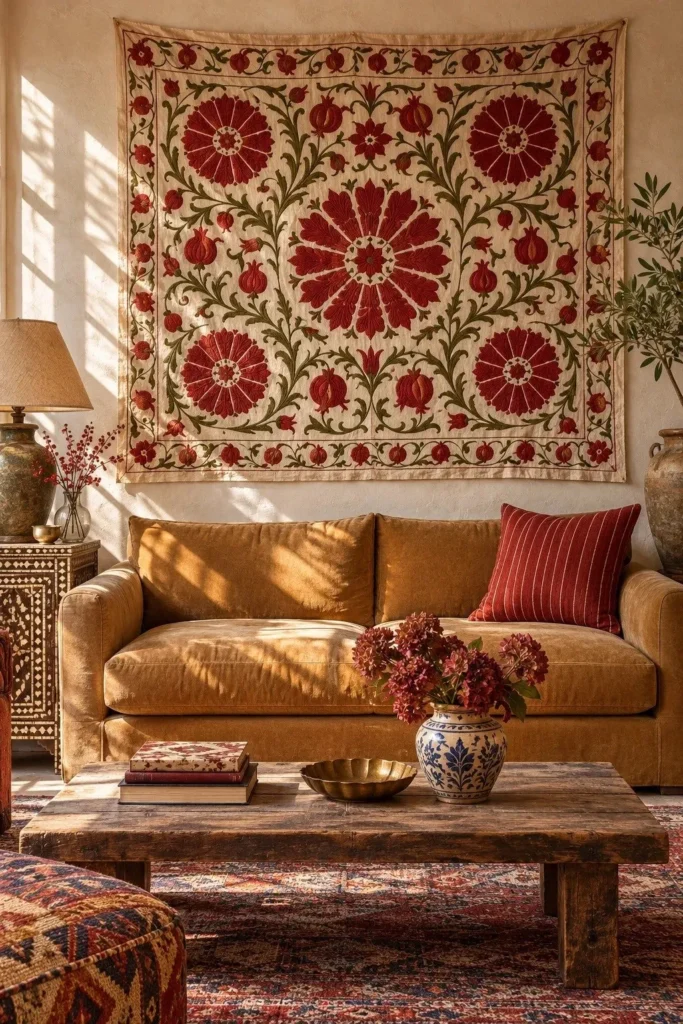
| Design choice | Pinstriped Cushion | Leaf Print Cushion |
|---|---|---|
| Detail to borrow | Pick up the red ring around an embroidered rosette. | Echo the olive stems that curl between the flowers. |
| Pattern scale | Choose fine stripes that read as one band of color from the doorway. | Choose leaves about the length of your palm so their shapes stay visible. |
| Placement | Center a long lumbar cushion beneath the largest rosette. | Place a square cushion at one sofa arm, beneath a trailing stem. |
Spread the suzani across the sofa back before deciding which cushion to use. Embroidery catches light differently from printed cotton, so carry the cushion from one end of the cloth to the other. Look for a thread color that still feels related to the print on the shaded side.
Wallpapered Door Panels
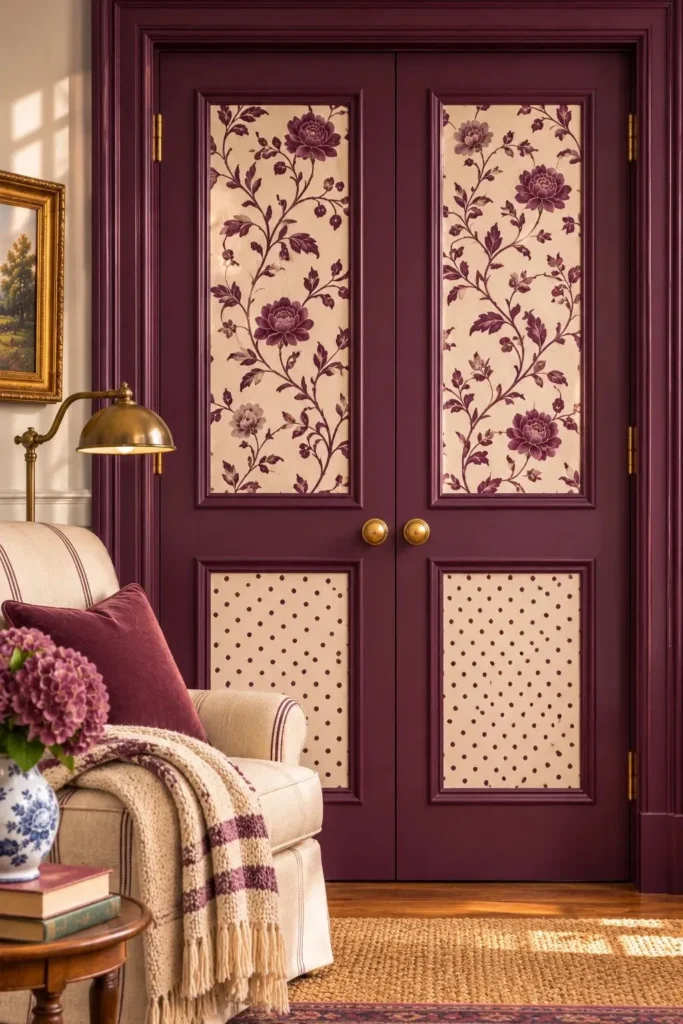
DO
- Give a painted door a pattern you can enjoy even when it stands open.
- Place the climbing vine in the taller upper panels, where you can see a full turn of the stem.
- Use a small dot below the middle rail so the lower panels need little pattern matching.
DON’T
- Let the wallpaper overlap the beveled molding, where the edges can lift.
- Assume the left and right recesses are identical. Measure each one before cutting.
- Cut both vine panels without checking which way the leaves point when the doors close.
Tape paper samples inside neighboring panels and swing the doors open. From the sofa, you might see one upper panel beside a curtain or directly behind a lamp. Choose the vine placement from that angle, especially if the doors spend most of the day open.
Vintage Tea Tin Display
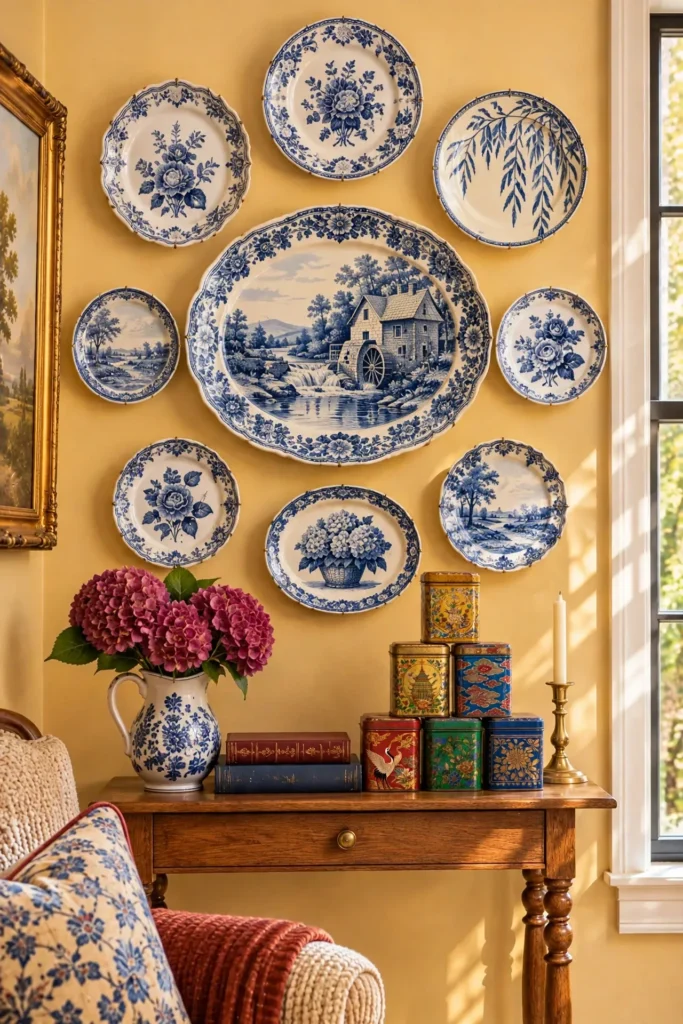
Best starting piece: A poppy print tea tin supplies the red for a tartan tin and the leaf green for a third.
Useful mix: Choose one tall rectangle, one cylinder, and one low tin so their designs show at different heights.
Hidden storage: A wide tin with a loose-fitting lid keeps coasters within reach.
Set the tallest tin at the back of the table and turn the tartan one until a red band faces the chair. Give the coaster tin the front spot. You should be able to lift its lid and reach what you need without moving the other two.
Indigo Resist Print Pillows
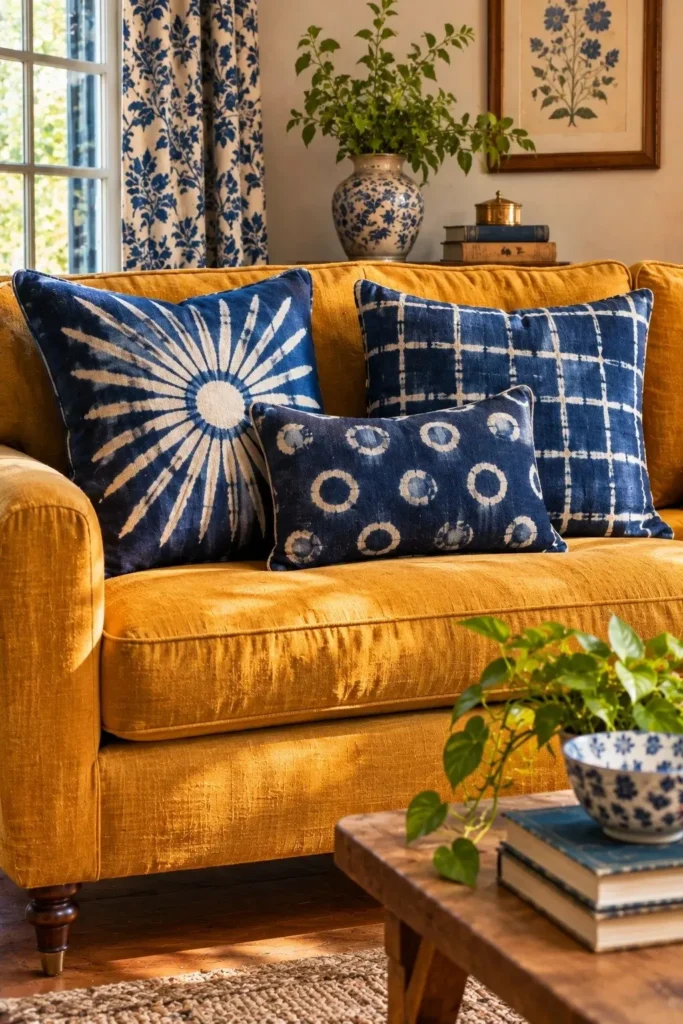
Three indigo pillows can look surprisingly different on the same sofa. Choose one with a white sunburst that reaches nearly to its seams, then add a broken grid and a scattering of small rings. The uneven edges of the dyed shapes tie the prints together even when their sizes differ.
On a long sofa, place the sunburst at one end and the pale grid at the other. Move the ring print between them until each motif has a clear outline. For a maximalist living room with a bright sofa, leave a cushion’s width of upholstery showing between the groups.
Conclusion
A maximalist living room can begin with the one print you’d miss if you packed it away. Let that favorite guide your next choice. Pull a color from an old quilt, echo it in a cushion, and leave enough of each pattern showing to enjoy the details that caught your eye.
Save this post on Pinterest so you can find your favorite pairings the next time you’re choosing fabric or browsing a thrift shop. Share it with a friend who has a bold piece they’ve never quite known how to use. Then pick one idea and try it in your favorite corner today.
If your room leans moody, these dark boho living room ideas how to layer deep color and bold pattern without losing warmth.
For a softer, lived-in take, these modern rustic living room ideas pair natural textures with the same fearless print mixing.