Contemporary Coastal Living Room: 32 Dreamy Updates
Soft blue cushions, sunlit linen, and a clear spot to set down your coffee can make home feel a little calmer. A contemporary coastal living room brings these everyday comforts together with simple shapes and natural textures.
Maybe your sofa still works, but the room feels flat. Perhaps clutter keeps gathering on the coffee table, or your furniture leaves an awkward path to the window. The answer could be a better layout, softer lighting, or a few carefully chosen materials.
These 32 updates range from fresh cushion covers to storage benches and thoughtfully arranged seating. You will find practical details to help you work with existing furniture, avoid awkward purchases, and choose a starting point that suits your budget. Pick the change your room needs most, then build from there.
Warm White Walls

A softer white keeps coastal rooms bright without making them feel stark. For a contemporary coastal living room, choose a warm white that complements your existing flooring. Compare two or three sample boards beside the sofa, since nearby wood, upholstery, and daylight can change how the color appears.
Check the samples again after sunset with your usual lamps switched on. A shade that looks creamy at noon may turn noticeably yellow at night. Pair the final choice with sandy upholstery and a few charcoal accents to give the pale room definition without losing its calm.
Pale Oak Coffee Table

- Does your seating area feel a little cold? Choose a pale oak coffee table with visible grain and a matte finish to introduce warmth.
- Aim for a tabletop around the height of your sofa cushions. Measure the seat before shopping so the table stays comfortable to reach.
- Mark the table’s footprint with painter’s tape before buying. Check that everyone can sit down and walk around it comfortably.
- Group a ceramic bowl and your remote controls on one small tray. Leave the remaining surface available for drinks, books, or an evening board game.
Pale oak works especially well beside white upholstery and dusty blue textiles because its grain adds detail without a busy pattern. Keep surrounding wood finishes in a similar undertone, even if they vary in depth. If your flooring is already very light, choose a slightly deeper oak for contrast.
Linen Curtain Panels
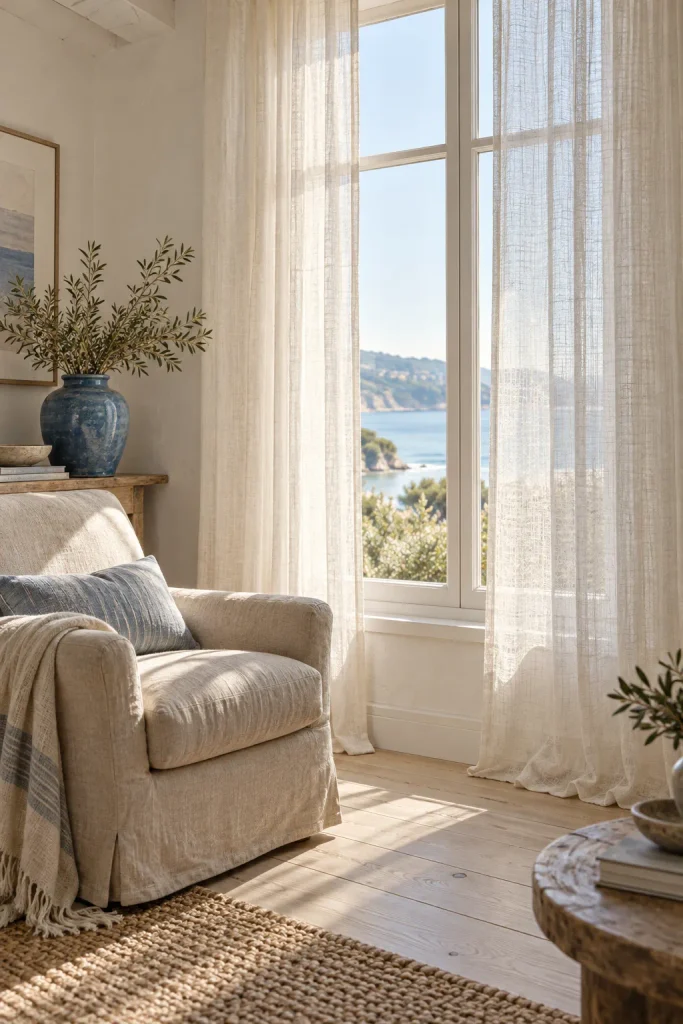
Quick Tip:
Give a small window more presence by extending the curtain rod beyond both sides of its frame. Make sure the panels can gather mostly clear of the glass when open, and choose a hem that just meets the floor.
Sheer linen softens the window outline while letting daylight filter through its loose weave. For a fuller look, check the curtain maker’s width guidance rather than buying panels that barely cover the glass. These airy layers offer limited privacy after dark, so pair them with a separate blind.
Muted Blue Cushions
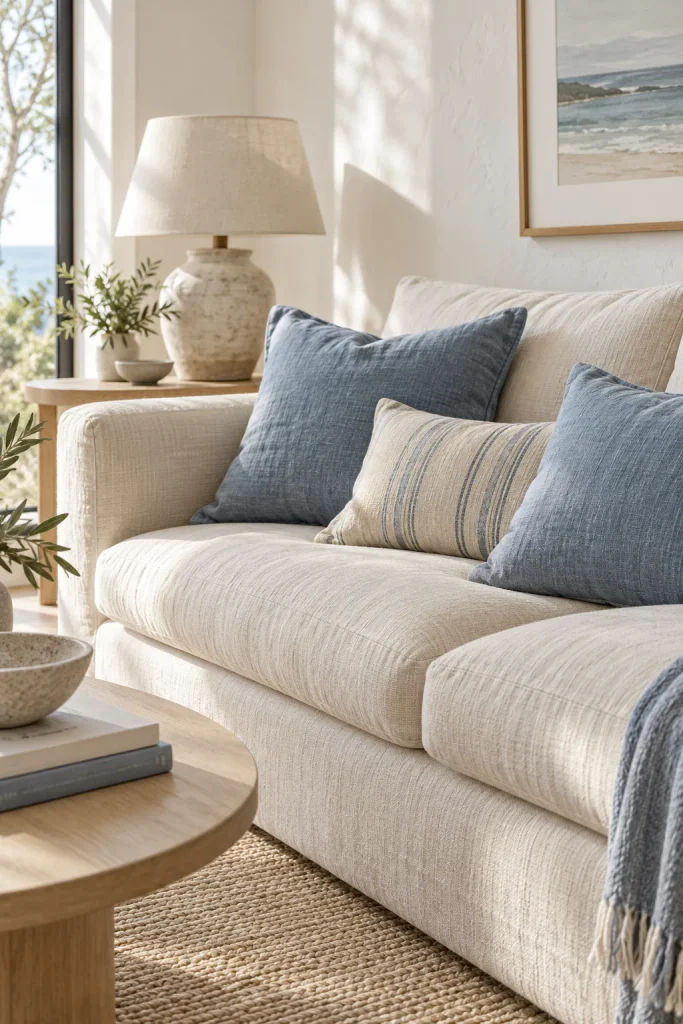
BEFORE:
Too much matching beige can make a comfortable sofa fade into the background. Several identical cushions add bulk but little contrast against pale walls.
AFTER:
Two dusty blue cushions introduce a gentle color shift against the neutral upholstery. A smaller oatmeal cushion with a fine stripe connects the new color to the rest of the room.
Start with cushion covers instead of replacing perfectly usable inserts. Choose one plain linen cover and one subtle woven texture, keeping both blues close in depth. Spread them across the sofa rather than crowding one corner. The result feels relaxed, with enough empty seat space for everyday lounging.
Oversized Coastal Artwork

- Let one oversized seascape give a blank wall a clear purpose. Choose an abstract shoreline in chalk, sand, and muted blue.
- Cut a paper template to the artwork’s full framed dimensions. Tape it above the sofa to check the scale before buying.
- Center the template over the sofa rather than the entire wall. Leave a visible gap above the sofa back so the frame does not look cramped.
- Choose a slim oak or white frame. Keep nearby accessories low so they do not compete with the artwork.
An abstract horizon suggests the coast without relying on anchors, shells, or beach lettering. Repeat one color from the artwork in a cushion or vase to connect it with the seating area. If the painting has strong movement, keep nearby fabrics mostly plain so the room still feels restful.
Woven Area Rug
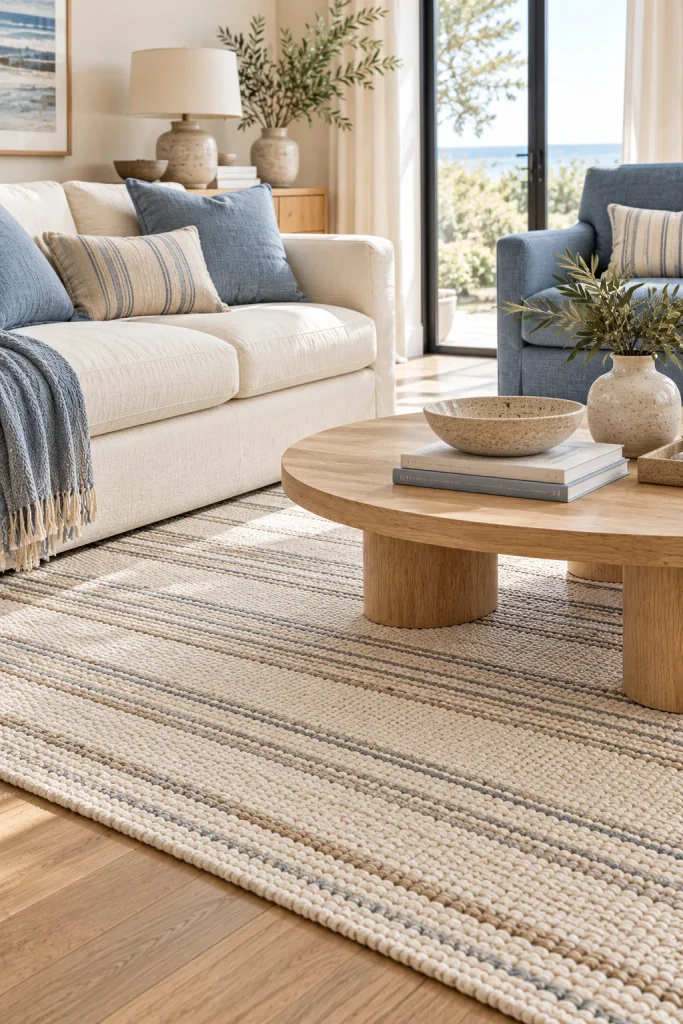
| Detail | Plain Woven Rug | Subtly Striped Rug |
| Visual effect | Lets the weave provide quiet detail | Introduces gentle lines beneath simple furniture |
| Best pairing | Patterned cushions or expressive artwork | Plain upholstery and minimal accessories |
| Coastal palette | Oatmeal, ivory, or sandy beige | An ivory base with thin sand or faded blue stripes |
| Styling approach | Mix cushion textures for variety | Repeat one stripe color in a small accessory |
The right rug makes separate furniture pieces feel like one seating area. Tape out its dimensions first, aiming to rest the sofa’s front legs and nearby chair legs on the surface. Keep the pattern quiet if your cushions already have stripes, and add an underlay suited to your flooring.
Ceramic Table Lamp
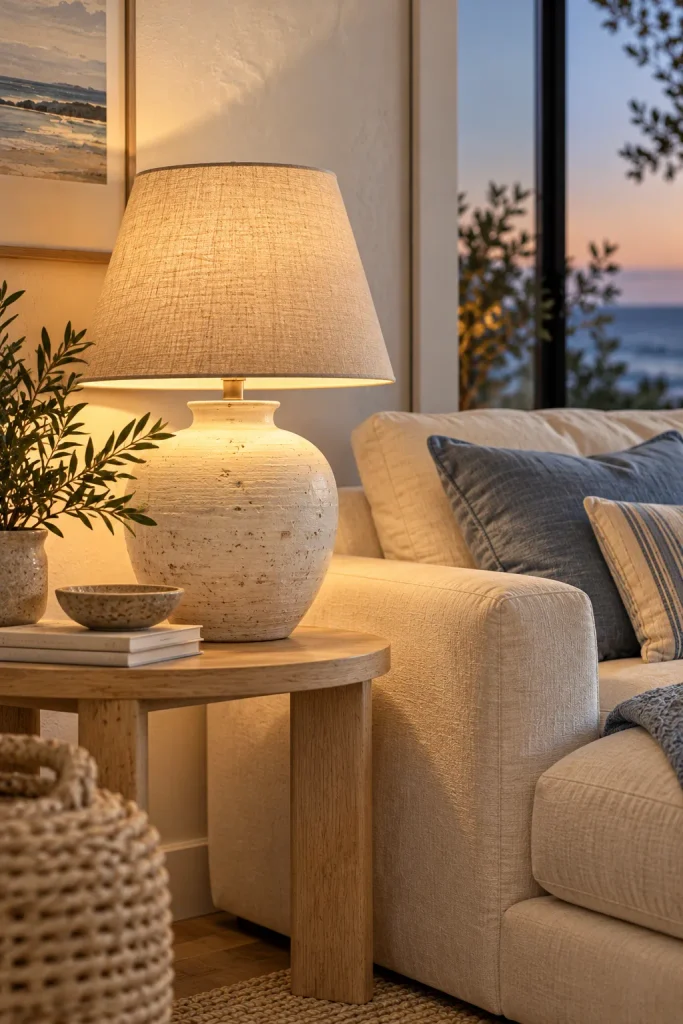
DO:
- Soften evening glare with a linen shade that fully covers the bulb.
- Check the lamp from your usual seated position so the bulb stays out of direct view.
- Choose a base with enough weight to sit securely on your side table.
DON’T:
- Do not let the shade project into a narrow walkway.
- Do not crowd the base with tall ornaments or stacks of books.
- Do not mix sharply different bulb colors in the same seating area.
A rounded ceramic base adds shape to a room filled with straight furniture edges. Choose chalk white for a quiet look or muted sea green for a little color. Before buying, measure the shade as well as the base, since the widest part determines how much space the lamp needs.
Glass Vase Branches

sual Effect: Airy greenery without a crowded tabletop.
Materials: A stable glass vase and three leafy stems.
Skill Level: Beginner.
Best For: Consoles, sideboards, and unused corners.
Three uneven stems often look more natural than a tightly packed bunch. Cut them to different heights and turn the fullest branch toward the room, leaving open space around the leaves. For fresh stems, keep foliage above the waterline and refresh the water when it starts to look cloudy.
Curved Accent Chair

Could one rounded chair soften all those straight lines? A curved accent chair balances a boxy sofa, rectangular windows, and angular tables without adding more decoration. Choose a muted sea green or sandy fabric, then angle the seat toward the sofa so it becomes part of the conversation.
Check both seat depth and back support before buying, especially if the chair will double as a reading spot. A sculptural shape should still feel comfortable after more than a quick sit. For smaller rooms, a chair on exposed legs leaves more of the floor visible around the seating.
Cane Media Console
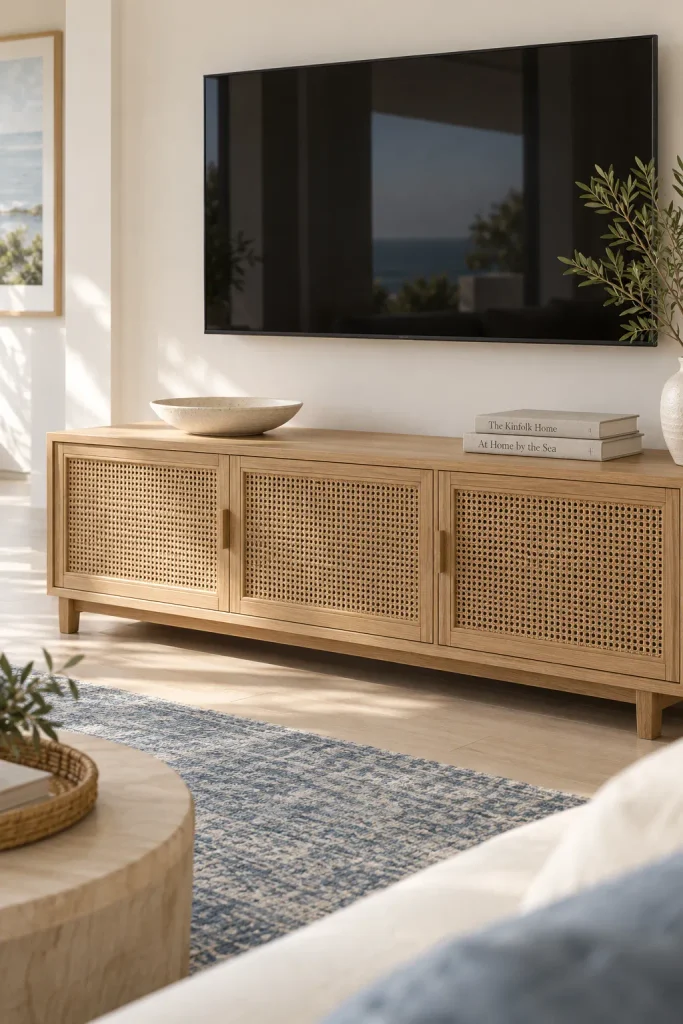
- A large black screen does not have to dominate the room. Choose a low oak media console with cane doors to introduce a lighter texture beneath it.
- Measure your equipment before choosing compartments. Leave the ventilation clearance specified by each device’s manufacturer.
- Look for rear cable openings and adjustable shelves. Group loose leads behind the cabinet so they stay off the floor.
- Check whether remotes work with the doors closed. Cane panels vary in openness, so do not assume every signal will pass through.
Keep the console top mostly clear so the woven fronts remain the main detail. A shallow ceramic dish can hold remotes, while one short stack of books adds height without blocking the screen. Repeat the cane texture just once elsewhere, perhaps in a basket, to avoid making the room feel overly themed.
Arched Wall Mirror

Quick Tip:
Before hanging an arched mirror, check what it will reflect from the sofa and the doorway. Shift its position until it frames daylight, greenery, or a calm section of the room rather than a cluttered shelf.
The arch breaks up the straight edges of windows and shelving without adding another pattern. A slim frame keeps the shape light, especially above a narrow console. Mirrors also repeat whatever sits opposite them, so clearing that sightline can matter more than choosing a larger or more expensive piece.
Pale Blue Ceiling

BEFORE:
Even with blue cushions and pale wood, the room still feels unfinished above eye level. A stark white ceiling stands apart from the softer palette below.
AFTER:
A barely blue ceiling carries a hint of sky across the room. Warm white walls and simple furnishings keep the overhead color gentle enough to suit everyday living.
Test a painted sample board overhead before committing, because ceiling color can look different from the same shade held vertically. Check it in daylight and under your evening lamps. Choose a muted blue with a touch of gray, and keep the finish matte to limit reflections from ceiling fixtures.
Open Shelf Styling
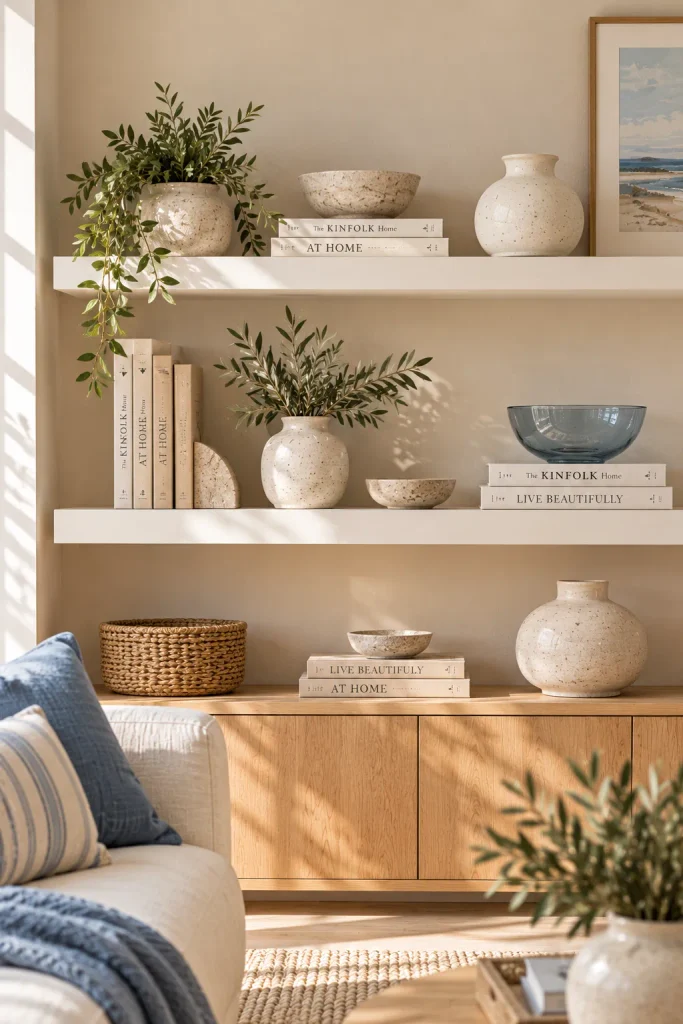
- Are your shelves starting to look like storage overflow? Remove everything from one shelf and set aside items you no longer want on display.
- Place your tallest object first, leaving clearance above it. Add a shorter piece nearby to vary the outline.
- Stand a few books upright and lay another small group flat. Place a low bowl beside the books instead of filling the whole shelf.
- Leave a visible gap between each small grouping. Step back to the sofa and remove any item that makes the arrangement feel crowded.
In a contemporary coastal living room, open shelving works best when everyday objects share a simple palette. White pottery, sandy book covers, and a little blue glass can sit together without looking identical. Keep frequently used pieces within easy reach, and leave enough space to lift them out without rearranging the display.
Sofa Slipcovers

| Detail | Loose Slipcover | Tailored Slipcover |
| Fit | Drapes with visible folds and a softer outline | Follows the sofa’s shape more closely |
| Visual effect | Casual, with relaxed fabric movement | Neater, with more defined upholstery lines |
| Check before buying | Ties, tucks, or straps that help hold it in place | Compatibility with the arm shape and cushion dimensions |
| Styling partner | A simple throw and lightly textured cushions | A few soft cushions to balance the structured fit |
A fresh cover can update a sound sofa without replacing the frame. Measure the arms, back, and cushions, then confirm the cover suits that exact shape. Check the care label before assuming it is machine washable, and follow its drying instructions so the fabric still fits after cleaning.
Lidded Storage Baskets
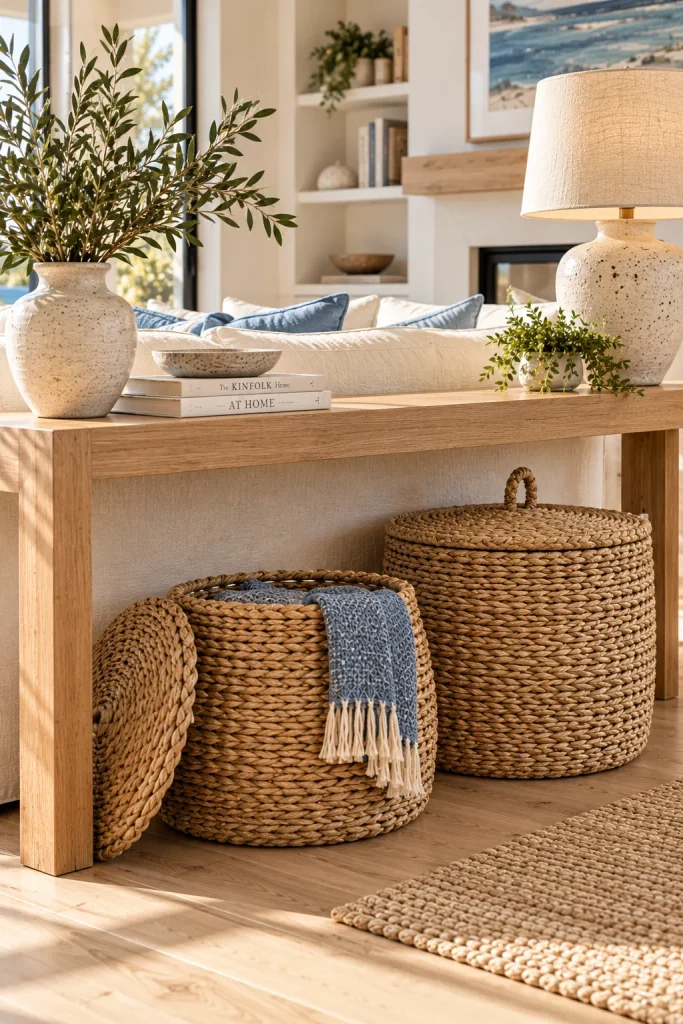
DO:
- Give scattered throws a proper home in a lidded basket beside the seating.
- Measure the opening beneath your console, including enough clearance to lift the lid or slide the basket out.
- Choose a smooth fabric liner for baskets that will hold delicate textiles.
DON’T:
- Do not buy several baskets before deciding what each one will store.
- Do not overfill them until the lids sit crookedly.
- Do not leave baskets where they narrow the main walking route.
Closed storage gives busy rooms a calmer backdrop while keeping daily essentials nearby. Assign one basket to throws and another to magazines or small games, rather than mixing everything together. For a shared family room, a discreet label inside each lid makes it easier for everyone to put things back.
Lightweight Cotton Throw
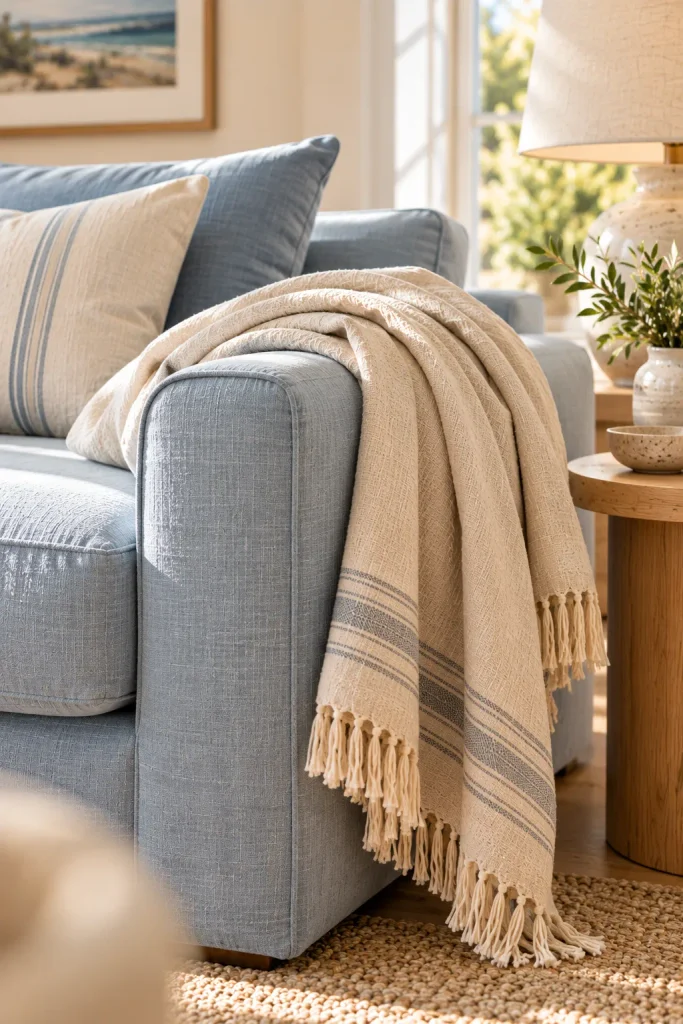
Texture: Light, flexible cotton with a subtle weave.
Placement: Across one sofa arm or the end of a chaise.
Color: Sand, chalk, or faded blue.
Best For: Softening plain upholstery without adding more cushions.
A single loose fold can make a tidy sofa feel more welcoming. Spread the throw lengthwise, fold it once, and drape it over one arm so some upholstery stays visible. Keep the fabric clear of the floor, especially beside a busy walkway where it could collect dust or get caught.
Conversation Seating Layout
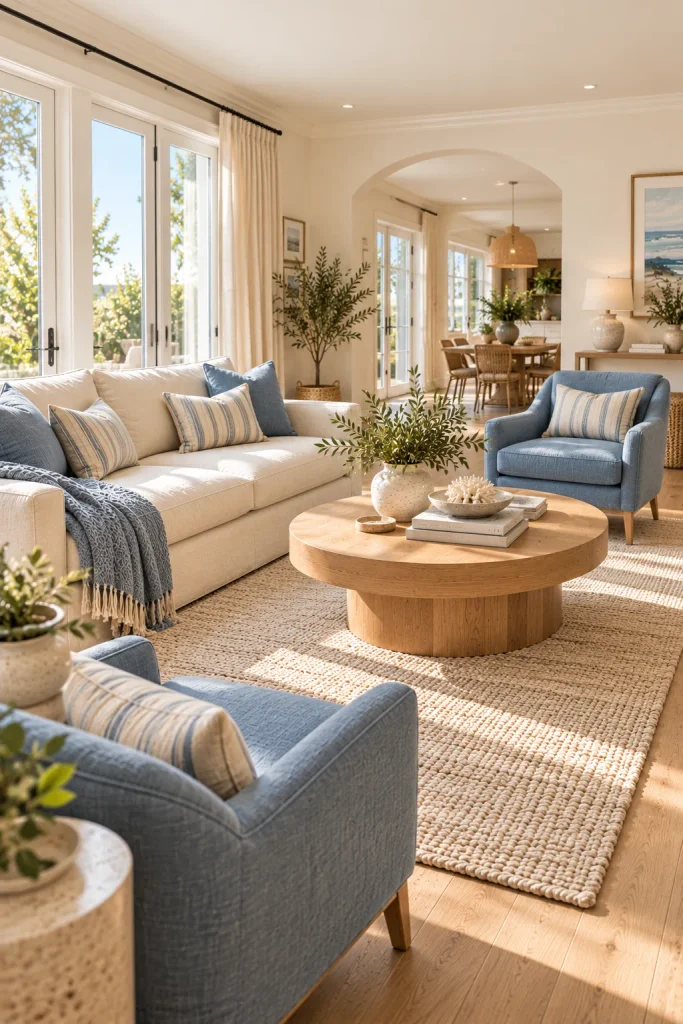
Does everyone have to turn sideways to talk? A small seating adjustment can make the room feel more sociable. Angle an armchair toward the sofa rather than pointing every seat at the television, and bring the pieces close enough for easy conversation across the coffee table.
Walk through the arrangement before deciding it is finished. Check the route from the doorway to the window, then sit in each seat to test access to a table. In a narrow room, one movable accent chair may work better than squeezing in a matching pair.
Paper Lantern Pendant
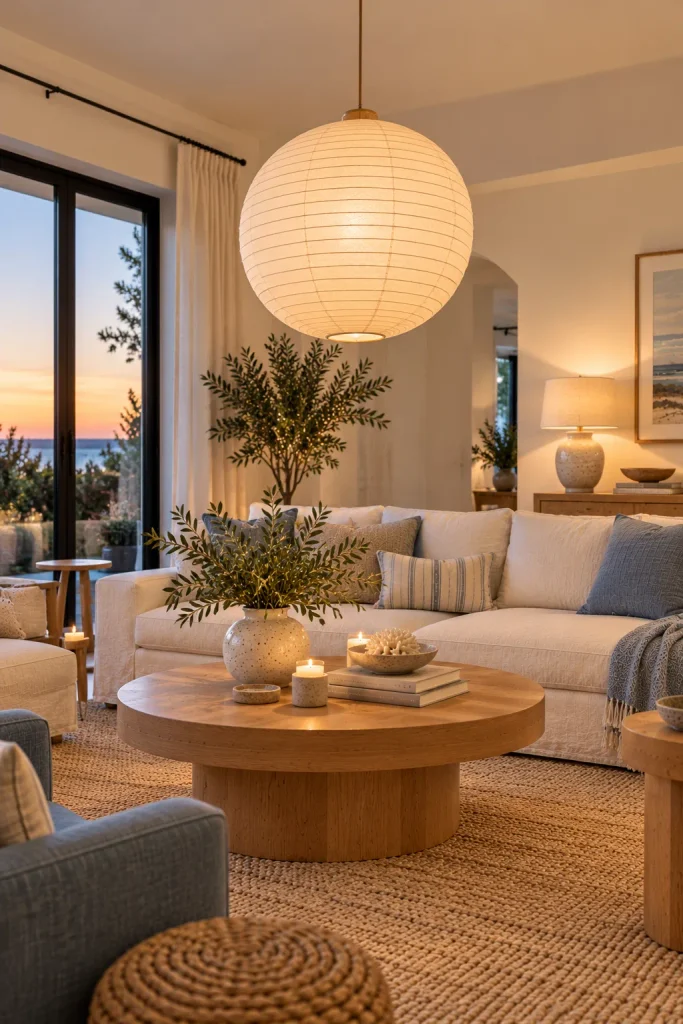
- An airy paper globe gives the seating area a focal point without adding a heavy-looking fixture. Choose ivory or warm white to keep the palette soft.
- Measure the lantern’s full diameter before ordering. Check that it suits the coffee table and does not crowd nearby shelves or ceiling beams.
- Check the proposed hanging position from the sofa and doorway. Keep the shade above the table, clear of standing heads and the main walking route.
- Match the bulb to the fitting’s specifications. For dimming, check that the bulb and dimmer are compatible.
The rounded shade adds a sculptural shape while its pale surface keeps the ceiling visually light. Let it be the main overhead feature, with smaller lamps providing light closer to the seats. Paper can show dents and dust, so place it where it is easy to reach for gentle cleaning.
Stone Side Table
Quick Tip:
Make your favorite seat more comfortable by placing a side table beside the chair’s front arm, within easy reach. Choose a top around arm height, then test the reach while seated before settling on its position.
Stone adds a quiet contrast to woven fabrics and pale wood, especially when the surface has subtle markings. Keep the tabletop simple so those details remain visible. If you choose natural stone, follow the supplier’s care instructions and use a coaster, since some finishes can mark from spills.
Slim Black Accents
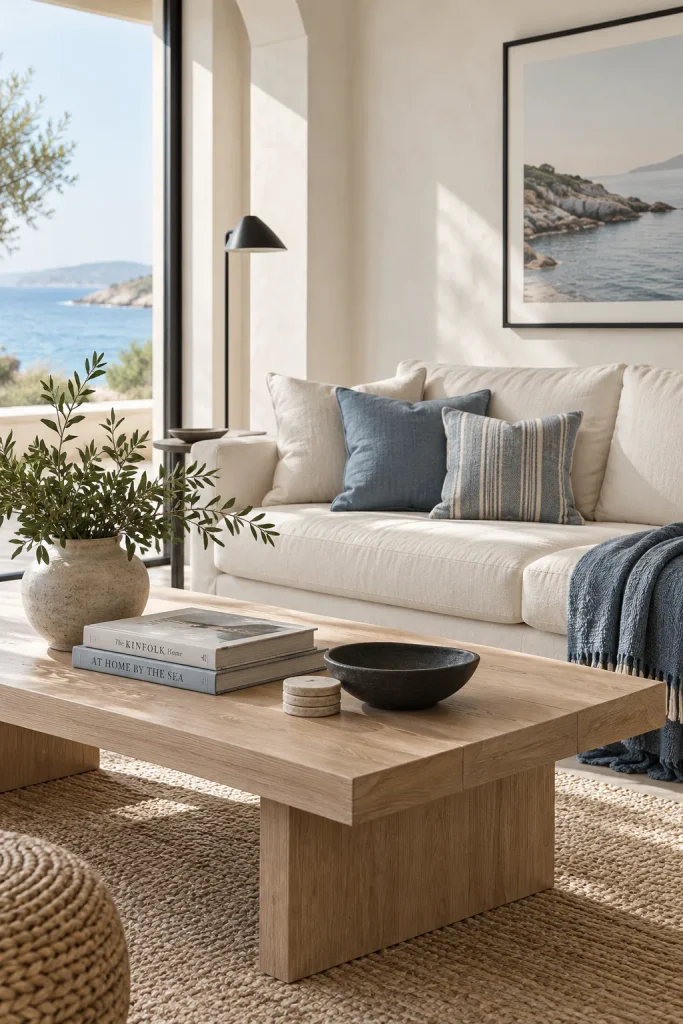
BEFORE:
Pale furniture can blur together when every edge is the same tone. The room feels airy, but the artwork, lighting, and seating lack clear definition.
AFTER:
A slender black frame gives the artwork a sharper outline, while a dark lamp stem repeats the contrast nearby. Small charcoal details help the light upholstery stand out without changing the room’s overall palette.
Start with two or three small dark details, spaced across the seating area. Choose thin profiles and matte finishes so the accents feel restrained. Before adding more, take a photo from the doorway; a quick glance at the image can reveal whether one corner carries too much visual weight.
Window Reading Nook
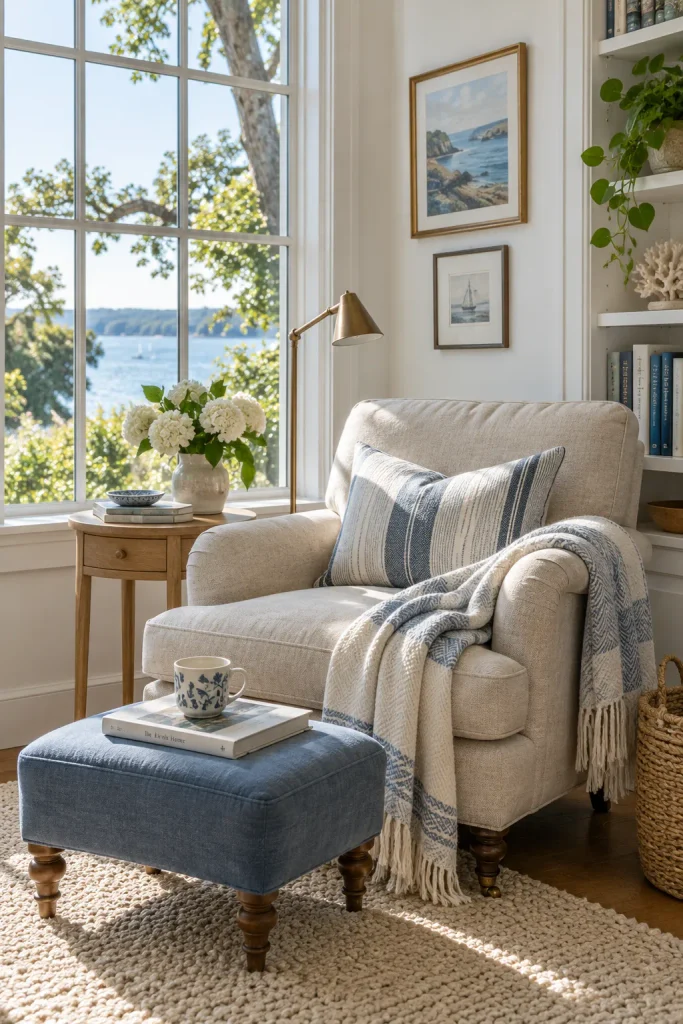
- Could that unused window corner become your favorite seat? Place a comfortable chair where daylight falls from one side rather than directly into your eyes.
- Add a narrow table within easy reach for a book and cup. Check that it leaves room to open curtains or blinds.
- Position an adjustable reading lamp beside or slightly behind your shoulder. Test the light on an open book while seated.
- Include a small footstool only if it fits outside the walking route. Choose one you can tuck close to the chair when finished reading.
A reading nook earns its place when it supports an ordinary daily habit, whether that is ten quiet minutes or a longer weekend read. Keep just the current book nearby, with extras on a shelf. In a shared living room, angle the chair slightly inward so the corner still feels connected.
Low Wood Paneling

| Detail | Natural Oak Panels | Painted Panels |
| Appearance | Visible grain and natural color variation | A more uniform surface with defined board lines |
| Coastal palette | Pale oak with ivory walls above | Warm white, soft blue, or pale sage |
| Best pairing | Simple upholstery and restrained patterns | Rooms that already contain several wood finishes |
| Check before choosing | A finish sample beside the flooring | A paint sample beside existing trim |
A little paneling can give a plain room architectural detail without covering every wall. Mark the proposed top edge with painter’s tape, then check how it meets outlets, window trim, and the sofa back. Keep the cap simple, and choose a height that works with those existing features.
Upholstered Ottoman

DO:
- Give tired feet a softer landing with a firm upholstered ottoman near the sofa.
- Choose a height close to the sofa seat and test whether the distance feels comfortable.
- Use a rigid tray with a stable base when the ottoman doubles as a coffee table.
DON’T:
- Do not balance drinks directly on a soft or tufted surface.
- Do not buy an oversized piece that leaves too little room to walk around it.
- Do not use it as extra seating unless the manufacturer rates it for that purpose.
An ottoman softens the center of a room dominated by hard tables and straight furniture edges. A tightly woven fabric gives the shape definition while still looking relaxed. If you often put your feet up, keep the tray small enough to move easily onto a nearby table when you settle in.
Tall Indoor Tree
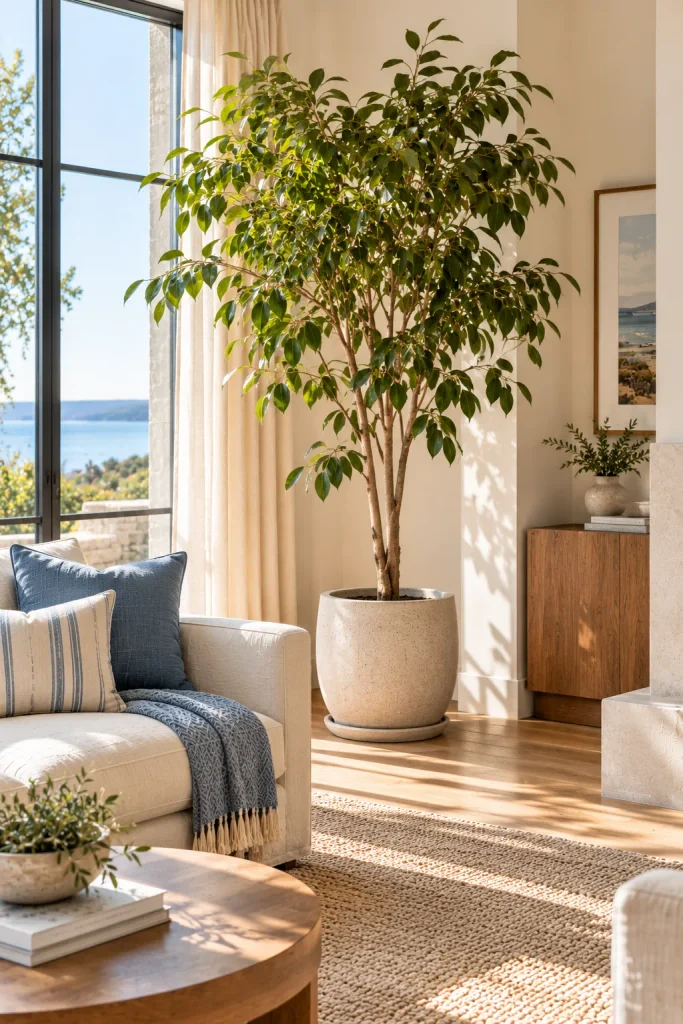
Visual Effect: Leafy height that balances low seating.
Placement: A bright corner that suits the chosen tree’s light needs.
Container: A draining nursery pot inside a decorative planter.
Best For: Rooms with unused floor space near a suitable window.
Empty corners gain a softer outline when leafy branches rise above the furniture. Before buying a tree, note how much direct sun reaches the spot and choose a species suited to it. Leave room for the canopy to grow, and remove collected water from the outer planter after watering.
Minimal Mantel Styling

An uncluttered mantel lets the fireplace shape become part of the decoration. Begin with one taller ceramic piece near an end, then balance it with a lower object on the other side. Leave the middle open so the arrangement feels deliberate instead of becoming another crowded display shelf.
Choose pieces with different silhouettes but a shared sandy or chalky finish. A narrow vase beside a broad bowl creates variety without needing extra color. Check the display from the sofa and remove any small objects that disappear from that distance or distract from the fireplace.
Slatted Room Divider
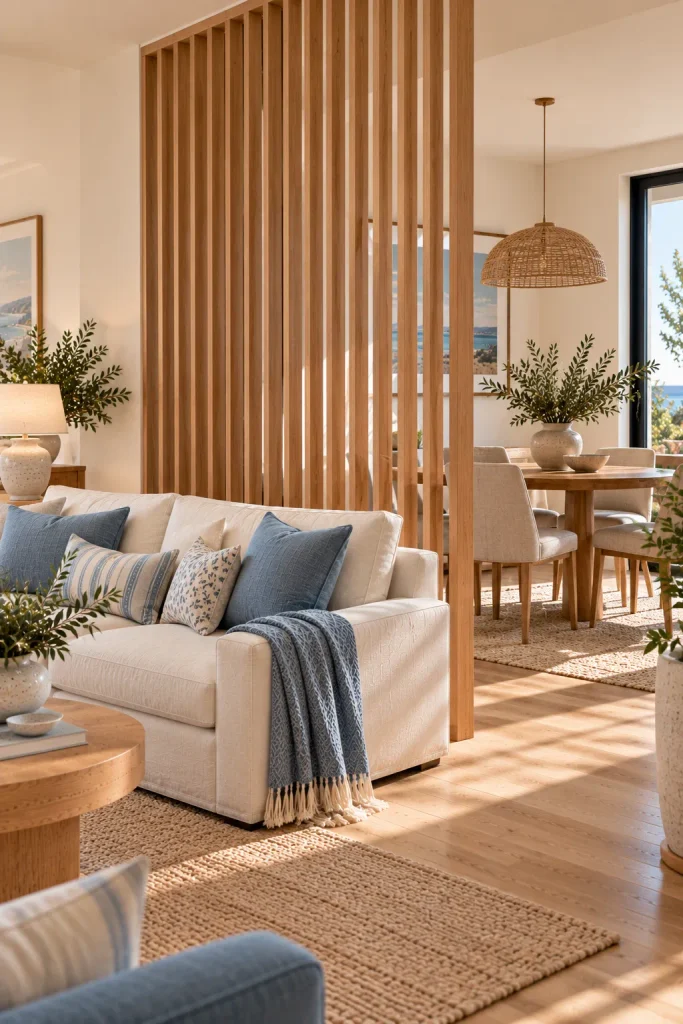
- Need a little separation in an open living area? Use a freestanding oak slat screen to mark the seating zone while leaving glimpses of the room beyond.
- Measure the full footprint, including any feet or supports. Leave enough space to move around the screen without turning sideways.
- Check the view from both sides before choosing its position. The divider should look finished from the living room and the adjoining area.
- Choose a stable design and follow its assembly or anchoring instructions. Avoid balancing a lightweight decorative screen where people regularly brush past it.
The gaps between slats keep the boundary visually lighter than a solid partition, though they offer limited privacy. Position the screen where it defines an edge rather than cutting through the main route. Repeat its wood tone in one nearby piece, and keep surrounding accessories simple to avoid a busy corner.
Woven Wall Hanging

Quick Tip:
Bring softness to a bare wall with a flat woven textile in two or three muted colors. Hang it from a slim dowel or a suitable textile hanging system so its upper edge stays evenly supported.
A textile introduces texture at eye level, which helps balance smooth walls, glass, and wooden furniture. Choose a simple weave if the rug already carries a pattern, and let the hanging sit on its own. Avoid squeezing it among several small frames, where its shape and loose fibers can lose their impact.
Storage Bench Seating
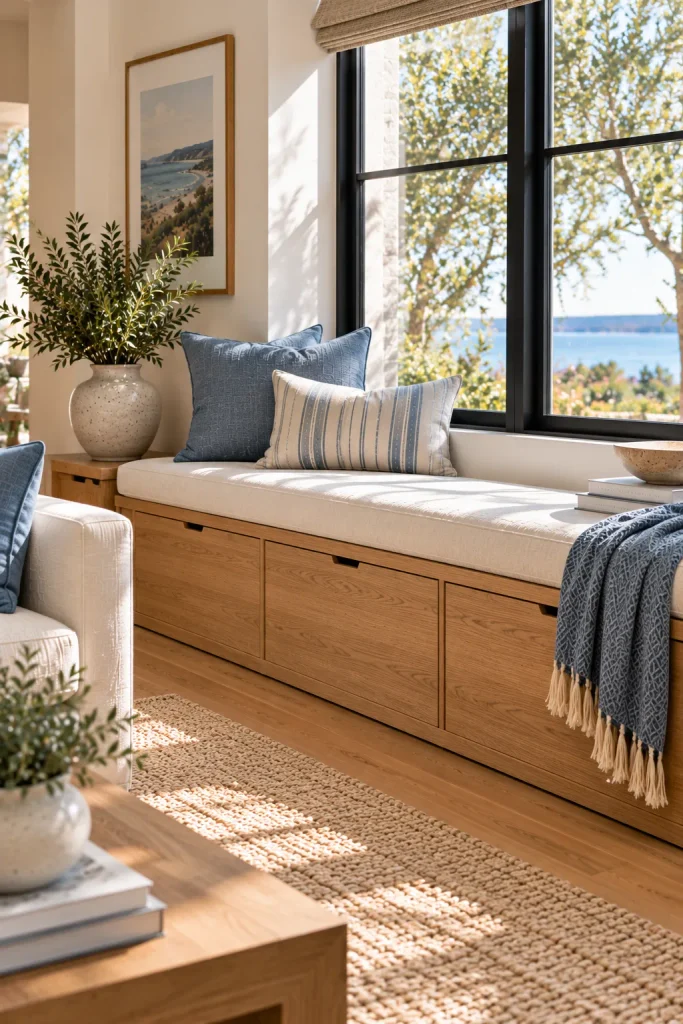
BEFORE:
Extra chairs and loose baskets can swallow the useful space along a wall. Spare cushions have no clear home, and the room still lacks somewhere comfortable for an extra guest.
AFTER:
A cushioned storage bench combines occasional seating with a place for those spare textiles. Flush drawer fronts keep the lower half of the room visually tidy, while blue pillows connect the bench to the main seating area.
Measure the available depth with the drawers fully open, then check the seat height with its cushion in place. A freestanding bench can offer this layout without custom cabinetry, provided it is designed for sitting. Choose a removable cushion cover so occasional spills are easier to deal with.
Mixed Wood Finishes

- Does every wood piece have to match? Keep your main pale oak furniture and introduce one noticeably deeper finish, such as walnut.
- Compare finish samples in the room’s daylight. Look for undertones that sit comfortably together, especially beside the flooring.
- Repeat the deeper wood in one small detail, such as a frame or tray. This gives the darker furniture a connection elsewhere in the room.
- Separate similar wood surfaces with a rug or upholstered piece. Leave enough contrast that the mix looks intentional rather than almost matched.
Mixed finishes give a coastal room more depth than an all-matching furniture set. Keep the darker finish in smaller doses if the goal is a bright room. Start with what you own and judge the room as a whole; a treasured darker piece can provide the contrast a pale scheme needs.
Coastal Gallery Wall

| Detail | Even Grid | Loose Grouping |
| Frame choice | Matching sizes and finishes | Two or three frame sizes in one finish |
| Visual effect | Orderly, with clear horizontal and vertical lines | Relaxed, with a varied outer outline |
| Starting point | Four or six prints of equal size | One larger image with smaller pieces nearby |
| Spacing | Repeat the same gap between every frame | Keep gaps similar despite the different frame sizes |
Small photographs can bring memories of a favorite shoreline into an everyday living room. Choose your own coastal snapshots or a set of art postcards with related colors. Arrange paper templates on the wall first, checking the whole grouping from the sofa before making holes.
Sofa Console Table
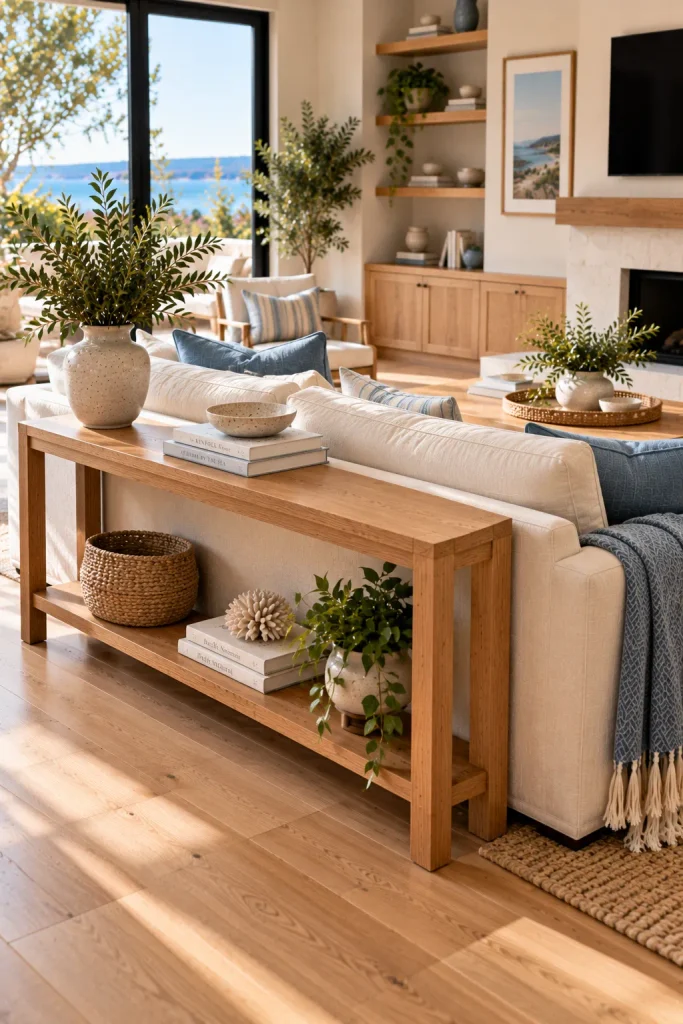
DO:
- Put the space behind a freestanding sofa to work with a narrow console for small everyday essentials.
- Choose a height at or slightly below the sofa back so the table does not dominate the view.
- Measure the remaining walkway with the console in position, including any projecting handles or legs.
DON’T:
- Do not fill the top with tall objects that interrupt conversation across the room.
- Do not run lamp cords through the walking route.
- Do not let the tabletop become permanent overflow for mail and unrelated clutter.
A console gives the back of a sofa a finished appearance, especially when the seating faces into an open room. Keep its styling useful: a small dish for glasses and a short stack of books. Choose a simple base that looks tidy from both the entrance and the neighboring dining area.
Brushed Brass Hardware

Visual Effect: A small touch of warmth against pale wood or painted doors.
Finish: Brushed brass with a soft sheen.
Skill Level: Beginner when replacement hardware fits the existing holes.
Fit Check: Hole spacing, screw length, and door thickness.
A few brass pulls give a plain cabinet a warmer finishing touch. Measure between the centers of the screw holes before choosing replacements, and check the supplied screws against the door thickness. Test one handle first, then repeat the finish on the remaining doors for a consistent, understated update.
Conclusion
Creating a contemporary coastal living room starts with choices that make everyday life feel easier. Softer light, a comfortable seating layout, and a few natural textures can bring warmth and clarity to the space you already have. Choose one update that solves a real frustration before planning a bigger change.
Save this post on Pinterest so your favorite ideas are easy to find, and share it with someone planning a room refresh. Try a cushion swap, clear a crowded surface, or rearrange a chair this week. Start small, keep what feels good, and make this a room you love using.