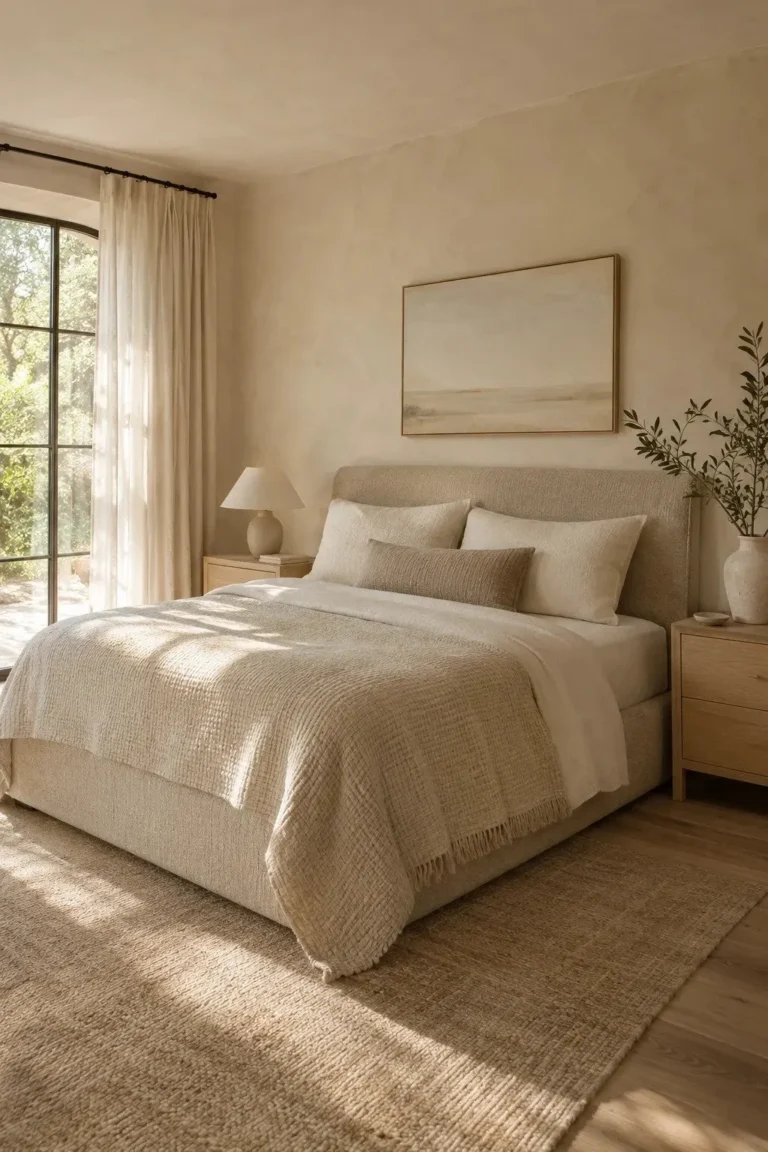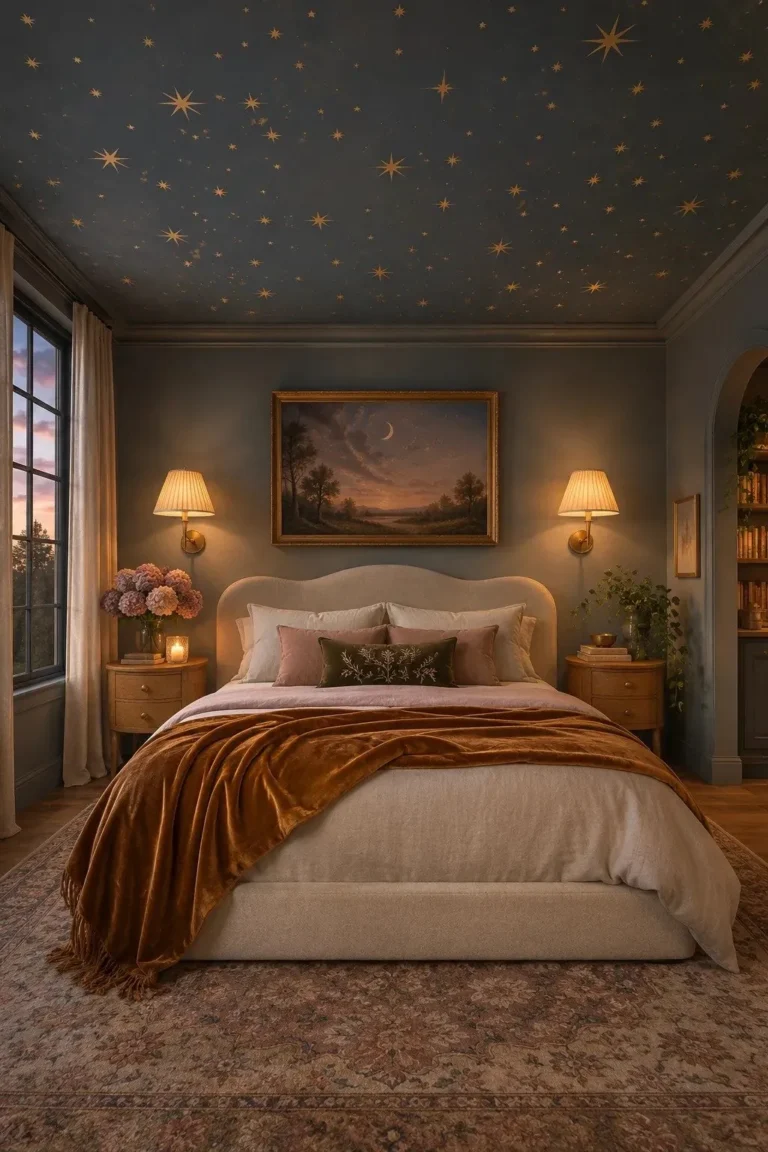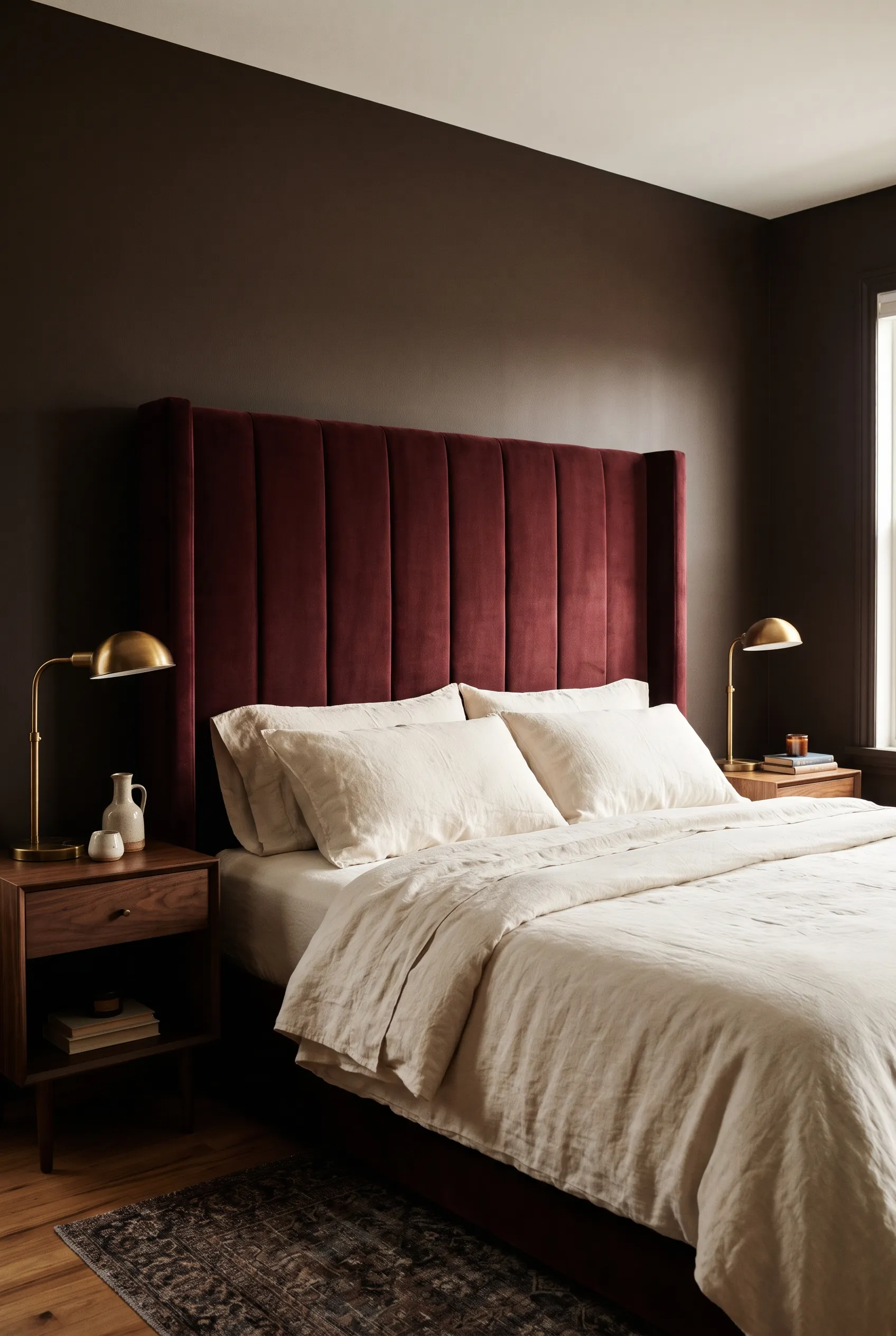
Cozy Moody Bedroom: 32 Cocooning Ideas to Unwind In
Some bedrooms look stylish in photos but feel cold the moment you walk in. A cozy moody bedroom should do the opposite: wrap you in warm color, soft layers, and gentle light without sacrificing comfort.
You do not need a large room or an expensive makeover to get there. A deep olive accent wall can anchor the bed, while textured linen, a vintage rug, and amber bedside lamps bring welcome warmth.
The trick is balancing rich tones with breathable fabrics and enough light for everyday routines. Whether you’re renting, decorating a small room, or refreshing a space that feels unfinished, these 32 ideas offer practical starting points.
Begin with one detail, then build a bedroom that feels calm at the end of a long day.
Deep Olive Walls
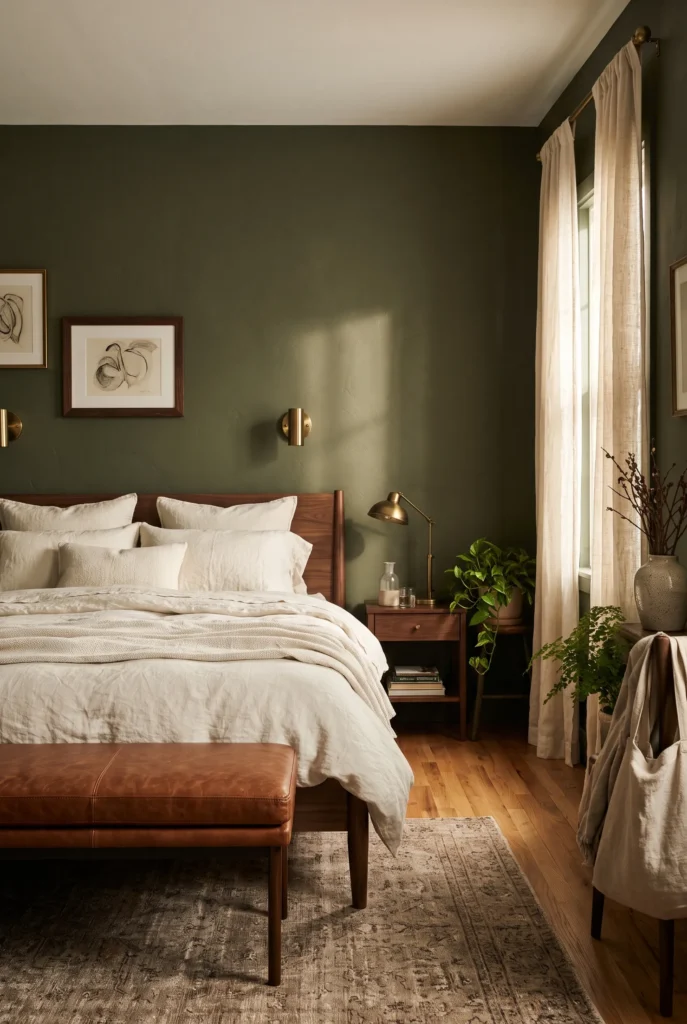
Deep olive walls create a gentle cocoon that makes a bedroom feel sheltered and peaceful. Unlike pure black, this earthy green adds depth while maintaining a welcoming atmosphere. Pair it with a walnut headboard, ivory bedding, and aged brass details to create a cozy moody bedroom that feels rich without becoming overwhelming.
Start with the wall behind your bed if painting the entire room feels intimidating. Test paint samples during daylight and under evening lamps because olive tones can shift dramatically. Warm wooden furniture and soft cream textiles help balance the darker walls, keeping the finished room comfortable rather than gloomy.
Layered Velvet Bedding
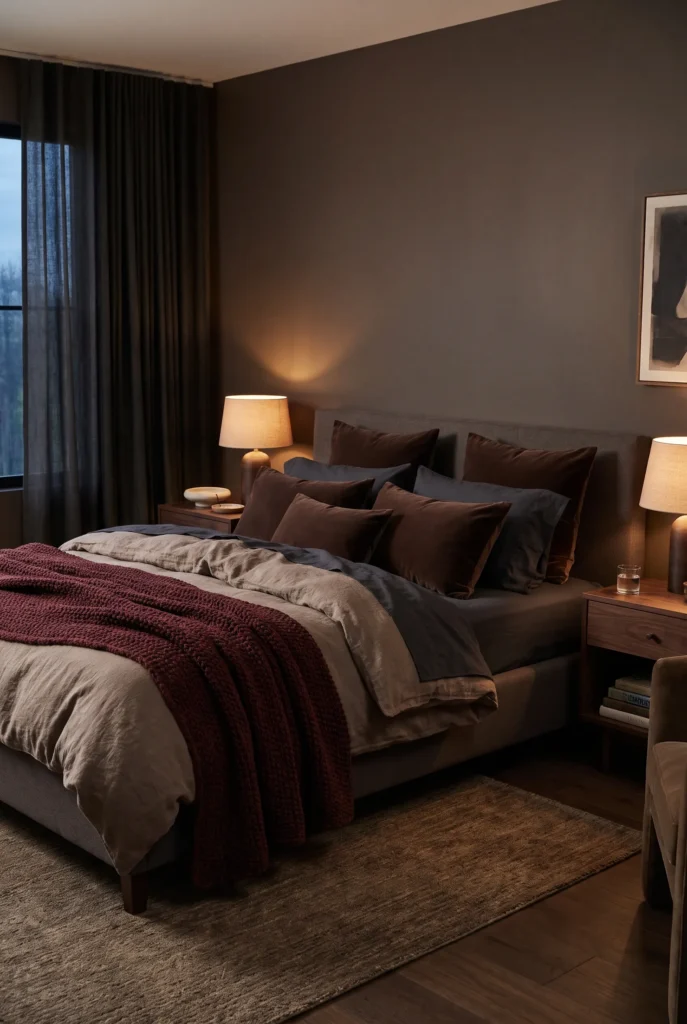
A beautifully layered bed instantly makes a dark bedroom feel warmer and more inviting.
- Start with cotton sheets: Choose charcoal, warm taupe, or muted mocha for a soft foundation that feels comfortable against your skin.
- Introduce velvet pillows: Add two chocolate brown or burgundy velvet cushions to bring richness and subtle light reflection.
- Mix contrasting textures: Combine a relaxed linen duvet with a chunky knitted throw for noticeable depth without extra patterns.
- Keep the layers practical: Fold heavier blankets at the foot of the bed so you can adjust them according to the temperature.
- Limit decorative cushions: Two or three accent pillows create a full appearance without making bedtime inconvenient.
The secret to inviting bedding is texture rather than excessive decoration. Velvet catches warm lamplight, while linen provides a relaxed contrast that prevents the arrangement from appearing overly formal. Choose three coordinating shades and repeat them throughout the bed. The finished look feels luxurious, comfortable, and surprisingly easy to maintain.
Amber Bedside Lighting
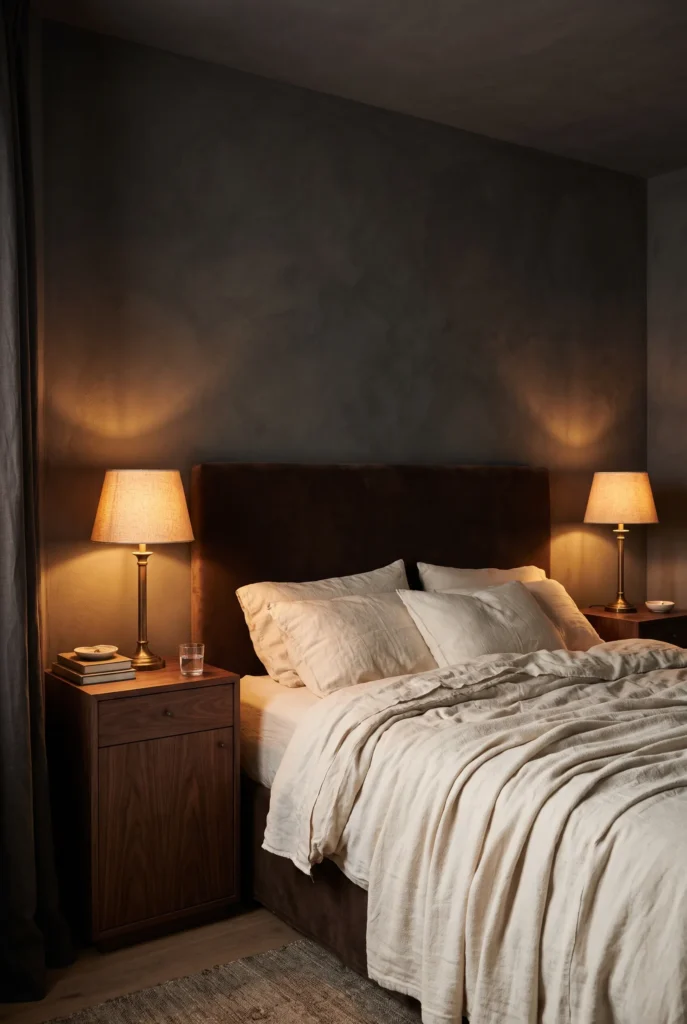
Quick Tip:
Harsh overhead lighting can make even the coziest bedroom feel cold and uninviting. Replace bright white bedside bulbs with warm white bulbs around 2700K, and use dimmers to adjust the brightness before bedtime. Choose fabric lampshades to soften visible glare.
Position bedside lamps slightly below or near eye level when seated against your headboard. This provides comfortable light for reading while allowing darker corners to maintain their depth. For smaller bedrooms, wall mounted sconces free up nightstand space and create a polished, balanced appearance without requiring additional furniture.
Chocolate Brown Accent Wall
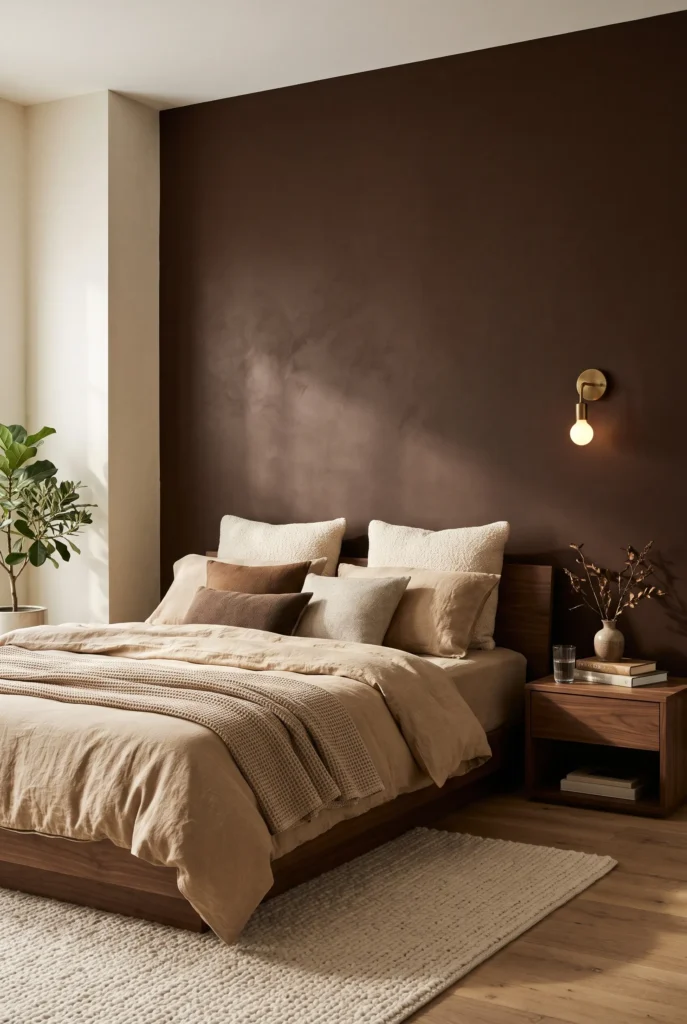
BEFORE:
A plain white wall behind the bed feels disconnected from darker furniture and warm bedding. Even with beautiful accessories, the room lacks a strong focal point and feels visually unfinished.
AFTER:
A rich chocolate brown accent wall creates a grounded backdrop that makes cream bedding and wooden furniture stand out. The darker surface adds warmth and visual depth without making the entire bedroom feel enclosed.
Choose a matte or eggshell finish to reduce glare and keep the color looking soft under bedside lighting. Chocolate brown pairs particularly well with warm ivory, muted caramel, and natural walnut. Paint only the headboard wall in smaller rooms, allowing lighter surrounding walls to maintain an open, comfortable atmosphere.
Floor Length Curtains
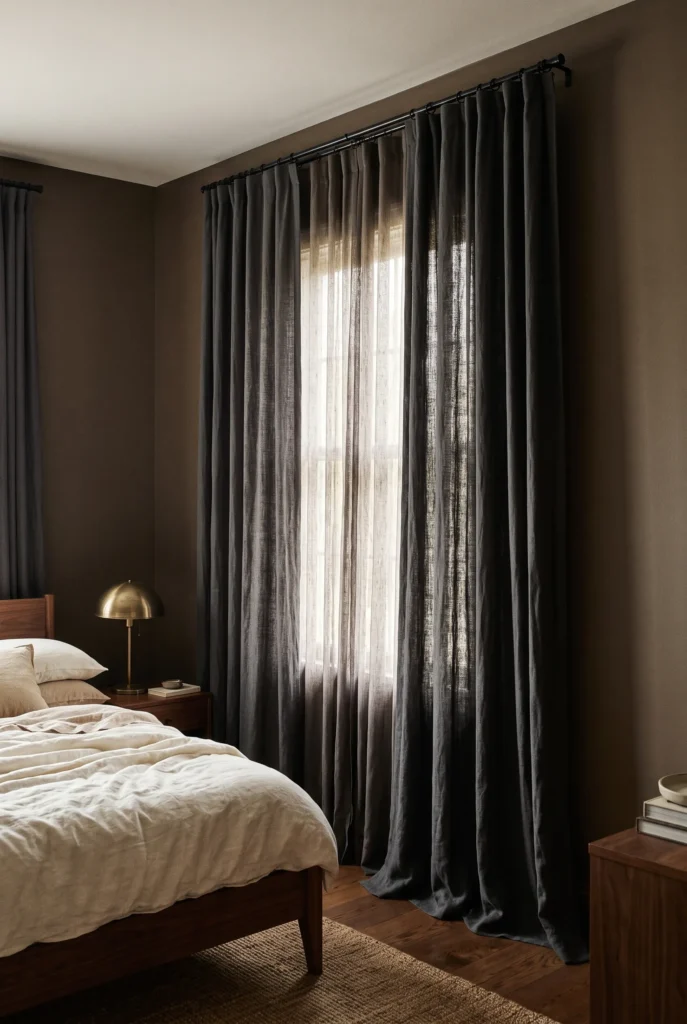
Ordinary window coverings often leave a bedroom feeling exposed and unfinished. Floor length curtains create a softer boundary around the room while making windows appear taller.
- Measure the height: Install the curtain rod approximately four to six inches above the window frame, provided ceiling clearance allows.
- Choose substantial fabric: Select charcoal linen, tobacco brown cotton, or deep olive velvet for a grounded appearance.
- Extend the rod: Position it six to ten inches beyond each side of the window so open curtains reveal more glass.
- Control incoming light: Add blackout lining or a separate blackout shade if you prefer darker sleeping conditions.
- Finish the length: Hem curtains to skim the floor rather than gathering excessive fabric.
In smaller bedrooms, curtains that begin near the ceiling draw the eye upward and create a more polished appearance. Choose fabric with a soft drape instead of stiff, shiny material. During daytime, pull the panels fully open to preserve natural light while maintaining the cozy atmosphere created by darker textiles.
Walnut Wood Furniture
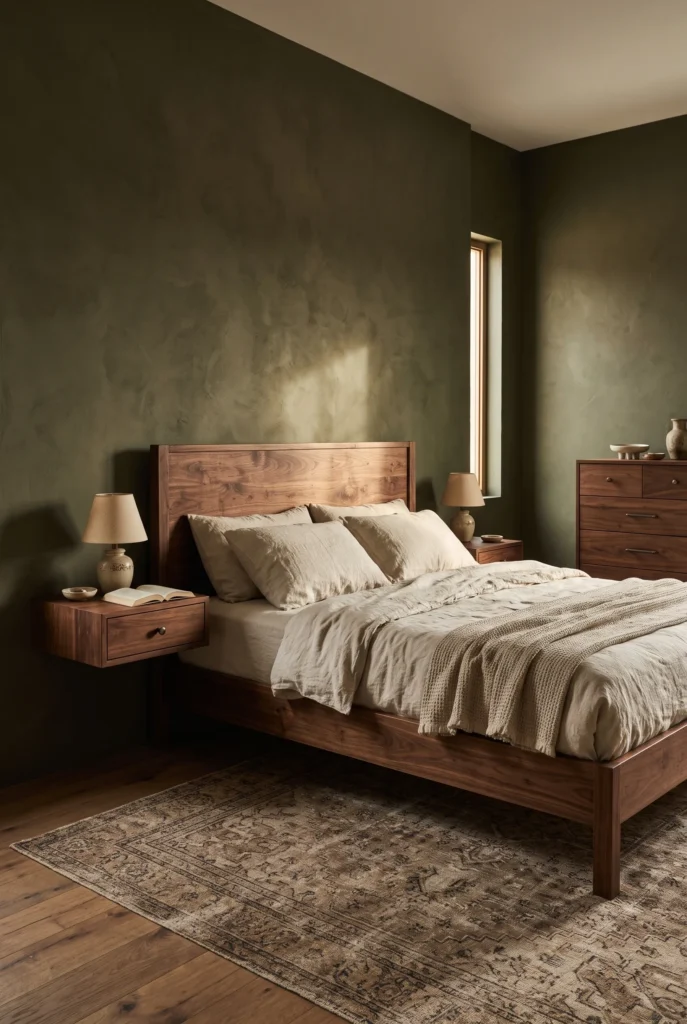
Dark painted rooms can sometimes feel cold when every piece of furniture has a black or glossy finish. Walnut introduces natural warmth through its rich brown tones and distinctive grain patterns.
| Design Detail | Option A: Black Furniture | Option B: Walnut Furniture |
|---|---|---|
| Visual effect | Bold, high contrast | Warm, earthy depth |
| Surface texture | Often smooth and uniform | Visible organic grain |
| Lighting response | Can absorb more light | Reveals warm brown undertones |
| Styling partners | Charcoal, gray, white | Olive, cream, caramel |
For a relaxing bedroom, consider a walnut bed frame as the main furniture investment. Its natural texture adds character without requiring elaborate decoration. Match wood undertones rather than demanding identical finishes across every piece. A lighter oak bench or vintage wooden stool can complement walnut while keeping the arrangement relaxed and personal.
Burgundy Velvet Headboard
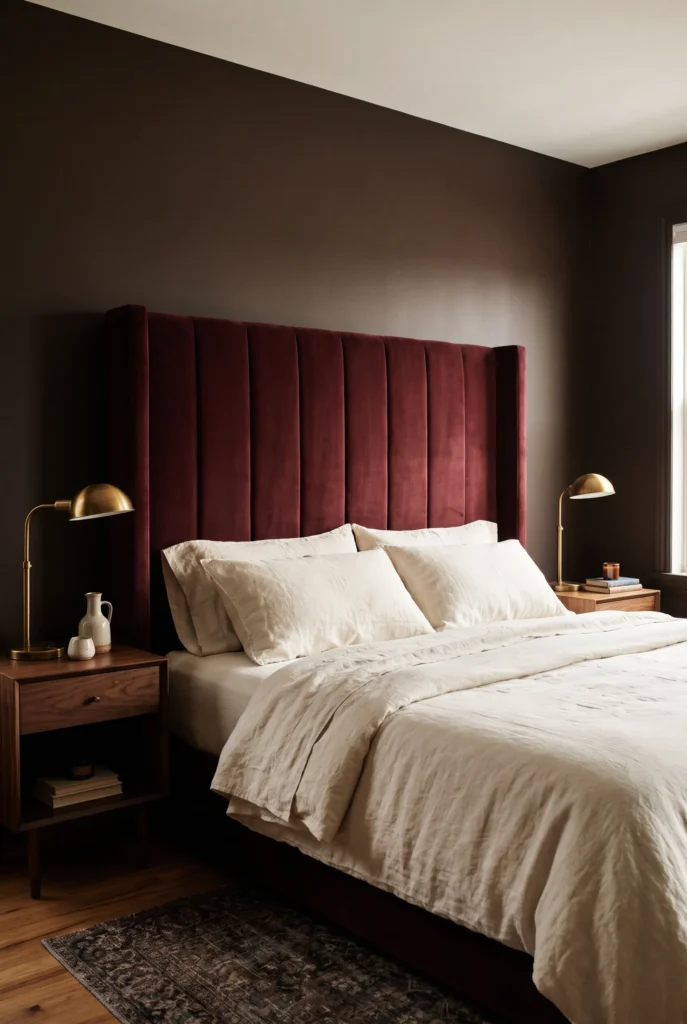
A burgundy velvet headboard introduces a luxurious focal point without requiring a complete bedroom makeover. Its plush texture softens darker walls, while the rich wine red color adds warmth and character.
DO:
- Choose muted burgundy with warm brown undertones.
- Pair the headboard with cream or taupe bedding.
- Use warm bedside lamps to highlight the velvet texture.
- Select a padded design for comfortable reading.
DON’T:
- Combine several bright red accessories.
- Choose glossy velvet that reflects excessive light.
- Crowd the bed with oversized decorative pillows.
- Ignore the headboard height when measuring your wall.
Burgundy works beautifully alongside charcoal, chocolate, and deep olive because it introduces color without disrupting the restful palette. For a smaller bedroom, choose a slim upholstered headboard rather than an oversized wingback design. The result feels rich and inviting while leaving enough visual breathing room around the bed.
Vintage Persian Rug
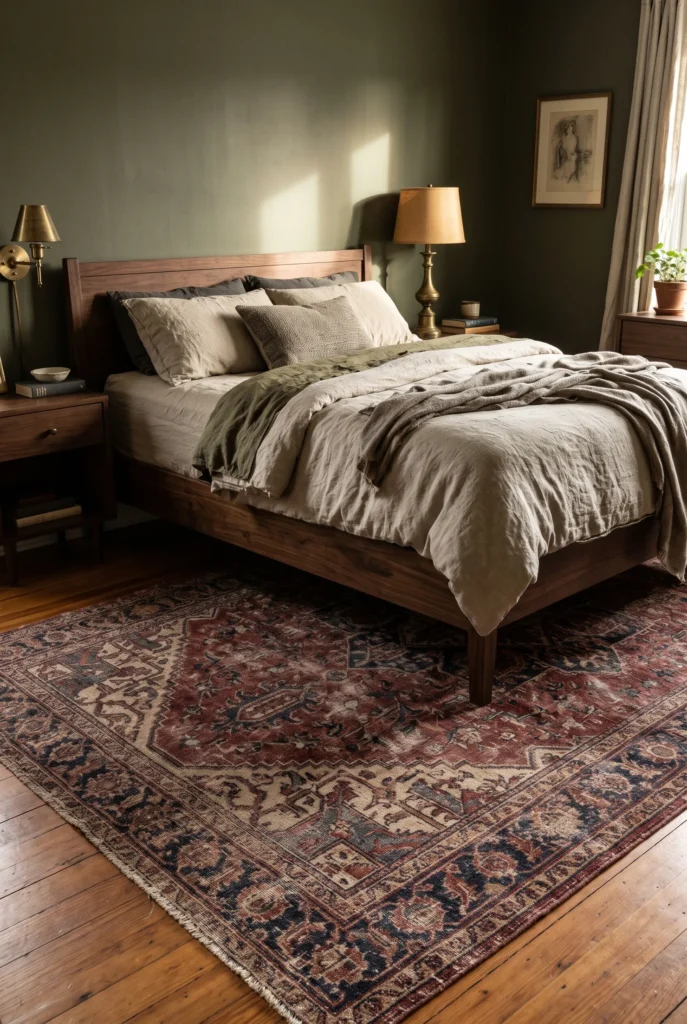
A faded Persian-style rug brings pattern and warmth to a dark bedroom without making the space feel busy. Its muted colors connect wooden furniture, painted walls, and layered bedding into one cohesive arrangement.
Cost: Moderate to high, depending on material and authenticity.
Time: Approximately 30 minutes for positioning.
Skill Level: Beginner.
Best For: Bedrooms with wood, laminate, or other hard flooring.
Choose a rug large enough to extend beyond both sides of the bed, giving your feet a soft landing each morning. For a queen bed, an 8-by-10-foot rug often provides generous coverage. Use a nonslip pad underneath to prevent shifting, especially on smooth wooden floors.
Charcoal Limewash Walls
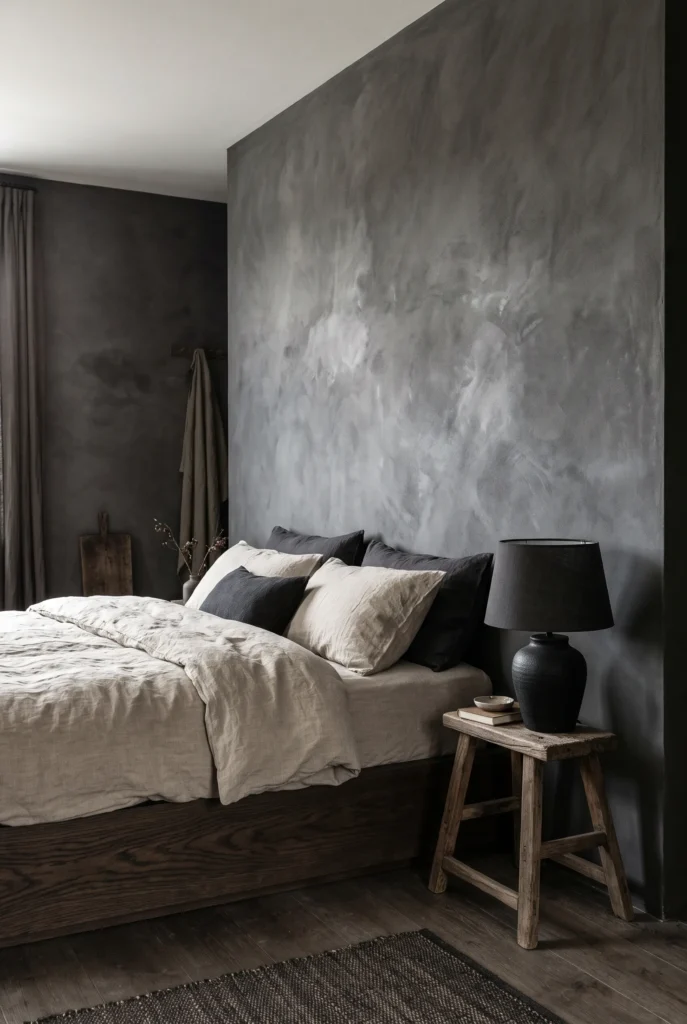
Flat charcoal paint can sometimes make bedroom walls feel visually heavy. Limewash introduces delicate tonal movement that softens the darkness while giving the room a more natural, lived-in character. The cloudy finish pairs beautifully with linen bedding, weathered oak furniture, and handmade ceramic accessories in a relaxing retreat.
Before applying limewash, check whether your wall requires a compatible mineral primer. Work in small sections with overlapping brushstrokes, following the manufacturer’s instructions to prevent harsh transition lines. Because colors can dry lighter than expected, test a sample first and observe it under both daylight and warm evening lighting.
The finished surface has a quiet, organic character that makes even simple furnishings feel thoughtfully chosen. Avoid covering every wall with large artwork, since the subtle plaster texture deserves room to stand out. A single framed print or sculptural wall lamp provides enough decoration without competing with the finish.
Dark Botanical Wallpaper
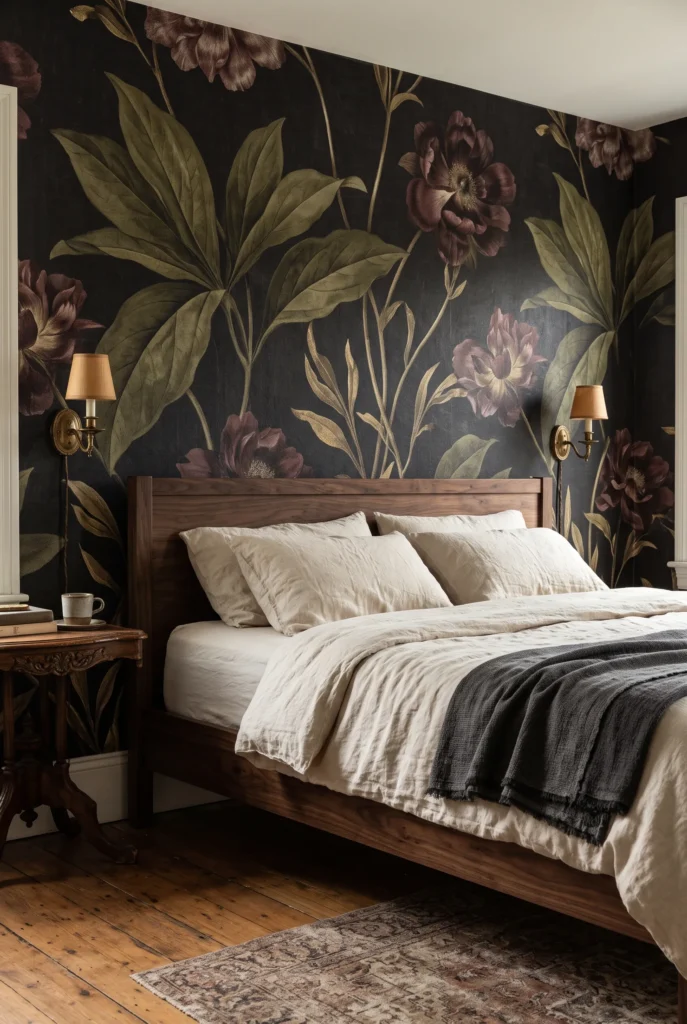
Dark botanical wallpaper creates a striking focal point while introducing natural patterns that soften the appearance of deep bedroom colors.
- Choose muted patterns: Look for oversized leaves, delicate branches, or faded florals in olive green, dusty burgundy, and charcoal tones.
- Focus on one wall: Install wallpaper behind the headboard to create visual interest without overwhelming the entire bedroom.
- Balance with plain bedding: Choose ivory, mocha, or muted taupe linens to prevent competing patterns.
- Repeat subtle colors: Pick one shade from the wallpaper and introduce it through cushions, throws, or ceramic accessories.
- Consider removable wallpaper: Peel and stick designs offer a practical solution for renters, provided the wall surface is compatible.
Large botanical patterns work especially well with simple wooden furniture and understated lighting. Before purchasing, order a sample and examine it under natural and artificial light. Dark backgrounds can appear considerably deeper at night. Keeping the surrounding accessories minimal allows the wallpaper to become the room’s defining feature.
Cocooning Bed Canopy
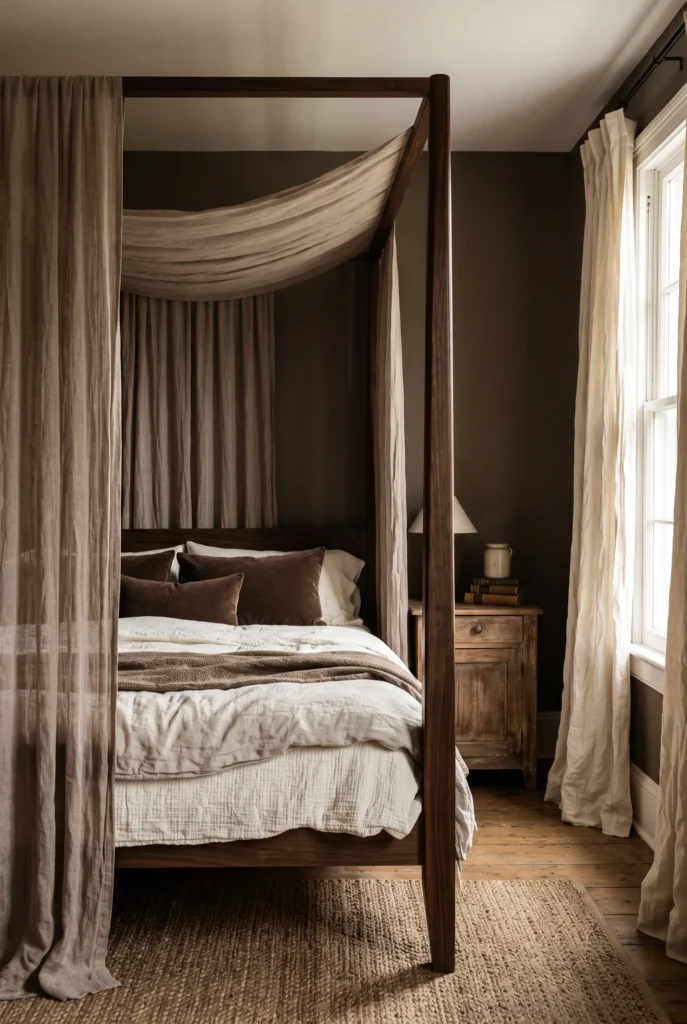
Quick Tip:
Choose lightweight linen or cotton canopy panels instead of thick velvet if your bedroom is small. Keep the fabric clear of lamps, heaters, and other heat sources, and secure it properly to prevent the canopy from becoming a safety hazard.
A softly draped canopy creates a sheltered sleeping area without requiring darker paint or expensive renovations. For a modern appearance, use a simple four poster frame with neutral fabric panels. Leave the sides partially open during the day to maintain airflow and prevent the arrangement from feeling too enclosed.
Low Profile Bed
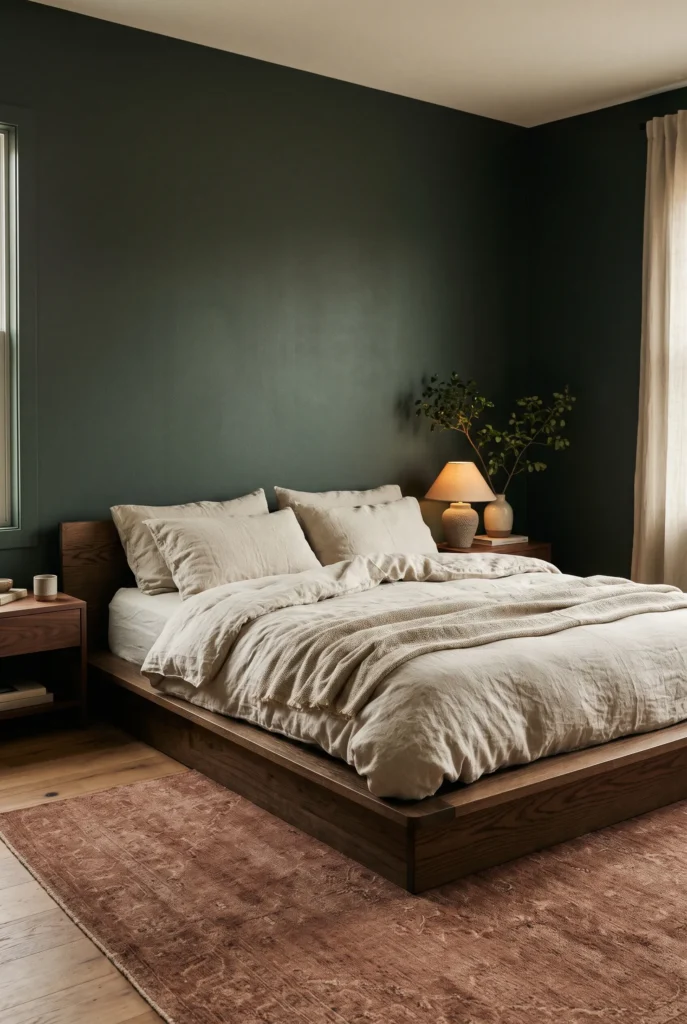
BEFORE:
A tall bed frame with a bulky footboard dominates the bedroom and makes the ceiling appear lower. Oversized furniture leaves limited visual space around the bed, especially in compact rooms.
AFTER:
A low profile platform bed creates a cleaner horizontal line and opens up more visible wall space. Soft bedding, a textured rug, and warm wooden accents keep the simplified arrangement comfortable rather than stark.
Choose a platform bed with a sturdy base and enough clearance for your preferred mattress. Pair it with compact nightstands that sit close to mattress height for easy access. In a small moody bedroom, this grounded furniture arrangement creates a calmer silhouette while preserving valuable floor space.
Rust Linen Accents
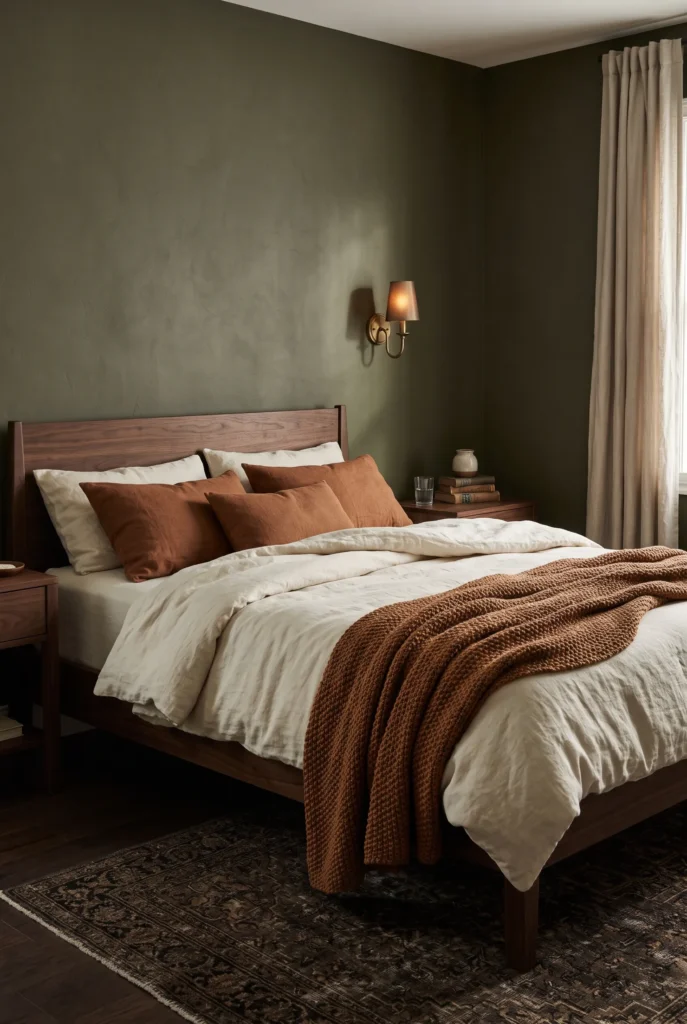
A few earthy rust accents can warm up dark bedroom colors without requiring new furniture or fresh paint.
- Choose a foundation: Start with charcoal, olive, or chocolate bedding that allows warm rust tones to stand out.
- Introduce linen pillows: Place two burnt orange or terracotta linen cushions against neutral sleeping pillows.
- Add a textured throw: Fold a cinnamon colored knitted blanket across the lower third of the bed.
- Repeat the accent: Include a small terracotta vase or rust toned artwork to connect the colors throughout the room.
Rust tones work particularly well with deep greens and warm browns because they introduce contrast without appearing overly bright. Choose washed, earthy shades rather than vivid orange. For a balanced appearance, limit rust accents to two or three locations, allowing the darker furniture and surrounding textiles to remain visually dominant.
Smoky Plum Color Drenching
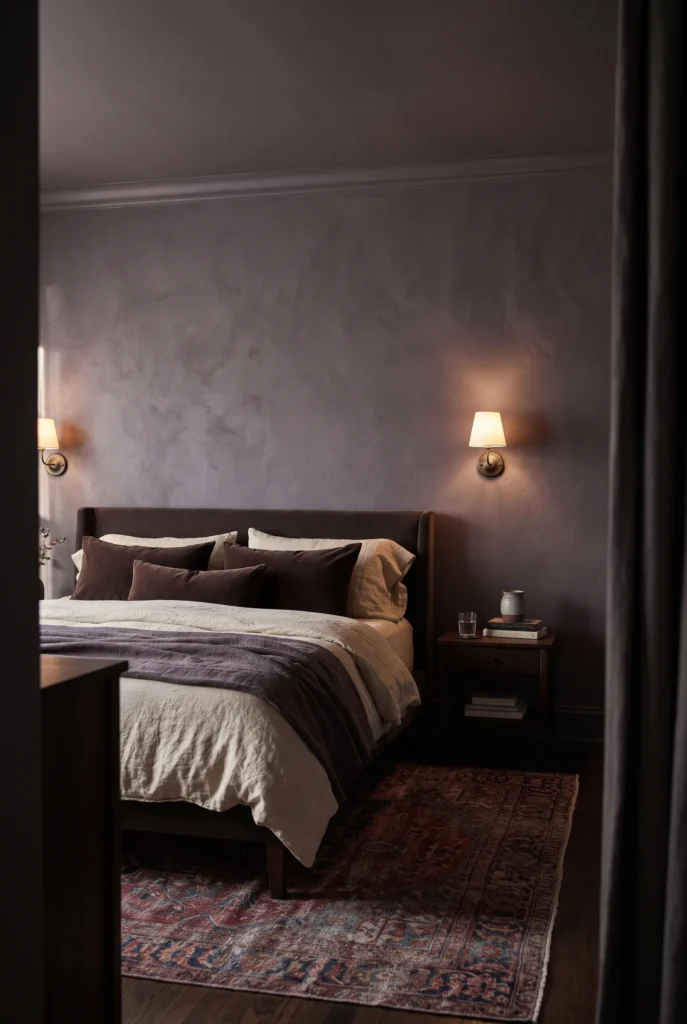
Painting the walls, ceiling, and trim in one smoky plum shade creates an enveloping atmosphere that feels intimate and sophisticated.
| Design Detail | Single Accent Wall | Full Color Drenching |
|---|---|---|
| Wall treatment | One dark focal wall | All walls painted plum |
| Ceiling finish | Standard white | Matching smoky plum |
| Overall appearance | Strong visual contrast | Continuous, enveloping color |
| Best application | Rooms needing lighter balance | Rooms designed for deeper atmosphere |
Color drenching works especially well in bedrooms where a unified color scheme feels more relaxing than contrasting surfaces. Choose a muted plum with brown undertones to avoid an overly purple appearance. Test the color on multiple surfaces before committing, since ceilings and walls receive different amounts of light.
Window Seat Nook
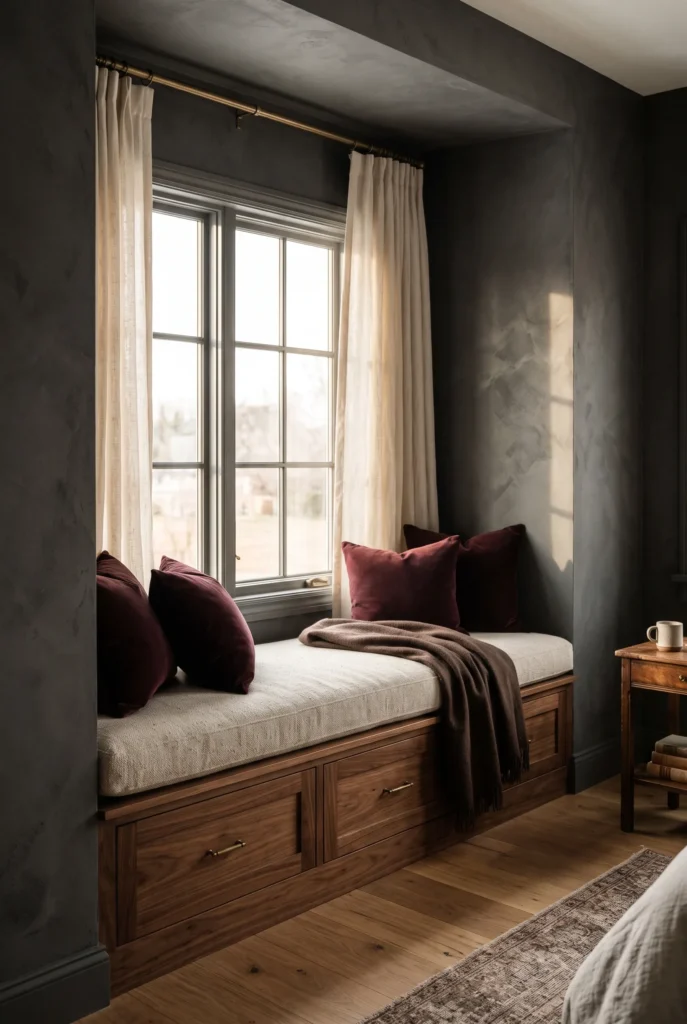
An unused bedroom window can become a comfortable retreat for reading, relaxing, or enjoying natural light.
DO:
- Choose a supportive seat cushion with removable fabric covers.
- Add two soft pillows in burgundy or chocolate brown.
- Install a wall mounted reading lamp beside the nook.
- Include storage drawers beneath the seat if space allows.
DON’T:
- Block heating vents or obstruct window access.
- Overcrowd the seat with decorative accessories.
- Use delicate fabrics that fade easily in direct sunlight.
- Build a window seat without checking its structural support.
For smaller bedrooms, a narrow cushioned bench beneath a suitable window can create a similar appearance without permanent construction. Match the cushion fabric to your bedding for visual consistency. Keep the seating area uncluttered so it remains functional, especially when the bedroom already contains substantial dark furniture.
Fluted Oak Paneling
Cost: Moderate, depending on the panel material and wall size.
Time: One weekend for a straightforward accent wall.
Skill Level: Intermediate DIY.
Best For: Bedrooms needing architectural texture behind the headboard.
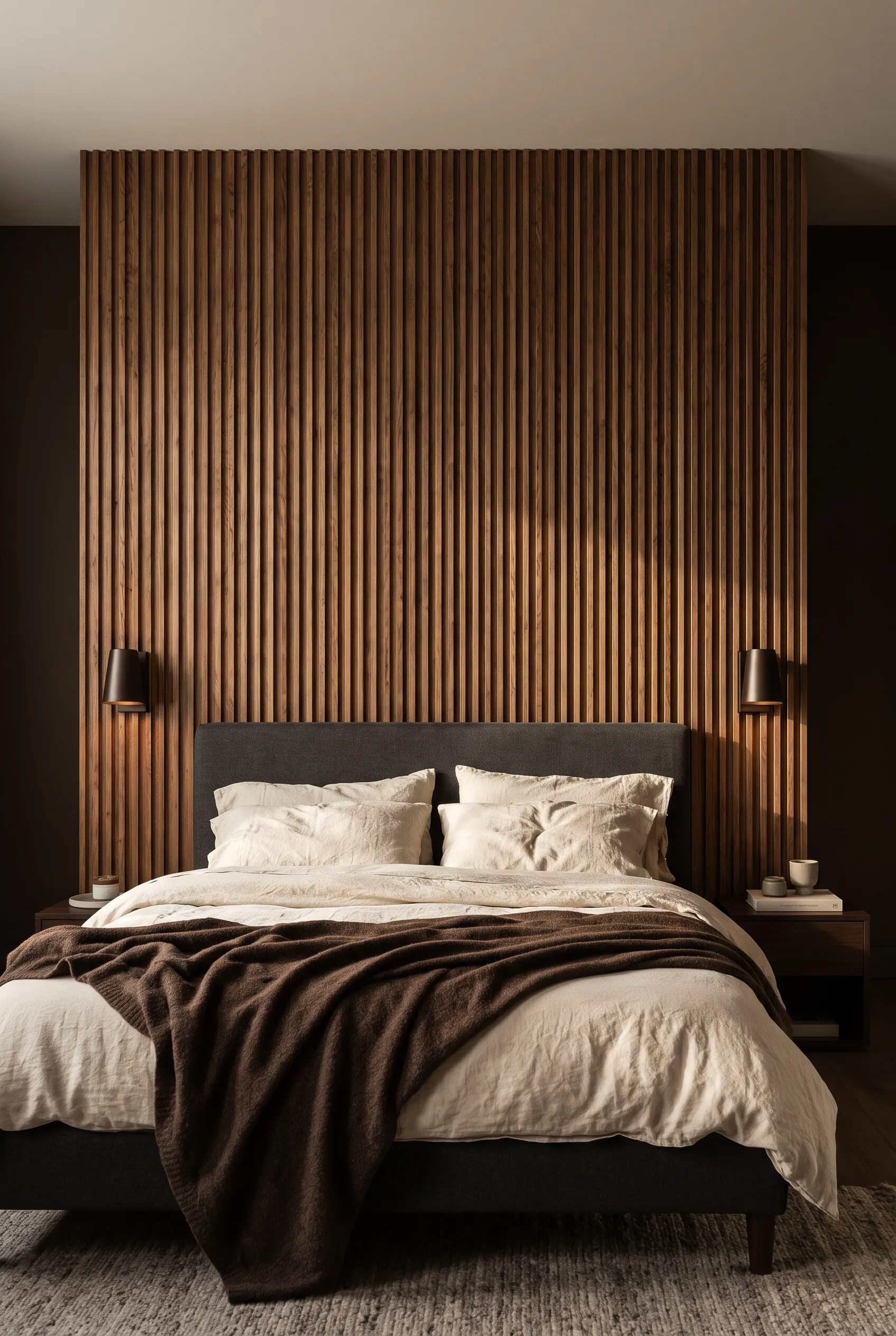
Flat bedroom walls sometimes lack the texture needed to make dark interiors feel inviting. Fluted oak paneling adds gentle vertical lines that create depth without introducing busy patterns. Install it behind the headboard and pair it with matte charcoal paint, simple bedding, and warm lighting for a sophisticated finish.
Smoky Blue Bedding
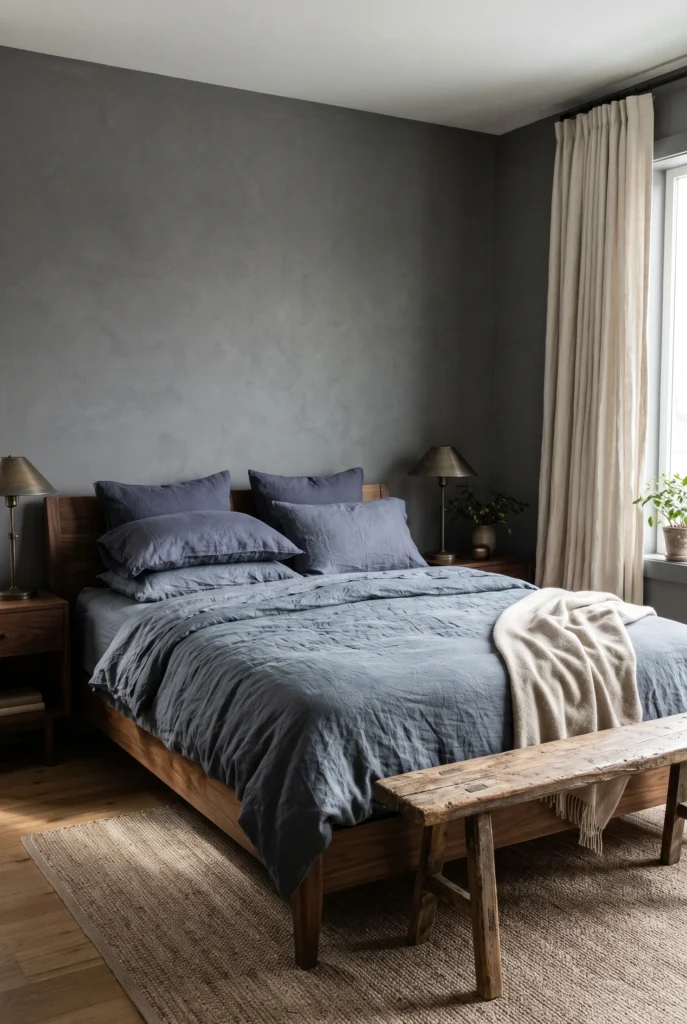
Smoky blue bedding gives a dark bedroom a softer edge without losing its deep, restful character. Choose a muted slate or ink blue duvet instead of a bright navy set. Against charcoal walls, the blue feels subtle and layered, especially beside oatmeal pillows and a warm wooden headboard.
Keep the arrangement grounded with a single patterned cushion in faded cream and blue, then fold a wool throw across the foot of the bed. For rooms with limited daylight, select a slightly grayer blue to prevent the bed from looking too dark. Washable cotton or linen makes everyday maintenance easier.
Antique Mirror Accents
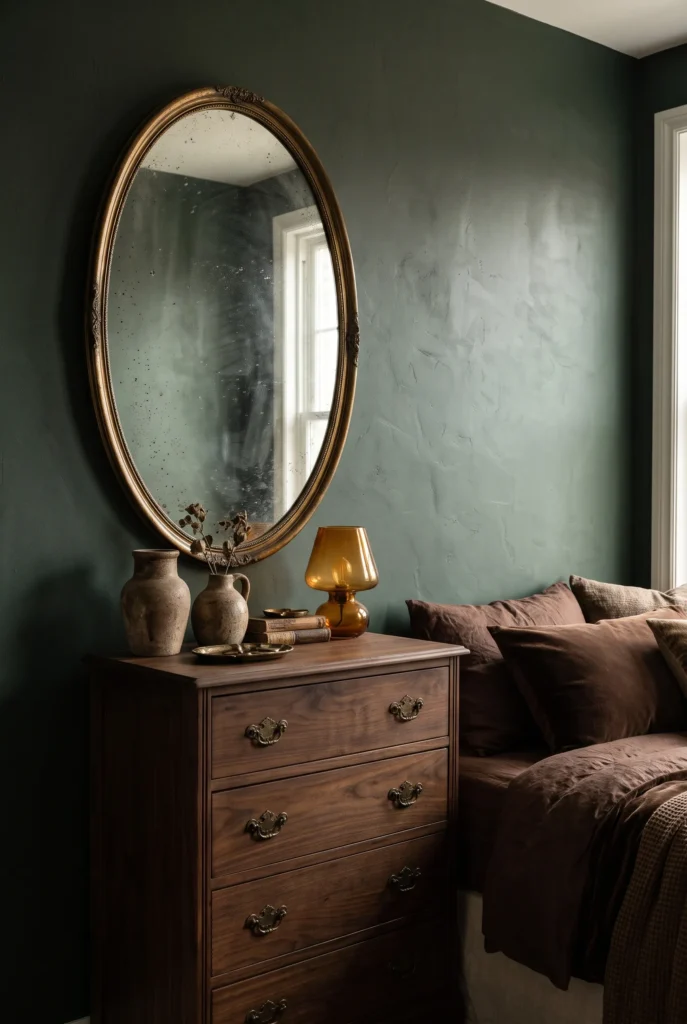
A carefully positioned antique mirror can brighten a dark bedroom while preserving its intimate atmosphere.
- Choose aged finishes: Select antique brass, dark bronze, or distressed walnut frames that complement moody bedroom colors.
- Reflect natural light: Position a mirror near a window where it can catch daylight without producing uncomfortable glare.
- Consider rounded shapes: Oval and arched mirrors soften the straight lines of beds, dressers, and rectangular artwork.
- Keep styling simple: Place a ceramic vase, small lamp, or vintage jewelry box beneath the mirror.
- Secure the frame: Use suitable wall anchors and hardware rated for the mirror’s weight.
Antique mirrors work particularly well in bedrooms with deep green, charcoal, or chocolate walls because their warm frames introduce gentle contrast. A single medium sized mirror above a dresser often provides enough visual interest. Avoid positioning reflective surfaces directly opposite bright lamps if nighttime glare becomes distracting.
Woven Wall Tapestry

Quick Tip:
Choose a tapestry with earthy colors already present in your bedding or furniture. Hang it approximately six to eight inches above the headboard, adjusting the spacing to suit its size. Use secure mounting hardware rather than relying on adhesive hooks for heavy woven pieces.
A wool or cotton tapestry softens the hard surfaces of a dark bedroom while introducing handmade character. Look for understated geometric patterns or irregular woven designs in tobacco, charcoal, and warm beige. Avoid overly large pieces that extend beyond the bed frame, since balanced proportions create a calmer appearance.
Minimal Bedside Styling
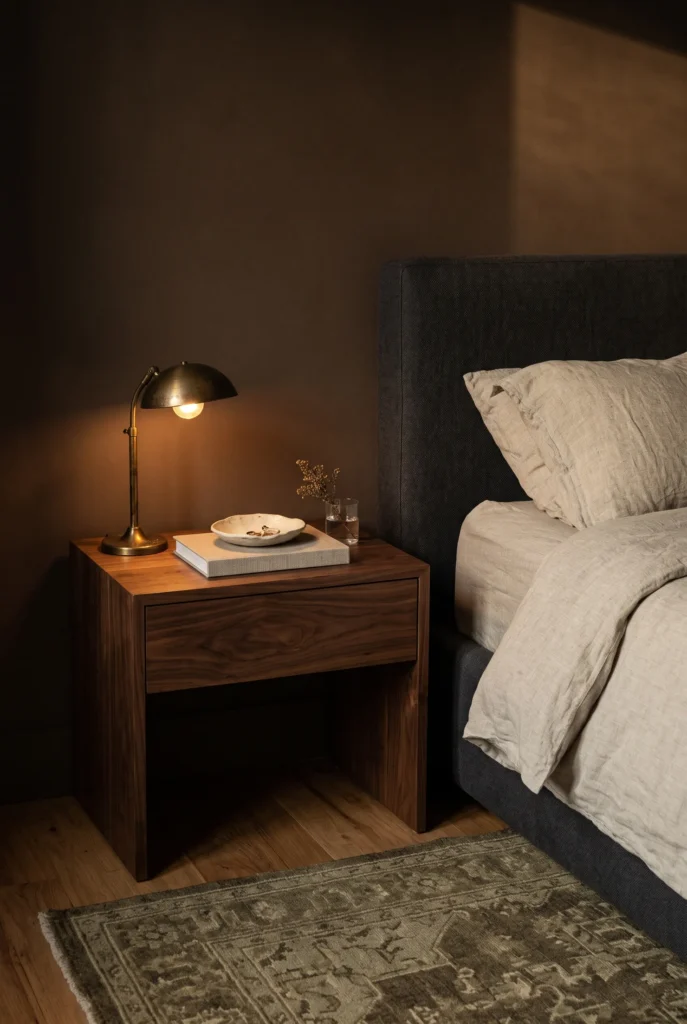
BEFORE:
An overcrowded nightstand holds tangled charging cables, scattered skincare products, multiple books, and oversized decorative accessories. The visual clutter competes with the room’s darker color palette and makes the sleeping area feel disorganized.
AFTER:
A neatly arranged walnut nightstand displays one warm lamp, a ceramic catchall, and a favorite book. Hidden storage keeps everyday essentials accessible while allowing the surrounding textures and colors to stand out.
Start by removing everything from your bedside table and returning only the items you use regularly. Store charging accessories inside a drawer or discreet cable organizer. Choose a lamp with a compact base, and leave part of the tabletop empty to create visual breathing room.
Vintage Gallery Wall
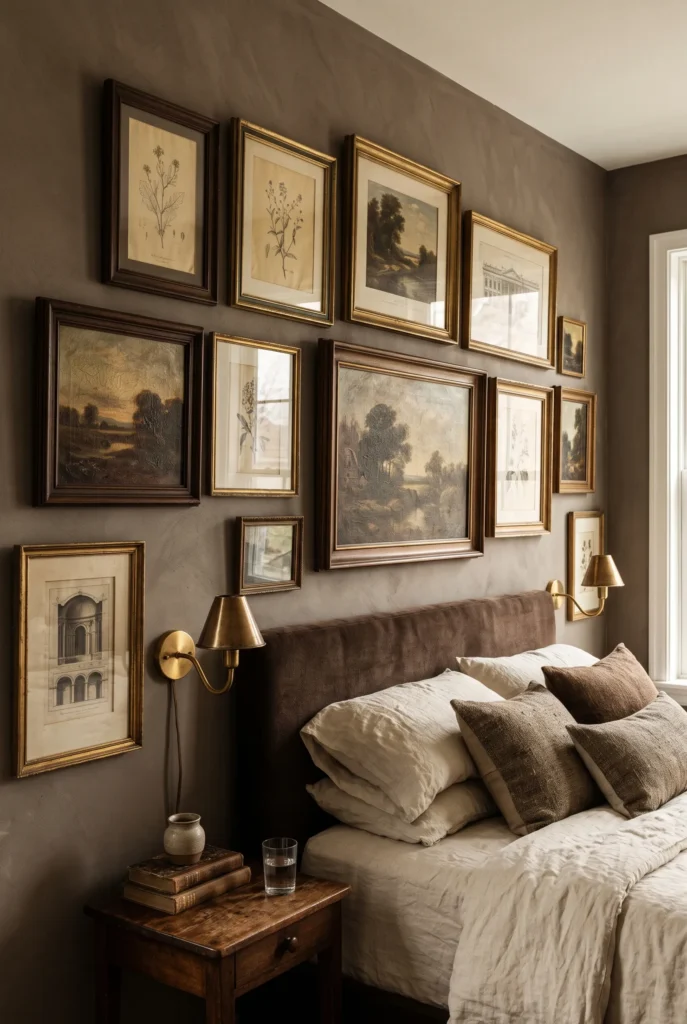
A thoughtfully arranged collection of vintage artwork brings personality to dark bedroom walls without introducing overly bright colors.
- Choose a consistent palette: Collect artwork featuring muted landscapes, faded botanicals, or antique sketches in olive, brown, charcoal, and cream.
- Mix frame finishes: Combine aged brass, dark walnut, and distressed black frames while maintaining similar visual weight.
- Plan the arrangement: Lay the frames on the floor before hanging them, leaving approximately two to three inches between pieces.
- Establish a focal point: Position the largest artwork near the center and arrange smaller pieces around it.
- Check the height: Keep the gallery visually connected to the furniture below rather than placing it too close to the ceiling.
Vintage artwork works particularly well with dark walls because aged paper and warm wooden frames create subtle contrast. For a cohesive arrangement, repeat one or two colors from your bedding throughout the artwork. Avoid filling every available wall, allowing the finished gallery to remain the room’s main decorative feature.
Corner Reading Chair
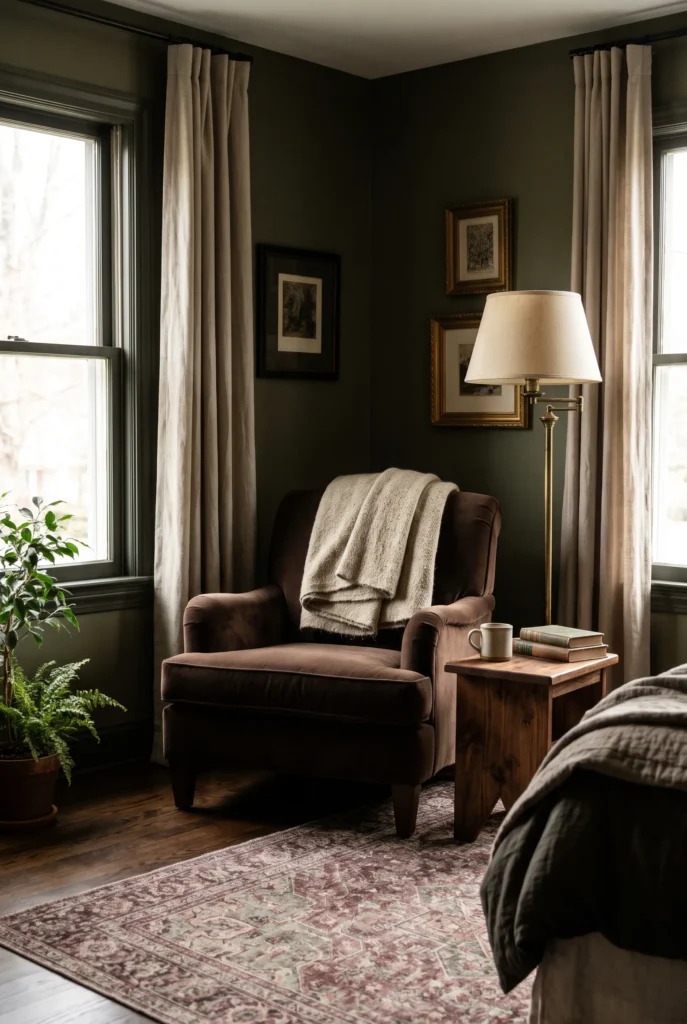
A comfortable reading chair creates a personal retreat within the bedroom, especially when positioned away from the main sleeping area.
| Design Detail | Option A: Velvet Armchair | Option B: Boucle Armchair |
|---|---|---|
| Texture | Smooth and plush | Soft and nubby |
| Color choice | Chocolate or burgundy | Warm cream or taupe |
| Visual effect | Rich and dramatic | Soft and inviting |
| Styling partner | Antique brass floor lamp | Walnut side table |
Position your chair near a window to enjoy natural reading light during the day. Add a small side table for books and a warm floor lamp for evenings. In compact bedrooms, choose a narrow chair with exposed legs to maintain an open appearance without sacrificing comfort.
Flickering Flameless Candles
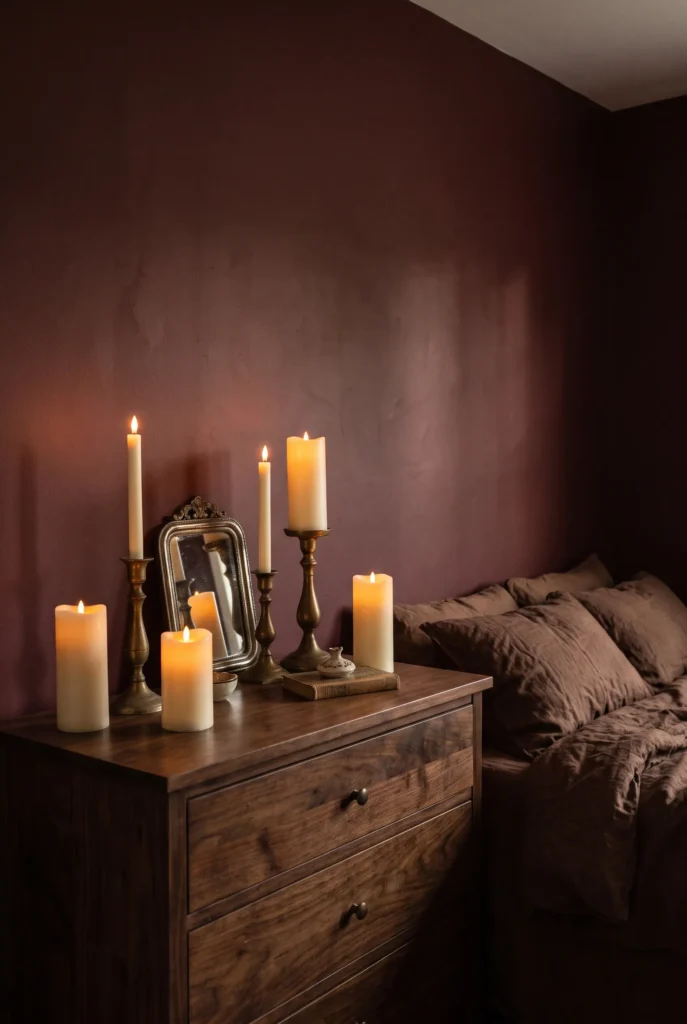
Soft candlelike lighting introduces warmth and intimacy to a dark bedroom without the risks associated with open flames.
DO:
- Choose warm white LED candles with realistic flickering effects.
- Group three candles at different heights for visual interest.
- Place them on a stable ceramic or wooden tray.
- Use timer settings for convenient evening illumination.
DON’T:
- Mix cool white and amber lighting in the same display.
- Overcrowd the dresser with excessive candle arrangements.
- Position battery powered candles beneath loose hanging fabrics.
- Forget to check battery compartments for damage or leakage.
Flameless candles work beautifully on walnut dressers, floating shelves, or bedside tables where traditional candles would be impractical. Choose matte ivory finishes rather than glossy plastic for a more realistic appearance. Their gentle glow complements deep wall colors and creates a relaxing evening atmosphere without adding unnecessary visual clutter.
Textured Ceiling Beams
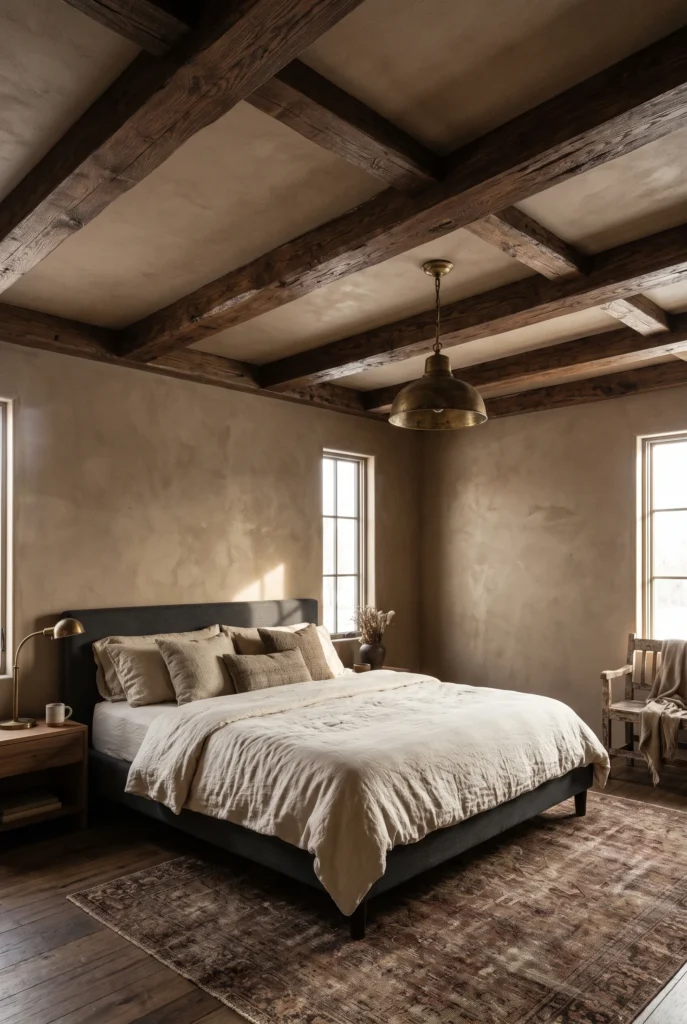
Cost: Moderate to high, depending on materials and installation.
Time: One to two days for a straightforward decorative installation.
Skill Level: Intermediate to professional.
Best For: Bedrooms with medium to high ceilings and rustic architectural details.
Decorative ceiling beams introduce warmth and architectural character to bedrooms with otherwise plain ceilings. Lightweight faux wood beams offer a practical alternative to solid timber, provided they are securely installed using appropriate fixings. Choose a deep walnut finish and keep surrounding ceiling colors lighter to maintain a balanced appearance.
Warm Taupe Ceiling
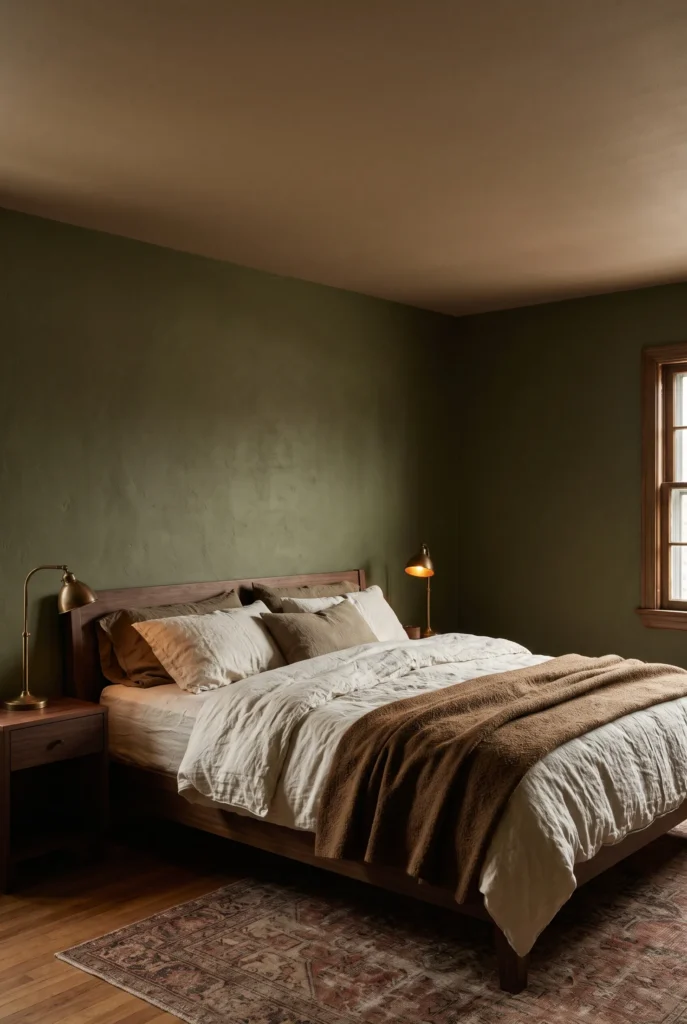
A bright white ceiling can interrupt the softness of a dark bedroom, especially after sunset. Painting it warm taupe creates a gentler transition above charcoal, olive, or chocolate walls. Choose a shade slightly lighter than the walls so the room feels wrapped in color without appearing cramped.
Before painting, test two large swatches near the ceiling and check them during daylight and under your bedside lamps. Flat paint usually disguises minor surface imperfections better than glossy finishes. Keep cornices and trim close in tone for a quiet look, then let cream bedding provide contrast.
Vintage Storage Trunk
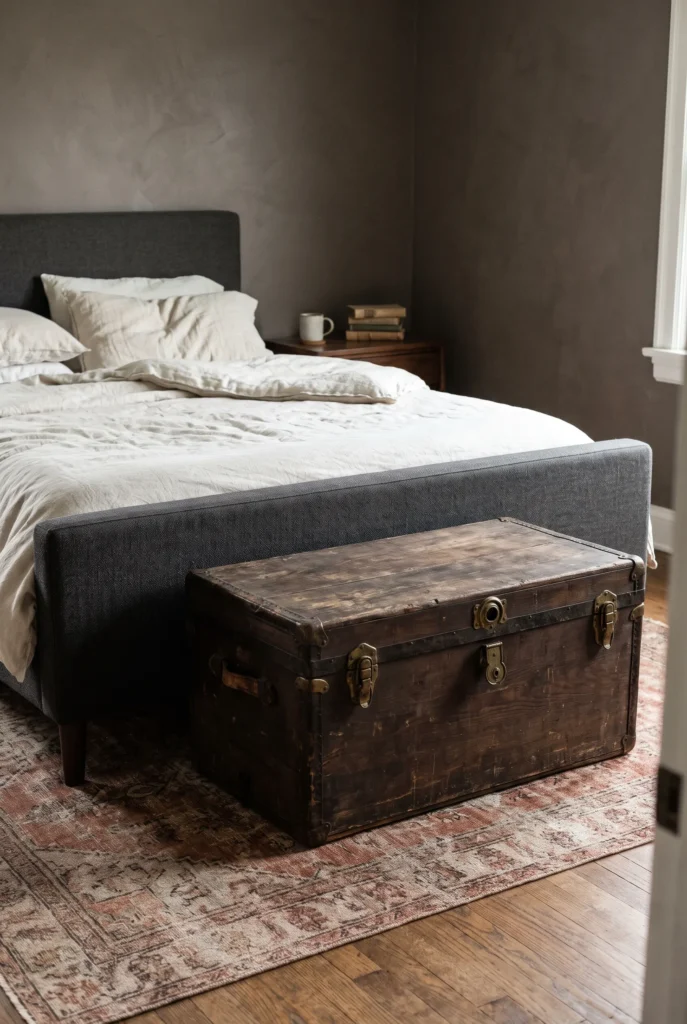
A vintage wooden trunk adds practical storage while introducing the worn textures that make dark bedrooms feel inviting.
- Choose aged wood: Look for walnut, dark oak, or weathered chestnut finishes with visible grain and natural imperfections.
- Position it carefully: Place the trunk at the foot of the bed, leaving enough clearance for comfortable movement.
- Store seasonal bedding: Keep folded throws, spare pillowcases, and lightweight blankets inside to reduce wardrobe clutter.
- Add protective details: Use a soft interior liner and check that hinges and lid supports operate safely.
- Keep the surface simple: Style the closed trunk with a folded wool blanket rather than excessive decorative objects.
An old storage trunk can bring character to a moody bedroom while giving spare blankets a practical home. Place it at the foot of the bed only if there is comfortable walking clearance. A washable liner protects textiles, and felt pads beneath the trunk help prevent scratched floors.
Cocoa Painted Doors
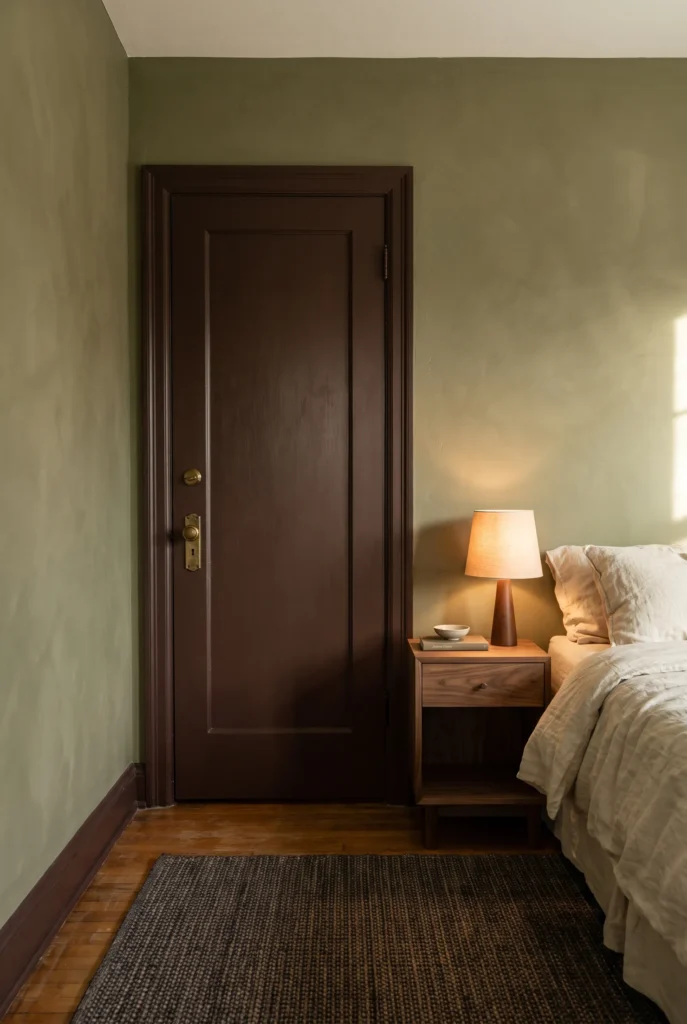
Quick Tip:
Choose a rich cocoa brown with subtle red or earthy undertones rather than a cool gray brown. Paint the door and its frame in the same shade for a cohesive appearance, and use a durable satin or eggshell finish that withstands frequent handling.
Painting an ordinary bedroom door deep cocoa brown creates a subtle architectural detail without changing the main wall color. Keep the surrounding trim in warm cream for contrast, or match it to the door for a quieter effect. Finish with antique brass hardware and test the door’s swing before positioning furniture nearby.
Arched Bed Alcove
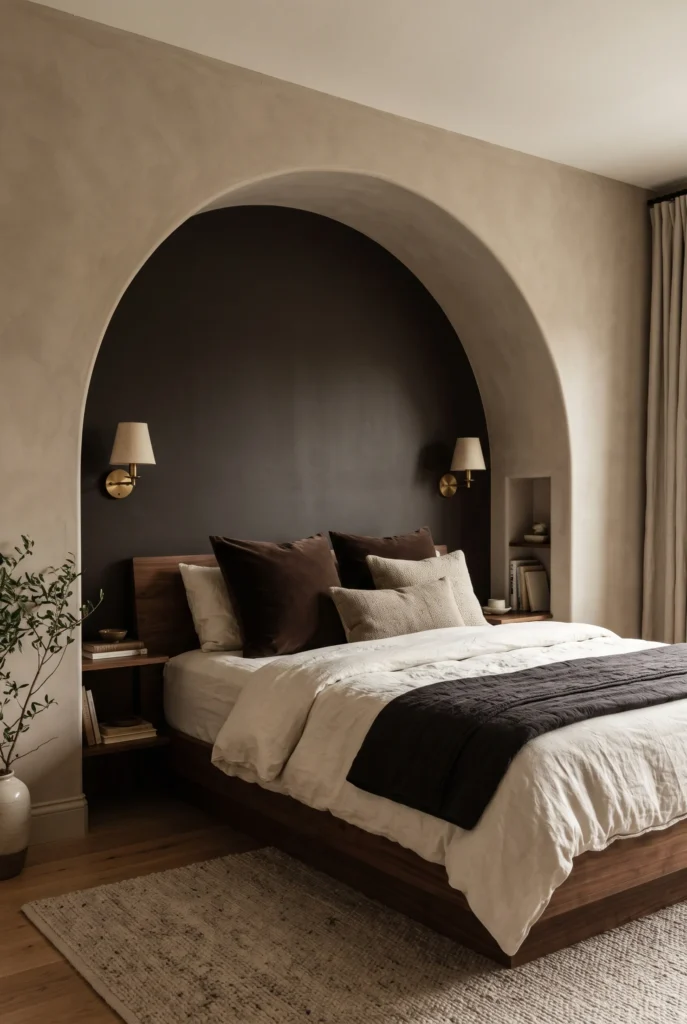
BEFORE:
A flat wall behind the bed feels plain despite the dark paint and attractive bedding. The sleeping area lacks architectural definition, making the furniture appear disconnected from the surrounding room.
AFTER:
A softly arched alcove frames the headboard and creates a sheltered sleeping area. Deep espresso paint inside the arch adds dimension, while warm mushroom walls maintain a balanced appearance.
For a similar effect without major construction, paint an oversized arch directly behind the headboard using a carefully measured template. Choose a shade two or three tones darker than the surrounding walls. Keep bedside furniture symmetrical and use simple bedding to let the curved feature remain the focal point.
Cognac Leather Bench
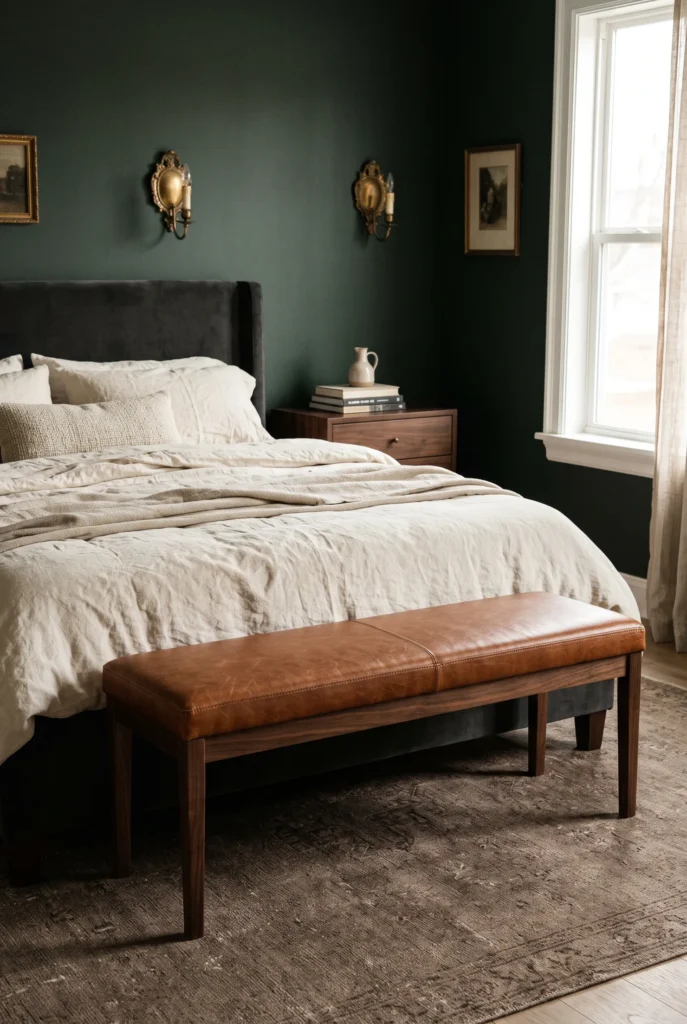
An empty area at the foot of the bed offers an opportunity to introduce another warm texture without overwhelming the bedroom.
- Measure the available space: Leave at least 30 inches of walking clearance where possible before choosing the bench dimensions.
- Choose warm leather: Select cognac, tobacco, or saddle brown upholstery with a matte finish.
- Match furniture proportions: Pick a bench slightly narrower than the bed to maintain a balanced arrangement.
- Keep styling minimal: Fold a lightweight wool throw over one end rather than covering the entire seat.
- Protect the flooring: Attach felt pads beneath the legs to prevent scratches on wooden surfaces.
Cognac leather adds warmth to deep green, charcoal, and chocolate interiors while introducing a smooth texture that contrasts with soft bedding. A narrow bench also provides a convenient place to sit while dressing. Choose a sturdy design with supportive cushioning, especially if you plan to use it daily.
Misty Landscape Mural
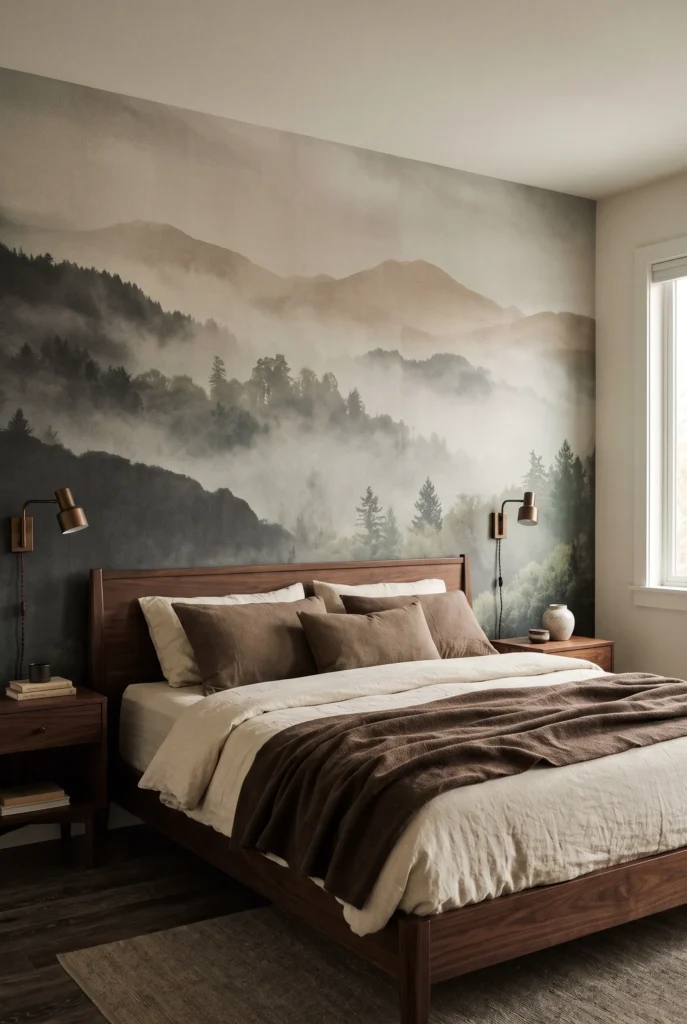
A muted landscape mural adds visual depth to a dark bedroom while introducing a peaceful connection to nature.
| Design Detail | Option A: Forest Mural | Option B: Mountain Mural |
|---|---|---|
| Main colors | Deep olive and smoky green | Slate gray and muted taupe |
| Visual texture | Layered trees and soft foliage | Misty ridges and gentle gradients |
| Overall atmosphere | Sheltered and intimate | Open and peaceful |
| Ideal furniture | Dark walnut or rustic oak | Smoked oak or charcoal upholstery |
Choose a mural with softened edges and restrained colors rather than highly detailed, vivid scenery. Install it behind the bed and keep nearby artwork minimal to avoid visual competition. For smaller bedrooms, misty mountain designs can create an impression of distance, while woodland scenes produce a more enclosed atmosphere.
Blackout Roman Shades
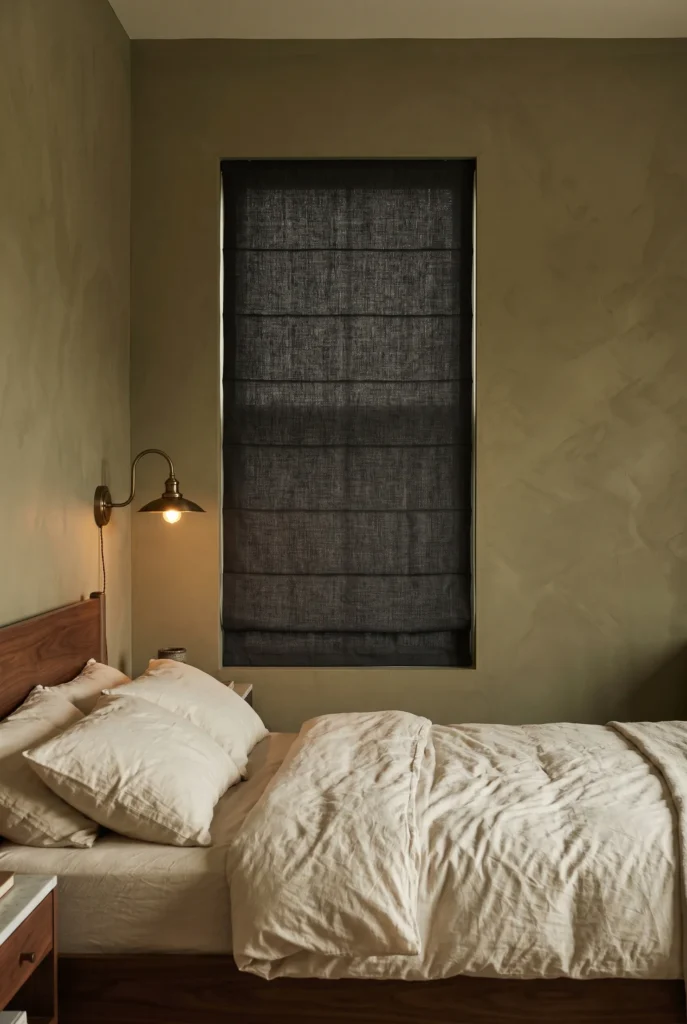
DO:
- Choose blackout lined Roman shades to create a darker, more restful sleeping environment.
- Select charcoal, espresso, or muted olive fabric with visible woven texture.
- Mount shades close to the window edges to reduce unwanted light gaps.
- Use cordless or motorized controls for a cleaner, safer arrangement.
DON’T:
- Choose thin fabric if blocking morning sunlight is your priority.
- Install shades without measuring the window carefully.
- Combine too many competing patterns around the window.
- Ignore cleaning instructions when selecting textured fabrics.
Roman shades offer a tailored alternative to traditional curtains, especially in bedrooms with limited wall space. Their folded fabric introduces softness without overwhelming the window. Pair charcoal shades with warm wooden furniture and cream bedding for a balanced appearance. Proper blackout lining also helps reduce unwanted early morning light.
Handmade Ceramic Decor
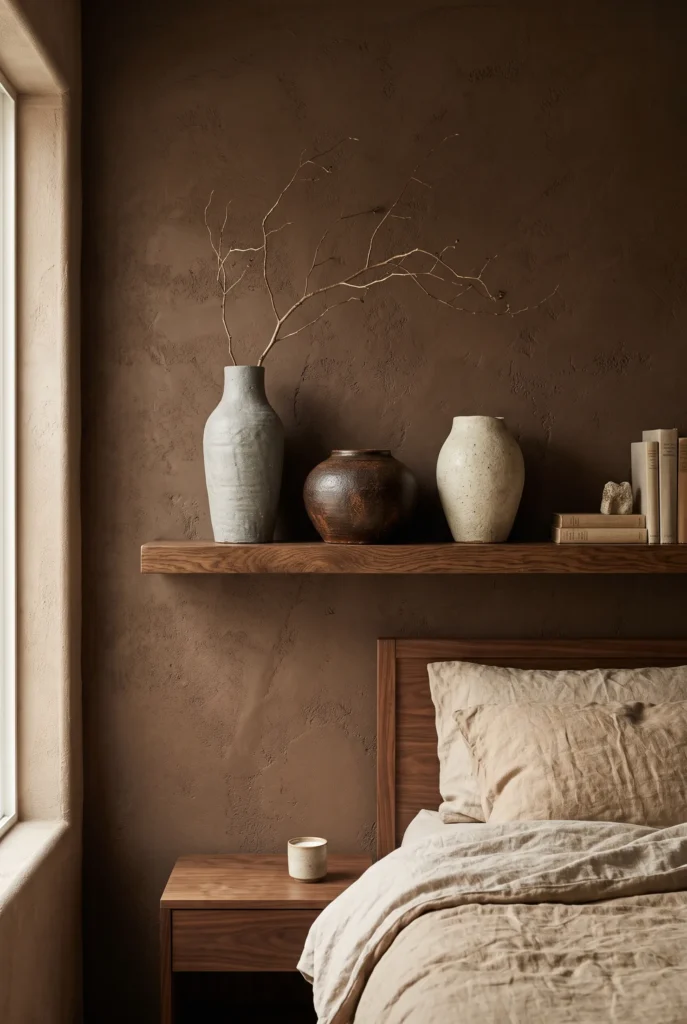
Cost: Low to moderate, depending on craftsmanship and materials.
Time: 15 to 30 minutes for arranging accessories.
Skill Level: Beginner.
Best For: Nightstands, dressers, floating shelves, and small bedroom corners.
Handmade ceramics introduce organic shapes that soften the straight lines of bedroom furniture. Choose two or three pieces with irregular edges, matte glazes, and earthy finishes. Group different heights together for visual balance, leaving enough empty space around them. A single dried branch adds character without cluttering the arrangement.
CONCLUSION
A restful bedroom is built through small, thoughtful choices rather than a single dramatic purchase. From velvet bedding and smoky paint colors to layered lighting and vintage accents, these ideas show how a cozy moody bedroom can feel both intimate and livable.
Start with the change that suits your budget, whether that’s swapping a lamp bulb, adding a textured throw, or painting one wall. Notice how the room feels in daylight and at night, then adjust as you go.
Save this post on Pinterest, try your favorite ideas, and share it with someone who wants a more comforting place to unwind.
If you love this cocooning mood, explore our dark green bedroom ideas and jewel tone bedroom ideas next.