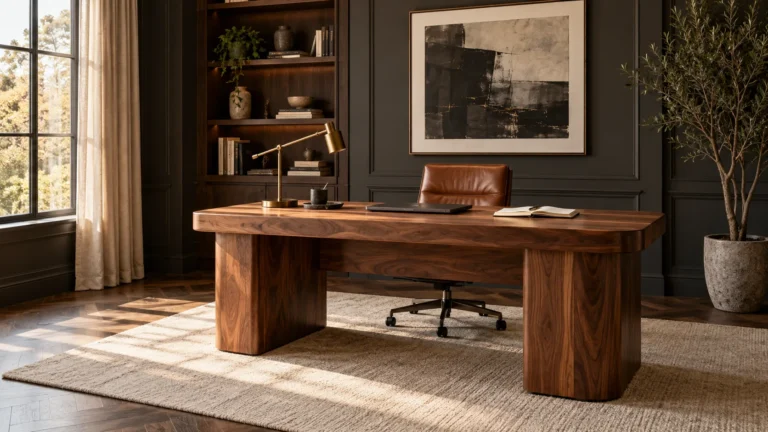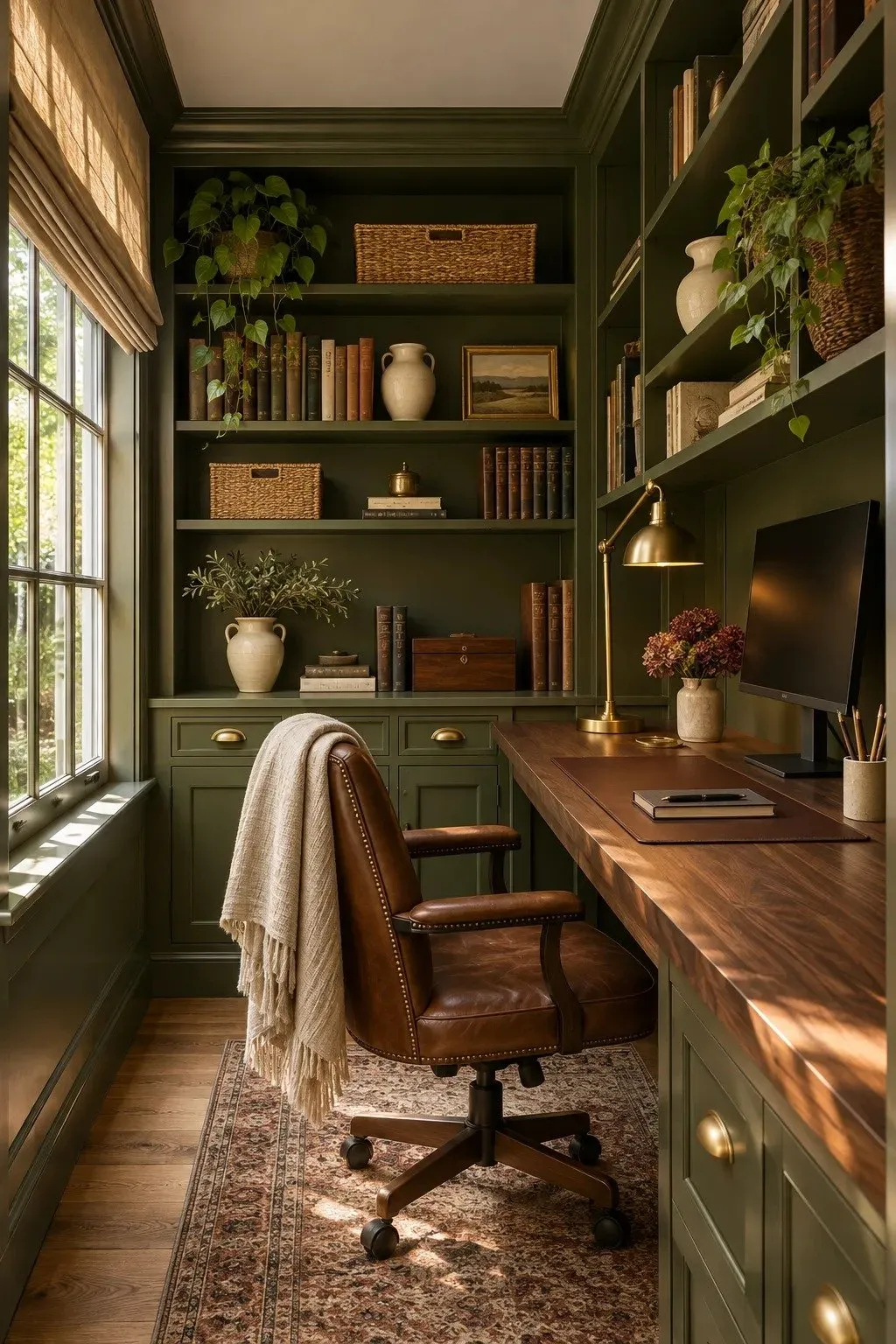
33 Productive Moody Home Office Ideas for Small Rooms
Small room, big workday? Your desk shouldn’t feel like another thing to squeeze around. A moody home office can bring focus, warmth, and practical storage to even the tightest corner.
You don’t need a spare room or a costly makeover. The right deep paint color can define your work zone, while a floating desk, task lighting, and wall-mounted organizers free up precious floor space. If you’re working from a bedroom, sharing a living room, or fitting a laptop into an alcove, every inch needs a job.
These 33 ideas balance dramatic finishes with everyday comfort. You’ll find smart ways to manage cables, reduce clutter, control glare, and make dark colors feel inviting rather than heavy.
Start with the problem that bothers you most, then borrow the details that fit your budget and layout.
Deep Charcoal Accent Wall
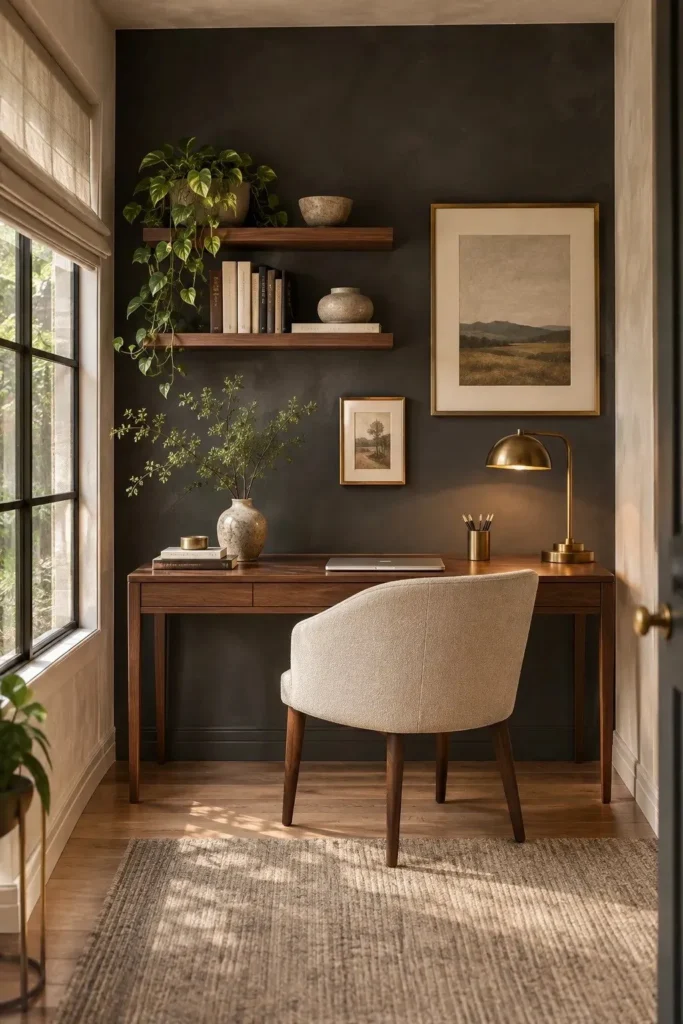
Dark walls can make a tiny workspace feel focused rather than cramped when the color has a clear purpose. Paint the wall behind your desk deep charcoal, then leave the ceiling and adjacent walls in a softer warm white. The contrast frames your work zone without swallowing the room.
Choose a matte or eggshell finish to soften reflections from a monitor. A slim oak desktop, cream pinboard, and one brass lamp keep the palette balanced. Test paint samples in morning and evening light before committing, because charcoal can read blue or brown as daylight changes.
Floating Walnut Desk
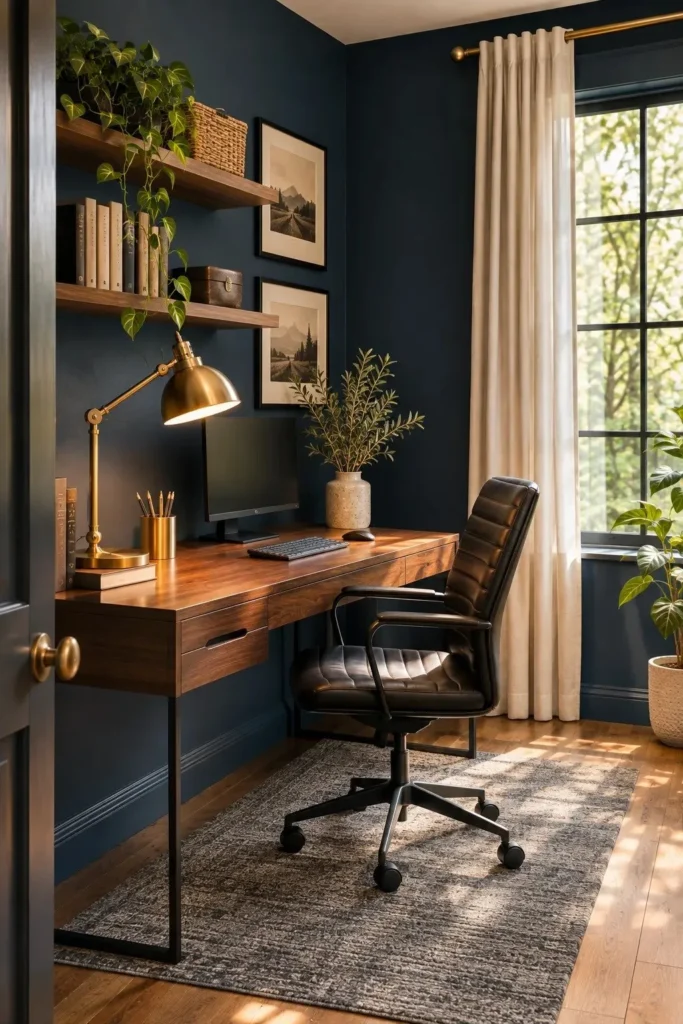
A bulky desk can steal valuable floor space before you even sit down. A floating walnut workspace creates a cleaner layout while keeping the room sophisticated and practical.
- Choose a slim desktop: A depth of 18 to 22 inches can accommodate a laptop and writing essentials without crowding a narrow room.
- Secure proper supports: Fix heavy-duty brackets into wall studs or appropriate masonry anchors according to the desk’s weight requirements.
- Keep cables hidden: Install an under-desk cable tray and route cords toward the nearest outlet.
- Use vertical storage: Mount shallow shelves above the desk for notebooks, reference books, and small office supplies.
- Protect legroom: Choose a compact chair that slides underneath the desktop when your workday ends.
A floating surface works particularly well in bedrooms and apartment corners where every inch matters. Pair dark walnut with muted green walls and warm brass details for a moody home office that feels intentional. Keep the desktop mostly clear so the rich wood finish remains visible.
Layered Task Lighting
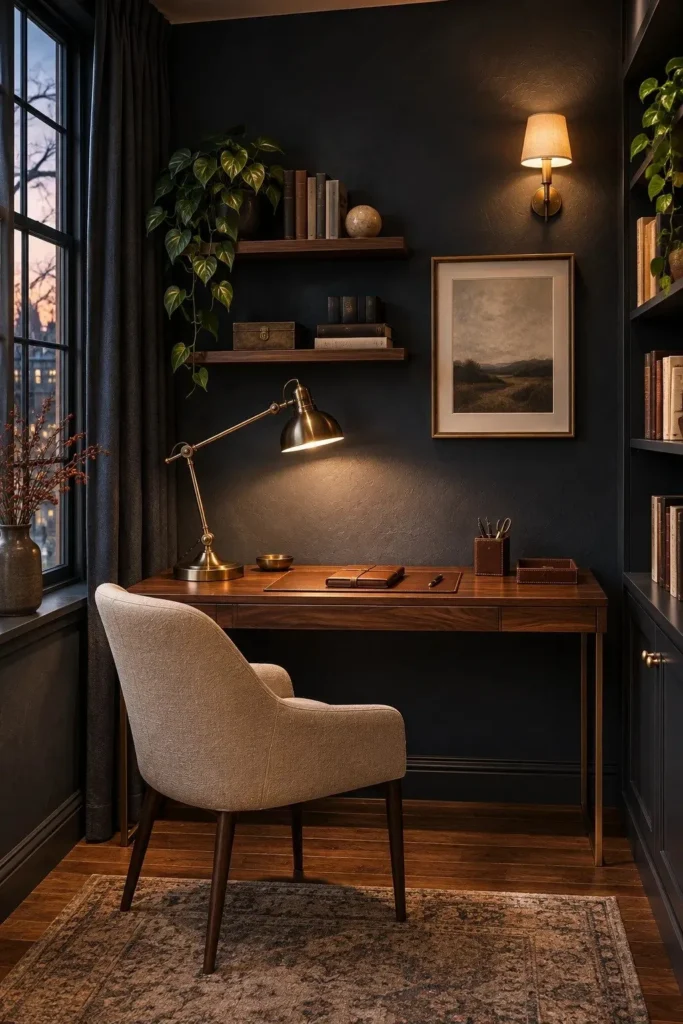
Quick Tip:
Position an adjustable desk lamp beside your keyboard or writing area, directing light away from the monitor. Combine it with a softly diffused wall sconce to prevent harsh contrast between your desk and the surrounding room.
Lighting determines whether a dark workspace feels cozy or exhausting after sunset. Choose a focused task lamp for paperwork and a separate ambient light for the wider room. Dimmable bulbs make adjustments easier throughout the day. Avoid positioning exposed bulbs directly behind your monitor, where reflections can distract you.
Forest Green Built Ins
BEFORE:
A narrow office corner feels cluttered with mismatched shelves, scattered paperwork, and storage boxes occupying valuable floor space. The desk looks crowded, while unused wall space makes the room feel unfinished.
AFTER:
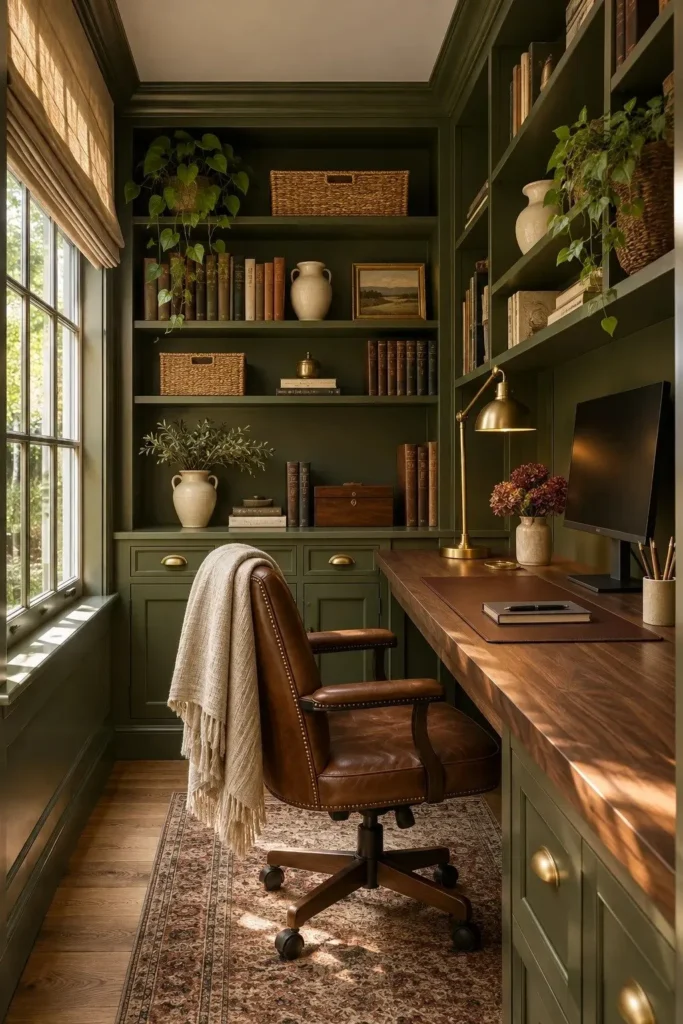
Deep forest green built-ins frame the desk and provide dedicated storage for everyday supplies. Closed lower cabinets conceal clutter, while open upper shelves display books and decorative pieces without overwhelming the workspace.
Built-in storage works especially well in rooms where freestanding furniture restricts movement. Choose adjustable shelves to accommodate changing storage needs, and keep frequently used supplies within easy reach. Painting the cabinetry and surrounding wall the same deep green creates a continuous appearance, making the arrangement feel more integrated.
Compact Corner Workstation
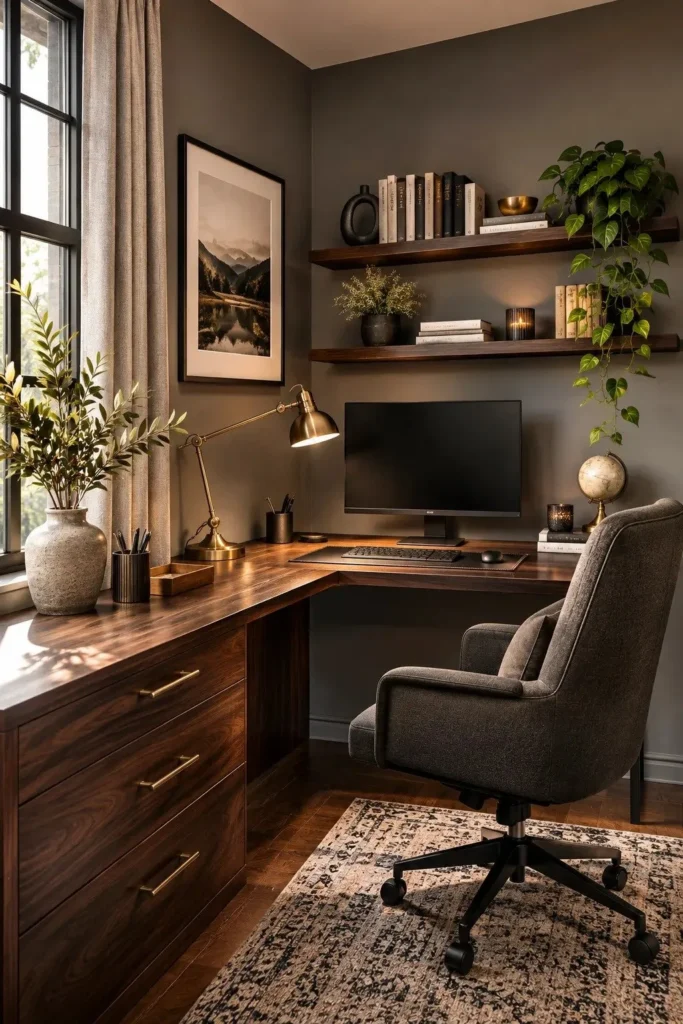
An overlooked corner can become the most productive part of a small room with the right furniture arrangement.
- Measure both walls: Record the available width and depth, including clearance for doors, outlets, and chair movement.
- Choose a compact desk: Select a narrow L-shaped design with one longer surface for computer work and a shorter return for writing.
- Position your monitor: Place the screen directly in front of your normal seated position to avoid constant neck twisting.
- Install corner shelves: Use the wall above the shorter desk section for lightweight storage without sacrificing work surface.
- Organize your cables: Secure power cords beneath the desktop using adhesive clips or a mounted cable tray.
Corner workstations are especially useful in studio apartments and bedrooms that serve multiple purposes. Dark walnut furniture gives the setup depth, while warm gray walls keep the surrounding space from feeling enclosed. Maintain enough room behind your chair to stand and move comfortably throughout the day.
Black Metal Shelving
| Design Detail | Bulky Shelving | Slim Metal Shelving |
|---|---|---|
| Visual appearance | Heavy, solid cabinet frames | Open, lightweight structure |
| Floor space | Often requires floor support | Wall-mounted options free the floor |
| Storage style | Deep enclosed compartments | Shallow, visible storage |
| Small-room effect | Can dominate narrow walls | Keeps more wall visible |
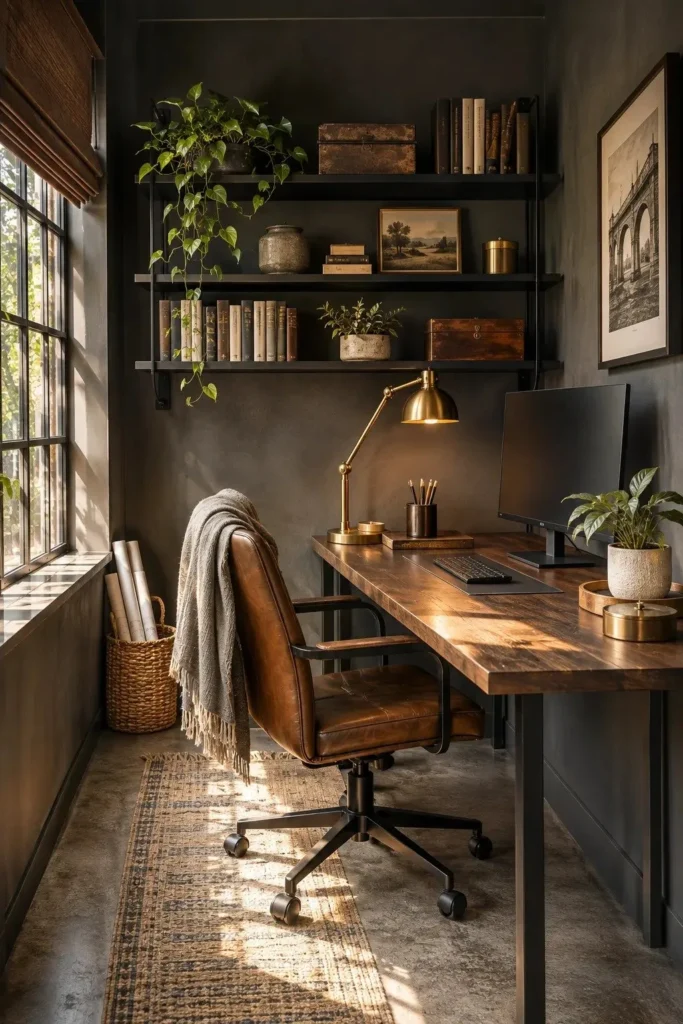
Black metal shelves introduce structure without demanding the visual attention of heavy cabinets. Choose shelves around 8 to 10 inches deep for books and small accessories, provided the supports are rated for the load. Leave breathing room between objects and secure every shelf properly for safe everyday use.
Dark Wood Wall Panels
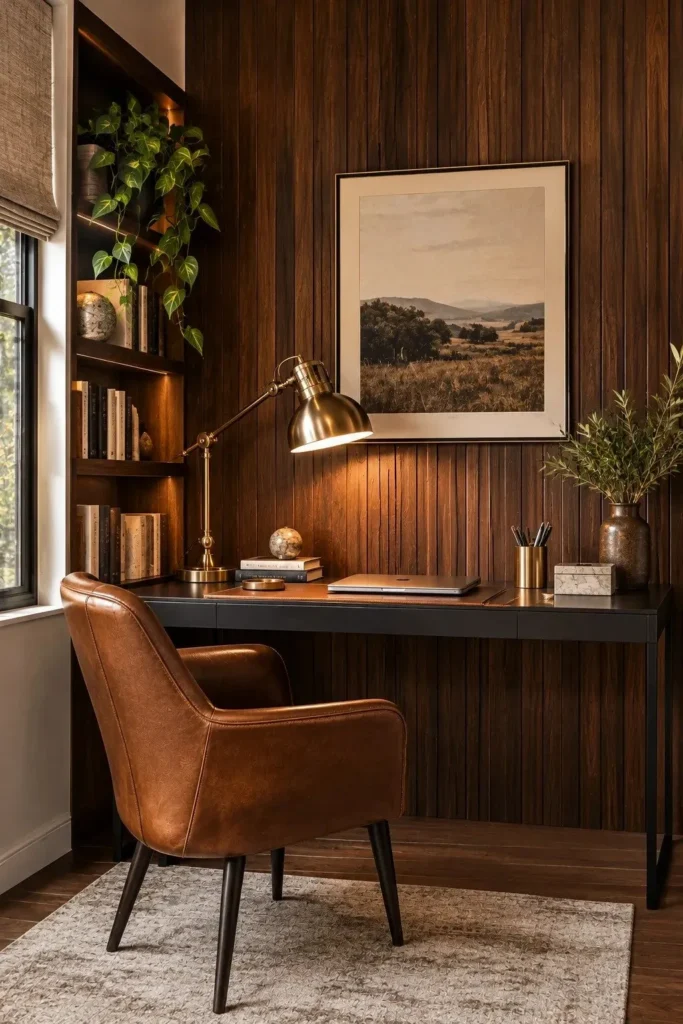
Rich wood paneling gives a small office architectural character without requiring bulky furniture. Vertical panels draw attention upward, making low ceilings appear taller while creating a defined backdrop for focused work.
DO:
- Install narrow vertical panels on the wall behind your desk.
- Choose walnut or smoked oak finishes with natural grain.
- Pair dark wood with warm white ceilings.
- Use concealed cable channels for a cleaner desk setup.
DON’T:
- Cover every wall with heavy dark paneling.
- Combine too many competing wood finishes.
- Install panels over damp or damaged walls.
- Block electrical outlets or ventilation openings.
For a budget-friendly approach, use wood veneer panels or stained timber slats instead of solid hardwood. Keep the remaining furniture simple so the wall becomes the main feature. A narrow desk, adjustable lamp, and comfortable chair provide functionality without competing with the paneling’s natural texture.
Vintage Leather Desk Chair
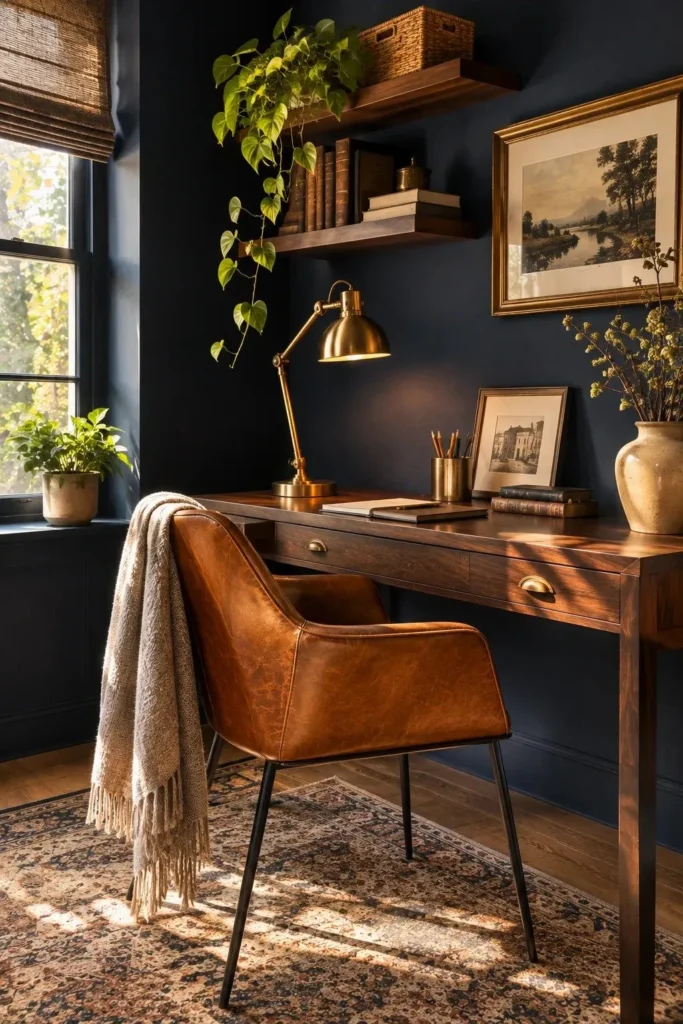
Cost: Moderate to high, depending on upholstery and construction.
Best For: Small offices with traditional, industrial, or vintage-inspired interiors.
Materials: Cognac leather, dark wood, and black metal.
Key Feature: Adjustable seat height and supportive backrest.
A cognac leather chair brings warmth to dark walls without introducing another large decorative piece. Look beyond appearance and check seat depth, lumbar support, and armrest clearance before purchasing. For daily computer work, choose an ergonomic office chair with leather upholstery rather than an attractive but unsupportive vintage dining chair.
Navy Blue Office Nook
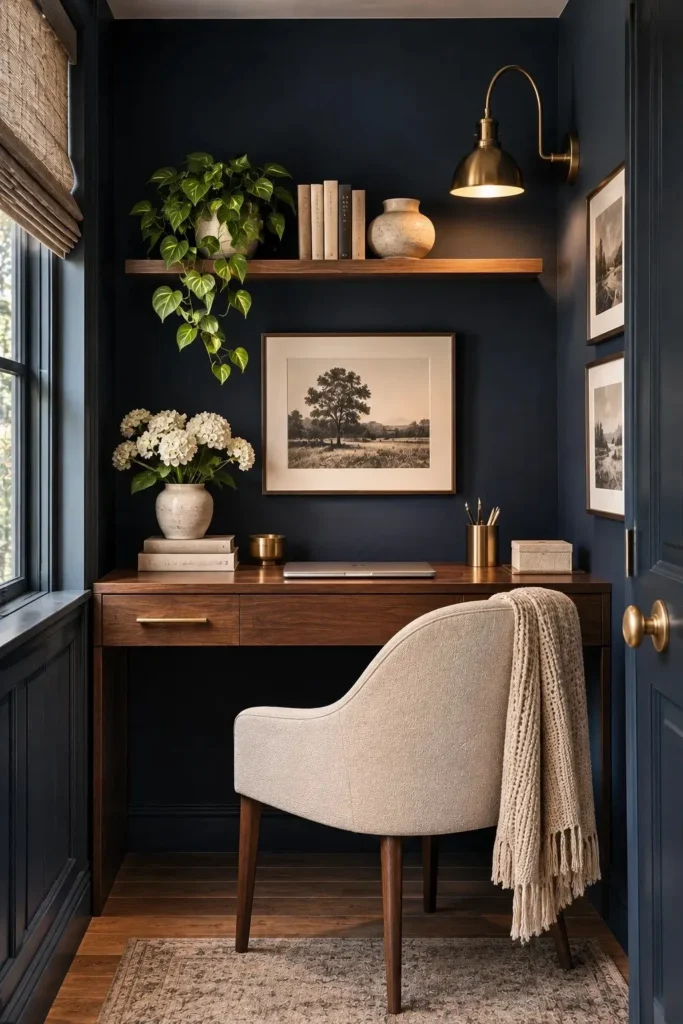
A forgotten alcove can become a surprisingly capable workspace with a carefully chosen navy backdrop. Paint the recessed walls in a rich midnight blue, then install a desktop that fits the available width without leaving awkward gaps. The darker color visually separates your workstation from the surrounding room.
For comfort, position the desk near natural light and choose a chair that moves freely within the nook. A wall-mounted sconce saves valuable desktop space, while a single shallow shelf holds everyday essentials. Keep the main room lighter to create contrast and maintain an inviting atmosphere.
Matte Black Pegboard
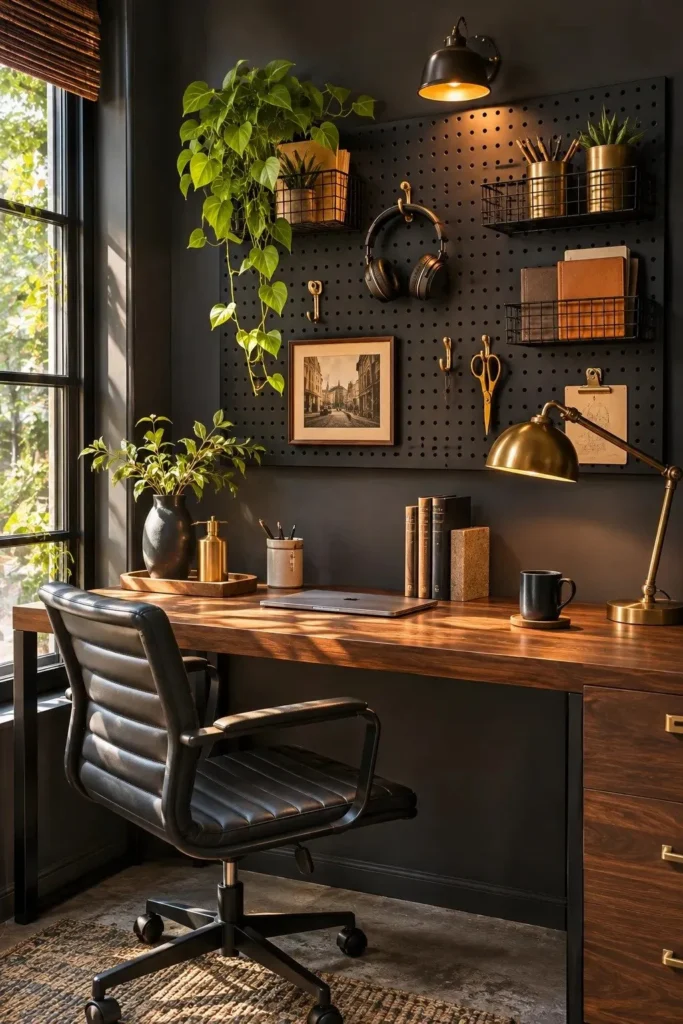
A cluttered desk becomes much easier to manage when everyday supplies have dedicated places on the wall. A matte black pegboard adds practical vertical storage while maintaining the rich, understated appearance of a dark workspace.
- Choose the right size: Select a pegboard slightly narrower than your desk to create a balanced arrangement.
- Organize daily essentials: Hang headphones, scissors, measuring tools, and frequently used accessories within comfortable reach.
- Add small containers: Use compatible pegboard baskets for pens, sticky notes, charging cables, and other loose items.
- Create visual balance: Mix black accessories with a few brass hooks or natural wooden holders.
- Keep it accessible: Position frequently used items where you can reach them without standing or stretching.
Wall-mounted organization is especially helpful when your desktop must accommodate a monitor, keyboard, and writing materials. Install the pegboard using suitable wall anchors and leave enough clearance above your screen. Avoid filling every opening with accessories, since overcrowding can make a small workspace feel visually busy.
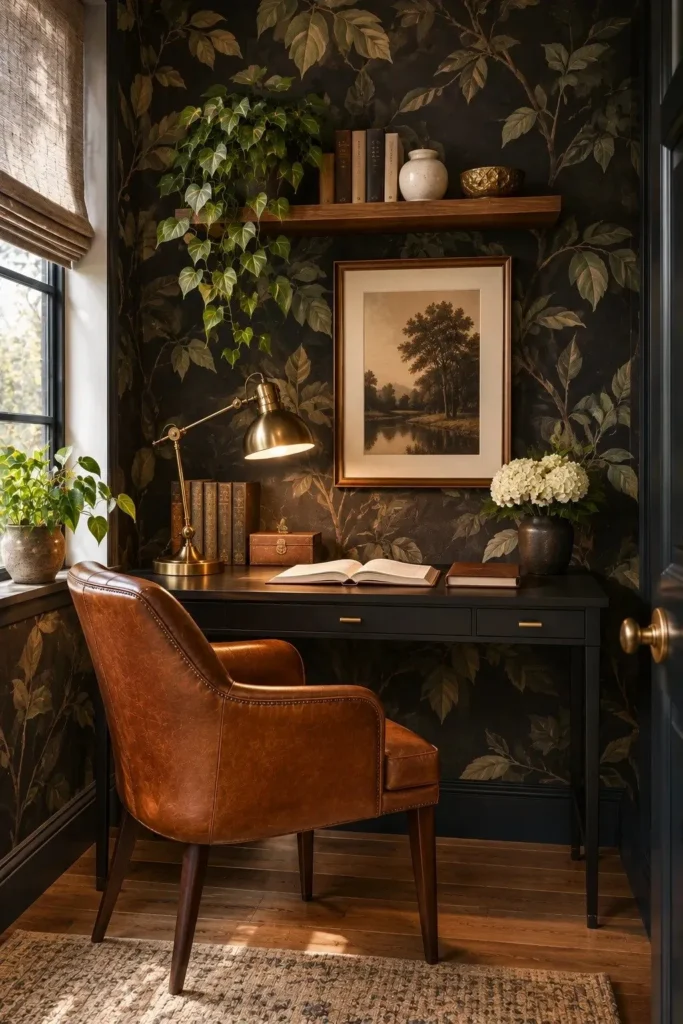
Dark Botanical Wallpaper
Quick Tip:
Choose botanical wallpaper with a dark background and a restrained pattern rather than oversized, brightly colored leaves. Apply it to the wall behind your desk and keep the remaining walls in a coordinating neutral shade to prevent visual overload.
Botanical wallpaper introduces texture and personality without occupying valuable floor space. Deep olive foliage against charcoal creates a layered backdrop for walnut furniture and brass accessories. For rented apartments, consider removable wallpaper after checking wall compatibility. Order a sample first, since intricate patterns can appear much busier in smaller rooms.
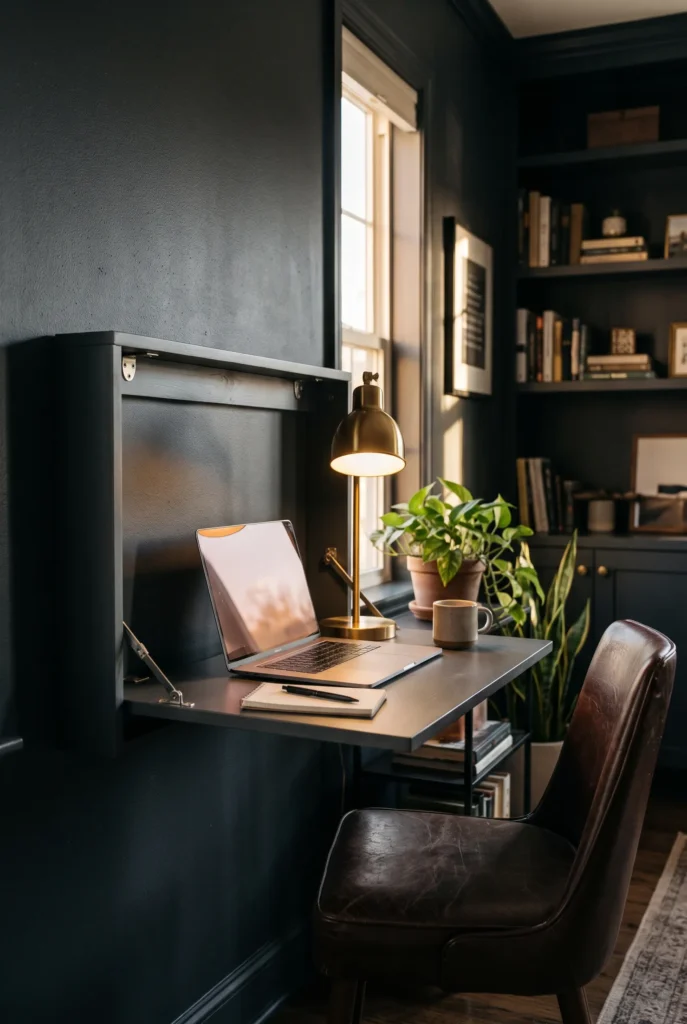
Charcoal Foldaway Desk
BEFORE:
A traditional desk occupies valuable floor space in a narrow bedroom, leaving little room to move around comfortably. Computer accessories and paperwork remain visible even after the workday ends, making the room feel crowded.
AFTER:
A charcoal foldaway desk provides a dedicated work surface that closes neatly against the wall when unused. Compact interior compartments hold notebooks and small accessories, restoring valuable walking space and creating a cleaner appearance.
Foldaway furniture works particularly well in studio apartments, guest bedrooms, and shared living spaces. Choose a model with sturdy hinges, appropriate wall fixings, and sufficient depth for your laptop. Check the manufacturer’s weight limit before adding equipment, and use a lightweight chair that stores easily nearby.
Espresso Painted Ceiling
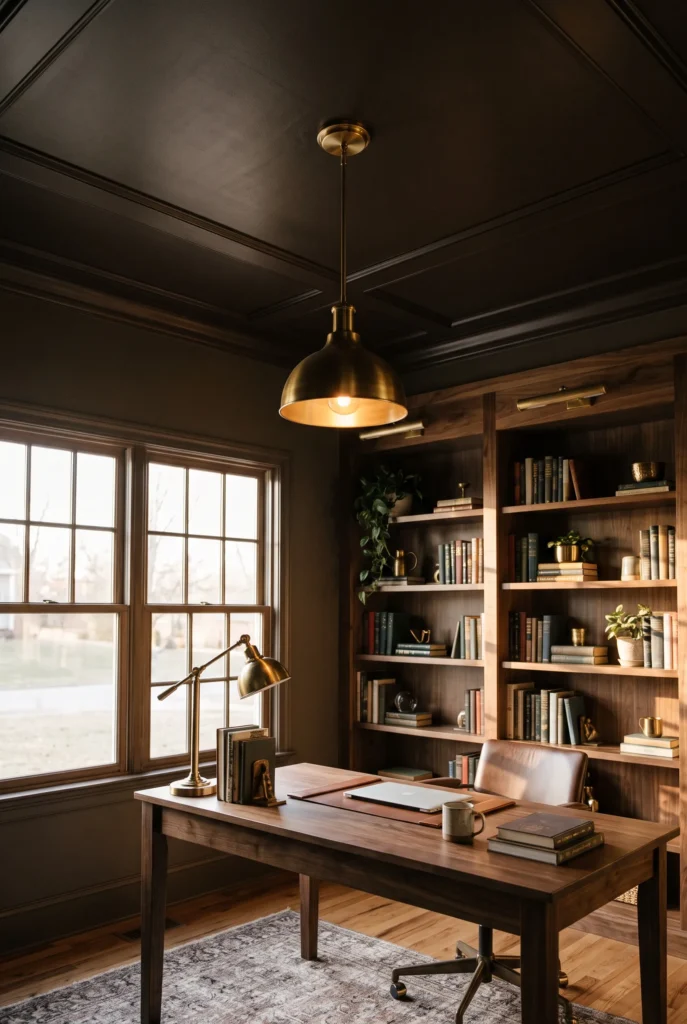
Cost: Low to moderate, depending on paint and preparation.
Time: One weekend, including drying time.
Best For: Small offices with good natural light and simple ceiling details.
Color Palette: Espresso brown, warm taupe, walnut, and antique brass.
A dark ceiling introduces unexpected depth while keeping the walls available for shelves and artwork. Choose a matte espresso finish to minimize reflections, and test a sample before painting the entire surface. Pair it with lighter walls and adequate lighting to prevent the room from feeling overly enclosed.
Velvet Window Panels
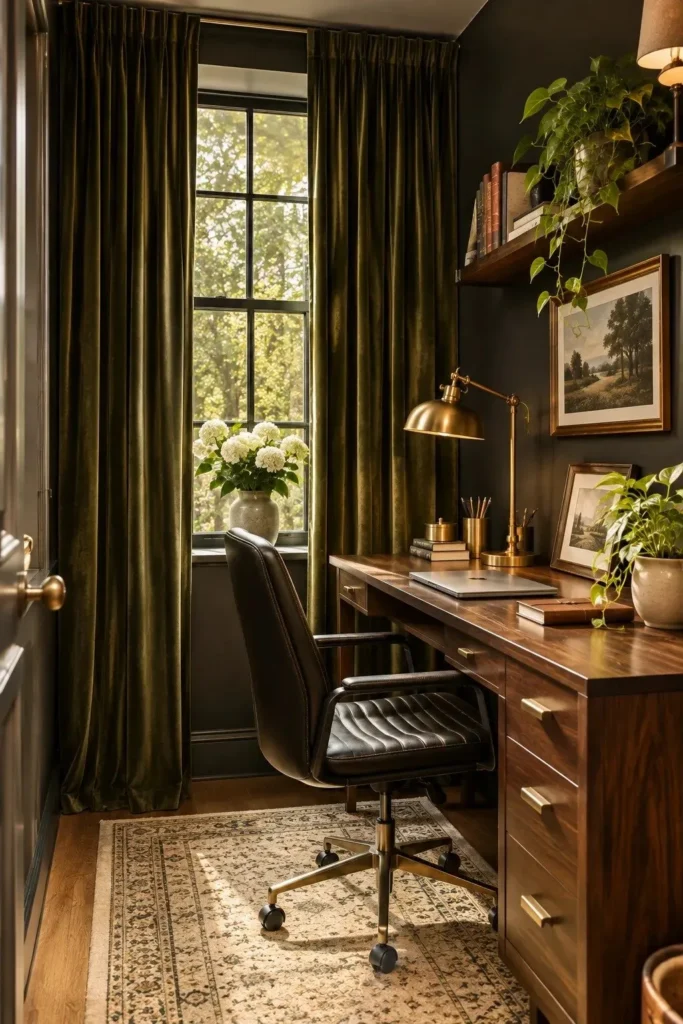
Heavy curtains can make a compact office feel luxurious, but the right proportions matter more than the fabric’s richness. Choose floor-length velvet panels in deep olive, tobacco brown, or muted burgundy. Mount the curtain rod several inches above the window frame to create a taller appearance and leave more visible wall space around your desk.
Select lined panels if afternoon glare makes computer work uncomfortable. Open them fully during darker mornings to preserve natural light, and position your monitor perpendicular to the window whenever possible. A simple brass curtain rod adds warmth without visual clutter. Keep the fabric clear of floor vents and nearby heaters for safer everyday use.
Concealed Desk Drawers
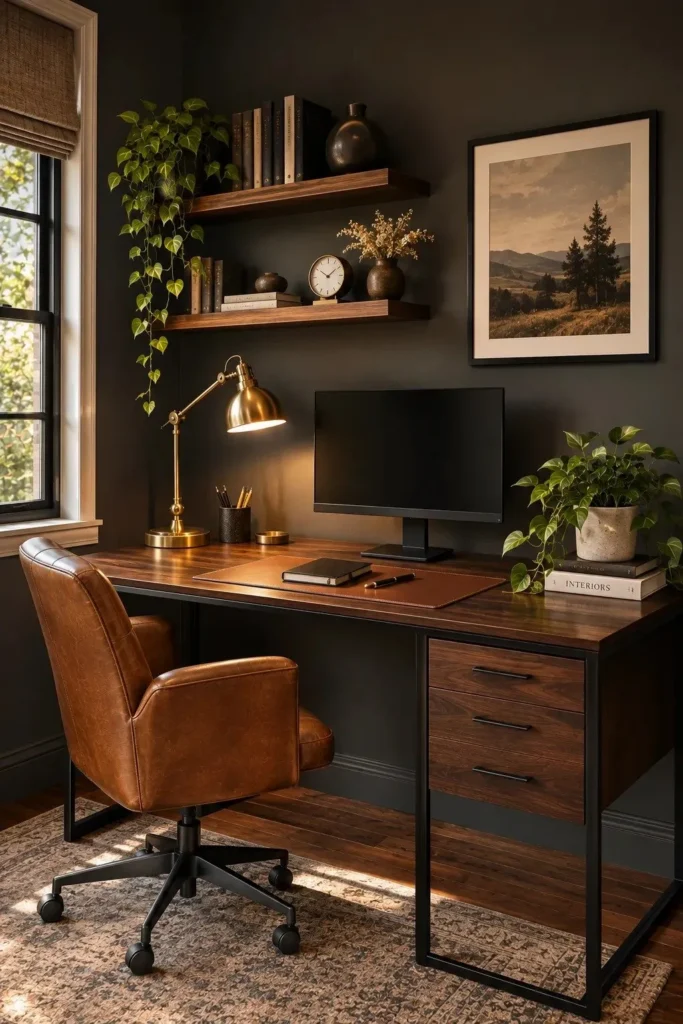
Small office supplies can take over a beautiful desktop surprisingly quickly. Concealed drawers keep everyday essentials close without interrupting the clean lines of your furniture.
- Choose shallow drawers: Install one or two slim drawers beneath the desktop for notebooks, charging cables, and stationery.
- Protect your legroom: Position storage toward one side, leaving adequate space for your knees and thighs.
- Add drawer organizers: Use small compartments to separate pens, sticky notes, memory cards, and other accessories.
- Match the finish: Select dark walnut or matte black drawer fronts that blend with the existing furniture.
- Check mounting clearance: Confirm that drawer hardware will not interfere with desk supports, cables, or your chair.
Hidden storage is particularly useful in a moody home office where clean surfaces help dark finishes stand out. Keep frequently used items in the uppermost drawer and store occasional supplies elsewhere. A weekly five-minute clear-out prevents small compartments from becoming another source of clutter.
Espresso Leather Desk Mat
Quick Tip:
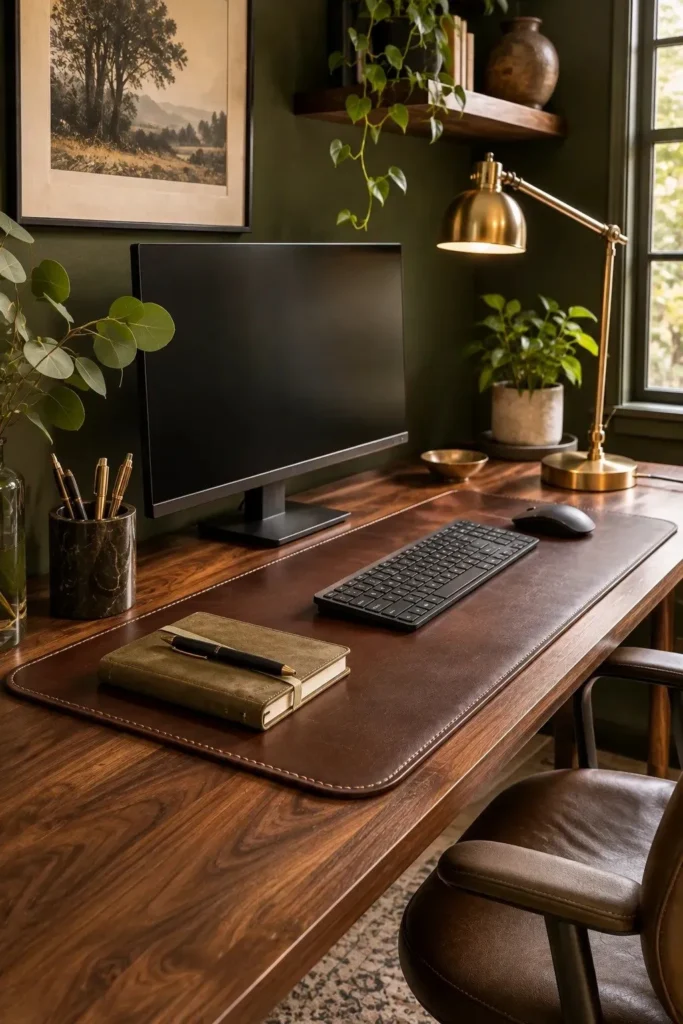
Choose a desk mat large enough to accommodate both your keyboard and mouse without covering the entire desktop. Look for a non-slip backing and a smooth surface that allows comfortable mouse movement while protecting delicate wood finishes.
An espresso leather desk mat adds warmth and structure to a compact workstation without occupying extra storage space. Pair it with matte black accessories and a walnut desktop for a cohesive appearance. Wipe the surface regularly, and avoid placing hot drinks directly on genuine leather to prevent damage.
Reeded Glass Room Divider
BEFORE:
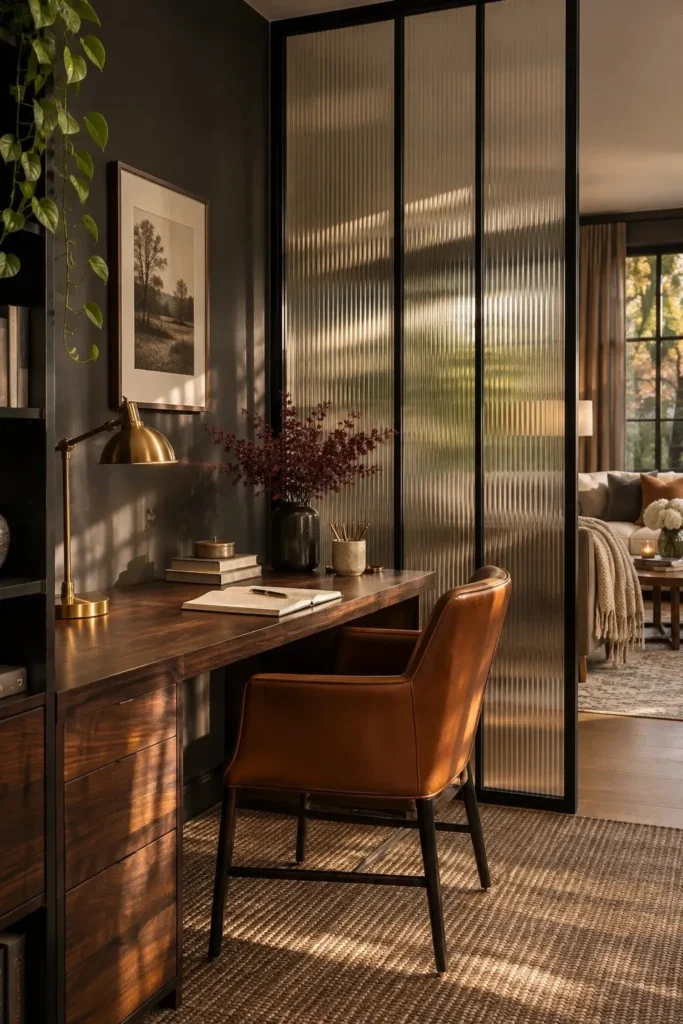
A small desk occupies one corner of a shared living room, leaving the workspace exposed to household distractions. The lack of separation makes it difficult to establish a clear boundary between work and relaxation.
AFTER:
A slim reeded glass divider creates a distinct office area without blocking valuable natural light. Textured glass partially obscures visual distractions, while its black metal frame complements the darker furniture and gives the arrangement a structured appearance.
This approach works particularly well in studio apartments and multipurpose living rooms. Choose a fixed or freestanding divider with a narrow footprint, and secure it against tipping according to the manufacturer’s instructions. Reeded glass provides visual separation but limited sound insulation, so headphones may still help during calls.
Rolling Printer Station
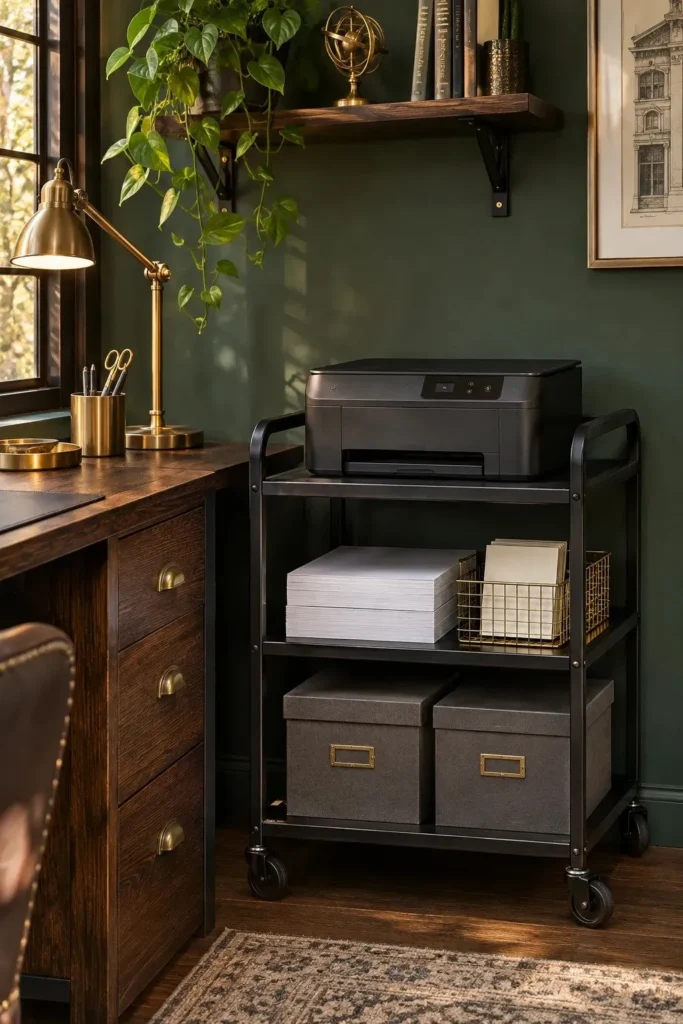
A printer does not need to occupy half your desktop. A compact rolling station gives bulky equipment its own storage area while keeping the main workspace available for daily tasks.
- Measure your printer: Check its width, depth, and required clearance for paper trays, ventilation, and opening covers.
- Choose a sturdy cart: Select a narrow rolling unit with a weight capacity suitable for your printer and supplies.
- Organize the lower shelves: Store printer paper, spare cartridges, and filing accessories in matching dark storage boxes.
- Manage power cables: Position the cart near an outlet and secure loose cables to prevent tripping when moving it.
- Lock the wheels: Engage the wheel locks before printing to keep the station stable during operation.
A black metal cart blends naturally with charcoal cabinetry and dark wooden furniture. Choose one that fits beside your desk or beneath an open counter when appropriate. Avoid enclosing equipment without sufficient ventilation, and keep the printer accessible enough for easy paper loading and maintenance.
Charcoal Low Pile Rug
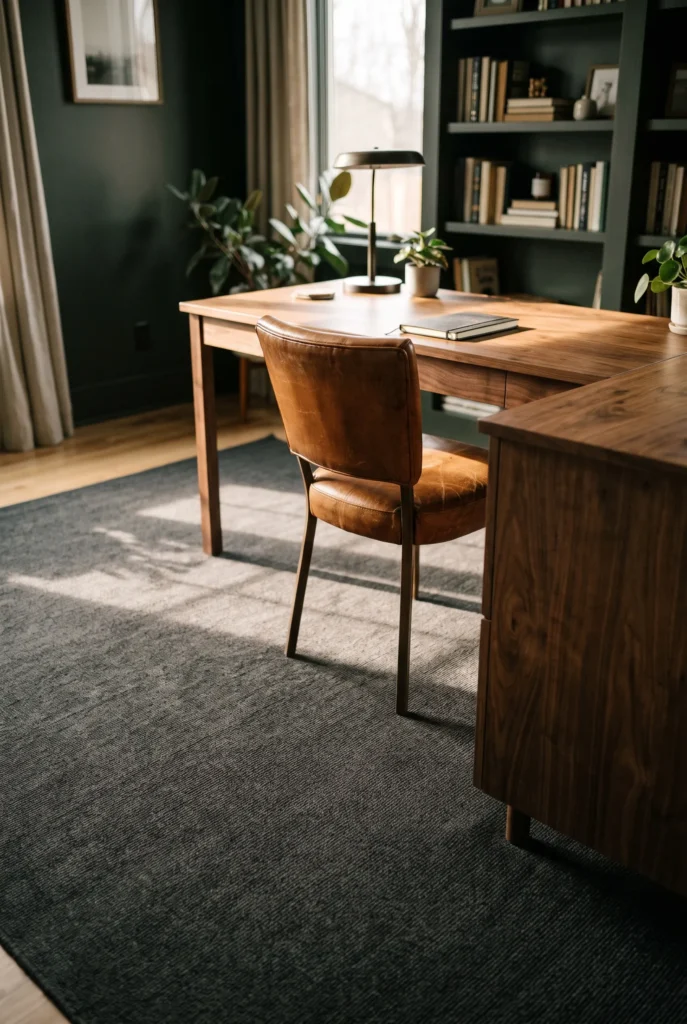
| Design Detail | Thick Shag Rug | Low Pile Rug |
|---|---|---|
| Chair movement | Wheels may sink into fibers | Firmer surface allows easier movement |
| Maintenance | Traps more dust and debris | Easier to vacuum regularly |
| Visual appearance | Plush and textured | Clean and understated |
| Small-room practicality | Can interfere with rolling chairs | More suitable for compact workstations |
A low-pile rug anchors a small workstation without making chair movement frustrating. Choose a tightly woven charcoal design with a subtle pattern that disguises everyday lint. Leave enough exposed floor around the edges to keep the room balanced, and use a non-slip pad suited to your flooring.
Olive Acoustic Wall Panels
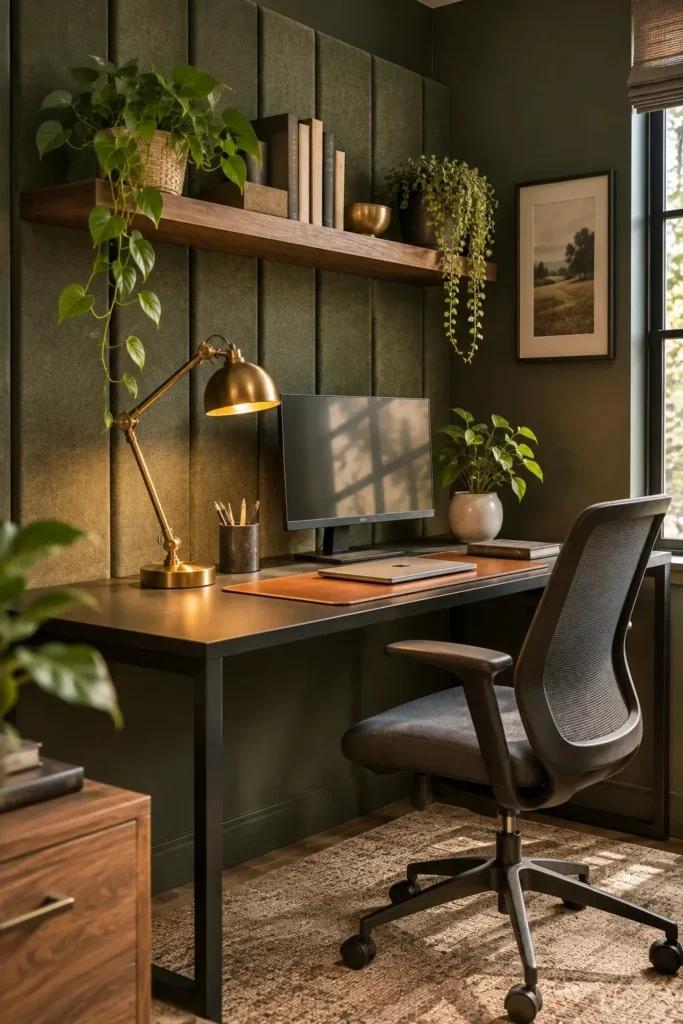
Unwanted echoes can make video meetings and focused conversations frustrating, especially in small rooms with bare walls and hard flooring. Olive acoustic panels introduce a softer surface while adding subtle visual texture.
DO:
- Install acoustic panels near reflective wall surfaces.
- Choose muted olive or charcoal felt finishes.
- Arrange panels in a balanced geometric pattern.
- Follow the manufacturer’s mounting instructions.
DON’T:
- Expect decorative panels to block outside noise.
- Cover electrical outlets or ventilation openings.
- Choose panels without checking acoustic performance.
- Overcrowd a narrow wall with competing patterns.
Acoustic felt panels can reduce reflected sound inside a room, although their effectiveness depends on thickness, coverage, and placement. Pair olive panels with black furniture and warm walnut accents for a cohesive workspace. Start with a small arrangement behind your desk before covering a larger wall.
Slim Under Desk Footrest
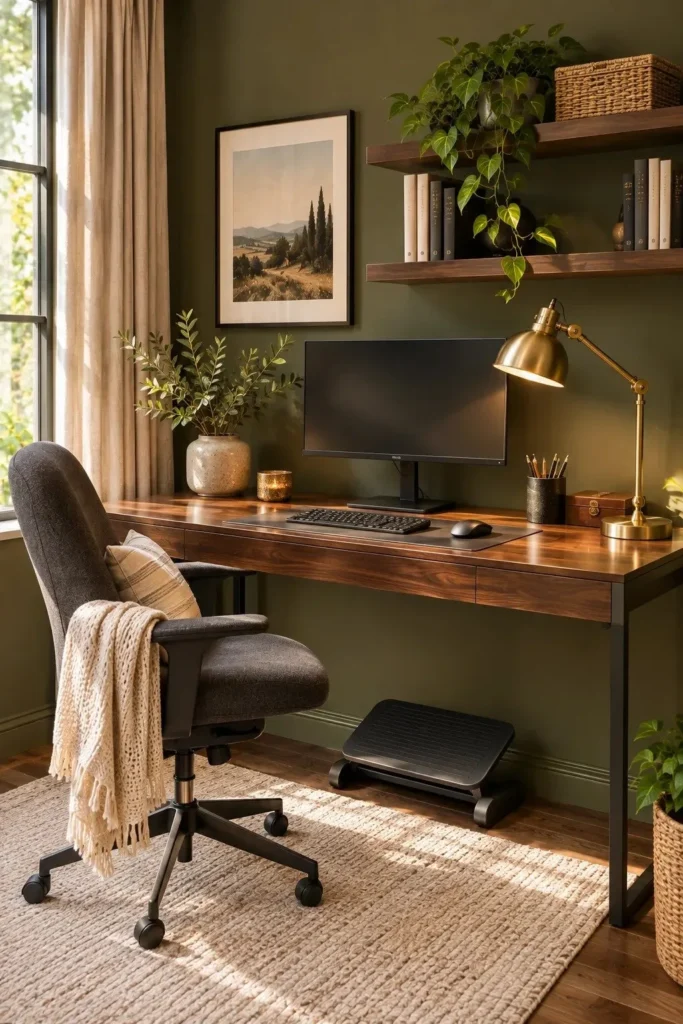
Cost: Low to moderate, depending on adjustability and materials.
Time: A few minutes to position and adjust.
Best For: Desk users whose feet do not rest comfortably on the floor.
Key Feature: Non-slip surface with adjustable height or tilt.
A footrest can improve seated comfort when your chair height leaves your feet unsupported. Choose a slim adjustable model that fits beneath the desk without restricting leg movement. Keep your knees comfortable and shoulders relaxed, and reposition the footrest occasionally rather than remaining in one posture throughout the day.
Compact Standing Desk
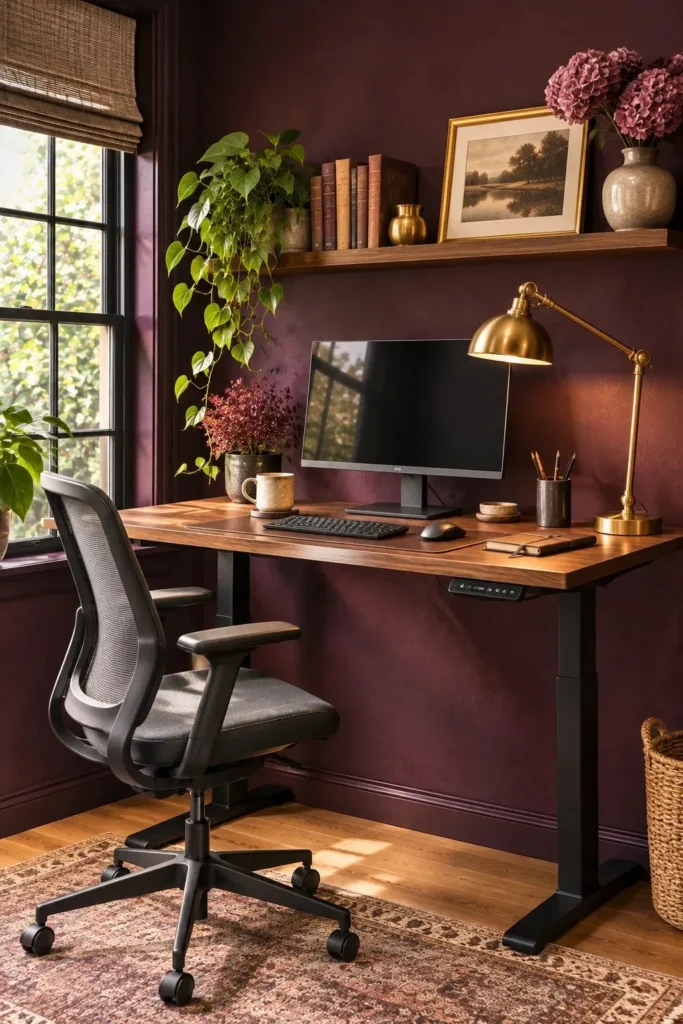
A height-adjustable desk can make a cramped workday feel less static without requiring a second workstation. Choose a compact rectangular top rather than a wide executive design, and measure the full lifting range before buying. Wall shelves and windowsills must remain clear as the desk rises.
Set the screen near eye level, with your elbows relaxed while typing. Route cables with enough slack for the desk’s highest position, and alternate between sitting and standing based on comfort. A black frame keeps the adjustable mechanism visually understated against dark walls.
Window Side Desk Placement
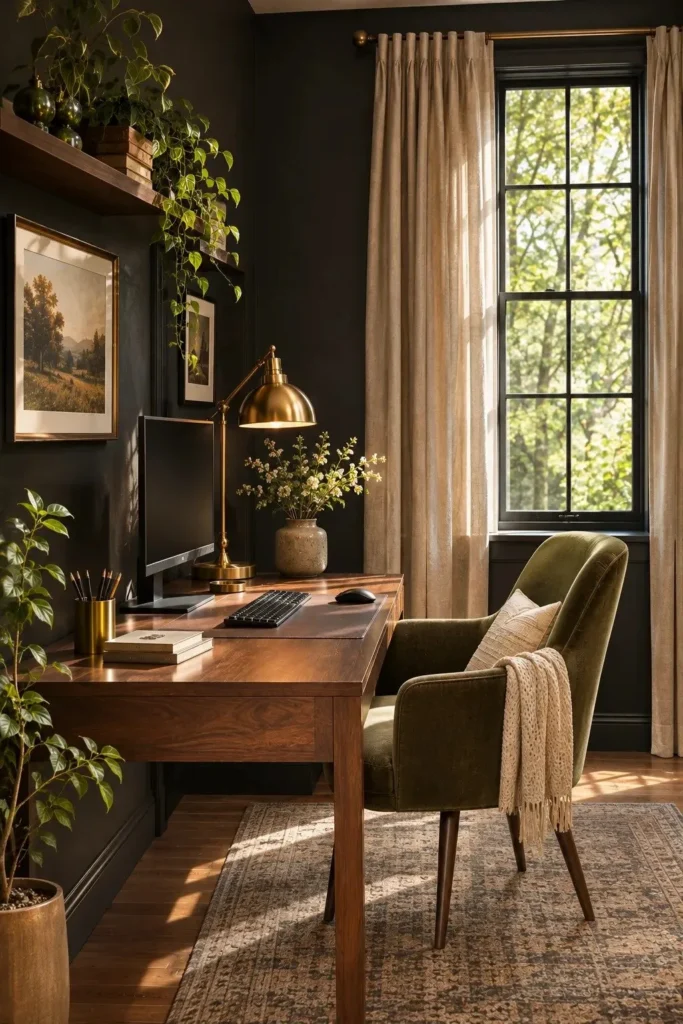
Natural daylight can make even the darkest office feel more comfortable, but poor desk placement often causes distracting screen glare. Positioning your workspace beside a window offers a practical balance between useful daylight and visual comfort.
- Choose a side position: Arrange the desk perpendicular to the window rather than facing directly into strong sunlight.
- Control harsh brightness: Install adjustable linen blinds or light-filtering shades to soften afternoon glare.
- Protect your screen: Position the monitor where direct sunlight cannot strike its surface during working hours.
- Maintain clear movement: Leave enough space between the desk, window treatments, and chair for comfortable access.
- Balance the contrast: Add a warm desk lamp for cloudy afternoons and evening work sessions.
A window-side workstation pairs particularly well with charcoal walls and dark walnut furniture because daylight reveals the richness of their textures. Keep the windowsill free from bulky decorations, and avoid blocking the natural light with tall storage units. The result feels focused without becoming gloomy.
Antique Brass Wall Mirror
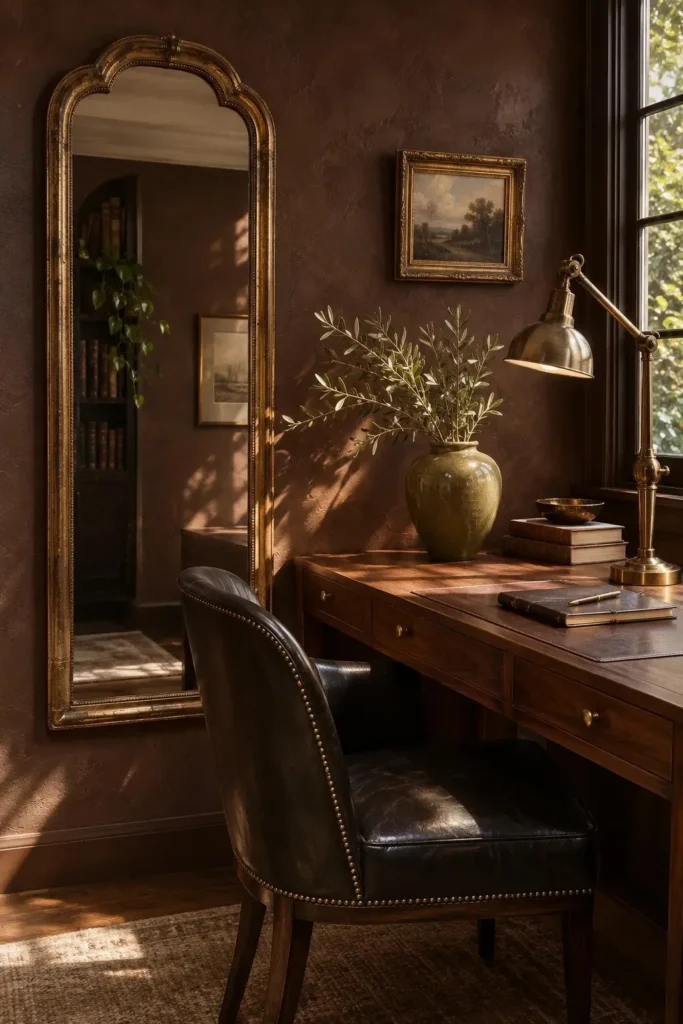
Quick Tip:
Position a narrow wall mirror where it reflects natural light or a softly illuminated wall rather than your computer screen. Choose a simple antique brass frame to introduce warmth without adding bulky decorative furniture.
A carefully placed mirror can make a narrow office feel more open while preserving its darker atmosphere. Choose a vertical design to emphasize ceiling height and mount it securely away from busy walkways. Avoid reflecting cluttered shelves or exposed light bulbs, which can create unnecessary visual distractions.
Closet Office Conversion
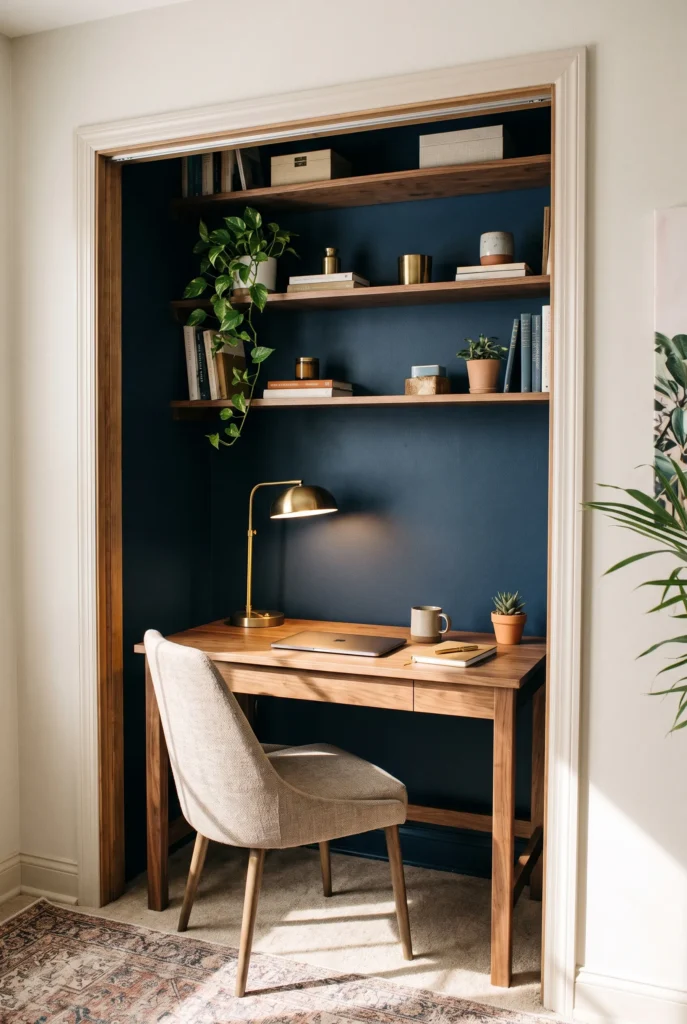
BEFORE:
An underused bedroom closet becomes a frustrating collection of boxes, seasonal decorations, and forgotten supplies. Meanwhile, a freestanding desk occupies valuable floor space and makes the bedroom feel crowded.
AFTER:
The closet becomes a compact workstation with a fitted desktop, dark painted walls, and overhead storage. A comfortable chair slides beneath the surface, while organized shelves keep supplies accessible without spreading clutter throughout the bedroom.
A closet office works especially well in guest bedrooms and small apartments where dedicated workspace is limited. Remove unnecessary shelving, measure the available depth, and provide suitable lighting and ventilation. Keep electrical equipment accessible, and check that the chair has enough clearance for comfortable daily use.
Vertical Document Files
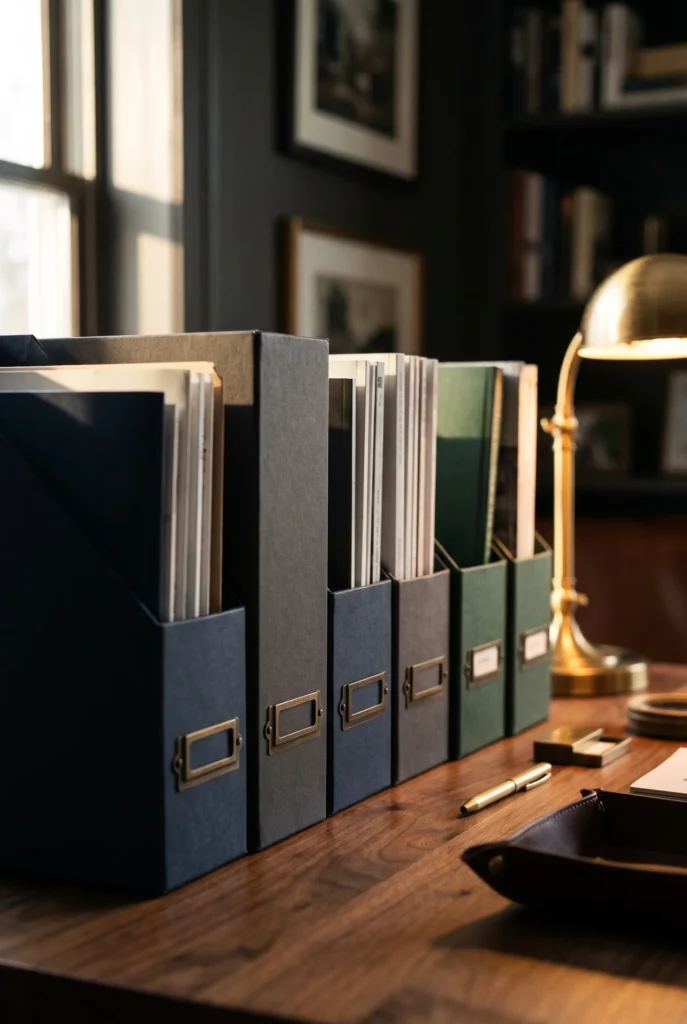
- Clear your paper clutter: Gather loose bills, project notes, and unfinished paperwork from your desk into one manageable stack.
- Choose wall-mounted organizers: Install three slim metal document holders on an accessible wall beside your workstation.
- Create simple categories: Label each holder for incoming papers, active projects, and documents awaiting filing.
- Sort papers immediately: Place new documents into the correct holder instead of leaving them across your desktop.
- Schedule a weekly review: Empty completed folders, securely dispose of unnecessary papers, and archive important records.
Vertical filing creates a dedicated place for paperwork without requiring another cabinet. Choose matte black organizers to coordinate with dark furniture, and use matching cream folders for a softer contrast. Keep confidential documents in enclosed storage rather than exposed holders, particularly when your office doubles as a guest room.
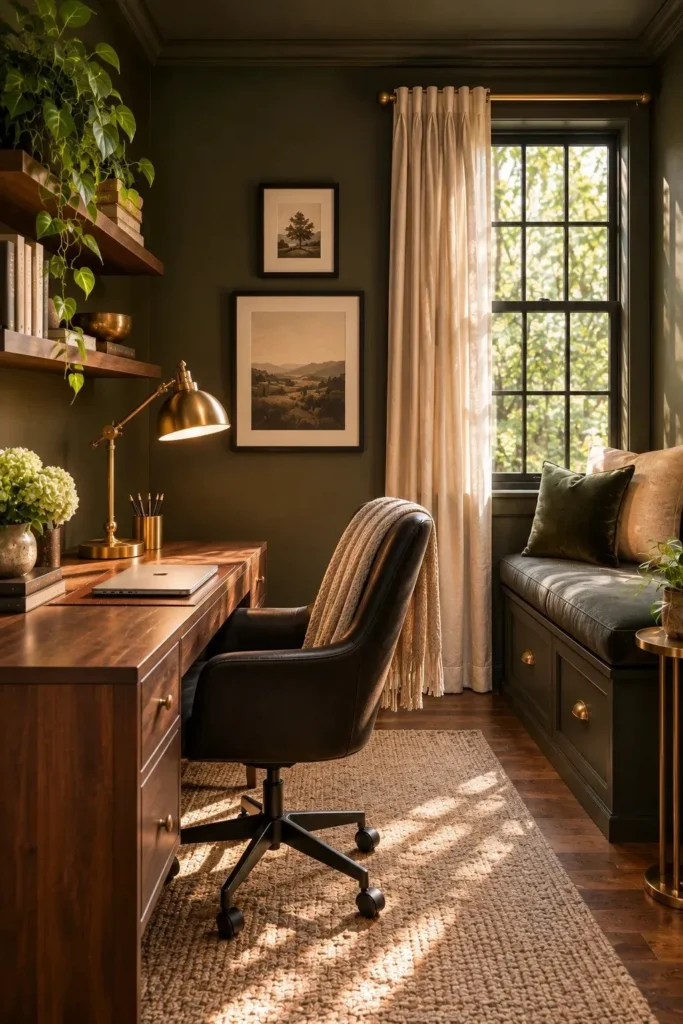
Upholstered Storage Bench
| Design Detail | Separate Guest Chair | Storage Bench |
|---|---|---|
| Functionality | Provides occasional seating | Combines seating with concealed storage |
| Storage capacity | Usually offers no storage | Holds office accessories and supplies |
| Placement | Requires its own floor space | Can fit beneath a window |
| Visual appearance | Adds another furniture silhouette | Creates a streamlined horizontal feature |
A narrow storage bench offers occasional seating while concealing spare notebooks, office supplies, and seasonal accessories. Choose charcoal upholstery with a hinged lid and check the interior dimensions before buying. Position it away from your desk chair’s movement path, and avoid blocking heating vents or window access.
Under Desk Cable Basket
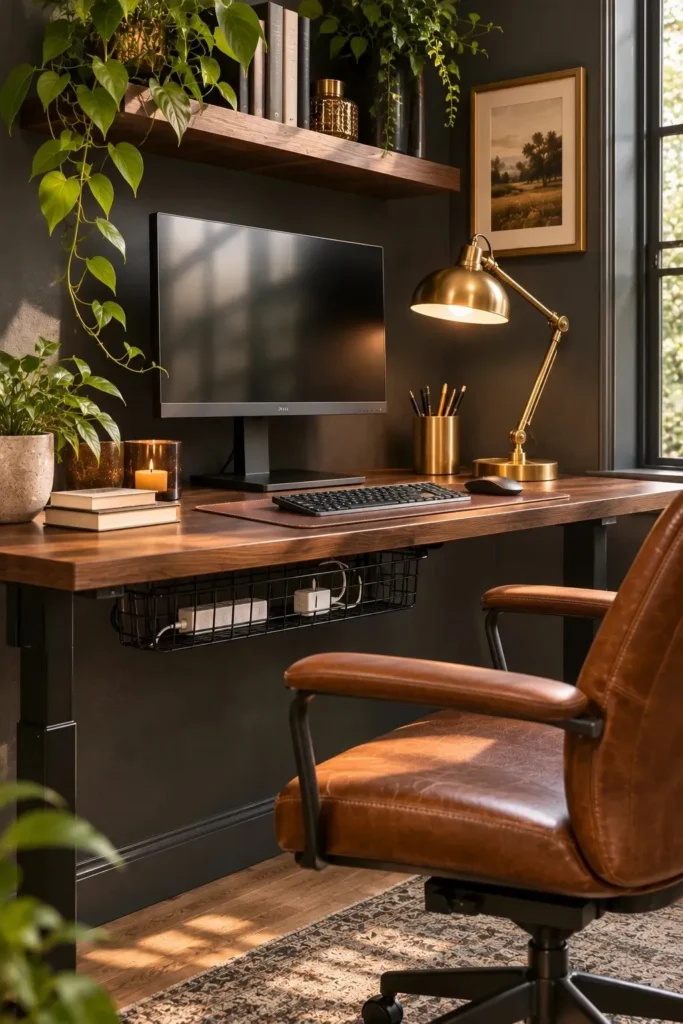
Tangled cables can ruin the clean appearance of a beautifully arranged dark office. An under-desk cable basket keeps power strips and loose cords organized while preserving valuable floor space.
DO:
- Choose a sturdy metal basket with adequate ventilation.
- Mount the basket beneath the rear edge of your desk.
- Group compatible cables with reusable hook-and-loop ties.
- Leave enough slack for adjustable desk movement.
DON’T:
- Overload power strips with excessive equipment.
- Crush or tightly bend electrical cords.
- Place power adapters beneath loose fabrics.
- Block ventilation around charging equipment.
A concealed cable basket is especially useful for small workstations with multiple electronic devices. Choose a matte black finish that blends with the desk frame and dark furniture. Keep power switches accessible for everyday use, and check cables periodically for wear, overheating, or loose connections.
Framed Architectural Prints
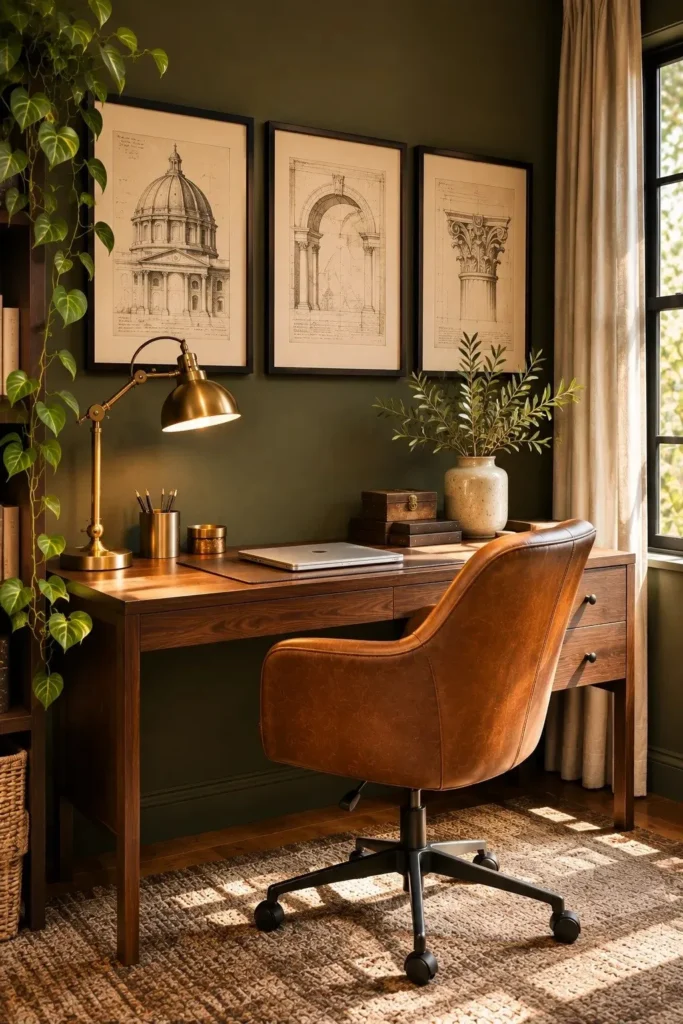
Cost: Low to moderate, depending on prints and frames.
Time: Approximately one hour for arranging and hanging.
Best For: Vintage-inspired, traditional, and contemporary dark offices.
Color Palette: Antique ivory, charcoal black, walnut, and muted olive.
Architectural prints introduce personality without overwhelming a compact workspace. Choose two or three drawings with similar tones and matching frames to maintain visual consistency. Arrange them at comfortable viewing height above your desk, leaving even spacing between frames. Avoid oversized artwork that makes a narrow wall feel crowded.
Two Tone Painted Walls
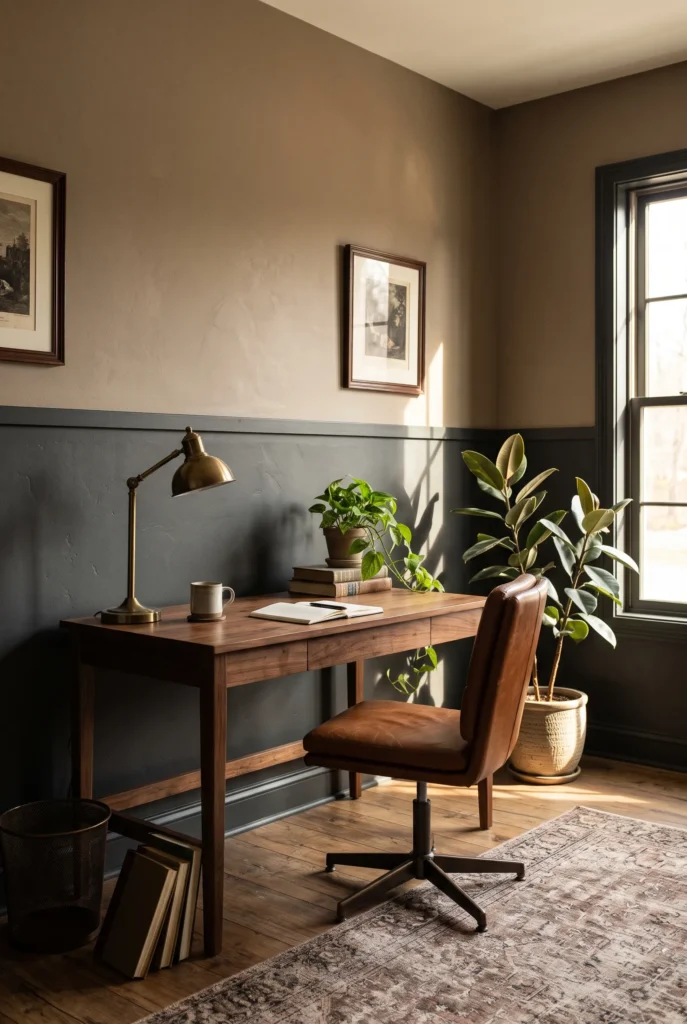
Two-tone walls bring architectural interest to a small office without sacrificing storage or floor space. Paint the lower portion deep slate blue, then keep the upper walls warm ivory to maintain an airy feeling. A clean horizontal division adds structure while allowing dark furniture to blend naturally into the lower color.
For a balanced appearance, place the dividing line slightly above desk height and use painter’s tape for crisp edges. Choose washable paint near the workstation to simplify maintenance. Pair the finish with walnut furniture and restrained brass accents. The result feels tailored without requiring expensive wall treatments.
Desk Side Wall Hooks
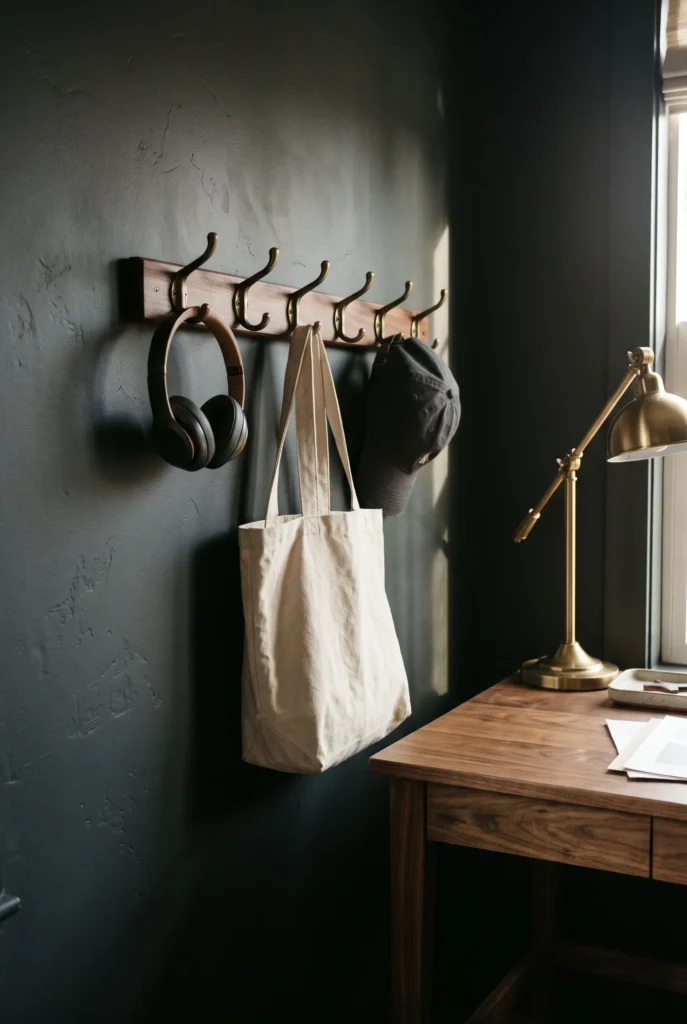
Headphones, bags, and cables can quickly crowd a small desk, especially when there is nowhere convenient to store them. A short row of wall hooks creates an accessible drop zone without introducing another piece of furniture.
- Select sturdy hooks: Choose brass or matte black hooks with smooth edges that will not damage hanging accessories.
- Find the right location: Install them beside the desk at a height you can reach comfortably while seated or standing.
- Separate daily essentials: Assign individual hooks to headphones, a small bag, and a cable pouch.
- Use suitable fixings: Secure the hooks into studs or appropriate wall anchors for the expected weight.
- Keep the arrangement simple: Leave enough space between items to prevent tangled straps and cords.
A compact hook arrangement is particularly helpful in bedrooms where the desk also serves as a dressing or reading area. Matching brass hardware complements walnut furniture and dark green walls without making the setup feel industrial. Keep bulky coats elsewhere so the hooks remain useful for workday essentials.
Deep Teal Door Paint
Quick Tip:
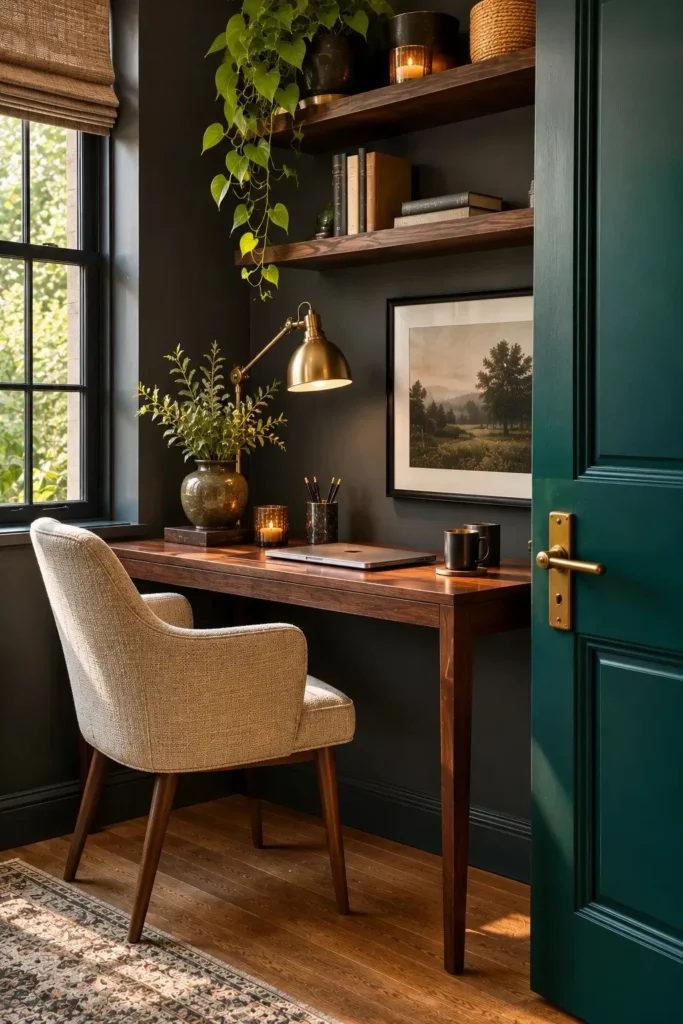
Test a deep teal paint sample on the door at different times of day before committing. Use a durable finish appropriate for doors and trim, and allow the recommended curing time before closing the door fully or reinstalling hardware.
Painting the office door introduces a dramatic color accent without sacrificing valuable wall or floor space. Deep teal pairs naturally with walnut, charcoal, and antique brass. Keep surrounding furniture simple so the saturated finish feels deliberate, and consider matching the door frame for a more unified appearance.
Warm LED Shelf Strips
BEFORE:
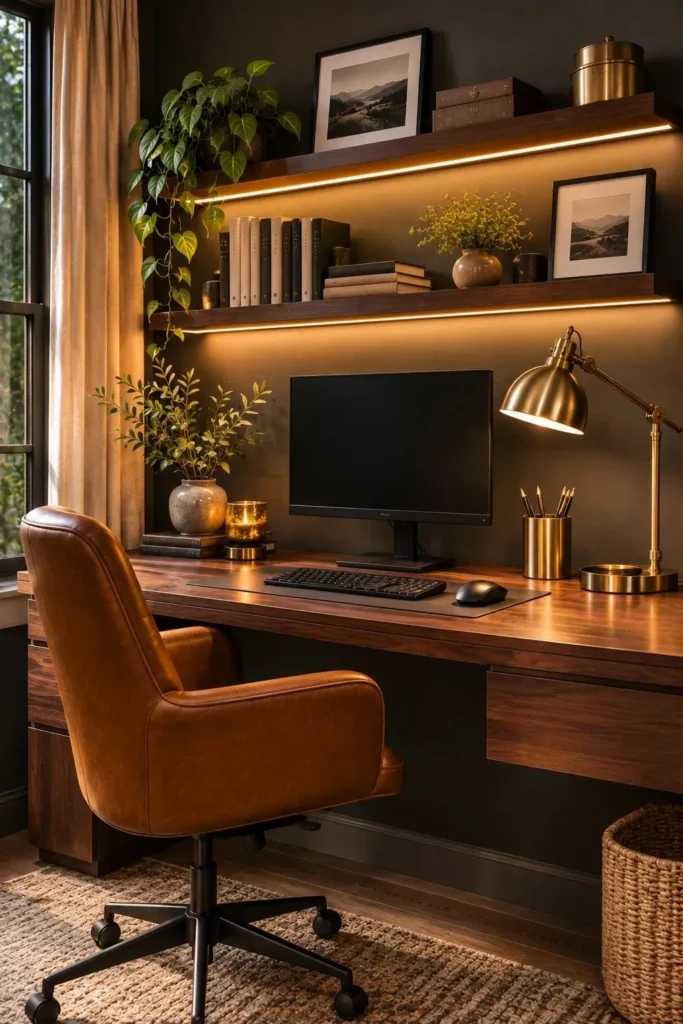
Dark floating shelves disappear into charcoal walls after sunset, making books and small accessories difficult to see. A single overhead light leaves shadowy patches around the workspace and creates an uneven lighting atmosphere.
AFTER:
Concealed warm LED strips softly illuminate the shelves and reveal their natural wood texture. Books, storage boxes, and decorative objects become easier to locate, while the gentle glow adds visual depth without occupying the desktop.
Choose low-profile LED strips with diffusers to avoid visible dots of harsh light. Route cables through appropriate channels and use compatible power supplies according to the manufacturer’s instructions. Keep this lighting separate from your main task lamp, since decorative shelf illumination should complement rather than replace practical work lighting.
CONCLUSION
A productive workspace isn’t measured by square footage. It comes from a setup that supports the way you actually work. Whether you choose a charcoal accent wall, a slim corner desk, better lighting, or hidden storage, each small improvement can make your routine easier.
Your moody home office should feel calm and usable, not crowded with decor. Pick one idea to try this week, see how it works in your room, and build from there.
Save this post on Pinterest for later inspiration, and share it with someone who needs a smarter small-space setup. Start with one change and make it count. For a bolder take, see our masculine home office ideas, and if your workspace lives in a closet, our closet system ideas will help it work harder.