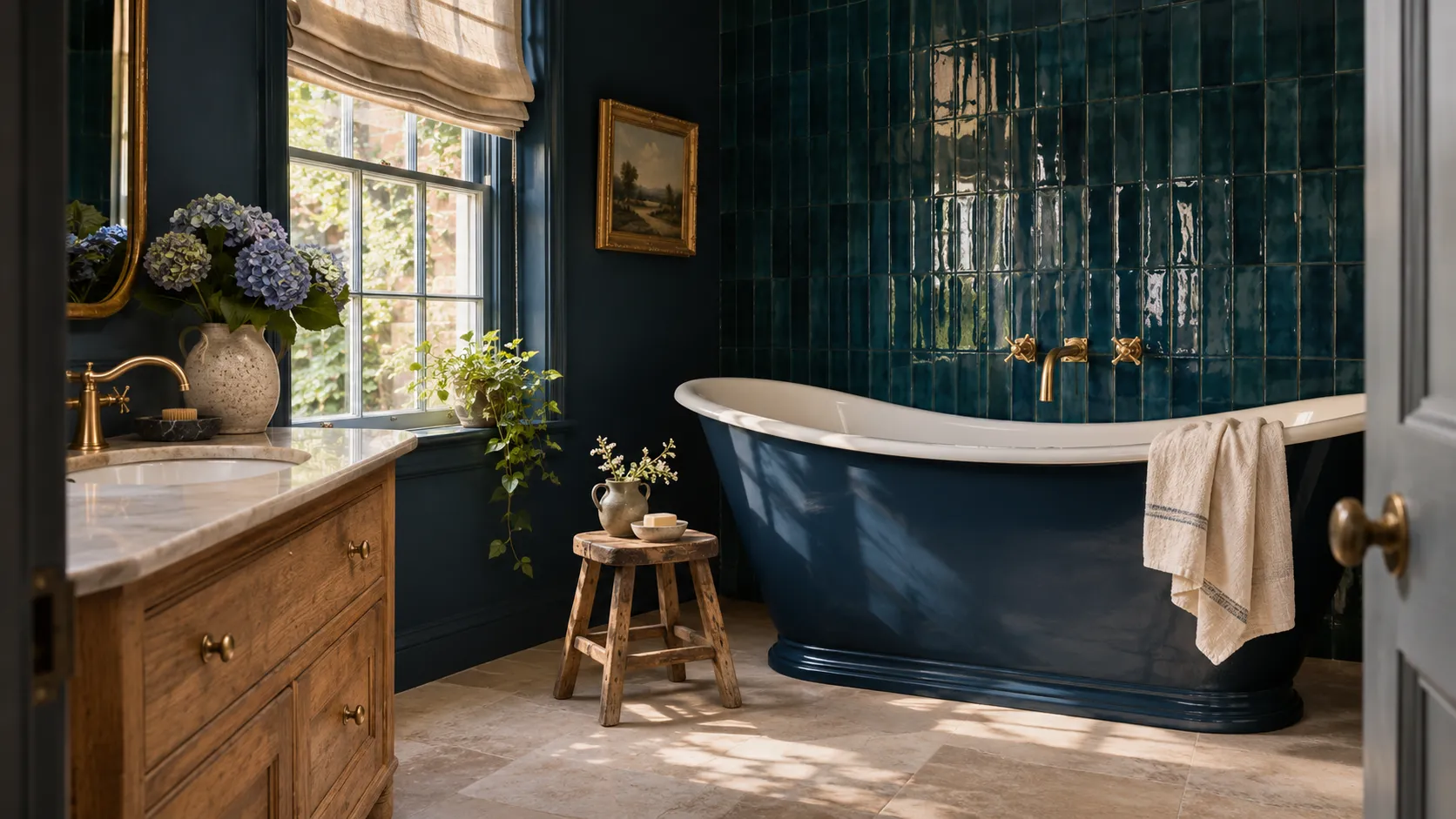
30 Alluring Moody Blue Bathroom Ideas to Add Depth
A moody blue bathroom can start with the white sink you already own. Give it an ink blue backdrop, and the curve of the porcelain rim stands out from the doorway.
The trickier decision is where else to use that blue. A shade you love in morning sunlight can look almost black when you flip on the vanity lights at night. If that sounds familiar, hold a paint sample beside your sink and check it at both times of day before choosing a finish.
These 30 ideas show how much the placement matters. Glossy shower tile catches light along its uneven edges. A walnut mirror frame brings warmth to a navy wall. Even a striped shade can draw your eye toward a small window. Whether you’re replacing tile or picking out towels, you’ll find a way to give your bathroom depth at a scale that suits your budget.
Ink Blue Wainscoting
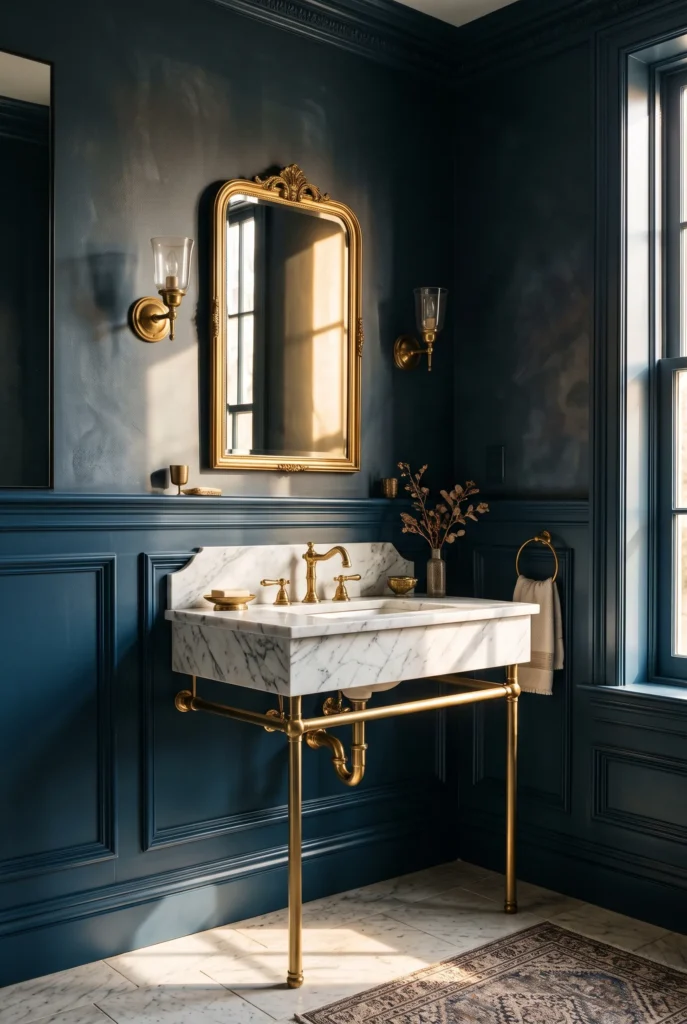
A white pedestal sink can disappear against a white wall. Give it an ink blue backdrop and the curved bowl, slim stem, and porcelain lip around the taps come into focus. In a moody blue bathroom, painted wainscoting creates that contrast while the upper walls stay light.
Before you settle on a height, run painter’s tape along the wall and stand in the doorway. Check where the line meets the sink and mirror. Leaving a few inches between the cap rail and the bottom of the mirror gives both edges room to show.
Glossy Petrol Blue Tile
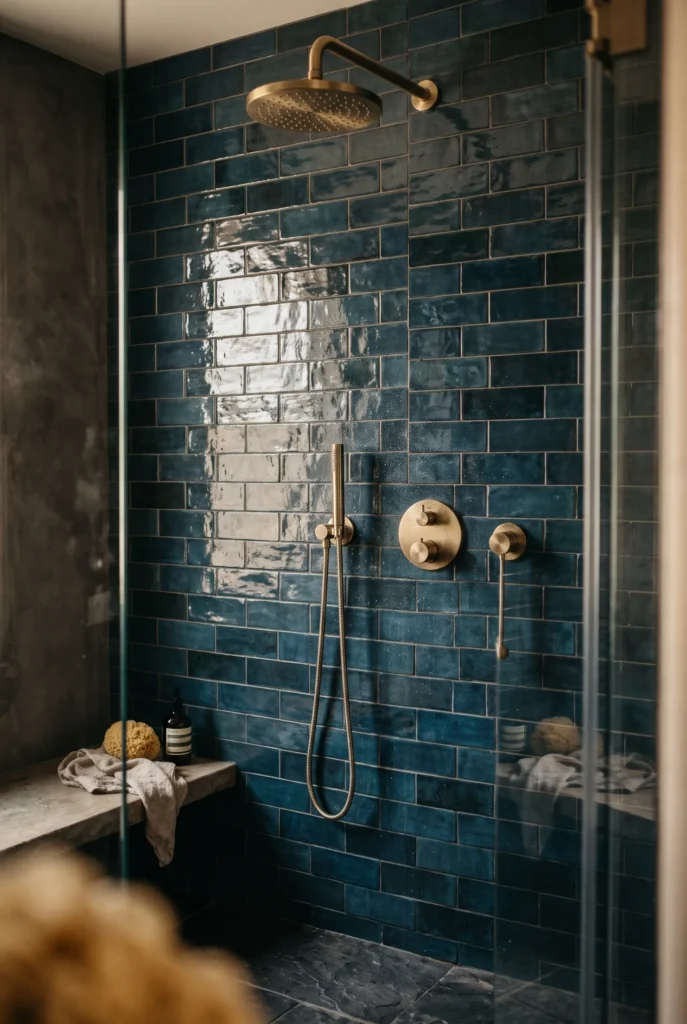
- Let the window pick your feature wall. Look for the shower wall that daylight brushes from the side, where small ripples in the glaze will catch it.
- Choose a smoky blue grout close to the tile’s middle shade for a softer grid.
- Lay out two staggered rows before installation to see where the cuts will fall at each corner.
- Mix tiles from several boxes so the darkest pieces are scattered across the wall.
Ask the tile shop for a few loose pieces if the glaze varies across the collection. Stand them upright beside your floor sample and check them under the bathroom lights. A single tile can read almost black on the counter, while a group reveals streaks of teal and indigo.
Navy Linen Shower Curtain
Quick Tip:
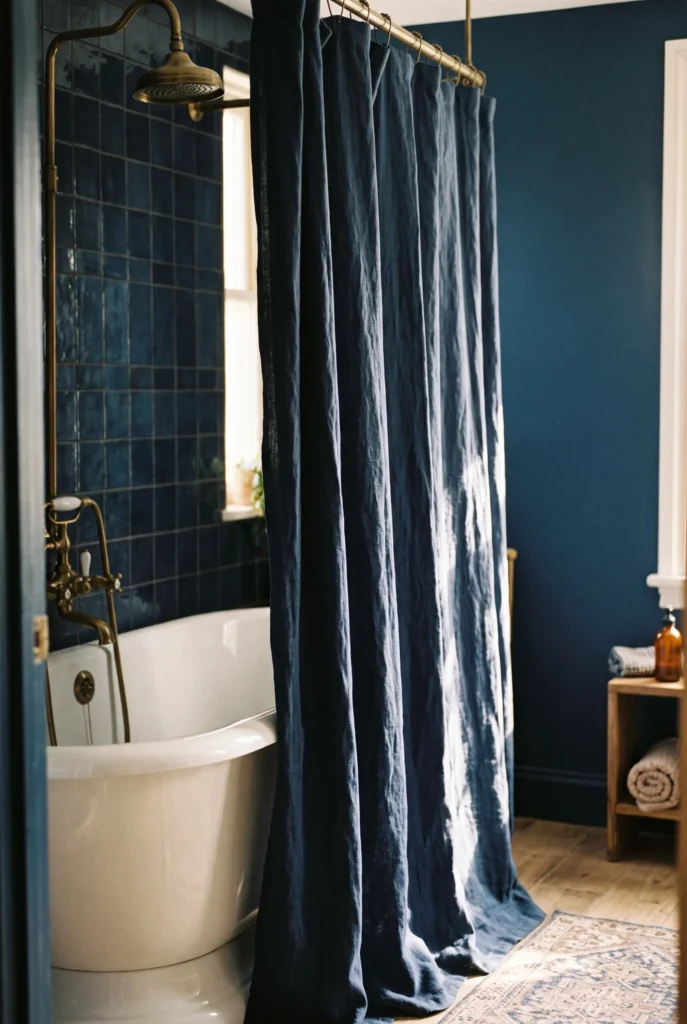
How much blue will you see from the doorway? Drape a navy sheet over the shower rod and pull it across the tub to preview the color at full size before buying a curtain.
A washed linen curtain has small ridges that catch the light, so a solid navy panel shows several shades across its folds. Choose a washable linen blend and hang a separate liner inside the tub. Keep the fabric outside, with the hem an inch above the floor for easy cleaning.
Smoky Blue Ceiling
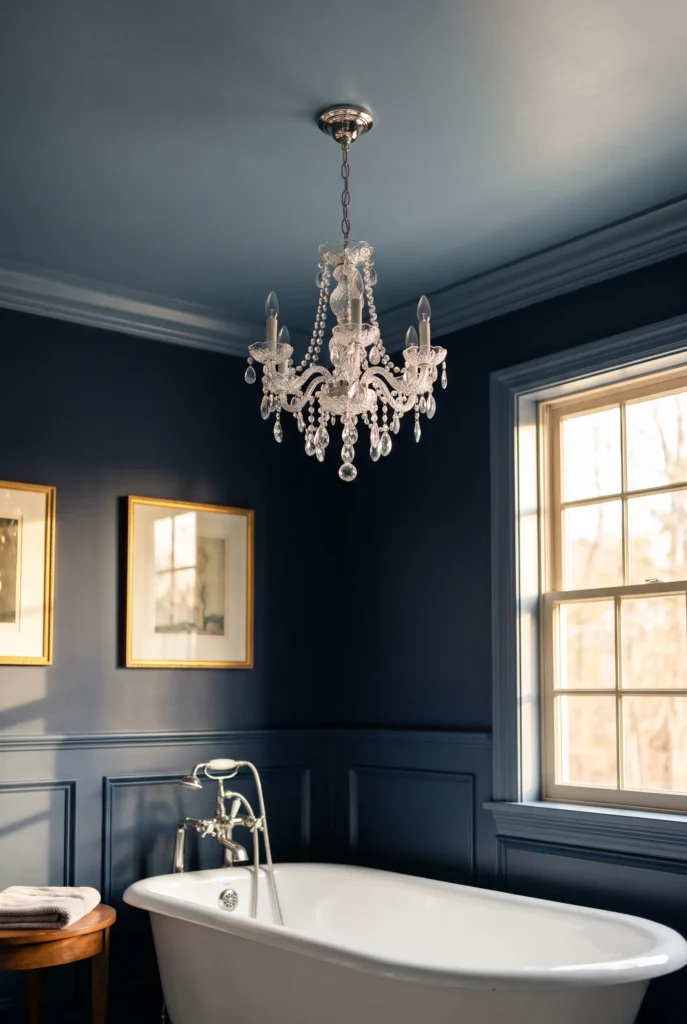
Before: The prettiest detail in this bathroom is an opal pendant, yet its milky glass almost disappears against the white ceiling. From the doorway, your eye lands on the sink and stops there.
After: Smoky blue paint gives the pendant a backdrop that reveals its round silhouette. The color overhead also brings the tall ceiling visually closer, making the narrow room feel cozier.
Paint a large sample board and hold it flat overhead before you commit. The same blue can look grayer on a ceiling because it catches light differently there. Check the sample from the doorway in daylight, then look again from the sink with your usual evening lights on.
Indigo Vanity Cabinet
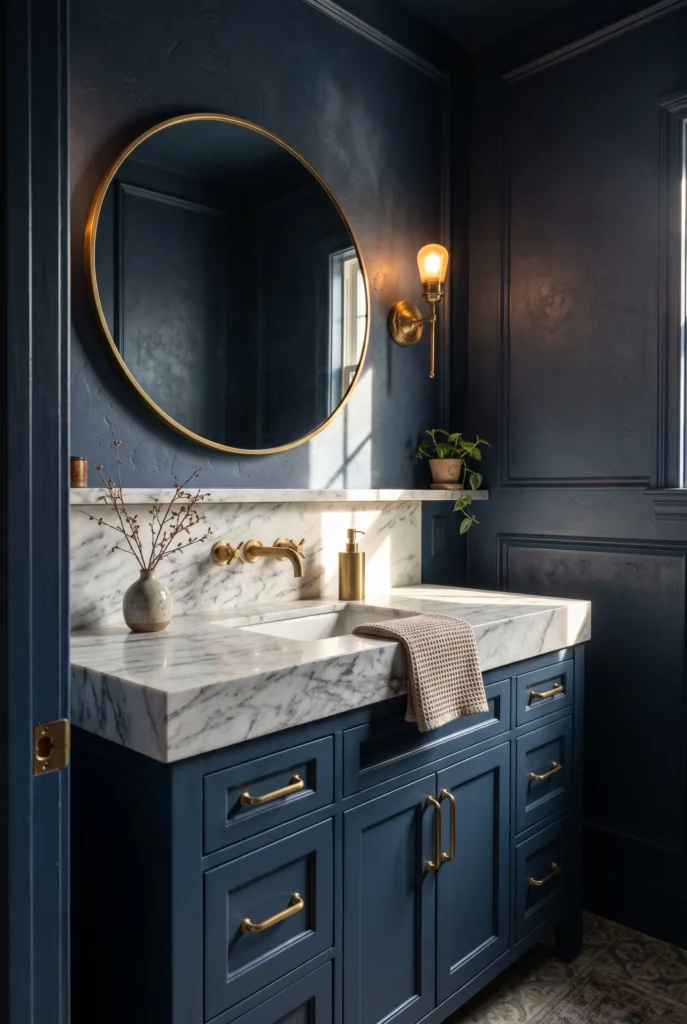
- Let the countertop choose the blue. Hold two indigo samples vertically beneath its front edge and see which one brings out a color you like in the stone.
- Remove the knobs, doors, and drawer fronts. Label each piece with its original position so everything lines up again.
- Clean the cabinet thoroughly, especially around the pulls. Follow the primer instructions for your cabinet material, including any sanding it needs.
- Apply thin coats of cabinet paint, allowing the recommended drying time between coats. Follow the paint maker’s cure guidance before putting the vanity back into everyday use.
Look at the hardware while the first door is off. A round brass knob casts a small shadow on indigo paint, while a longer pull draws attention to the width of a drawer. If you like the existing handles, give them a clean and hold one against the finished sample.
Blue Botanical Wallpaper

| Design detail | Fine trailing sprigs | Oversized willow leaves |
|---|---|---|
| View from the doorway | Slender stems blend into a soft blue texture. | Broad leaf silhouettes catch the eye across the room. |
| Best wall for the pattern | A narrow strip beside the sink shows several sprigs. | An open wall gives a whole branch room to spread. |
| Placement around a mirror | Small repeats leave visible details along both edges. | Position a favorite leaf where it curves around one corner. |
Tape a wallpaper sample beside the mirror at eye level, where you’ll see it every morning. Step back to the doorway and check how much of the branch you can still see. Moving the pattern a few inches can bring a whole leaf into view beside the glass.
Slate Blue Floor Tile
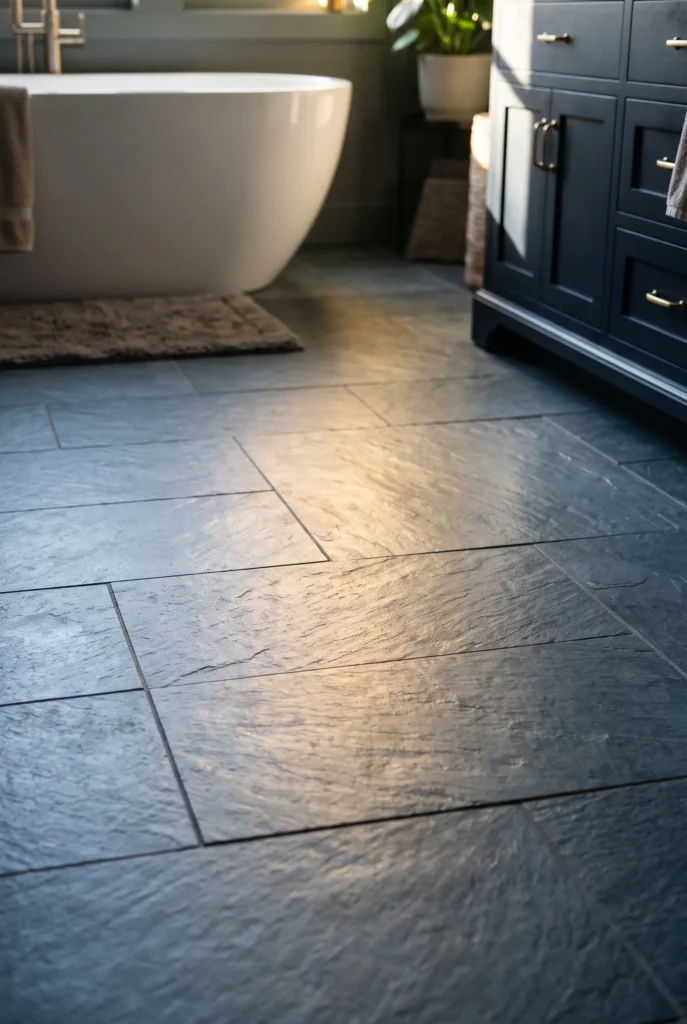
Do
- Give a white tiled bathroom a darker base with slate blue hexagons underfoot.
- Hold grout samples against the tile edges to see how clearly each one outlines the shape.
- Check the layout at the doorway, where a row of full or nearly full hexagons makes a tidy first impression.
Don’t
- Don’t judge the tile from an upright display alone. Place a sample flat on the floor.
- Don’t commit to bright white grout until you’ve seen how strongly it outlines every hexagon.
- Don’t forget the bath mat when choosing tile size. A large mat may hide most of the pattern.
Set your usual bath mat in place and lay a few loose tiles beside it. In a narrow bathroom, the strip between the mat and the vanity may be the part you see most. Smaller hexagons can show several complete shapes in that little stretch of floor.
Peacock Blue Towels

Best spot: A towel bar facing the doorway gives peacock blue room to register from across the bathroom.
Color cue: Look for a deep blue with a hint of green, especially beside walnut or warm brass.
Texture: Ribbing creates narrow shadow lines, while terry loops give the color a softer finish.
Skill level: Beginner. Start with one hand towel to test the shade.
Give each towel enough rail space to hang open so it dries between uses. If your bar only fits one bath towel, hang the matching hand towel by the sink. That second glimpse of peacock blue carries the color across the room and puts a towel where wet hands need it.
Midnight Blue Window Trim
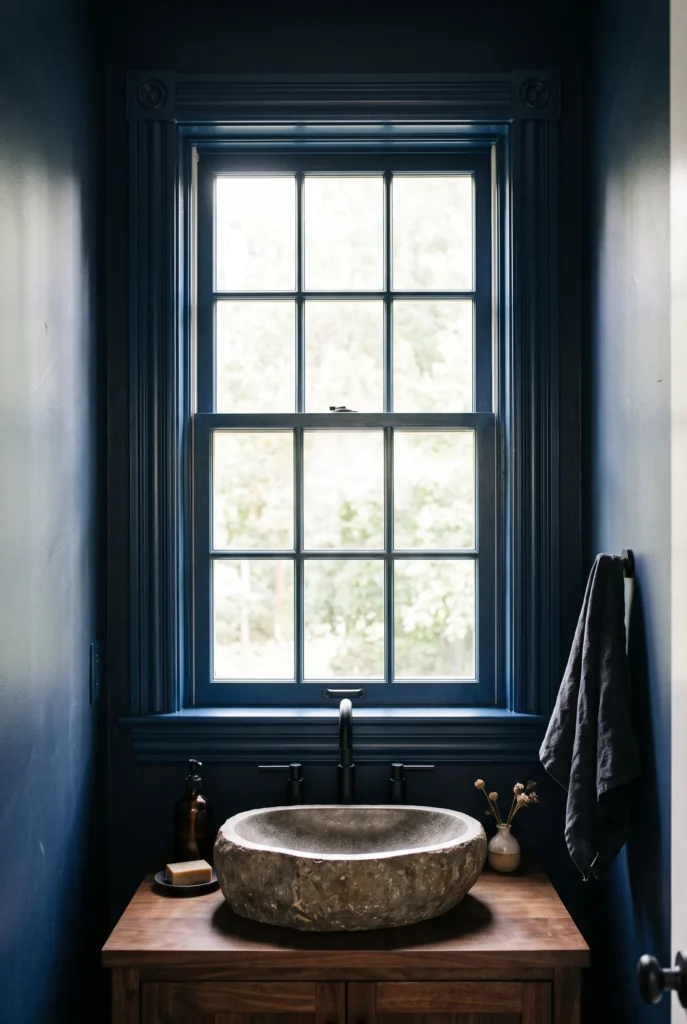
A window with a deep sill has several surfaces that catch light differently. Paint the casing, sill, and inside edges the same midnight blue, and the recess shows a lighter band along the bottom and deeper shadows at the sides. Even a plain frosted pane gains a crisp outline.
Tape a strip of dark blue paper along one side of the frame before picking up a brush. Check it against the glass in daylight and again after dusk. If the blue reads almost black both times, move one shade lighter on the paint card to keep that inky color visible.
Ink Blue Slipper Tub
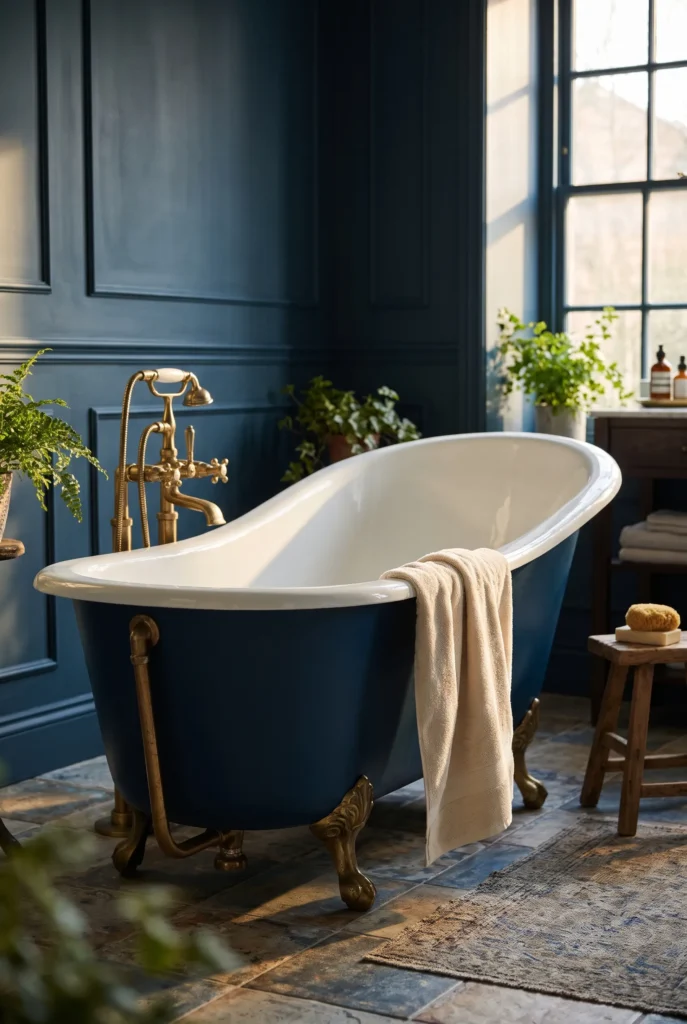
- Give the tub’s raised end a pale backdrop so its sweeping curve is visible from the doorway.
- Choose a white interior with a blue outer shell. The narrow white rim will trace the shape even in low light.
- Hold a blue finish sample near the floor, where the lower half of the tub will sit in shadow.
- Set the bath stool near the low end so it keeps soap within reach and leaves the taller curve in view.
If you already own a freestanding tub, check what the exterior is made of before choosing a finish. A coating intended for a cast iron shell may be unsuitable for acrylic. For a new tub, ask for a sample of the factory color and compare it with your floor tile at home.
Walnut Mirror Frame
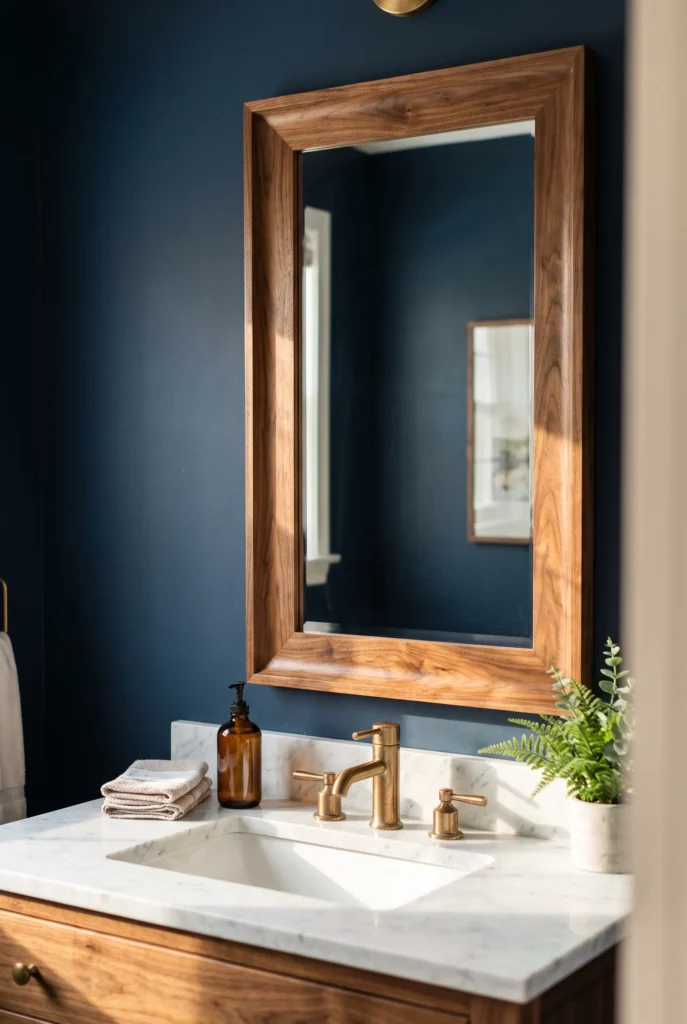
Quick Tip:
Can you see the wood grain from the doorway? Hold a walnut sample against the blue paint and step back. If the edges disappear, look for a piece with lighter brown streaks that will show under your vanity lights.
A slim walnut frame suits a powder room where the mirror nearly fills the wall. Over a wider vanity, a broader frame shows off more of the grain. Measure the gap between your sconces and check the frame’s outside width so the wood has a little blue showing on either side.
Prussian Blue Linen Alcove
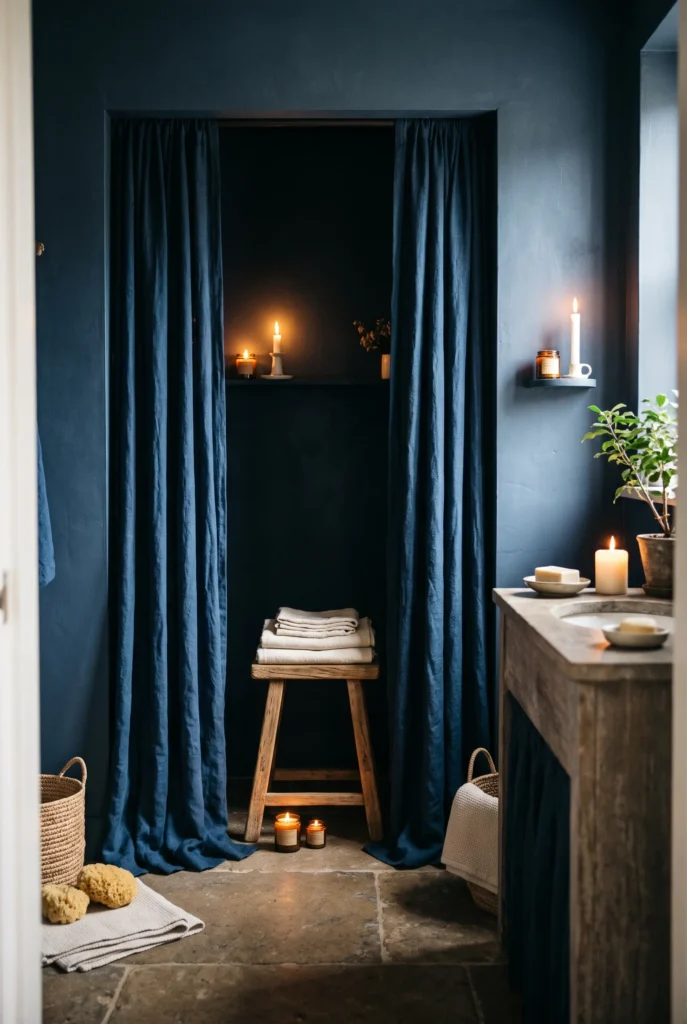
Before: A white linen recess can disappear into a white wall. Even neatly folded cream towels are hard to distinguish from the shelves behind them.
After: Prussian blue across the back, sides, and shelves gives each stack a dark outline. The pale wall around the opening frames the whole alcove, and the folds are easy to pick out from across the room.
Fold one of your bath towels the way you usually store it, then measure the stack before setting the shelf heights. Leave enough room above it to lift the top towel with one hand. That small gap also lets a ribbon of blue show between the linen and the shelf overhead.
Indigo Striped Roman Shade

- See how a stripe changes your window before ordering fabric. Hold a striped swatch against the glass, then fold it loosely to see how the lines look across the folds.
- Match the indigo stripe to a blue detail already in the room. A vanity knob or the border of a hand towel is enough.
- Decide whether the shade will sit inside the recess or cover the trim. Follow the maker’s measuring guide for that mounting style.
- Check the lining sample against the glass after dark with the bathroom lights on. Choose the lining that gives you the privacy you want.
Stripe spacing makes a bigger difference than you might expect. Fine lines can blend into a soft denim tone from across the room. Wider stripes stay distinct even when the shade is raised. On a narrow window, count how many full stripes will fit before choosing your fabric.
Blue Terrazzo Countertop
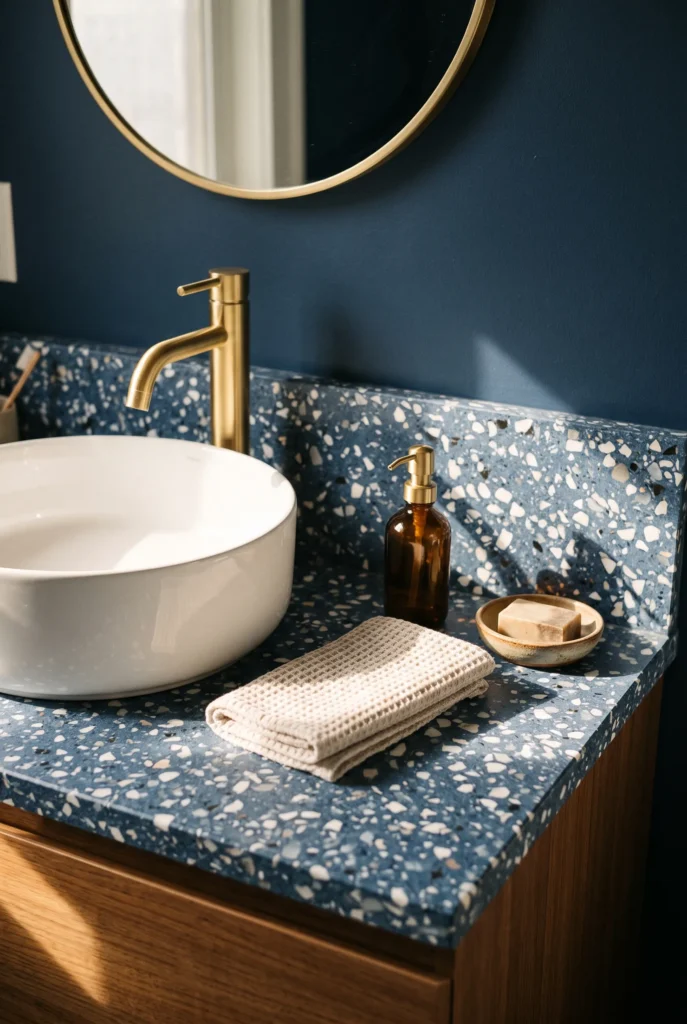
| Design detail | Ivory base with blue chips | Navy base with pale chips |
|---|---|---|
| View from the doorway | Flecks of blue draw the eye toward the sink. | A dark band defines the full width of the vanity. |
| Cabinet pairing | Indigo doors pick up the scattered blue pieces. | Oak doors echo the warmer stone fragments. |
| Basin detail | A white basin blends into the pale background. | A white basin shows a crisp outline against the navy. |
Ask to see a larger piece of terrazzo before you settle on a pattern. A small sample may show one caramel chip, while a full counter could have dozens. If the vanity has a narrow strip beside the basin, check that you like how the pattern looks there too.
Sepia Coastal Prints
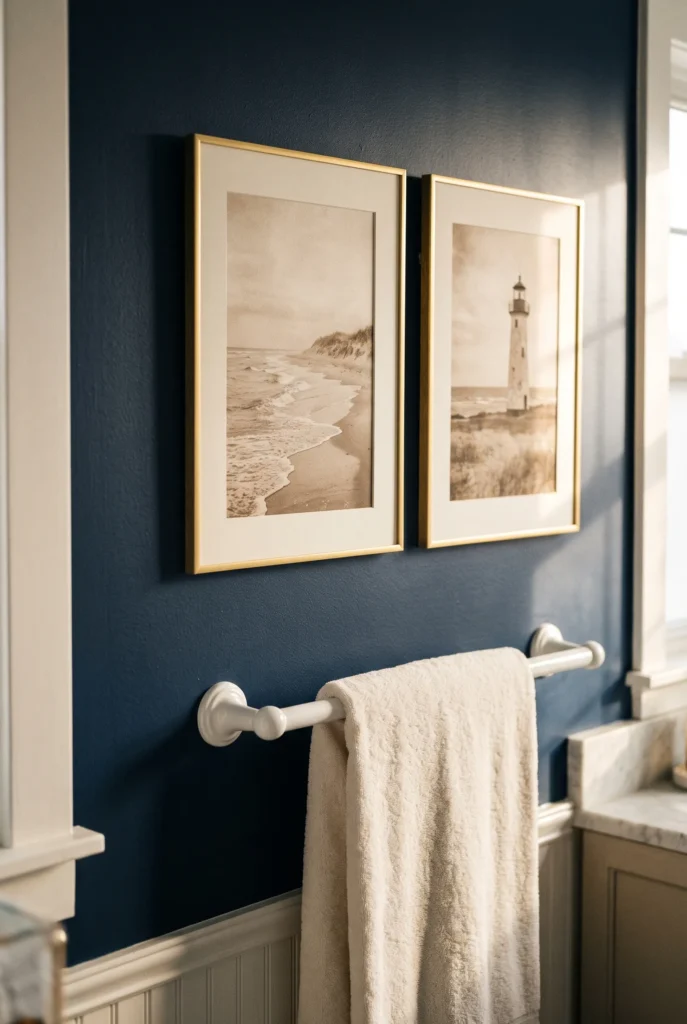
Do
- Give sepia dune grass or a weathered pier a deep blue backdrop so the pale sky in the print catches your eye.
- Use the same ivory mat color for both pictures to tie different shoreline scenes together.
- Tape paper templates to the wall and check the arrangement from the doorway before hanging the frames.
Don’t
- Don’t overlook the mirror reflection. From the sink, check whether you see a whole print or an awkward sliver.
- Don’t squeeze two frames onto a wall where one generous print would show more detail.
- Don’t hang a favorite original beside a steamy shower. Choose a reproduction for that spot.
For a narrow wall, stack the prints and line up their centers. Choose one close view, such as grass bending over sand, and one distant view with an open horizon. The change in scale gives your eye somewhere to travel while the matching frames keep the pair feeling connected.
Ribbed Glass Shower Screen

Visual effect: One blue shower wall takes on a striped appearance as you move past the ribbed glass.
Best placement: Across a sightline where you can see the blue tile through the screen from the doorway.
Privacy: Closely spaced ribs soften detail, though silhouettes may still be visible.
Frame finish: A slim bronze edge picks up the warmth of nearby oak or brass.
Hold a glass sample a few inches in front of your tile and look through it from both sides. Notice how much of the grout pattern you can still see. Then check the screen’s care instructions. If the smooth face can go toward the shower, it will be easier to squeegee.
Deep Blue Color Drenching
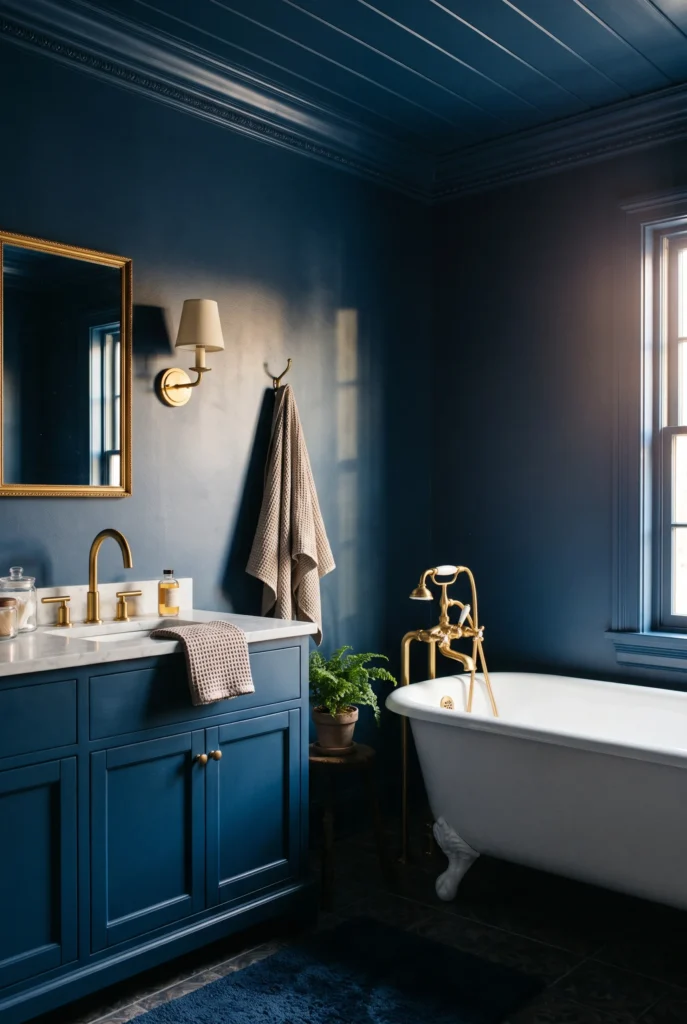
Where does the wall end and the door begin? In a narrow powder room, painting the door, casing, and baseboards the same deep blue as the walls softens those boundaries. You can still see the panels because their raised edges catch the light and cast small shadows.
Carry the blue onto the ceiling if you like the enclosed feeling, then give the room one pale focal point. A white basin is enough. For a subtle shift at the edges, choose a washable wall finish and a satin trim paint mixed in the same color.
Terracotta Floor Tiles

- Start with the tile that looks almost too orange by itself. Beside a deep blue paint sample, that same piece may give you just the warmth you were looking for.
- Compare square and rectangular tiles on the floor. Squares give a simple grid, while staggered rectangles draw the eye along the room.
- Test a warm gray grout beside the clay. It softens the joints and lets the variation between tiles show.
- Compare natural terracotta with terracotta-look porcelain, and ask what upkeep each floor needs before choosing.
Lay several tiles beside the largest white fixture in the room. A tub apron gives you a better sense of the color than a tiny white chip. If you love the pinker pieces beside the tub but prefer cinnamon against the blue wall, look for a mix that includes both.
Blue Veined Shower Slab

Quick Tip:
The best blue vein on a slab can disappear behind the shower controls. Ask the fabricator to mark the panel edges and fixture positions on a photo of the actual slab so you can see which part of the pattern will show.
Look at the proposed layout from the angle you’ll see at the bathroom door. A blue vein that runs diagonally across the back wall draws your eye through the shower. For the adjoining wall, pull a paint sample close to the darkest streak and compare the two in daylight.
Indigo Gingham Sink Skirt
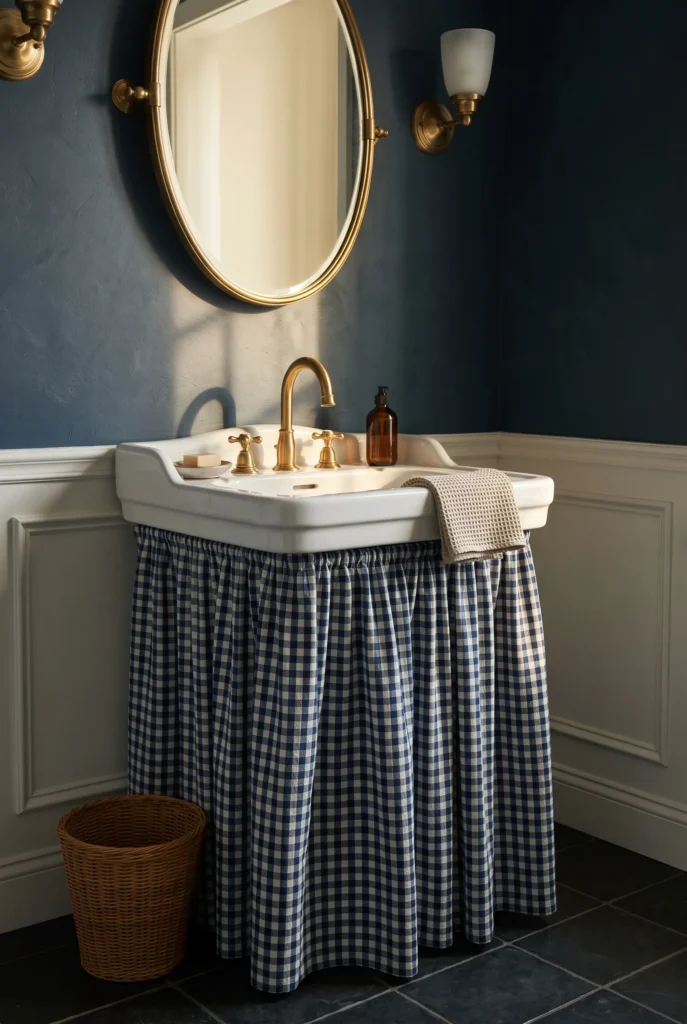
Before: A wall-mounted basin leaves the waste pipe and spare rolls in plain view. In a small powder room, they may be the first things you see through the open door.
After: An indigo gingham skirt hides the plumbing and gives the basin a soft, checked edge. Two overlapping front panels let you reach the shelf underneath without lifting the whole skirt.
Choose washable cotton and launder it before measuring the finished drop. Pin up the hem while the skirt is hanging so you can check that it clears the floor all the way around. A removable fastening beneath the basin rim lets you take the panels down on laundry day.
Antique Brass Hook Rail
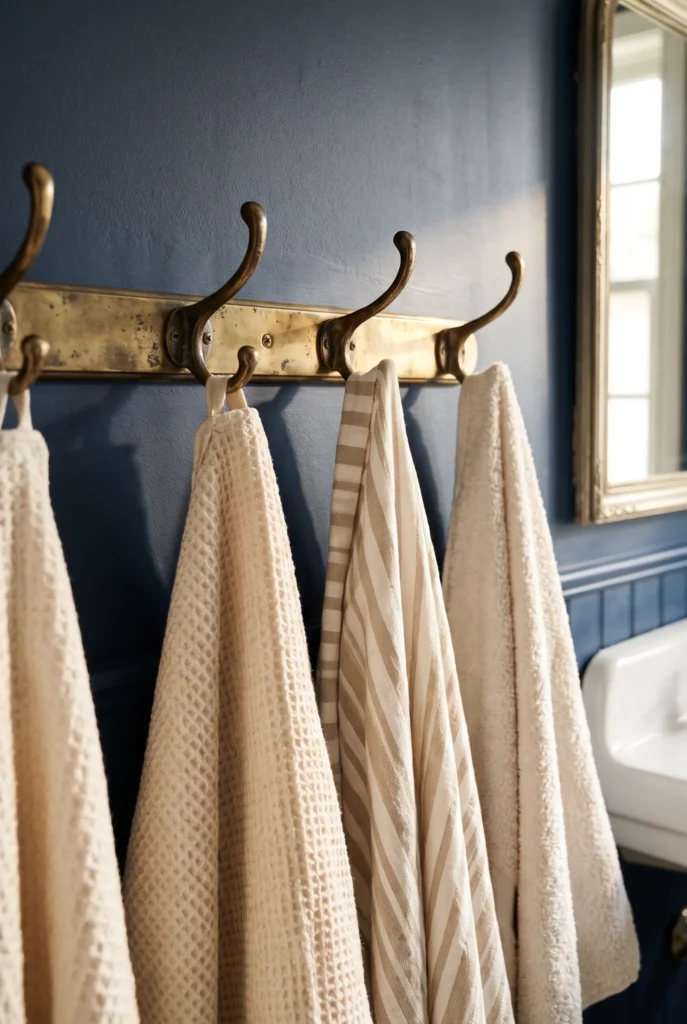
- Find the spot where your hand naturally reaches for a towel as you step out of the shower. Hold the rail there to check the reach.
- Hang your longest towel from one hook while someone holds the rail in place. Check that the hem clears the floor or bench below.
- Compare the hook spacing with the width of your damp towels. Leave room for them to hang open, or plan to use alternate hooks.
- Mark the position with painter’s tape, check that the rail is level, and mount it with fixings suited to your wall and the rail’s instructions.
An aged brass finish shows up especially well on flat navy paint because the curved hook tips catch small highlights. Leave the hook nearest the doorway empty if you like seeing that detail. It also gives a guest an obvious place to hang a robe or a wash bag.
Blue Mosaic Shower Niche
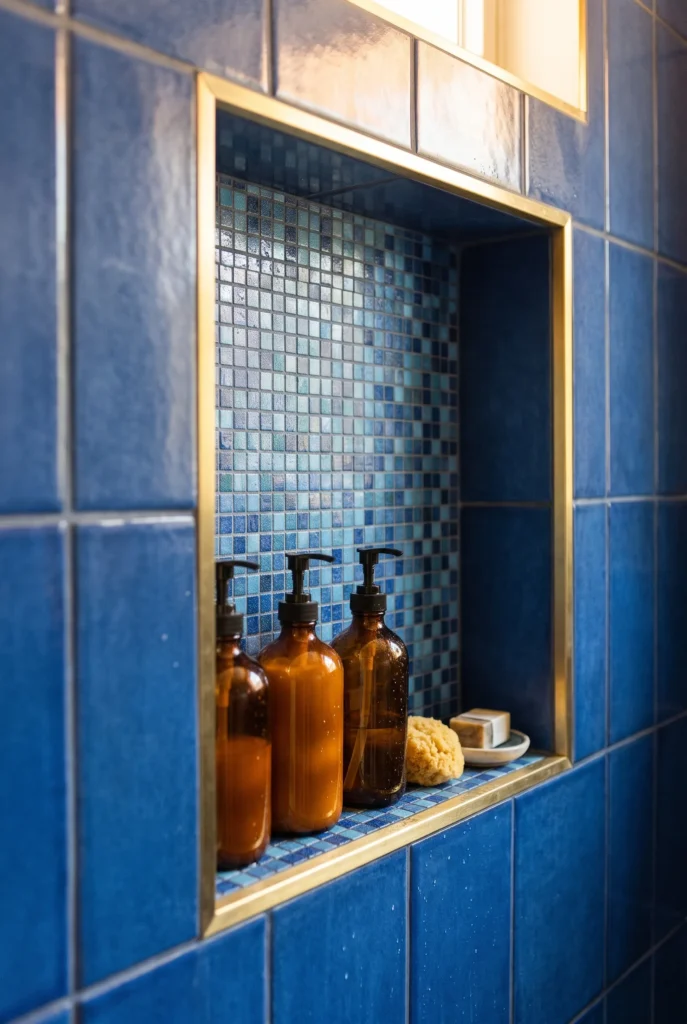
| Design detail | Small square mosaic | Narrow finger mosaic |
|---|---|---|
| First impression | A grid of blue squares gives the recess a checked backdrop. | Upright strips draw the eye toward the top of the opening. |
| Best color mix | Scattered cobalt squares stand out in a field of navy. | Slight shifts from denim to ink create fine vertical stripes. |
| Layout check | Center a square or a joint to balance the cuts at both sides. | Check the width of the end strips so neither edge gets a sliver. |
Stand your usual shampoo bottles in front of a mosaic sample before you choose it. In a short niche, the only pattern you see may be the strip above the bottle caps. Keep lighter blue pieces in that visible area if you want the detail to catch your eye.
Opal Globe Sconces
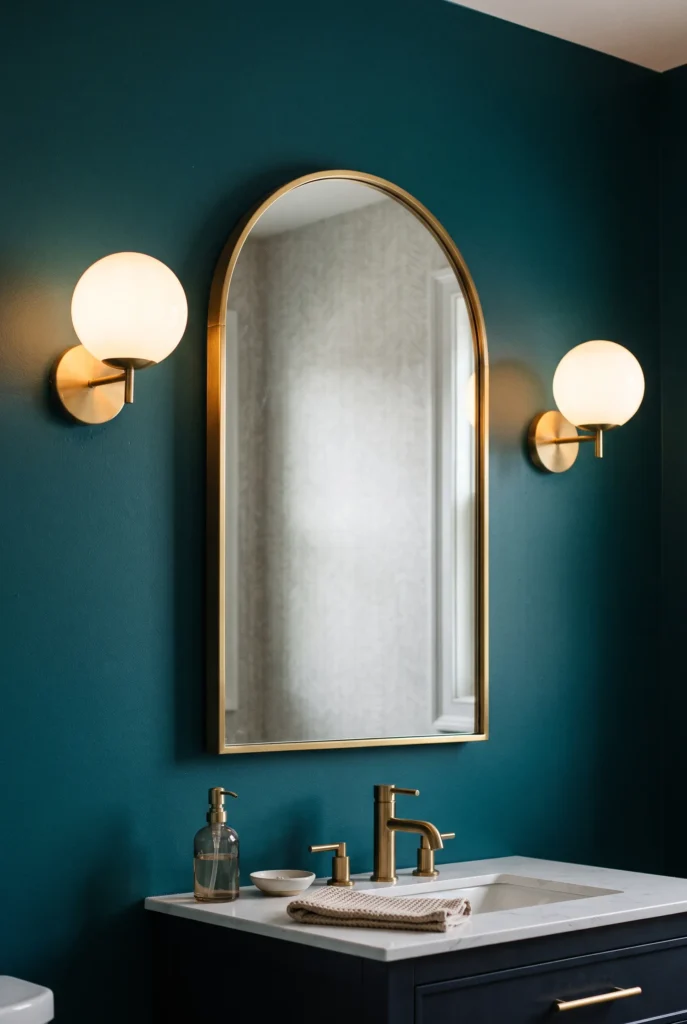
Do
- Give each opal globe a little blue wall around it so its round outline stays distinct.
- Cut paper circles the size of the shades and tape them beside the mirror to test their scale.
- Check the proposed height while standing at the sink so the light reaches your face evenly.
Don’t
- Don’t judge the size by the backplate alone. The glass shade is usually the part closest to the mirror.
- Don’t crowd a hinged medicine cabinet. Open its door fully when checking clearance.
- Don’t choose the bulb color from the package alone. Compare it with your wall sample after dark.
A pair of globes can look balanced from the doorway and still throw uneven light at the sink. Before settling on their position, have the people who use the mirror check the layout at their own heights. A few inches can change where each person sees the glow reflected in the glass.
Navy Ladder Towel Warmer
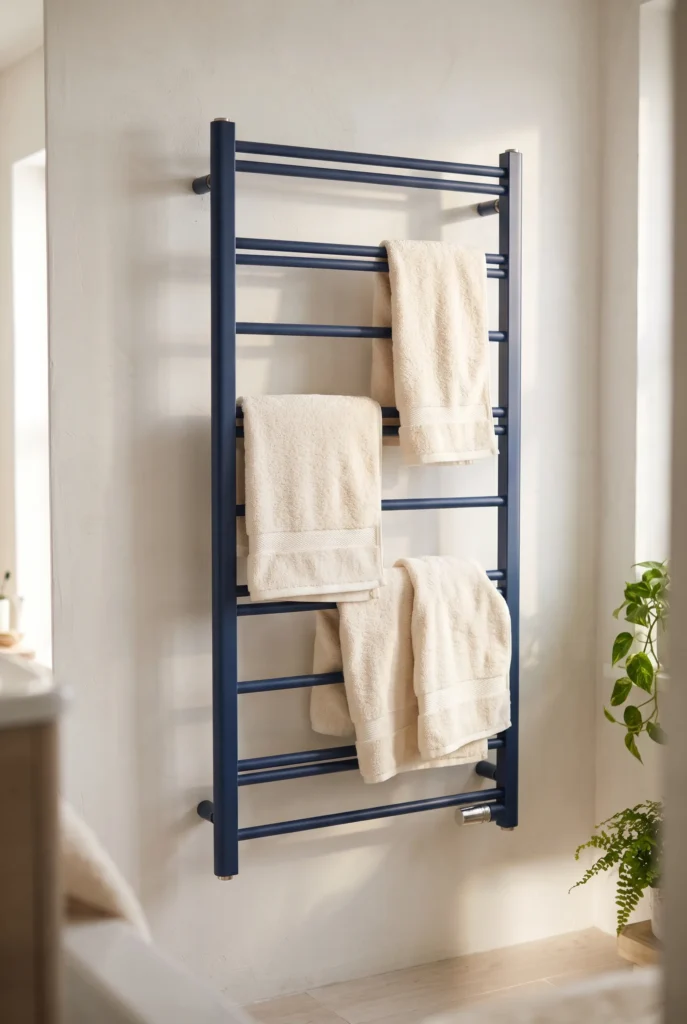
Visual effect: Navy rails draw crisp horizontal lines on a pale blue wall, even when the warmer is empty.
Finish: Satin blue picks up a slender highlight along each rounded bar.
Best placement: A clear stretch of wall within easy reach of the bath, with room for a towel to hang freely.
Sizing cue: Measure your bath towel folded as you normally hang it before choosing the rail width.
Think about the towel you’ll hang here most often. A white bath sheet can cover nearly the whole ladder, while a hand towel leaves several blue bars visible. If two people share the bathroom, check the spacing between usable rails as well as the overall height when comparing models.
Cobalt Glass Basin

Light slips through the rim of a cobalt glass basin and leaves a blue crescent on the counter. A pale vanity top makes that color easy to see. Give the bowl a little space on either side so a soap dish or toothbrush holder doesn’t hide its outline.
Before ordering, add the bowl height to your counter height and see where the rim would sit. Check the faucet reach on the drawing, too. The stream should land comfortably inside the bowl, with enough room beneath the spout to rinse both hands without brushing the rim.
Checkerboard Tub Apron
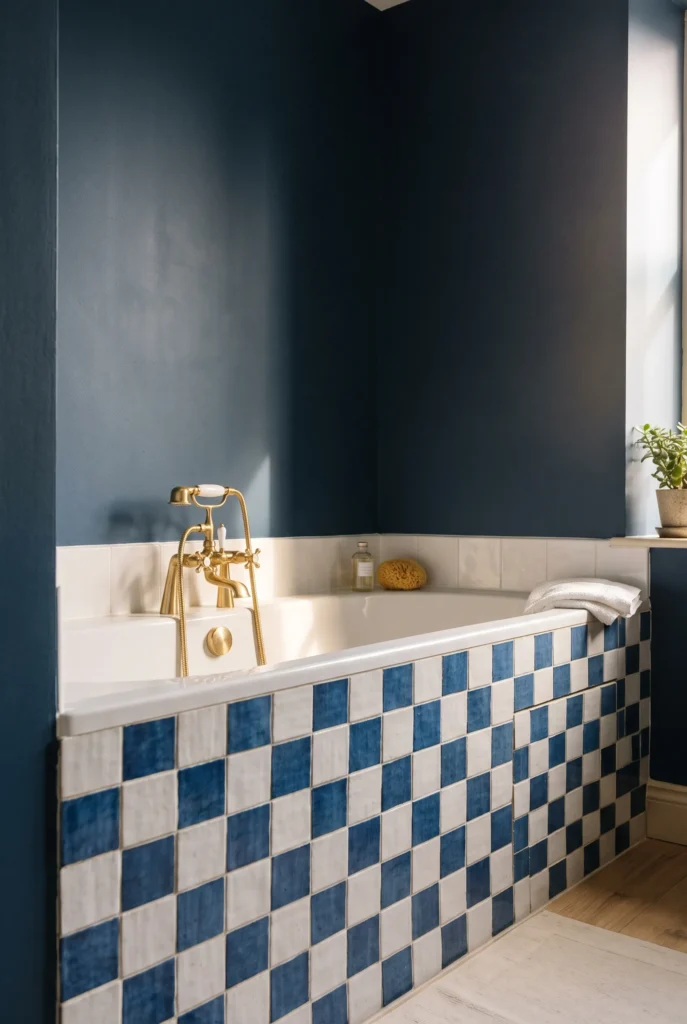
- Give the broad front of a built-in tub its own checkerboard. Pair midnight blue with dusty blue for a pattern that’s easy to see from the doorway.
- Choose equal-size squares from the same tile range so their thickness and edges line up.
- Mark the apron dimensions on the floor with painter’s tape and lay out the pattern inside it. Shift the grid until the cuts look balanced at both ends.
- Carry the alternating colors around any visible corner so the pattern continues along the short return.
Check how the top row meets the underside of the tub rim. That junction is especially noticeable when you’re sitting on the bathroom floor bathing a child. If the layout leaves a thin strip there, shift the rows before installation so the top and bottom cuts look more even.
Ochre Bath Runner
Quick Tip:
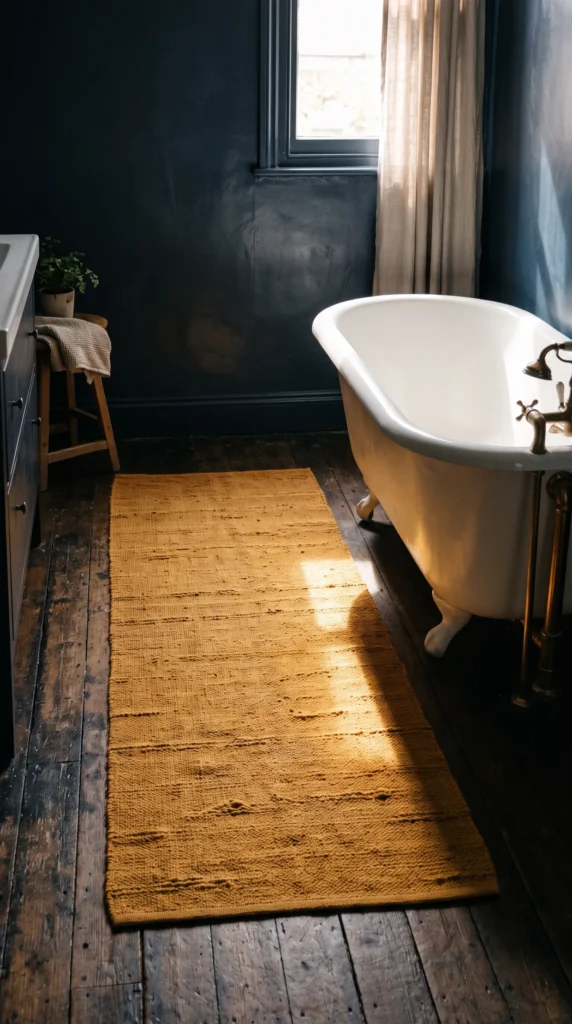
Will the bathroom door clear the runner on a hurried morning? Fold a towel to roughly the combined thickness of the rug and its pad, place it in the door’s path, and test the full swing before choosing a pile height.
An ochre runner brings warmth to a moody blue bathroom, especially along a vanity where you usually stand barefoot. Choose a washable weave with a nonslip backing or a rug pad suited to the floor. Leave a border of tile visible at each end so the runner’s long shape stands out.
Scalloped Blue Backsplash
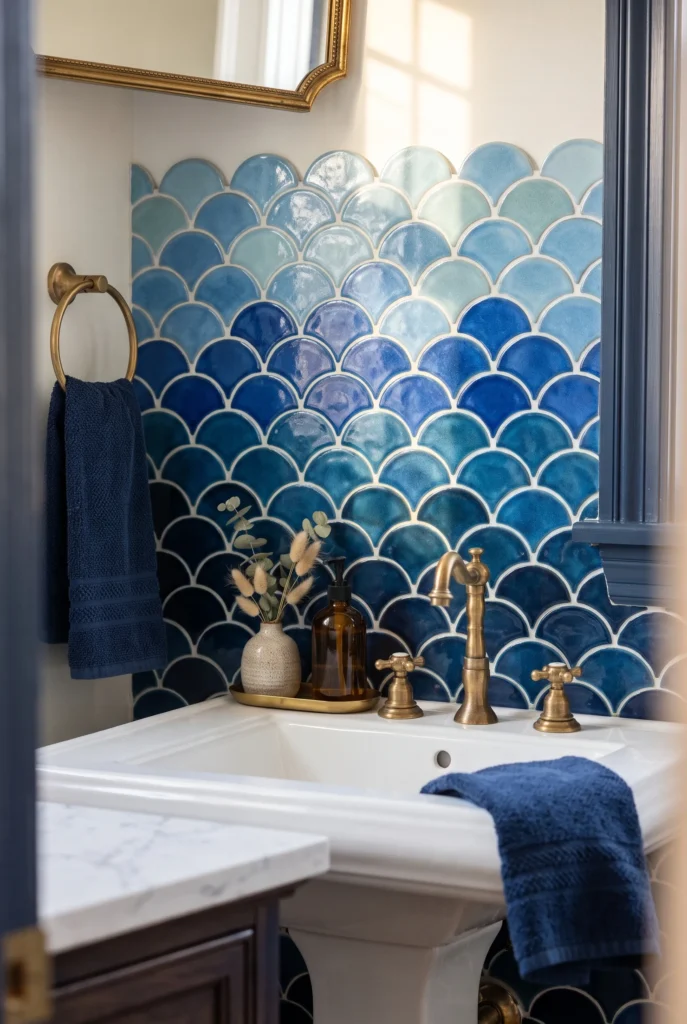
Before: A small white sink can get lost beneath a wide mirror. A narrow strip of white tile protects the wall, but from the doorway the basin and backsplash blend together.
After: A few rows of blue fan tiles give the sink a backdrop of its own. The scallops trace a curved line across the plaster and echo the oval mirror above.
Cut a paper template of the scalloped outline and tape it behind the faucet. Adjust the height until you can see the curves above the handles. Before ordering, ask how the exposed top edges are finished, since that wavy outline is the part you’ll notice every time you wash your hands.
Cobalt Pump Bottles
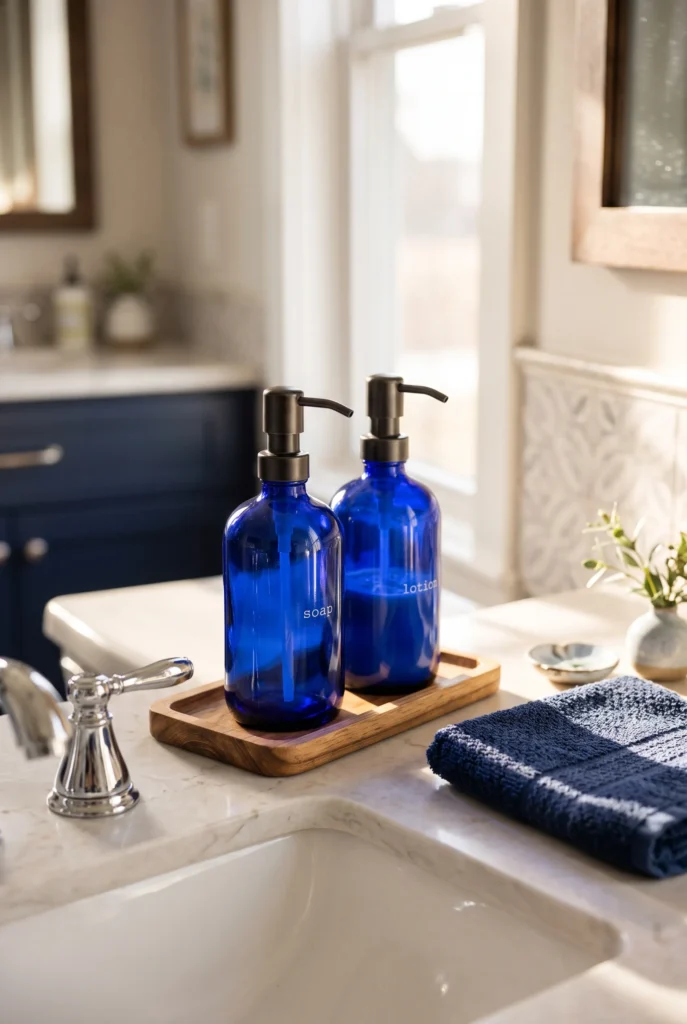
- Catch a little window light at the sink. Hold an empty cobalt bottle where you usually keep the soap and check when the blue glass glows.
- Pick different silhouettes for hand soap and lotion. A tall soap bottle and a squat lotion bottle are easy to tell apart at a glance.
- Label the fronts in small, legible lettering so guests know which pump to use.
- Set both on a washable tray with enough space to lift either bottle without knocking the other.
Press the soap pump with one hand before settling on a tray. If the bottle rocks against a raised lip, choose a tray with a wider flat base. In a tiny powder room, one blue dispenser beside the tap gives you the same flash of color and frees up space for a hand towel.
Floating Oak Vanity
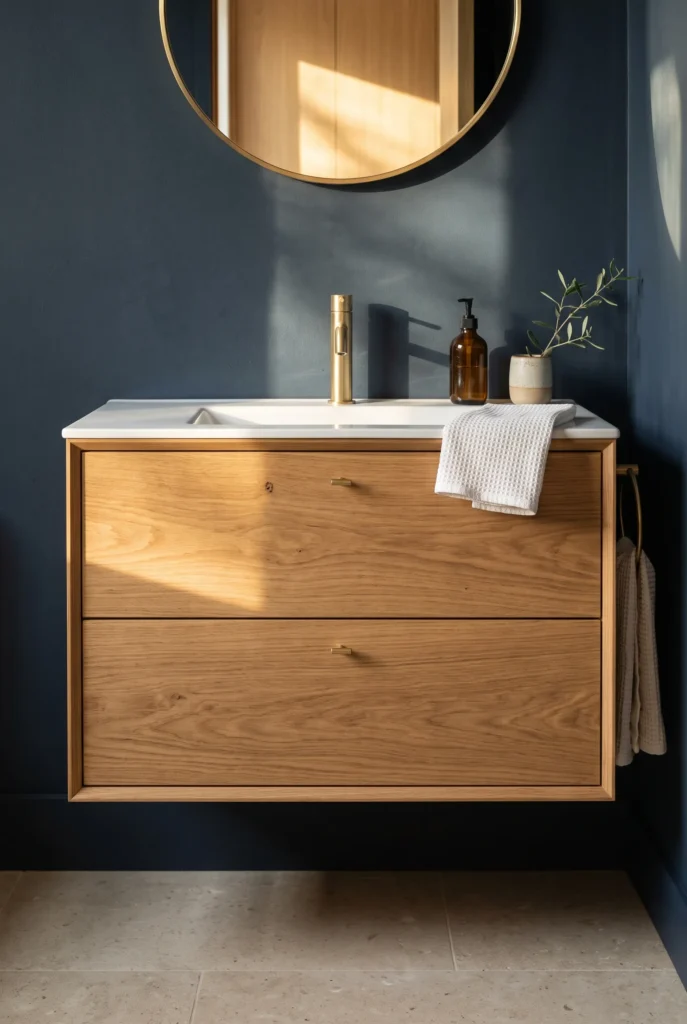
| Design detail | Honey oak | Smoked oak |
|---|---|---|
| Against an ink blue wall | Golden grain draws the eye straight to the vanity. | Deep brown edges blend into the blue, bringing the pale countertop into focus. |
| Flooring partner | Warm gray stone lets the golden wood stand out. | Pale limestone makes the shadow beneath the cabinet easier to see. |
| Hardware pairing | Small bronze pulls leave the grain in view. | Brushed nickel pulls are easy to spot against dark drawer fronts. |
Mark the bottom of the proposed vanity on the wall with painter’s tape, then look from the hall. Can you see the floor continuing beneath it? That glimpse of tile gives a small bathroom a sense of depth, especially along the side where you approach the sink each morning.
Conclusion
Start with the detail you’d like to notice tomorrow morning. Maybe it’s the glow of a cobalt soap bottle by the tap or the grain of an oak vanity against an inky wall. One well-placed shade can give a moody blue bathroom depth, even if the sink, floor, and fixtures stay exactly as they are.
Save this post on Pinterest so your favorite combinations are handy when you shop. Share it with someone choosing colors for their own bathroom, then try one idea in yours. Hang the navy curtain or prop up that tile sample and see how it looks in your evening light. If you’d like to carry this look further, see our Japandi bathroom ideas and dark blue bedroom ideas for more moody inspiration.