
30 Tranquil Japandi Bathroom Ideas for a Spa Escape
A bathroom should feel like a quiet retreat, not another room crowded with bottles, harsh lighting, and mismatched finishes. A japandi bathroom brings together Japanese simplicity and Scandinavian warmth to make everyday routines feel calmer. The best part? You do not need a full renovation to get started.
In these 30 ideas, you’ll find pale oak vanities, warm stone textures, soft lighting, clever hidden storage, and thoughtful details that work in real homes. Small bathrooms can benefit from floating fixtures and clear shower screens, while larger spaces can make room for a soaking tub or a textured feature wall. Pay attention to moisture-resistant materials and easy-to-clean surfaces as you plan. The goal is a bathroom that looks peaceful in photos and stays practical on busy mornings.
Floating Oak Vanity

A floating oak vanity instantly gives a compact bathroom more breathing room. Choose a simple, handle-free cabinet with a warm, natural grain and mount it high enough to reveal a strip of floor beneath. In a japandi bathroom, that open space keeps the room grounded without looking heavy.
Pair the vanity with a matte white countertop and a single round ceramic basin. Keep daily toiletries inside shallow drawer organizers instead of lining them along the sink. A small tray for hand soap is plenty. For humid bathrooms, select moisture-resistant cabinetry and wipe splashes away promptly.
Natural Stone Basin

- A sculptural stone basin can do the decorating for you. Choose a rounded shape with soft edges for a relaxed, organic appearance.
- Stick with warm ivory, sandy beige, or pale gray stone to complement natural wood cabinetry.
- Select a slim wall-mounted faucet to keep the countertop visually open and uncluttered.
- Check the basin height before installation so washing your hands feels comfortable.
- Choose a properly sealed stone surface and clean it with products recommended for that material.
A stone basin becomes the room’s quiet focal point without relying on bold color or decoration. Its organic outline softens straight cabinet edges, while a simple faucet keeps the composition clean. For busy households, a smooth, sealed finish is easier to maintain than deeply textured or porous stone.
Vertical Wood Slats
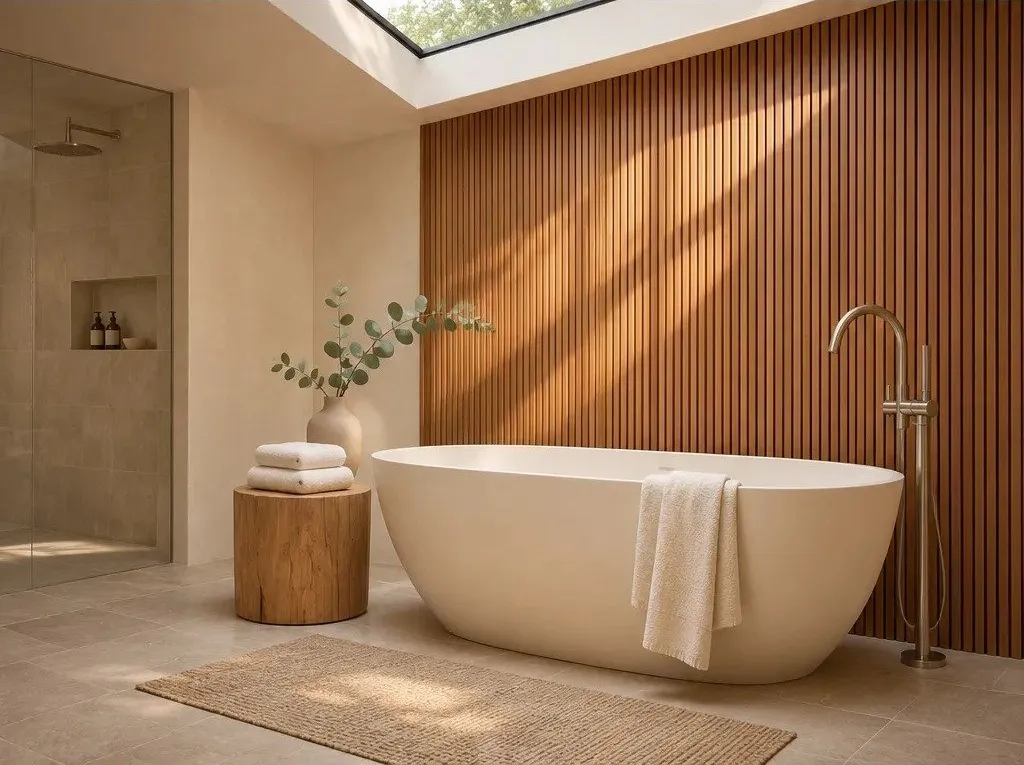
Quick Tip:
That warm timber texture loses its charm if water gets trapped behind it. Keep wooden slats away from direct spray unless the material and installation are rated for wet areas. Allow for airflow behind the feature and use a bathroom-safe finish.
Narrow vertical slats bring gentle rhythm to a plain wall while making a low ceiling feel taller. Install them behind a vanity or beside the tub, then leave the other walls simple so the detail can breathe. In a small room, one partial panel often feels calmer than full coverage.
Seamless Walk-In Shower

BEFORE:
A bulky shower enclosure interrupts the peaceful flow of a bathroom. Thick metal frames, raised shower trays, and mismatched tiles make the space feel smaller and visually crowded.
AFTER:
A frameless glass panel creates a cleaner, more open appearance. Continuous neutral tiles and a discreet linear drain make the shower feel connected to the surrounding floor.
Choose large-format porcelain tiles with a natural stone appearance to minimize visible grout lines. A recessed niche keeps shampoo bottles off the floor, while brushed bronze fixtures provide subtle warmth. Have a professional confirm proper waterproofing, drainage slope, and slip resistance before installing a curbless shower.
Soft Linen Textiles
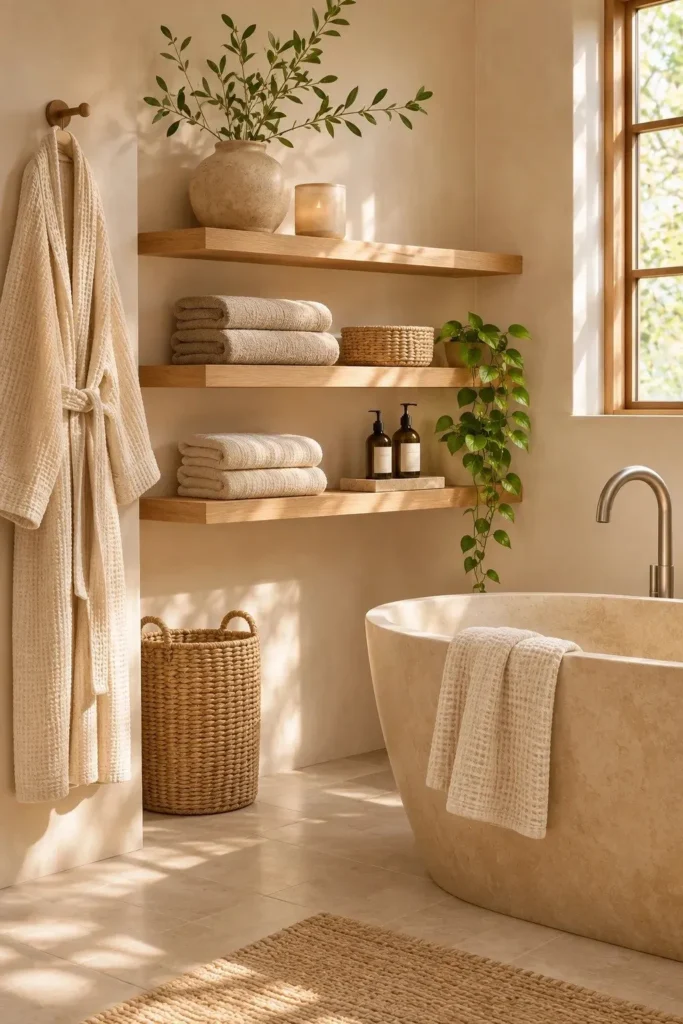
- Choose muted fabrics: Select oatmeal, warm ivory, or pale taupe towels that complement the bathroom’s natural color palette.
- Layer subtle textures: Combine soft cotton bath towels with a linen-blend hand towel for gentle visual contrast.
- Introduce natural storage: Place neatly rolled towels inside a shallow woven basket or on an open oak shelf.
- Keep essentials accessible: Hang a lightweight bathrobe on a simple wooden hook near the shower.
Soft textiles balance the hard surfaces commonly found in minimalist bathrooms. The contrast between woven fabric, smooth stone, and warm wood creates a welcoming atmosphere without unnecessary decoration. Choose absorbent, quick-drying materials for everyday use, especially in bathrooms where humidity tends to linger after showers.
Warm Neutral Tiles

| Design Element | Cool Neutral Tiles | Warm Neutral Tiles |
|---|---|---|
| Color palette | Blue-gray and bright white | Sand, cream, and greige |
| Overall appearance | Crisp and contemporary | Soft and earthy |
| Wood pairing | Cooler ash and gray oak | Natural oak and teak |
| Best lighting | Bright, balanced daylight | Soft daylight and warm lighting |
Warm beige tiles create a relaxing foundation that works especially well with natural wood and understated fixtures. Choose matte porcelain with gentle color variation rather than strong marble veining. Before buying, examine tile samples under your bathroom lighting, since artificial bulbs can significantly change how beige and greige tones appear.
Frosted Window Panels
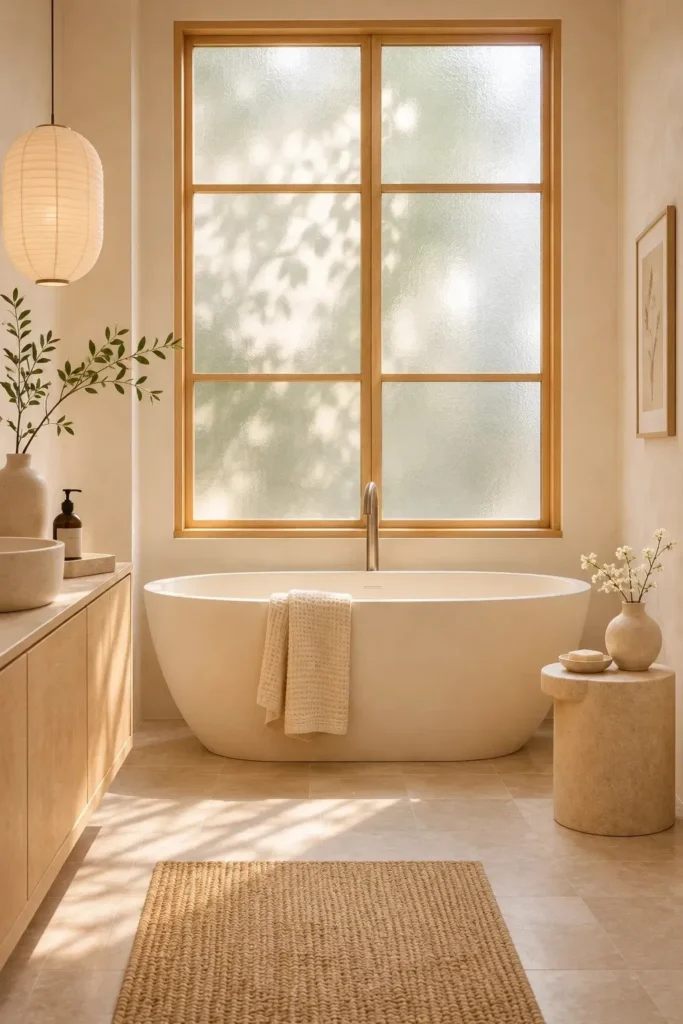
DO:
- Choose translucent window film that allows soft daylight to enter while improving privacy.
- Select warm white or lightly textured finishes for a gentle appearance.
- Apply the film to thoroughly cleaned glass for a smooth finish.
- Check privacy at night with the bathroom lights switched on.
DON’T:
- Don’t use heavily patterned films that compete with minimalist surroundings.
- Don’t assume every frosted film provides complete nighttime privacy.
- Don’t apply adhesive film to textured glass without checking compatibility.
- Don’t cover operable windows or interfere with ventilation.
Frosted window panels soften harsh sunlight while maintaining the privacy a bathroom needs. They work particularly well beside bathtubs or vanities facing neighboring homes. For a more traditional Japanese influence, add slim wooden trim around the window, keeping the finish simple enough to complement surrounding stone surfaces.
Warm Layered Lighting
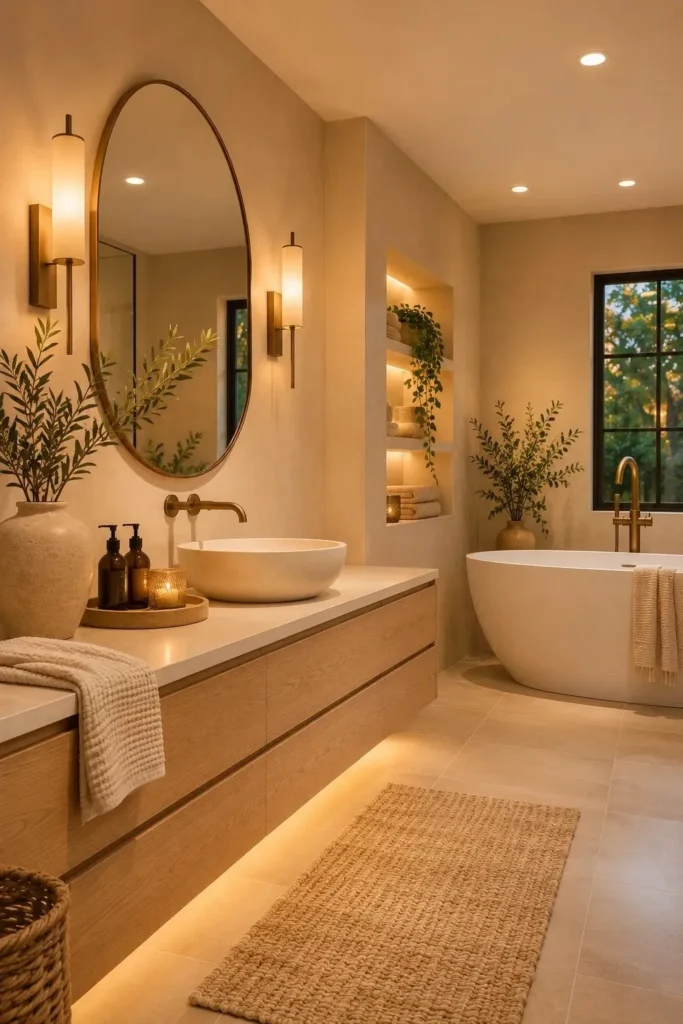
Best For: Bathrooms that feel cold or overly bright under a single ceiling fixture.
Light Temperature: Warm white LEDs around 2700K to 3000K.
Placement: Wall sconces near the mirror, ceiling illumination, and subtle under-vanity lighting.
Installation: Damp-rated or wet-rated fixtures as appropriate, with professional wiring for new electrical connections.
A calm bathroom needs more than one source of light. Gentle wall sconces provide useful illumination around the mirror, while dimmable overhead fixtures help adjust brightness throughout the day. Under-vanity lighting adds a soft evening glow without overpowering natural textures. Keep all fixtures suitable for their installation locations.
Freestanding Soaking Tub

A deep soaking tub brings a peaceful bathing ritual into the home. Choose a compact oval design with smooth edges and a matte white finish to complement the restrained palette. Position it near a window or against a softly textured wall, allowing enough clearance for comfortable access and cleaning.
Pair the bathtub with a simple wooden stool for a folded towel and bath essentials. Avoid crowding the surrounding floor with decorative baskets or plants. Before purchasing, check the tub’s filled weight, plumbing requirements, and available floor space. Comfort matters just as much as appearance.
Pebble Shower Flooring

- Natural pebble textures feel soothing underfoot. Choose small, closely spaced stones with relatively flat surfaces for comfortable daily use.
- Select warm beige, soft gray, or sandy brown pebbles to complement neutral bathroom finishes.
- Check the flooring’s suitability and slip resistance for wet shower areas before purchasing.
- Use moisture-resistant grout and properly waterproof the shower beneath the decorative surface.
- Clean grout lines regularly to prevent soap residue and mineral buildup from dulling the finish.
Pebble flooring introduces organic texture without overwhelming a minimalist shower. Its irregular shapes contrast gently with smooth walls and streamlined fixtures, creating a nature-inspired atmosphere. For easier maintenance, choose a flat pebble mosaic rather than deeply rounded stones, especially if multiple family members use the shower daily.
Washi-Style Wall Lights

Quick Tip:
Choose bathroom-rated sconces with diffusers that resemble traditional Japanese washi paper rather than using delicate untreated paper near moisture. Position fixtures beside the mirror at approximately face height for more balanced illumination. Select warm white bulbs to maintain a gentle atmosphere.
Washi-inspired lighting adds a soft decorative element without introducing complicated shapes or bright colors. The diffused glow works beautifully with oak furniture, neutral stone, and matte walls. For practical everyday use, pair decorative sconces with brighter task lighting so grooming remains comfortable even during darker mornings and evenings.
Built-In Bath Ledge
BEFORE:
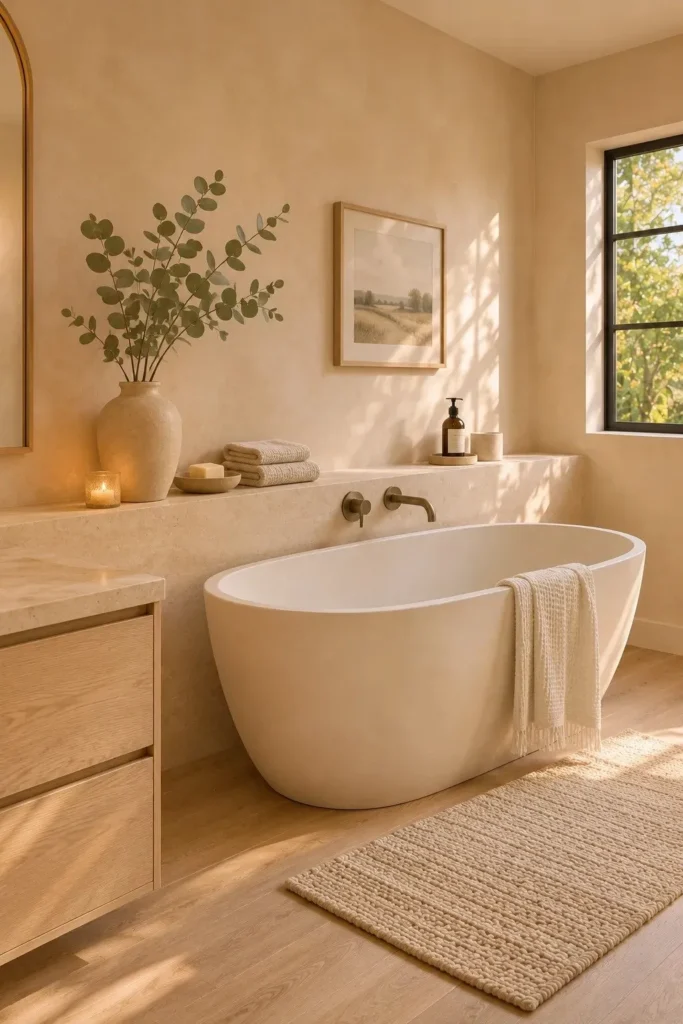
Shampoo bottles, bath products, and decorative accessories crowd the bathtub edges. A separate storage cart takes up valuable floor space, making the bathing area feel visually busy and difficult to clean.
AFTER:
A slim built-in ledge provides a dedicated surface for essential bath products. Its continuous stone finish connects naturally with the surrounding wall, giving the bathing area a cleaner, more architectural appearance.
For a refined result, match the ledge material to nearby tiles or choose a complementary limestone-look porcelain surface. Keep its depth practical without sacrificing comfortable movement around the tub. Proper waterproofing and a slight slope toward the bathing area help prevent standing water and protect surrounding finishes.
Recessed Mirror Storage

First: Measure the wall above your vanity and choose a recessed mirror cabinet that fits comfortably without overpowering the sink.
Next: Confirm the wall cavity has enough depth and is free from plumbing, electrical wiring, or structural obstacles.
Then: Install a moisture-resistant cabinet with adjustable interior shelves for skincare, medicines, and daily grooming essentials.
Finally: Keep the surrounding countertop clear, allowing the mirror and natural wood finishes to become the main visual features.
Hidden storage helps a minimalist bathroom remain practical without sacrificing its peaceful appearance. A recessed cabinet provides convenient access to everyday necessities while keeping visual clutter behind closed doors. Choose a simple frameless mirror or a slim oak surround that coordinates with the vanity for a cohesive finish.
Textured Plaster Walls

| Design Element | Standard Painted Walls | Textured Plaster Walls |
|---|---|---|
| Surface appearance | Smooth and uniform | Soft, organic variation |
| Visual character | Clean and understated | Earthy and handcrafted |
| Light reflection | Consistent matte finish | Gentle highlights and shadows |
| Maintenance | Generally easier to repaint | Depends on finish and sealing |
Textured plaster introduces the subtle imperfections celebrated in Japanese-inspired interiors. Choose warm beige or muted greige finishes to complement natural timber and stone. A soft mineral texture works especially well behind a bathtub or vanity. In wet areas, use a properly specified waterproof system rather than ordinary decorative plaster.
Minimalist Countertop Styling

DO:
- Choose a shallow stone or ceramic tray to organize frequently used toiletries.
- Keep accessories in warm neutral shades that complement the vanity.
- Display a single small branch or simple ceramic vase for organic texture.
- Leave generous empty countertop space around the sink.
DON’T:
- Don’t crowd the vanity with multiple decorative containers.
- Don’t mix too many metallic finishes or contrasting colors.
- Don’t leave wet wooden accessories directly against the countertop.
- Don’t display products that are rarely used or difficult to clean around.
Thoughtful countertop styling helps a Japandi-inspired bathroom feel peaceful while keeping daily routines convenient. Grouping essentials on a tray creates visual order and makes cleaning easier. Select accessories with simple silhouettes and natural finishes. A few carefully chosen objects allow the beauty of the surrounding materials to stand out.
Handmade Ceramic Accessories
Best For: Bringing handcrafted character to simple bathroom surfaces.
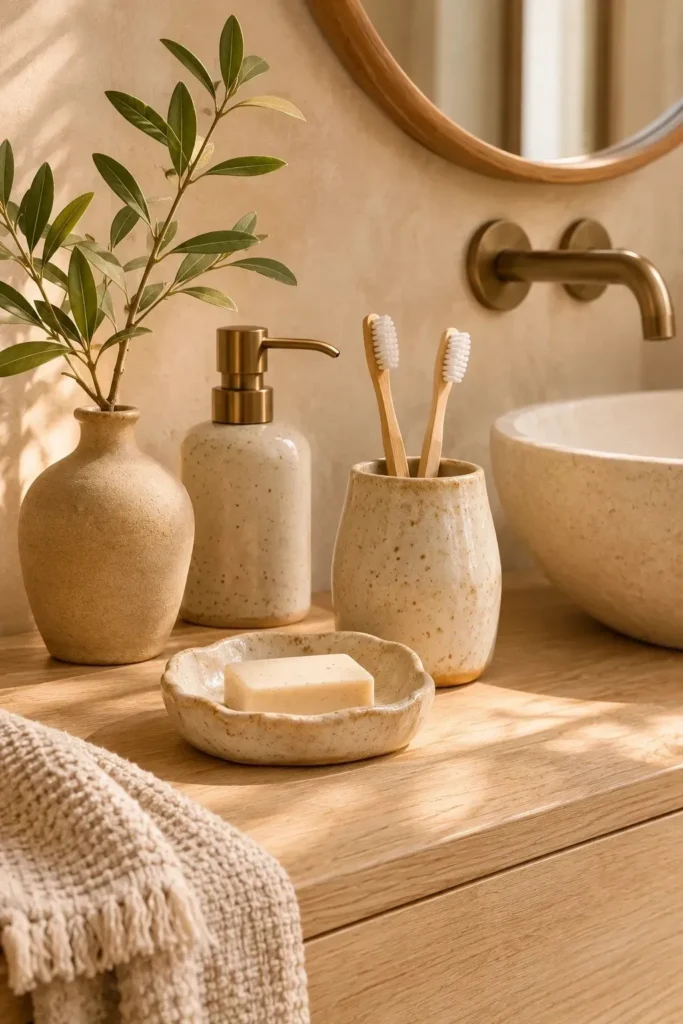
Color Palette: Warm ivory, sandy beige, muted taupe, and soft clay.
Materials: Glazed stoneware, handmade pottery, and moisture-resistant ceramics.
Styling Approach: A small collection of functional pieces with gently irregular shapes.
Handmade ceramics introduce subtle character without disturbing the calm atmosphere of a japandi bathroom. Choose accessories with matte finishes, rounded silhouettes, and slight variations in texture. Group a soap dispenser and toothbrush holder near the sink, keeping decorative pottery minimal. Glazed surfaces are generally easier to clean around water.
Muted Sage Accents
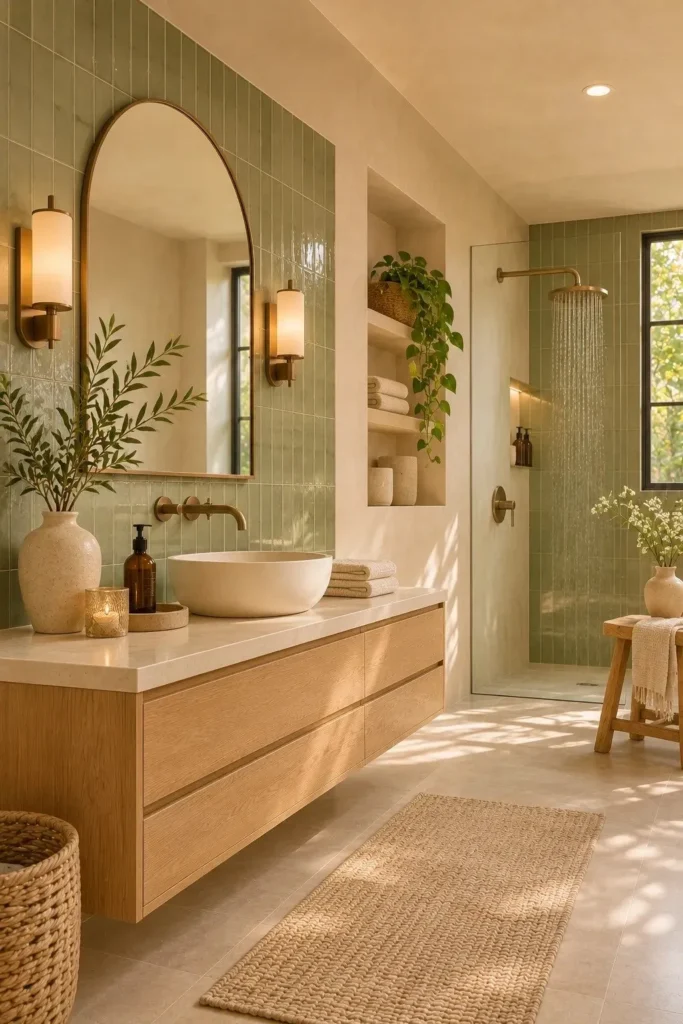
Soft sage green offers a refreshing alternative to an entirely beige bathroom. Introduce this gentle botanical shade through a tiled backsplash, painted vanity, or carefully selected accessories. Its gray undertones work especially well with pale oak, warm ivory walls, and natural stone, creating a balanced palette that feels restful rather than colorful.
For a subtle approach, limit sage green to one main surface and repeat it through a small towel or ceramic accessory. Choose matte finishes instead of glossy ones to maintain an earthy appearance. Test paint or tile samples in natural and artificial lighting before committing to the shade.
Ribbed Glass Shower Screen
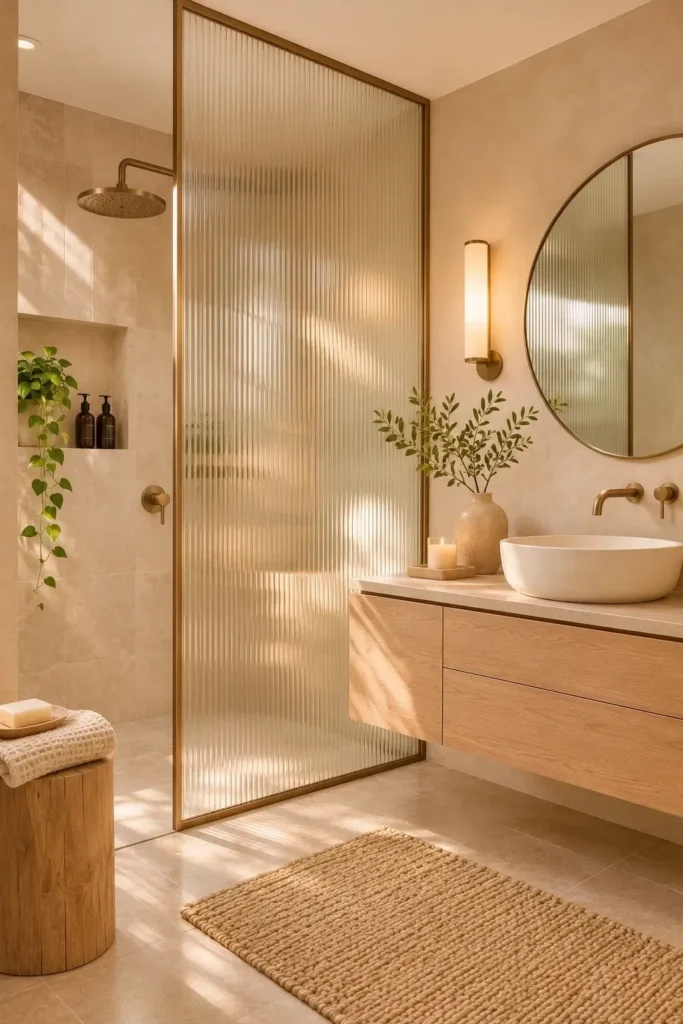
- Choose subtle glass texture: Fine vertical ribbing adds visual interest without introducing busy patterns or bold colors.
- Keep framing minimal: Slim bronze or brushed nickel profiles complement natural wood and warm stone finishes.
- Consider privacy: Textured glass partially obscures the shower area while allowing daylight to pass through.
- Plan regular cleaning: Select a glass treatment that helps reduce water spots and soap residue.
- Check installation requirements: Use properly rated safety glass and suitable waterproof hardware for shower applications.
Ribbed glass creates an attractive balance between openness and privacy. Its vertical texture brings gentle movement to otherwise smooth bathroom surfaces while softening the view of shower essentials. For smaller bathrooms, choose a fixed panel with minimal framing, provided the layout allows adequate access and controls water splashing.
Natural Teak Bath Mat
Quick Tip:
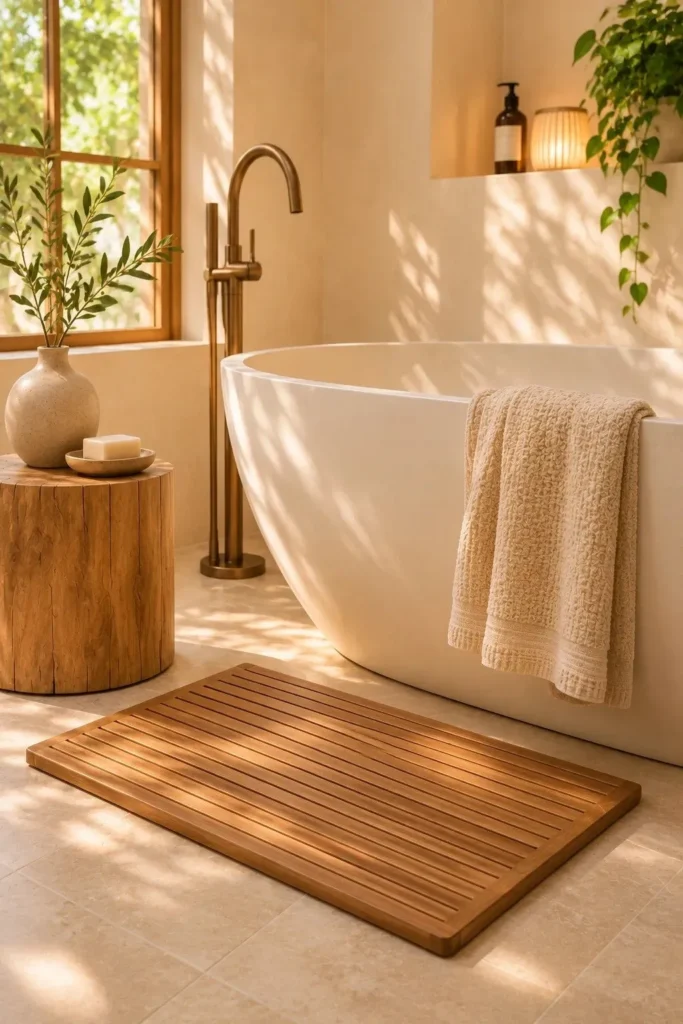
A wooden bath mat can become slippery if moisture collects underneath it. Choose a bathroom-safe teak design with nonslip feet and adequate drainage gaps. Lift the mat regularly to dry and clean the floor beneath it.
Natural teak introduces warmth and structure to bathrooms dominated by smooth stone and ceramic surfaces. Its golden brown tones complement pale oak furniture and neutral tile finishes. Position the mat where you normally step out of the bathtub, ensuring it sits securely on the floor without rocking or sliding.
Wall-Mounted Brass Faucets

BEFORE:
A bulky countertop faucet takes up valuable space behind the basin. Water collects around its base, making the surrounding surface harder to clean. Mixed metallic finishes also interrupt the room’s simple appearance.
AFTER:
A slim wall-mounted faucet frees up countertop space and creates a cleaner silhouette. Its brushed brass finish adds gentle warmth against pale stone, while the streamlined installation makes the sink area feel more spacious.
Choose a wall-mounted faucet with a spout long enough to direct water comfortably into the basin. Coordinate its finish with nearby towel hooks and shower fixtures for consistency. Because installation requires plumbing inside the wall, confirm the final sink position and faucet height before completing waterproofing.
Open Oak Shelving

First: Choose an unused wall above the toilet or beside the vanity where floating shelves will not obstruct movement.
Next: Install moisture-resistant oak shelves using suitable wall anchors, making sure each shelf can safely support its intended contents.
Then: Arrange folded towels, ceramic containers, and everyday essentials in small, organized groupings.
Finally: Leave some shelf space empty and limit decorative objects to maintain a balanced appearance.
Open shelving provides convenient storage while allowing natural wood to become part of the bathroom’s design. Choose shelves with simple edges and a finish suitable for humid conditions. Keep heavier products on lower shelves and store personal toiletries in closed cabinets to prevent an unnecessarily cluttered appearance.
Soft Charcoal Accents

| Design Element | Strong Black Contrast | Soft Charcoal Accents |
|---|---|---|
| Mirror frame | Bold matte black | Muted charcoal |
| Hardware | High-contrast dark metal | Soft graphite finish |
| Overall atmosphere | Dramatic and graphic | Calm and balanced |
| Best pairing | Bright white surfaces | Warm oak and beige stone |
Dark accents can provide definition without making a peaceful bathroom feel stark. Choose charcoal or graphite fixtures with matte finishes instead of glossy black surfaces. Repeat the darker shade through a mirror frame, towel hooks, and cabinet handles. Keep larger surfaces neutral so the contrast remains subtle and intentional.
Woven Laundry Baskets
DO:
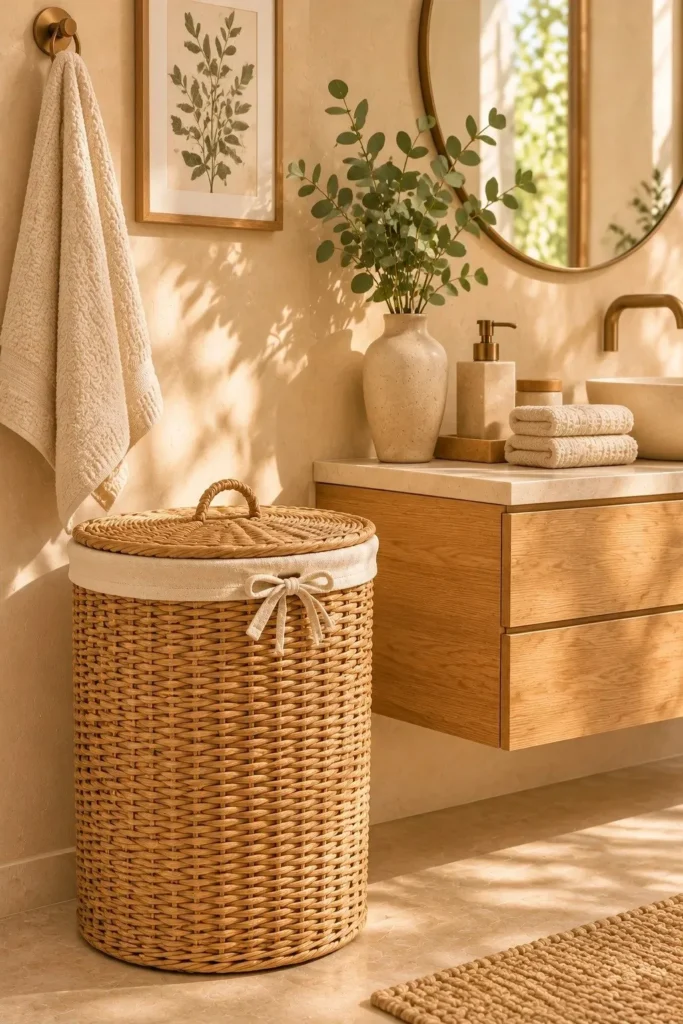
- Choose a tightly woven rattan basket with a removable, washable fabric liner.
- Select natural honey, wheat, or muted beige tones to complement oak furniture.
- Position the basket near the vanity without blocking bathroom walkways.
- Choose a ventilated design that allows damp fabrics to breathe.
DON’T:
- Don’t leave soaking wet towels inside woven baskets for extended periods.
- Don’t place untreated natural fibers where shower spray reaches them.
- Don’t overcrowd small bathrooms with oversized storage baskets.
- Don’t ignore moisture buildup beneath baskets sitting directly on tiled floors.
A woven laundry basket adds useful storage while introducing a relaxed natural texture. Its handcrafted appearance softens hard tile surfaces and complements simple bathroom furniture. For smaller rooms, choose a narrow cylindrical design that fits neatly beside a cabinet. Empty damp laundry regularly to prevent unpleasant odors.
Minimal Indoor Greenery
Best For: Bathrooms with natural daylight and available floor or shelf space.
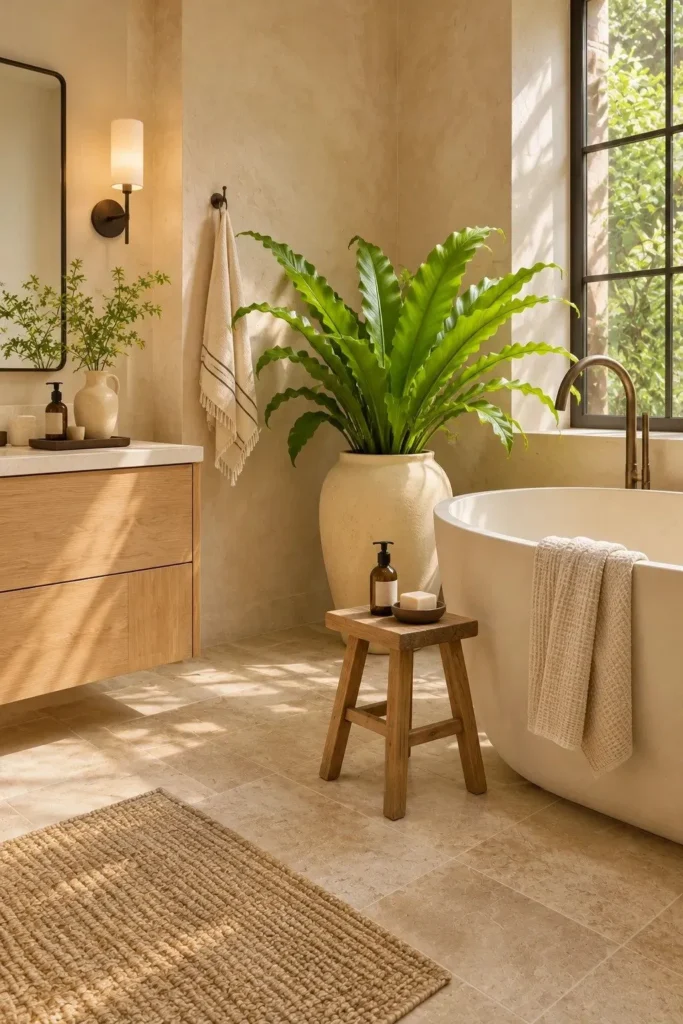
Plant Choices: Bird’s nest fern, pothos, or other species suited to the room’s light conditions.
Container Style: Matte ceramic or natural stone planters with suitable drainage.
Maintenance: Monitor soil moisture, provide airflow, and avoid standing water.
A single leafy plant introduces gentle color and organic movement to a neutral bathroom. Position greenery where it receives suitable light without obstructing daily routines. Choose one substantial plant rather than several small pots for a cleaner arrangement. Bathrooms without sufficient natural light may need a dedicated grow light.
Wooden Bath Caddy

A narrow wooden bath caddy turns an ordinary soak into a more organized ritual. Choose a sealed teak or bamboo tray that rests securely across your tub without covering the faucet. Look for raised edges or a nonslip underside, especially if you plan to keep a book or cup nearby.
Keep the arrangement simple: a folded washcloth, a small ceramic dish, and only what you will actually use. Remove the tray after bathing and let it dry upright to protect the finish. For a tub with curved or unusually wide rims, measure carefully before buying a fitted caddy.
Shoji-Inspired Sliding Door

- A sliding door can free up valuable floor space. Choose a design that moves smoothly along a track without requiring the clearance of a swinging door.
- Select slim natural oak framing to introduce warmth and complement other wooden bathroom elements.
- Use frosted safety glass or moisture-resistant translucent panels for privacy and practical durability.
- Choose corrosion-resistant tracks and hardware suitable for humid environments.
- Make sure the door closes securely and provides adequate privacy, especially in shared bathrooms.
Shoji-inspired doors introduce Japanese architectural character without overwhelming a modern interior. Their simple rectangular panels create a gentle geometric pattern that complements neutral stone and minimalist fixtures. For bathrooms with limited space, a sliding design can also improve furniture placement, provided the wall has sufficient clearance for the door.
Leaning Towel Ladder

Quick Tip:
Choose a towel ladder with smooth, sealed wooden rungs to prevent fabric snags and moisture damage. Secure the ladder against tipping, particularly in homes with children or pets. Leave space between hanging towels so they can dry properly.
A wooden towel ladder combines practical storage with subtle architectural detail. Its vertical silhouette draws the eye upward without requiring bulky cabinets or crowded wall hooks. Position it near the bathtub but outside direct shower spray. Match the wood tone to nearby cabinetry for a coordinated, peaceful appearance.
Wall-Hung Toilet

BEFORE:
A traditional floor-mounted toilet creates visible plumbing connections and awkward corners that collect dust. Its bulky base interrupts the clean appearance of the bathroom, particularly in smaller layouts.
AFTER:
A wall-hung toilet reveals more flooring and creates a streamlined appearance. The concealed cistern keeps mechanical components hidden, while the open space underneath makes routine floor cleaning easier.
Choose a compact, rimless toilet with a simple white ceramic finish. Coordinate the flush plate with nearby metallic fixtures for a consistent appearance. Before installation, confirm that the wall structure supports the concealed carrier system and that maintenance access remains available through the flush plate.
Bamboo Drawer Organizers

First: A crowded vanity drawer can make even a peaceful bathroom feel frustrating. Empty the drawer completely and separate daily essentials from products you rarely use.
Next: Measure the drawer’s interior dimensions and choose adjustable bamboo dividers that fit securely without restricting movement.
Then: Group similar items together, giving skincare bottles, hair accessories, and grooming tools dedicated compartments.
Finally: Place frequently used products near the front and keep spare supplies in deeper storage.
Organized drawers make it easier to maintain the uncluttered surfaces associated with Japanese Scandinavian design. Bamboo introduces a natural material that coordinates beautifully with oak cabinetry. Choose dividers with moisture-resistant finishes and wipe away spills promptly. Small washable containers can protect the wood from leaking skincare products.
Travertine Accent Wall

| Design Element | Natural Travertine | Travertine-Look Porcelain |
|---|---|---|
| Appearance | Authentic mineral variation | Consistent stone-inspired patterns |
| Maintenance | Requires appropriate sealing and care | Generally easier to maintain |
| Moisture resistance | Porous without proper treatment | Typically less absorbent |
| Budget | Often higher material and installation costs | Often more budget-friendly |
A travertine accent wall introduces gentle texture and earthy warmth without relying on bold decoration. Place it behind a bathtub or vanity, allowing the stone pattern to become the focal point. For shower walls, porcelain alternatives offer practical maintenance benefits. Choose subtle veining and coordinate grout colors carefully.
CONCLUSION
You do not need to change every tile or fixture to create a calmer bathroom. Start with one detail that solves a daily frustration, whether that is cluttered counters, cold lighting, or nowhere to hang a towel. Warm wood, soft stone, and purposeful storage can help a japandi bathroom feel restful while staying easy to use. Choose materials that suit your budget and your room’s moisture levels, then build the look gradually. Save this post on Pinterest for your next refresh, try one or two ideas this weekend, and share it with someone who loves peaceful spaces. Small updates count.